Hypopituitarism Diagnostics Market Size, Share & Demand Report By Diagnostic Type (Hormonal Blood Tests, Imaging Tests, Stimulation Tests, Genetic Testing, Others), By Indication (Growth Hormone Deficiency, Secondary Adrenal Insufficiency, Hypogonadism, Thyroid-Stimulating Hormone Deficiency, Multiple Pituitary Hormone Deficiency), By End User (Hospitals, Diagnostic Laboratories, Specialty Endocrine Clinics, Academic and Research Institutes) By Region & Segment Forecasts, 2026–2034
USD 3950
Market Overview
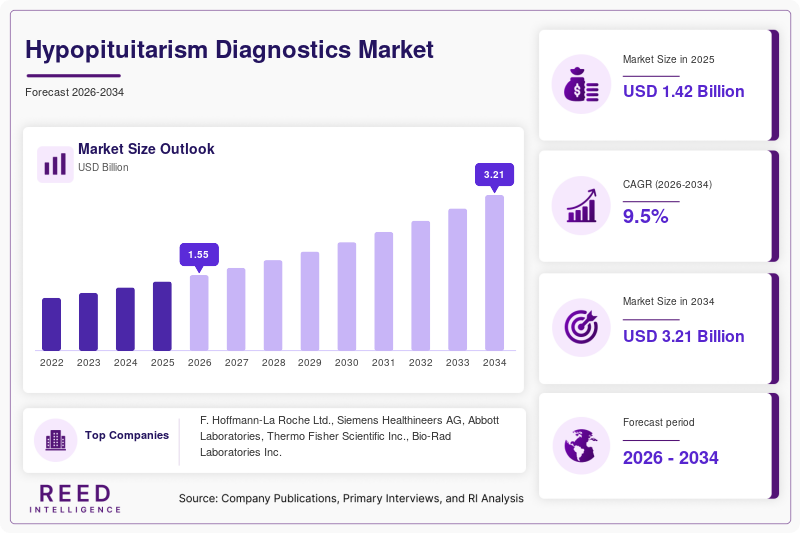
The global Hypopituitarism Diagnostics Market size was valued at USD 1.42 billion in 2026 and is projected to reach USD 2.94 billion by 2034, expanding at a CAGR of 9.5% during the forecast period from 2026 to 2034. The market is gaining traction due to the rising prevalence of hormonal disorders, increasing awareness regarding endocrine diseases, and wider adoption of advanced imaging and laboratory diagnostic technologies across developed and emerging healthcare systems. Growing investments in precision medicine and endocrine healthcare infrastructure have also contributed to higher testing rates for pituitary gland disorders. Hospitals and specialty endocrine clinics are increasingly integrating biomarker-based hormone analysis and magnetic resonance imaging procedures into routine diagnostic pathways, which continues to support market expansion.
Another major factor driving the market is the global increase in chronic diseases and traumatic brain injuries that may result in pituitary dysfunction. Medical professionals are emphasizing early diagnosis to reduce complications linked to adrenal insufficiency, thyroid dysfunction, infertility, and growth hormone deficiencies. Public healthcare initiatives focused on hormonal health screening and advancements in automated immunoassay analyzers have improved access to accurate diagnostic testing. In addition, the increasing availability of tele-endocrinology consultations has encouraged more patients to seek hormonal evaluations, especially in urban populations.
Key Highlights
- North America dominated the market with a 35.4% share in 2025.
- Asia Pacific is expected to grow at the fastest CAGR of 10.8% during 2026–2034. By diagnostic type, hormonal blood tests accounted for the largest share of 44.1%, while genetic testing is projected to grow at a CAGR of 11.6%.
- By indication, growth hormone deficiency led with a 39.7% share, whereas secondary adrenal insufficiency is expected to expand at a CAGR of 10.9%.
- By end user, hospitals held the largest share of 46.5%, while specialty endocrine clinics are projected to grow at a CAGR of 11.2%.
- The United States remained the dominant country, with market values of USD 465 million in 2024 and USD 512 million in 2025.
Market Trends
Integration of Artificial Intelligence in Hormonal Diagnostic Interpretation
Artificial intelligence and machine learning technologies are becoming increasingly important in the Hypopituitarism Diagnostics Market. Healthcare providers are using AI-enabled clinical decision support systems to analyze hormonal fluctuations, patient history, and radiology reports with improved speed and accuracy. These systems reduce diagnostic delays associated with pituitary hormone deficiencies and improve physician confidence in identifying complex endocrine conditions. Several hospitals are integrating predictive analytics platforms with laboratory information systems to detect abnormal hormone patterns earlier in the patient care pathway. AI-assisted MRI interpretation is also helping radiologists identify subtle pituitary abnormalities that may not be easily visible through traditional review methods.
The growing adoption of digital healthcare infrastructure across North America, Europe, and Asia Pacific is accelerating the use of automated diagnostic platforms. Market participants are developing software tools that combine endocrine test data with imaging outputs to create integrated diagnostic assessments. These technologies are improving workflow efficiency in hospitals and specialty clinics while lowering the risk of diagnostic errors. Increased funding for digital pathology and precision diagnostics is expected to further strengthen the role of AI-based endocrine testing solutions over the forecast period.
Expansion of Preventive Endocrine Screening Programs
Preventive endocrine screening programs are emerging as a significant trend in the Hypopituitarism Diagnostics Market due to increasing public awareness regarding hormonal imbalances and metabolic disorders. Healthcare organizations are promoting routine hormonal evaluations for high-risk groups, including patients with traumatic brain injuries, pituitary tumors, autoimmune conditions, and chronic steroid exposure. This shift toward preventive care is encouraging earlier diagnosis and treatment initiation, which improves patient outcomes and reduces long-term healthcare costs.
Diagnostic laboratories and hospitals are expanding their endocrine screening panels to include multiple pituitary hormones within a single testing workflow. The availability of high-sensitivity assays and automated laboratory analyzers has simplified the screening process and increased testing volumes. Government healthcare agencies in several countries are also supporting public awareness campaigns related to hormonal health and infertility management. As preventive healthcare spending continues to rise, the demand for comprehensive endocrine diagnostics is expected to increase steadily across both developed and developing regions.
Market Drivers
Rising Incidence of Pituitary Disorders and Hormonal Deficiencies
The increasing prevalence of pituitary disorders and hormone-related conditions is one of the primary factors supporting growth in the Hypopituitarism Diagnostics Market. Rising cases of pituitary adenomas, traumatic brain injuries, congenital endocrine disorders, and autoimmune diseases have contributed to greater demand for early and accurate diagnostic testing. Healthcare professionals are emphasizing timely detection of hormone deficiencies to prevent complications such as infertility, osteoporosis, cardiovascular disease, and metabolic dysfunction. The growing aging population is also creating higher demand for endocrine evaluations because older adults are more vulnerable to hormonal imbalance and glandular dysfunction.
Increased awareness among physicians and patients regarding endocrine health has improved diagnosis rates across hospitals and specialty clinics. Educational campaigns conducted by endocrine associations and healthcare organizations are encouraging regular hormonal testing among at-risk individuals. In addition, improvements in laboratory technologies and high-throughput immunoassays have enabled faster turnaround times and more precise hormonal measurements. These advancements are expanding access to pituitary diagnostics and contributing to stable market growth across global healthcare systems.
Technological Advancements in Imaging and Laboratory Diagnostics
Continuous advancements in imaging systems and laboratory diagnostic technologies are significantly driving the Hypopituitarism Diagnostics Market. Modern magnetic resonance imaging systems provide high-resolution visualization of pituitary structures, enabling healthcare professionals to detect microadenomas and structural abnormalities more effectively. At the same time, advanced hormone assays and automated analyzers are improving the sensitivity and specificity of endocrine testing procedures. These technological developments have strengthened diagnostic confidence and increased the adoption of comprehensive hormonal evaluation protocols.
The integration of molecular diagnostics and genetic screening into endocrine testing workflows is further enhancing market expansion. Healthcare institutions are increasingly adopting multiplex testing platforms capable of analyzing several hormone markers simultaneously, reducing testing time and operational costs. Diagnostic companies are also focusing on portable and point-of-care endocrine testing devices that improve accessibility in smaller clinics and rural healthcare centers. As healthcare providers continue to prioritize accurate and efficient diagnosis, demand for technologically advanced hypopituitarism diagnostic solutions is expected to remain strong during the forecast period.
Market Restraint
High Diagnostic Costs and Limited Specialist Access in Emerging Economies
One of the key challenges limiting the growth of the Hypopituitarism Diagnostics Market is the high cost associated with advanced hormonal testing and imaging procedures. Comprehensive endocrine evaluations often require multiple laboratory tests, MRI scans, stimulation testing, and specialist consultations, which can create a substantial financial burden for patients in low-income and middle-income regions. Limited reimbursement policies in certain countries further restrict access to advanced pituitary diagnostics, especially in private healthcare settings.
Another major concern is the shortage of trained endocrinologists and diagnostic specialists in developing economies. Many rural healthcare facilities lack access to sophisticated laboratory infrastructure and advanced imaging equipment required for accurate diagnosis. As a result, patients frequently experience delayed diagnosis or incomplete hormonal assessment, which may worsen disease progression and increase treatment complexity. Smaller hospitals also face operational challenges related to maintaining high-cost diagnostic instruments and skilled laboratory personnel. These limitations continue to affect testing accessibility and reduce market penetration across underserved healthcare systems.
Market Opportunities
Growing Adoption of Telemedicine and Remote Endocrine Consultation Services
The expansion of telemedicine platforms and remote healthcare services is creating strong opportunities for the Hypopituitarism Diagnostics Market. Endocrinologists are increasingly offering virtual consultations to evaluate hormonal symptoms, review laboratory reports, and recommend additional testing procedures for patients in remote areas. Tele-endocrinology services are improving access to specialist care, particularly in regions with limited healthcare infrastructure and low specialist availability. This trend is expected to support higher diagnostic rates and greater patient engagement in endocrine health management.
Digital health platforms are also enabling better coordination between diagnostic laboratories, physicians, and patients. Remote monitoring tools and online laboratory reporting systems have simplified follow-up evaluations and hormone level tracking. Healthcare providers are investing in integrated digital ecosystems that combine teleconsultation services with laboratory data management and imaging review. As internet penetration and smartphone adoption continue to increase globally, remote endocrine care solutions are expected to create new revenue opportunities for diagnostic companies and healthcare providers.
Expansion of Personalized Medicine and Biomarker-Based Diagnostics
The increasing focus on personalized medicine is generating significant opportunities within the Hypopituitarism Diagnostics Market. Physicians are adopting individualized diagnostic strategies based on patient genetics, hormone profiles, age, and disease severity. Biomarker-based diagnostics are gaining attention because they support more accurate disease classification and improve treatment planning for pituitary hormone deficiencies. Research institutions and biotechnology companies are investing in novel biomarkers that can identify pituitary dysfunction at earlier stages.
Advancements in molecular diagnostics and genomic sequencing technologies are supporting the development of targeted endocrine testing solutions. Diagnostic manufacturers are introducing customized testing panels designed for specific patient populations, including pediatric and geriatric groups. These innovations are improving diagnostic precision and enabling healthcare professionals to develop personalized hormone replacement strategies. As precision medicine becomes more integrated into routine healthcare practices, demand for advanced biomarker-driven endocrine diagnostics is expected to expand steadily across global markets.
Segmental Analysis
By Diagnostic Type
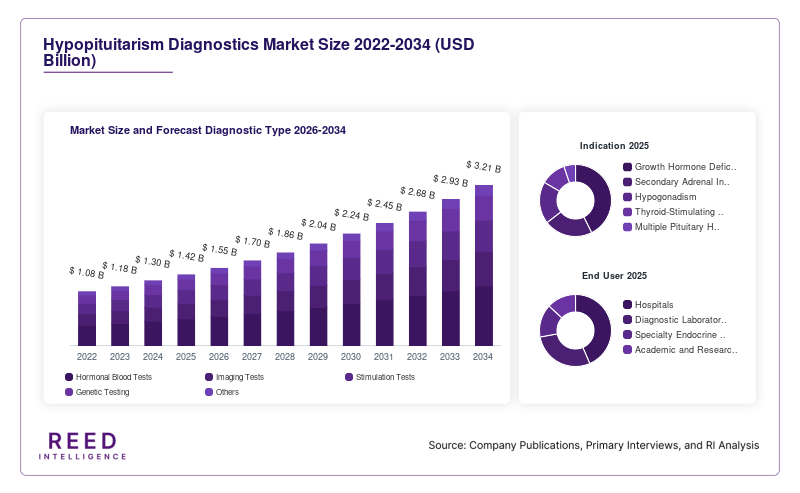
Hormonal blood tests represented the dominant subsegment within the Hypopituitarism Diagnostics Market and accounted for approximately 44.1% of the global share in 2024. These tests are widely used because they provide direct measurement of pituitary hormone levels, including growth hormone, adrenocorticotropic hormone, thyroid-stimulating hormone, and luteinizing hormone. Hospitals and diagnostic laboratories rely heavily on blood-based hormone analysis due to its clinical accuracy, cost-effectiveness, and compatibility with automated testing platforms. The growing availability of high-sensitivity immunoassays has further improved diagnostic precision and reduced turnaround times for endocrine evaluations. In addition, hormonal blood tests are frequently used in both initial diagnosis and long-term patient monitoring, which supports consistent testing demand across healthcare systems.
Genetic testing is expected to witness the fastest growth within the diagnostic type segment, expanding at a CAGR of 11.6% during the forecast period. The increasing focus on precision medicine and hereditary endocrine disorders is driving adoption of molecular diagnostic technologies in endocrine healthcare. Genetic testing enables clinicians to identify inherited pituitary dysfunction and evaluate disease susceptibility in pediatric and high-risk patient groups. Research institutions and biotechnology companies are investing in genomic screening solutions that support early diagnosis and personalized treatment planning. The growing integration of next-generation sequencing technologies into clinical diagnostics is also improving accessibility and affordability. As awareness regarding genetic causes of hormonal disorders increases, demand for advanced molecular endocrine testing solutions is expected to rise significantly.
By Indication
Growth hormone deficiency accounted for the largest share within the indication segment of the Hypopituitarism Diagnostics Market in 2024, contributing nearly 39.7% of total market revenue. The high prevalence of growth-related hormonal disorders among children and adults has increased demand for accurate endocrine evaluation and hormone stimulation testing. Physicians frequently recommend diagnostic screening for patients experiencing abnormal growth patterns, muscle weakness, fatigue, and metabolic dysfunction. Hospitals and specialty clinics are expanding pediatric endocrine services to address rising cases of congenital growth hormone deficiency and acquired pituitary disorders. The widespread use of growth hormone stimulation tests and advanced imaging procedures has strengthened diagnostic accuracy and improved disease management outcomes. Increasing awareness among parents and healthcare providers regarding early intervention is also supporting sustained demand for growth hormone diagnostic services.
Secondary adrenal insufficiency is projected to grow at the fastest CAGR of 10.9% during the forecast period due to increasing awareness regarding adrenal hormone deficiencies and associated complications. Patients with pituitary disorders, long-term corticosteroid exposure, and traumatic brain injuries are increasingly undergoing adrenal function testing to avoid severe metabolic and cardiovascular complications. Healthcare providers are emphasizing early detection because delayed diagnosis can lead to life-threatening adrenal crises. Diagnostic laboratories are introducing more sensitive cortisol and adrenocorticotropic hormone assays that improve clinical reliability and testing efficiency. The growing adoption of preventive endocrine screening programs in hospitals and specialty clinics is also expected to accelerate demand for adrenal insufficiency diagnostics over the coming years.
By End User
Hospitals held the dominant share within the end-user segment of the Hypopituitarism Diagnostics Market in 2024, accounting for approximately 46.5% of global revenue. Large hospitals serve as primary centers for endocrine diagnosis because they offer integrated laboratory services, advanced imaging technologies, and multidisciplinary specialist teams. Patients with suspected pituitary disorders often undergo comprehensive evaluations within hospital settings due to the availability of MRI systems, hormonal assays, and emergency care facilities. Hospitals also manage complex cases involving pituitary tumors, traumatic brain injuries, and multiple hormonal deficiencies, which contributes to high testing volumes. Growing investment in hospital-based diagnostic infrastructure and automation technologies has improved workflow efficiency and supported broader adoption of endocrine diagnostic procedures across public and private healthcare institutions.
Specialty endocrine clinics are expected to register the fastest growth within the end-user segment, expanding at a CAGR of 11.2% during the forecast period. These clinics provide focused hormonal care and personalized diagnostic services for patients with endocrine disorders. Increasing patient preference for specialized consultations and shorter appointment waiting times is supporting the expansion of endocrine clinic networks across urban healthcare markets. Many specialty centers are adopting advanced diagnostic technologies, including digital hormone monitoring systems and AI-assisted imaging tools, to improve patient outcomes and operational efficiency. Another important growth factor is the rising collaboration between endocrine clinics and diagnostic laboratories to provide integrated testing packages. This trend is expected to increase patient convenience and strengthen demand for specialized endocrine diagnostic services globally.
Regional Analysis
North America
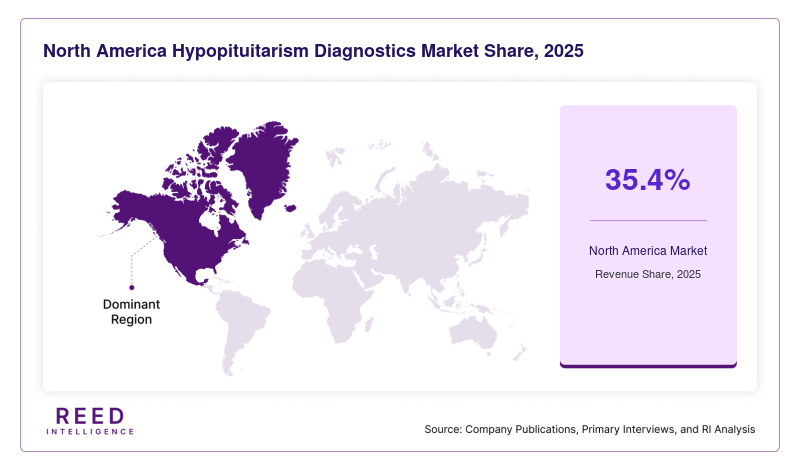
North America accounted for the largest share of the Hypopituitarism Diagnostics Market in 2025, representing approximately 35.4% of global revenue. The region is expected to maintain steady growth with a projected CAGR of 8.9% during the forecast period. Strong healthcare infrastructure, high awareness regarding endocrine disorders, and broad access to advanced imaging technologies continue to support regional market expansion. The presence of major diagnostic companies and specialized endocrine centers has also increased the adoption of hormonal testing and pituitary imaging procedures across the United States and Canada.
The United States remained the dominant country within the North American market due to its advanced diagnostic ecosystem and strong healthcare spending. Increasing prevalence of pituitary adenomas and hormone-related disorders has encouraged higher testing rates among adults and pediatric patients. Another unique growth factor is the widespread use of electronic health records integrated with endocrine diagnostic systems, which improves patient monitoring and supports faster diagnosis. Academic medical centers in the country are also conducting extensive research on biomarker-based hormonal diagnostics.
Europe
Europe represented a significant share of the Hypopituitarism Diagnostics Market in 2025 and is projected to expand at a CAGR of 8.5% during the forecast period. The region benefits from well-established public healthcare systems and strong reimbursement support for endocrine testing procedures. Countries across Western Europe are increasingly adopting advanced immunoassay analyzers and high-resolution MRI systems to improve diagnostic accuracy. Rising awareness regarding hormone deficiencies and infertility management is further contributing to regional market demand.
Germany emerged as the dominant country in the European market due to its strong healthcare infrastructure and high investment in medical technologies. The country has experienced growing demand for endocrine evaluations among aging populations and patients with chronic neurological disorders. A unique growth factor supporting the German market is the increasing collaboration between research institutes and diagnostic manufacturers to develop innovative hormone testing platforms. These partnerships are accelerating product development and improving the availability of advanced endocrine diagnostic solutions.
Asia Pacific
Asia Pacific is expected to register the fastest growth in the Hypopituitarism Diagnostics Market, with a projected CAGR of 10.8% during the forecast period. Rapid urbanization, increasing healthcare expenditure, and expanding access to diagnostic laboratories are supporting regional growth. Several countries in the region are investing heavily in healthcare modernization and endocrine disease awareness programs. The adoption of automated laboratory systems and digital diagnostic technologies has also increased significantly across major urban healthcare facilities.
China remained the leading country in the Asia Pacific market due to its large patient population and rapidly developing healthcare infrastructure. Rising prevalence of hormonal disorders and increasing health awareness among middle-income populations have boosted demand for pituitary diagnostic testing. Another unique growth factor is the expansion of domestic diagnostic manufacturing capabilities, which has improved affordability and accessibility of hormone testing systems. Government initiatives focused on chronic disease management are also supporting wider adoption of endocrine diagnostics.
Middle East & Africa
The Middle East & Africa region accounted for a smaller but steadily expanding share of the Hypopituitarism Diagnostics Market in 2025 and is projected to grow at a CAGR of 7.9% through 2034. Improvements in healthcare infrastructure, particularly in Gulf Cooperation Council countries, are increasing access to advanced laboratory testing and imaging services. Private healthcare providers are expanding specialty endocrine clinics and investing in automated diagnostic technologies to improve patient care quality.
Saudi Arabia dominated the regional market due to its growing healthcare investment and increasing focus on specialized medical services. Rising awareness regarding hormonal disorders and infertility treatments has encouraged more patients to undergo endocrine evaluations. A unique growth factor supporting the Saudi Arabian market is the expansion of government-funded healthcare modernization programs aimed at reducing dependence on overseas medical treatment. These initiatives are strengthening domestic diagnostic capabilities and supporting greater adoption of endocrine testing procedures.
Latin America
Latin America demonstrated moderate growth in the Hypopituitarism Diagnostics Market in 2025 and is anticipated to expand at a CAGR of 8.1% during the forecast period. Increasing healthcare access, growing awareness of hormonal disorders, and expansion of private diagnostic laboratories are supporting regional market growth. Countries across the region are gradually improving access to advanced imaging systems and automated endocrine testing technologies. Rising demand for infertility treatment and chronic disease management is also contributing to greater adoption of hormonal diagnostics.
Brazil emerged as the dominant country in the Latin American market due to its large healthcare network and expanding diagnostic laboratory industry. Urban healthcare centers are increasingly adopting high-sensitivity hormone assays and digital imaging systems to improve diagnostic efficiency. One unique growth factor in Brazil is the increasing participation of private healthcare organizations in endocrine awareness campaigns and preventive health programs. These initiatives are improving patient education and encouraging earlier diagnosis of pituitary hormone deficiencies.
Competitive Landscape
The Hypopituitarism Diagnostics Market remains moderately consolidated, with several multinational diagnostic companies competing through product innovation, strategic partnerships, and geographic expansion. Major market participants are focusing on advanced immunoassay systems, molecular diagnostics, and automated endocrine testing platforms to strengthen their competitive position. Companies are also investing in digital healthcare integration and artificial intelligence tools to improve diagnostic workflow efficiency and accuracy.
F. Hoffmann-La Roche Ltd. remained one of the leading participants in the market due to its broad endocrine testing portfolio and strong global distribution network. The company continues to expand its hormone assay capabilities and laboratory automation solutions for endocrine diagnostics. Siemens Healthineers, Abbott Laboratories, and Thermo Fisher Scientific are also strengthening their market presence through investments in precision diagnostics and high-throughput testing systems.
A recent development shaping the competitive landscape involved Bio-Rad Laboratories introducing an enhanced multiplex hormone testing panel designed to improve early detection of pituitary hormone deficiencies. Several companies are additionally expanding collaborations with hospitals and research institutions to accelerate development of biomarker-driven endocrine diagnostic solutions.
Key Players
- F. Hoffmann-La Roche Ltd.
- Siemens Healthineers AG
- Abbott Laboratories
- Thermo Fisher Scientific Inc.
- Bio-Rad Laboratories Inc.
- Danaher Corporation
- Quest Diagnostics Incorporated
- Sysmex Corporation
- DiaSorin S.p.A.
- Becton, Dickinson and Company
- bioMerieux SA
- Ortho Clinical Diagnostics
- Randox Laboratories Ltd.
- Agilent Technologies Inc.
- PerkinElmer Inc.
Recent Developments
- In February 2025, Siemens Healthineers expanded its endocrine testing portfolio with an upgraded automated hormone assay platform designed for faster pituitary hormone analysis.
- In July 2025, Abbott Laboratories announced a partnership with regional hospital networks to improve access to endocrine diagnostics and integrated laboratory management systems.
- In October 2025, Thermo Fisher Scientific introduced a new molecular diagnostic research program focused on biomarker identification for rare pituitary disorders.
- In January 2026, Bio-Rad Laboratories launched a high-sensitivity multiplex endocrine testing panel intended to improve diagnostic accuracy for complex hormonal deficiencies.
Hypopituitarism Diagnostics Market Segments
Diagnostic Type
- Hormonal Blood Tests
- Imaging Tests
- Stimulation Tests
- Genetic Testing
- Others
Indication
- Growth Hormone Deficiency
- Secondary Adrenal Insufficiency
- Hypogonadism
- Thyroid-Stimulating Hormone Deficiency
- Multiple Pituitary Hormone Deficiency
End User
- Hospitals
- Diagnostic Laboratories
- Specialty Endocrine Clinics
- Academic and Research Institutes
By Region
- North America
- Europe
- APAC
- Middle East and Africa
- LATAM