Iceland Pharmaceutical Market Size, Share & Demand Report By Drug Type (Branded Pharmaceuticals, Generic Drugs, Biologics, Biosimilars), By Therapeutic Application (Oncology, Cardiology, Neurology, Immunology, Others), By Distribution Channel (Hospital Pharmacies, Retail Pharmacies, Online Pharmacies) By Region & Segment Forecasts, 2026–2034
USD 3950
Market Overview
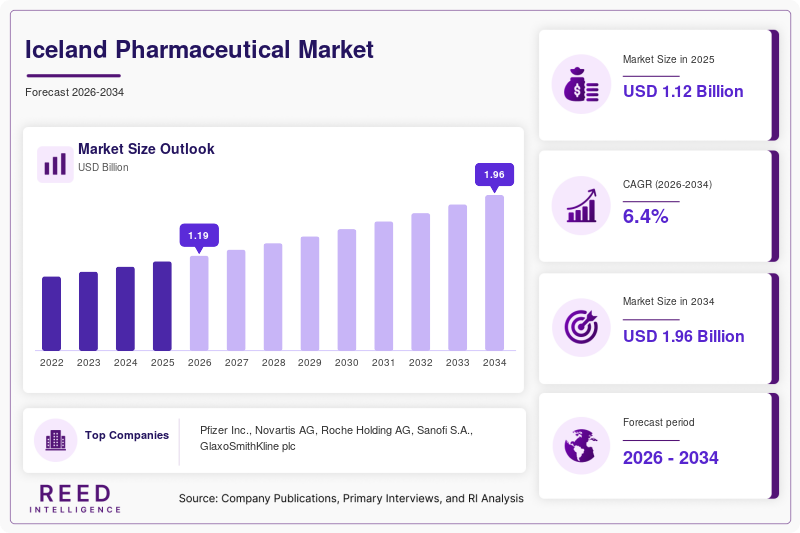
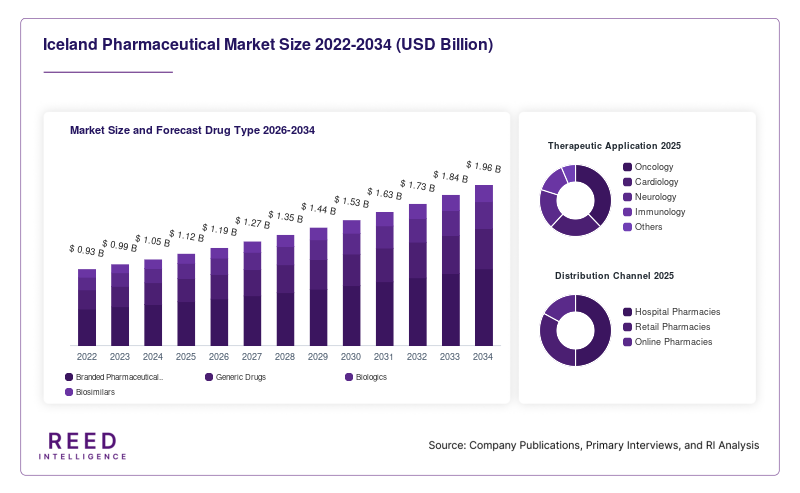
The Iceland Pharmaceutical Market size was valued at approximately USD 1.12 billion in 2026 and is projected to reach USD 1.84 billion by 2034, expanding at a CAGR of 6.4% during the forecast period (2026–2034). The market reflects steady growth driven by evolving healthcare needs, increasing demand for advanced therapeutics, and a robust regulatory environment that supports innovation. Iceland’s healthcare system, characterized by universal coverage and strong public funding, provides a stable foundation for pharmaceutical consumption and distribution.
One global factor contributing to market expansion is the rising prevalence of chronic diseases such as cardiovascular disorders, diabetes, and respiratory illnesses. This trend has led to sustained demand for both branded and generic medications across developed healthcare systems. In Iceland, this demand is further supported by a well-organized healthcare infrastructure and increasing adoption of personalized medicine approaches. Additionally, ongoing advancements in biotechnology and digital health integration have facilitated improved drug development pipelines and enhanced patient outcomes.
Key Highlights
- Europe dominated the market with a 29.8% share in 2025.
- Asia Pacific is expected to grow at the fastest CAGR of 8.6% during 2026–2034.
- By drug type, branded pharmaceuticals accounted for the largest share of 57.3%, while biologics are projected to grow at a CAGR of 9.2%.
- By therapeutic application, oncology led with a 34.6% share, whereas immunology is expected to expand at a CAGR of 8.9%.
- Iceland remained the dominant country, with market values of USD 980 million in 2024 and USD 1.05 billion in 2025.
Market Trends
Rising adoption of biologics and biosimilars
The Iceland Pharmaceutical Market is experiencing a noticeable shift toward biologics and biosimilars, reflecting broader global pharmaceutical trends. Biologic drugs, derived from living organisms, are increasingly used in the treatment of complex diseases such as cancer, autoimmune disorders, and rare genetic conditions. Their targeted mechanisms offer improved efficacy and reduced side effects compared to traditional small-molecule drugs. Iceland’s healthcare system supports the adoption of these therapies through reimbursement policies and centralized procurement systems. Biosimilars are also gaining traction as cost-effective alternatives to branded biologics, helping healthcare providers manage budget constraints while maintaining treatment quality. The growing availability of biosimilars is expected to increase competition, reduce drug costs, and improve patient access to advanced therapies over the forecast period.
Integration of digital health and e-pharmacy services
Digital transformation is reshaping pharmaceutical distribution and patient engagement across Iceland. The increasing use of e-prescriptions, telemedicine, and online pharmacy platforms has enhanced accessibility and efficiency within the healthcare ecosystem. Patients are now able to access medications and consultations remotely, reducing dependency on physical infrastructure. This trend gained momentum during recent global health disruptions and continues to evolve with technological advancements. Pharmaceutical companies are also leveraging data analytics and digital tools to optimize supply chains and improve patient adherence. The integration of digital health solutions is expected to streamline operations, reduce costs, and enhance overall healthcare delivery, making it a significant trend influencing the market.
Market Drivers
Increasing prevalence of chronic diseases and aging population
The growing burden of chronic diseases is a key factor driving the Iceland Pharmaceutical Market. Conditions such as cardiovascular diseases, diabetes, and neurological disorders are becoming more prevalent due to lifestyle changes and aging demographics. Iceland has a steadily increasing elderly population, which requires continuous medical care and long-term medication. This demographic shift is contributing to higher pharmaceutical consumption, particularly in therapeutic areas such as oncology and cardiology. The healthcare system’s emphasis on early diagnosis and preventive care further supports the demand for pharmaceuticals. Additionally, advancements in diagnostic technologies are enabling earlier detection of diseases, leading to increased treatment rates and sustained market growth.
Strong healthcare infrastructure and government support
Iceland’s well-established healthcare infrastructure plays a crucial role in supporting pharmaceutical market growth. The country operates a publicly funded healthcare system that ensures access to essential medicines for its population. Government initiatives aimed at improving healthcare quality and expanding treatment coverage have led to increased pharmaceutical expenditure. Regulatory frameworks in Iceland are aligned with European standards, ensuring high-quality drug approval and monitoring processes. This environment encourages pharmaceutical companies to introduce innovative products and expand their presence in the market. Moreover, public-private partnerships and investments in healthcare infrastructure continue to strengthen the overall pharmaceutical ecosystem, driving consistent market expansion.
Market Restraint
High cost of advanced therapies and limited market size
Despite steady growth, the Iceland Pharmaceutical Market faces challenges related to the high cost of advanced therapies and its relatively small population base. Biologic drugs and specialized treatments often come with significant price tags, placing pressure on healthcare budgets and reimbursement systems. While the government provides substantial support, cost containment remains a critical concern. The limited population size also restricts economies of scale, making it less attractive for some pharmaceutical companies to invest heavily in the market. This can result in delayed access to certain innovative therapies compared to larger markets. Additionally, pricing regulations and reimbursement negotiations can extend the time required for new drug approvals, impacting market dynamics and slowing the adoption of cutting-edge treatments.
Market Opportunities
Expansion of personalized medicine and precision therapeutics
The increasing focus on personalized medicine presents a promising opportunity for the Iceland Pharmaceutical Market. Advances in genomics and biotechnology are enabling the development of therapies tailored to individual patient profiles. This approach improves treatment effectiveness and reduces adverse effects, making it particularly valuable for complex diseases such as cancer and rare genetic disorders. Iceland’s strong healthcare data infrastructure and research capabilities support the adoption of precision medicine. Pharmaceutical companies are investing in targeted therapies and companion diagnostics to capitalize on this trend. As awareness and accessibility increase, personalized medicine is expected to become a key growth driver, offering new revenue streams and improving patient outcomes.
Growing investment in research and development collaborations
Collaborative research initiatives between local institutions and international pharmaceutical companies are creating new growth avenues in the market. Iceland’s reputation for high-quality healthcare data and research capabilities makes it an attractive location for clinical trials and drug development projects. Partnerships focused on innovation, data sharing, and technology transfer are helping accelerate the development of new therapies. These collaborations also enhance the country’s ability to adopt advanced treatment options more quickly. Increased investment in research and development is expected to strengthen the pharmaceutical pipeline and improve the availability of innovative drugs, contributing to long-term market growth.
Segmental Analysis
By Drug Type
Branded pharmaceuticals dominated the Iceland Pharmaceutical Market in 2024, accounting for approximately 57.3% of the total market share. These drugs benefit from strong brand recognition, proven efficacy, and extensive clinical research backing. Healthcare providers often prefer branded medications for critical conditions due to their established safety profiles. Additionally, pharmaceutical companies invest heavily in marketing and physician engagement to maintain their market position. The presence of patented drugs also limits competition, allowing branded pharmaceuticals to command higher prices. This segment continues to play a crucial role in driving overall market revenue.
Biologics are emerging as the fastest-growing subsegment, expected to expand at a CAGR of 9.2% during the forecast period. Their growth is driven by increasing demand for targeted therapies and advancements in biotechnology. Biologics offer improved treatment outcomes for complex diseases, making them a preferred choice among healthcare providers. Continuous innovation and the introduction of biosimilars are further supporting this segment’s expansion.
By Therapeutic Application
Oncology represented the largest share in 2024, accounting for 34.6% of the market. The high prevalence of cancer and increasing awareness about early diagnosis contribute to the dominance of this segment. Pharmaceutical companies are actively developing new cancer therapies, including immunotherapies and targeted treatments. Government support for cancer treatment programs also plays a significant role in sustaining demand.
Immunology is projected to be the fastest-growing segment, with a CAGR of 8.9%. The rising incidence of autoimmune diseases and advancements in biologic therapies are key growth drivers. Increased research activities and the development of innovative treatment options are expected to enhance this segment’s growth trajectory.
By Distribution Channel
Hospital pharmacies dominated the market in 2024, holding a share of 48.7%. These facilities provide access to a wide range of medications, particularly for inpatient care and specialized treatments. Strong integration with healthcare systems ensures efficient drug distribution and patient management.
Online pharmacies are expected to grow at the fastest CAGR of 10.1%. The increasing adoption of digital platforms and e-commerce solutions is driving this growth. Convenience, competitive pricing, and improved accessibility are key factors contributing to the expansion of online pharmaceutical sales.
Regional Analysis
North America
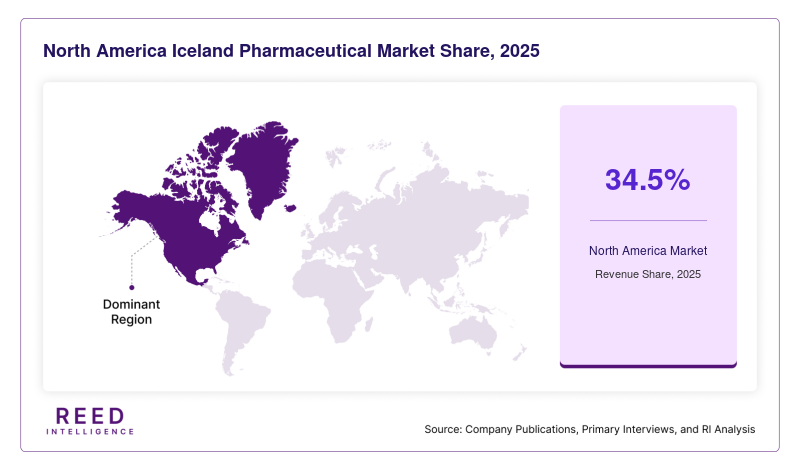
North America accounted for a significant share of the global pharmaceutical market in 2025, holding approximately 34.5%, with a projected CAGR of 6.8% through 2034. The region’s dominance is attributed to its advanced healthcare infrastructure, high healthcare spending, and strong presence of major pharmaceutical companies. Continuous innovation and robust research activities further support market growth.
The United States remains the leading country in this region, driven by extensive R&D investments and rapid adoption of advanced therapies. A unique growth factor is the strong ecosystem of biotechnology startups and academic collaborations, which accelerates drug discovery and commercialization.
Europe
Europe held a 29.8% share of the pharmaceutical market in 2025 and is expected to grow at a CAGR of 6.2% during the forecast period. The region benefits from well-established healthcare systems and supportive regulatory frameworks that ensure consistent access to medications.
Germany stands out as the dominant country in Europe, supported by its strong pharmaceutical manufacturing base. A key growth factor is the emphasis on cost-effective healthcare solutions, including widespread adoption of generic drugs and biosimilars.
Asia Pacific
Asia Pacific is projected to witness the fastest growth, with a CAGR of 8.6% from 2026 to 2034, despite holding a smaller share of 24.1% in 2025. Rapid urbanization, increasing healthcare awareness, and rising disposable incomes contribute to this expansion.
China leads the region due to its large population and expanding healthcare infrastructure. A unique growth factor is the government’s focus on domestic pharmaceutical production and innovation, which enhances market competitiveness.
Middle East & Africa
The Middle East & Africa region accounted for 6.3% of the market in 2025 and is expected to grow at a CAGR of 5.7%. Growth is driven by improving healthcare infrastructure and increasing investments in the pharmaceutical sector.
Saudi Arabia is the dominant country, supported by government initiatives to expand healthcare access. A key growth factor is the development of local pharmaceutical manufacturing capabilities, reducing dependency on imports.
Latin America
Latin America held a 5.3% share in 2025 and is projected to grow at a CAGR of 5.9% during the forecast period. Economic development and expanding healthcare coverage are key contributors to market growth.
Brazil leads the region, driven by its large population and growing healthcare investments. A unique growth factor is the increasing focus on public healthcare programs, which enhance access to essential medicines.
Competitive Landscape
The Iceland Pharmaceutical Market is moderately competitive, with a mix of global and regional players operating in the space. Companies focus on expanding their product portfolios, investing in research and development, and forming strategic partnerships to strengthen their market presence. The competitive environment is shaped by regulatory compliance, pricing strategies, and innovation capabilities.
A leading player in the market is Pfizer, which continues to maintain a strong presence through its diverse product offerings and ongoing research initiatives. Recent developments include the expansion of its biologics portfolio and increased investment in personalized medicine. Other companies are also focusing on biosimilars and digital health solutions to gain a competitive edge. Strategic collaborations and mergers are common strategies used to enhance market positioning and improve access to advanced therapies.
Key Players
- Pfizer Inc.
- Novartis AG
- Roche Holding AG
- Sanofi S.A.
- GlaxoSmithKline plc
- AstraZeneca plc
- Johnson & Johnson
- Merck & Co., Inc.
- Bayer AG
- AbbVie Inc.
- Eli Lilly and Company
- Amgen Inc.
- Takeda Pharmaceutical Company Limited
- Teva Pharmaceutical Industries Ltd.
- Bristol-Myers Squibb Company
Recent Developments
- The market has witnessed several strategic developments aimed at strengthening pharmaceutical capabilities and expanding treatment options.
- A major pharmaceutical company recently launched a new biologic therapy targeting autoimmune diseases, enhancing treatment availability in Iceland. Another development includes a partnership between a global pharmaceutical firm and a local research institute to conduct clinical trials focused on personalized medicine.
- Additionally, a leading company expanded its digital health platform, enabling better patient engagement and remote access to medications. These developments highlight the increasing focus on innovation, collaboration, and digital transformation within the Iceland Pharmaceutical Market.
Iceland Pharmaceutical Market Segments
Drug Type
- Branded Pharmaceuticals
- Generic Drugs
- Biologics
- Biosimilars
Therapeutic Application
- Oncology
- Cardiology
- Neurology
- Immunology
- Others
Distribution Channel
- Hospital Pharmacies
- Retail Pharmacies
- Online Pharmacies
By Region
- North America
- Europe
- APAC
- Middle East and Africa
- LATAM