Iloprost Market Size, Share & Demand Report By Formulation Type (Inhalation Solutions, Intravenous Formulations, Oral Formulations), By Application (Pulmonary Arterial Hypertension, Peripheral Vascular Disease, Other Vascular Disorders), By End-Use (Hospitals, Specialty Clinics, Homecare Settings), By Region & Segment Forecasts, 2026–2034
USD 3950
Market Overview
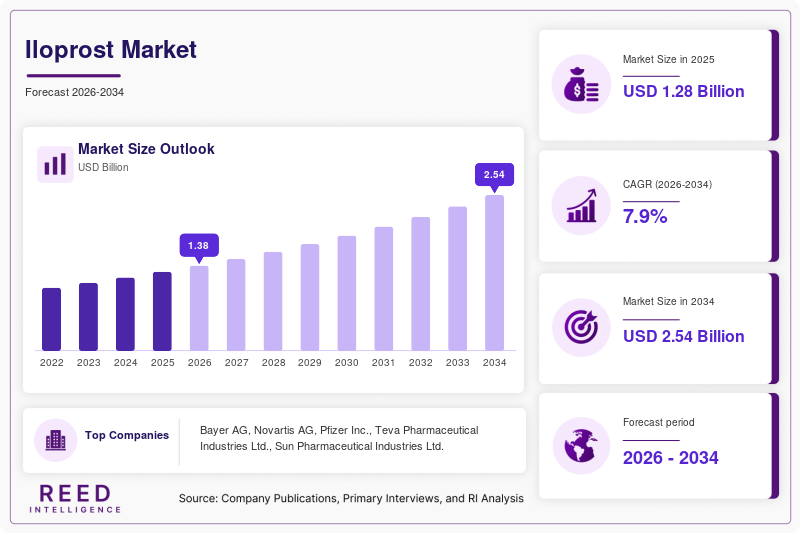
The global Iloprost Market was valued at approximately USD 1.28 billion in 2026 and is projected to reach USD 2.36 billion by 2034, expanding at a compound annual growth rate (CAGR) of 7.9% during 2026–2034. The market is driven by increasing demand for targeted therapies in the treatment of pulmonary arterial hypertension (PAH) and peripheral vascular disorders. Iloprost, a synthetic analogue of prostacyclin, plays a key role in vasodilation and platelet aggregation inhibition, making it a preferred therapeutic option in specialized clinical settings.
A major global factor supporting market growth is the rising prevalence of cardiovascular and pulmonary diseases linked to aging populations and lifestyle changes. Healthcare systems are increasingly prioritizing early diagnosis and advanced pharmacological interventions, leading to greater adoption of inhaled and intravenous iloprost formulations. Additionally, ongoing clinical research aimed at expanding indications and improving drug delivery mechanisms has contributed to sustained demand across developed and emerging economies.
Key Highlights
- North America dominated the market with a 36.4% share in 2025.
- Asia Pacific is expected to grow at the fastest CAGR of 9.8% during 2026–2034.
- By formulation type, inhalation solutions accounted for the largest share of 42.7%.
- while oral formulations are projected to grow at a CAGR of 10.6%.
- By application, pulmonary arterial hypertension led with a 48.9% share, whereas peripheral vascular disease is expected to expand at a CAGR of 8.9%.
- The United States remained the dominant country, with market values of USD 520 million in 2024 and USD 565 million in 2025.
Market Trends
Increasing Adoption of Inhaled Drug Delivery Systems
The Iloprost Market is witnessing a notable shift toward inhalation-based drug delivery systems due to their targeted therapeutic efficiency and reduced systemic side effects. Inhaled iloprost enables direct delivery to pulmonary arteries, improving drug bioavailability and enhancing patient outcomes in pulmonary arterial hypertension treatment. Healthcare providers are increasingly recommending inhalation therapies as they offer convenience and better compliance compared to intravenous alternatives. Additionally, advancements in nebulizer technologies and portable inhalation devices are making these treatments more accessible for home-based care. Pharmaceutical companies are investing in formulation optimization to improve stability and dosing accuracy, which further supports this trend. As patient preference leans toward non-invasive treatment options, inhaled iloprost is expected to maintain its dominant position.
Expansion of Therapeutic Applications Beyond PAH
Another key trend shaping the Iloprost Market is the growing exploration of its therapeutic potential beyond pulmonary arterial hypertension. Clinical studies are investigating iloprost’s efficacy in treating conditions such as systemic sclerosis-related digital ulcers and critical limb ischemia. This diversification is expanding the drug’s application scope and increasing its market penetration across various medical specialties. Pharmaceutical companies are focusing on clinical trials to validate these additional uses, which may lead to regulatory approvals in new indications. As a result, healthcare providers are becoming more aware of iloprost’s versatility, contributing to increased prescription rates. This trend is expected to drive long-term market growth by broadening the patient base and creating new revenue streams.
Market Drivers
Rising Prevalence of Pulmonary Arterial Hypertension
The increasing incidence of pulmonary arterial hypertension is a primary driver of the Iloprost Market. PAH is a progressive condition that requires long-term management, and iloprost is widely recognized for its effectiveness in improving exercise capacity and reducing symptoms. With growing awareness and improved diagnostic capabilities, more patients are being identified at earlier stages, leading to higher treatment adoption rates. Healthcare systems in both developed and emerging regions are emphasizing early intervention, which supports the demand for iloprost-based therapies. Additionally, the availability of reimbursement programs in several countries has made treatment more accessible, further driving market growth.
Advancements in Drug Formulation and Delivery Technologies
Technological advancements in drug formulation and delivery systems are significantly contributing to the growth of the Iloprost Market. Innovations such as improved inhalation devices, sustained-release formulations, and combination therapies are enhancing treatment efficacy and patient compliance. Pharmaceutical companies are focusing on developing formulations that offer better stability, longer shelf life, and reduced dosing frequency. These advancements not only improve patient outcomes but also increase the commercial viability of iloprost products. As healthcare providers seek more efficient treatment options, the adoption of advanced iloprost formulations is expected to rise, driving overall market expansion.
Market Restraint
High Treatment Costs and Limited Accessibility
One of the major restraints affecting the Iloprost Market is the high cost associated with treatment and limited accessibility in low- and middle-income countries. Iloprost therapy, particularly inhalation-based treatment, often requires specialized devices and frequent dosing, which can increase overall treatment expenses. This financial burden can limit patient adherence and restrict market penetration in regions with inadequate healthcare infrastructure. Additionally, the availability of alternative therapies, including generic vasodilators, may reduce the preference for iloprost in cost-sensitive markets.
The impact of this restraint is particularly evident in emerging economies where healthcare budgets are constrained. Patients may opt for less expensive treatment options, even if they are less effective, due to affordability concerns. Furthermore, limited reimbursement policies and lack of insurance coverage in certain regions further exacerbate the issue. Pharmaceutical companies are attempting to address this challenge by introducing cost-effective formulations and expanding distribution networks; however, the affordability barrier remains a significant hurdle. Unless pricing strategies and healthcare access improve, this restraint is likely to moderate the overall growth trajectory of the market.
Market Opportunities
Growth Potential in Emerging Markets
Emerging markets present a significant growth opportunity for the Iloprost Market due to improving healthcare infrastructure and rising awareness of advanced treatment options. Countries in Asia Pacific, Latin America, and the Middle East are investing in healthcare modernization, which is increasing access to specialized therapies. As diagnostic capabilities improve, more patients with pulmonary and vascular conditions are being identified and treated. Pharmaceutical companies are expanding their presence in these regions through partnerships, local manufacturing, and distribution agreements. This expansion is expected to drive market growth by tapping into previously underserved populations.
Development of Oral and Combination Therapies
The development of oral iloprost formulations and combination therapies offers a promising opportunity for market expansion. Oral formulations can significantly improve patient convenience and adherence by eliminating the need for specialized delivery devices. Additionally, combining iloprost with other therapeutic agents may enhance treatment efficacy and reduce disease progression. Ongoing research and clinical trials are focused on optimizing these formulations and evaluating their safety and effectiveness. As regulatory approvals are obtained, these innovations are expected to create new growth avenues and strengthen the competitive landscape of the Iloprost Market.
Segmental Analysis
By Formulation Type
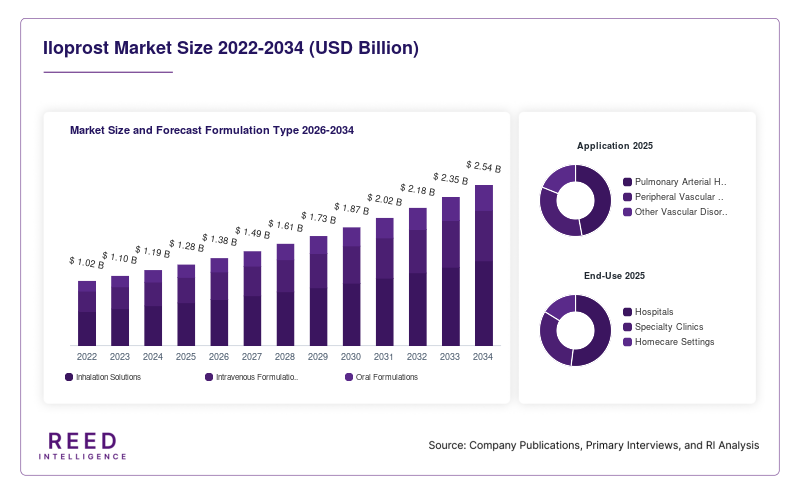
Inhalation solutions dominated the Iloprost Market with a share of approximately 42.7% in 2024. This dominance is attributed to their targeted delivery mechanism, which enhances therapeutic efficacy in pulmonary arterial hypertension. Inhalation formulations provide rapid onset of action and reduce systemic side effects, making them a preferred choice among healthcare providers. The availability of advanced nebulizer devices further supports the adoption of inhaled iloprost. Additionally, patient preference for non-invasive treatment options contributes to the strong market position of this segment. Pharmaceutical companies are continuously improving formulation stability and device compatibility, which further strengthens this segment’s dominance.
Oral formulations are expected to be the fastest-growing subsegment, with a CAGR of 10.6% during the forecast period. The growth is driven by the increasing demand for convenient and patient-friendly treatment options. Oral iloprost eliminates the need for specialized delivery devices, making it more accessible for a broader patient population. Ongoing research and development efforts are focused on improving bioavailability and reducing side effects associated with oral formulations. As these advancements reach commercialization, the adoption of oral iloprost is expected to increase significantly.
By Application
Pulmonary arterial hypertension accounted for the largest share of approximately 48.9% in 2024. This segment’s dominance is driven by the high prevalence of PAH and the established efficacy of iloprost in its treatment. Healthcare providers widely prescribe iloprost for managing symptoms and improving patient quality of life. The availability of clinical guidelines supporting its use further reinforces its position in this segment. Additionally, increasing awareness and early diagnosis of PAH contribute to the sustained demand for iloprost therapies.
Peripheral vascular disease is projected to be the fastest-growing application segment, with a CAGR of 8.9% during the forecast period. The growth is attributed to the rising incidence of vascular disorders and increasing recognition of iloprost’s therapeutic benefits in these conditions. Clinical studies demonstrating its effectiveness in improving blood flow and reducing complications are encouraging its adoption. As awareness of these benefits increases, the demand for iloprost in treating peripheral vascular diseases is expected to grow steadily.
By End-Use
Hospitals dominated the end-use segment with a share of approximately 51.2% in 2024. This dominance is due to the availability of specialized medical equipment and trained healthcare professionals required for administering iloprost therapy. Hospitals also serve as primary centers for diagnosing and treating complex conditions such as pulmonary arterial hypertension. The presence of multidisciplinary teams ensures comprehensive patient care, which supports the high adoption of iloprost in this setting.
Homecare settings are expected to be the fastest-growing subsegment, with a CAGR of 9.4% during the forecast period. The growth is driven by increasing patient preference for home-based treatment and advancements in portable drug delivery devices. Homecare offers convenience and reduces the burden on healthcare facilities, making it an attractive option for long-term therapy. As technology continues to improve, enabling safe and effective home administration of iloprost, this segment is expected to witness significant growth.
Regional Analysis
North America
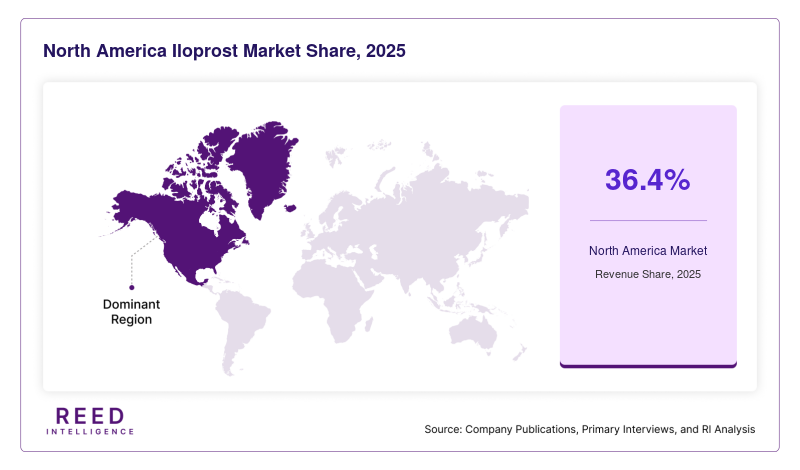
North America held a dominant share of approximately 36.4% in 2025 and is expected to maintain steady growth with a CAGR of 7.2% during the forecast period. The region’s strong healthcare infrastructure, high awareness levels, and availability of advanced treatment options contribute to its leading position. Additionally, favorable reimbursement policies and the presence of major pharmaceutical companies support market expansion.
The United States is the dominant country in this region, driven by a high prevalence of pulmonary arterial hypertension and well-established healthcare systems. A unique growth factor is the strong focus on research and development, with numerous clinical trials aimed at expanding iloprost applications. This innovation-driven environment continues to support market growth.
Europe
Europe accounted for a significant share of around 28.7% in 2025 and is projected to grow at a CAGR of 7.5% during 2026–2034. The region benefits from robust healthcare policies and increasing adoption of advanced therapies. Government initiatives to improve patient access to specialized treatments also play a key role in market development.
Germany is the leading country in Europe, supported by a well-developed pharmaceutical industry and strong regulatory framework. A unique growth factor is the emphasis on early diagnosis and preventive care, which increases the demand for iloprost therapies. This proactive approach contributes to sustained market growth.
Asia Pacific
Asia Pacific is expected to be the fastest-growing region, with a CAGR of 9.8% during the forecast period and a 2025 share of approximately 21.3%. Rapid economic development, increasing healthcare expenditure, and growing awareness of advanced treatments are key factors driving growth in this region.
China dominates the Asia Pacific market due to its large patient population and expanding healthcare infrastructure. A unique growth factor is the government’s focus on improving access to essential medicines through healthcare reforms. This initiative is expected to boost the adoption of iloprost therapies.
Middle East & Africa
The Middle East & Africa region held a smaller share of around 7.6% in 2025 but is expected to grow at a CAGR of 6.8%. The market is gradually expanding due to improvements in healthcare infrastructure and increasing awareness of pulmonary diseases.
Saudi Arabia is the leading country in this region, driven by significant investments in healthcare development. A unique growth factor is the government’s focus on expanding specialized medical facilities, which enhances access to advanced treatments like iloprost.
Latin America
Latin America accounted for approximately 6.0% of the market share in 2025 and is projected to grow at a CAGR of 7.1% during the forecast period. The region’s growth is supported by increasing healthcare investments and rising awareness of vascular diseases.
Brazil is the dominant country in Latin America, supported by a growing pharmaceutical sector and expanding healthcare services. A unique growth factor is the increasing adoption of public healthcare programs, which improve access to essential medications, including iloprost.
Competitive Landscape
The Iloprost Market is moderately competitive, with several established pharmaceutical companies focusing on innovation and strategic partnerships. Key players are investing in research and development to expand therapeutic indications and improve drug delivery systems. The market leader is Bayer AG, which has a strong presence due to its well-established product portfolio and global distribution network.
Other prominent companies are actively engaged in developing advanced formulations and exploring new applications for iloprost. Strategic collaborations, mergers, and acquisitions are common as companies aim to strengthen their market position. A recent development includes the introduction of improved inhalation devices designed to enhance patient compliance and treatment outcomes. These innovations are expected to intensify competition and drive market growth. Overall, the competitive landscape is characterized by continuous innovation and efforts to expand market reach.
Key Players List
- Bayer AG
- Novartis AG
- Pfizer Inc.
- Teva Pharmaceutical Industries Ltd.
- Sun Pharmaceutical Industries Ltd.
- Dr. Reddy’s Laboratories Ltd.
- Cipla Ltd.
- Mylan N.V.
- Glenmark Pharmaceuticals Ltd.
- Lupin Limited
- Zydus Lifesciences Ltd.
- Hikma Pharmaceuticals PLC
- Torrent Pharmaceuticals Ltd.
- Aurobindo Pharma Ltd.
- Alkem Laboratories Ltd.
Recent Developments
- In 2025, Bayer AG launched an upgraded inhalation delivery system for iloprost to improve dosing efficiency and patient adherence.
- In 2024, a leading pharmaceutical company initiated a clinical trial to evaluate oral iloprost formulations for expanded therapeutic applications.
- In 2025, a strategic partnership was formed between two pharmaceutical firms to enhance distribution networks in emerging markets, increasing global accessibility of iloprost therapies.
Iloprost Market Segments
Formulation Type
- Inhalation Solutions
- Intravenous Formulations
- Oral Formulations
Application
- Pulmonary Arterial Hypertension
- Peripheral Vascular Disease
- Other Vascular Disorders
End-Use
- Hospitals
- Specialty Clinics
- Homecare Settings
By Region
- North America
- Europe
- APAC
- Middle East and Africa
- LATAM