Indoor Ski Slope Market Size, Share & Demand Report By Facility Type (Full-Scale Indoor Ski Resorts, Snow Parks), By Activity Type (Recreational Skiing, Snowboarding), By Revenue Source (Ticket Sales & Passes, Equipment Rentals), By Visitor Category (Families, Young Adults, Professional Athletes, Tourists), By Booking Channel (Direct Booking, Travel Agencies), By Region & Segment Forecasts, 2026–2034
USD 3950
Market Overview
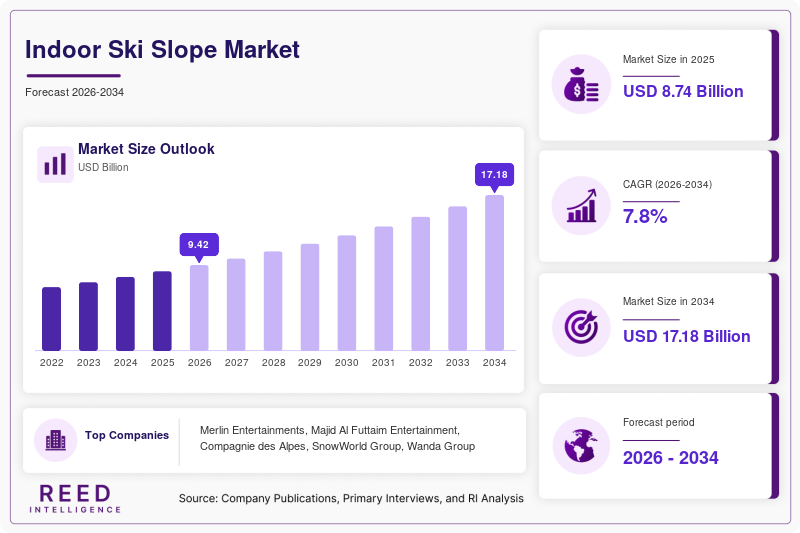
The Indoor Ski Slope Market size was valued at USD 8.74 billion in 2026 and is projected to reach USD 15.92 billion by 2034, expanding at a CAGR of 7.8% during 2026–2034. The global Indoor Ski Slope Market continues to gain momentum as urban consumers increasingly seek year-round recreational experiences independent of seasonal weather conditions. Indoor ski facilities have evolved from niche entertainment venues into multi-attraction leisure destinations that combine skiing, snowboarding, hospitality, retail, training academies, and family entertainment services under a single roof.
A major global factor supporting market growth has been the rapid expansion of experiential entertainment spending. Consumers across developed and emerging economies are allocating larger portions of discretionary income toward immersive leisure activities. Indoor ski slopes offer climate-controlled snow experiences, professional instruction, and predictable operating conditions, making them attractive alternatives to traditional mountain resorts. Furthermore, advancements in artificial snow generation technologies, energy-efficient cooling systems, and digital facility management platforms have improved operational efficiency and visitor satisfaction.
Key Highlights
- Europe dominated the market with a 37.6% share in 2025.
- Asia Pacific is expected to be the fastest-growing region, registering a CAGR of 9.4% during 2026–2034.
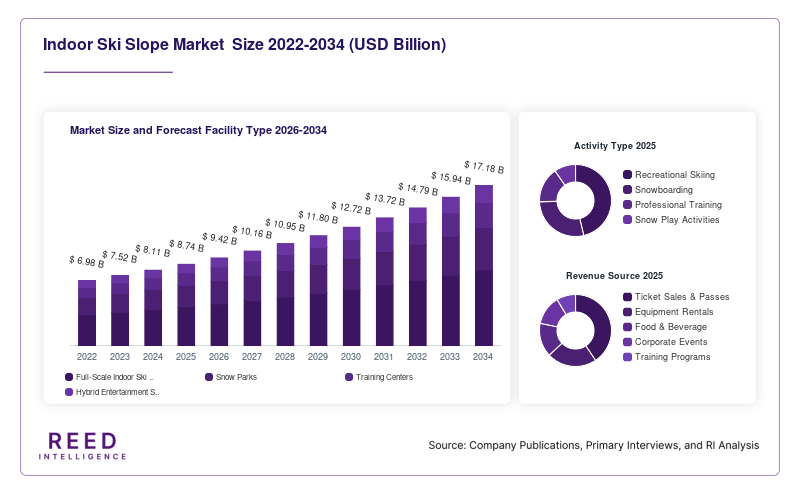
- By Facility Type, Full-Scale Indoor Ski Resorts held the leading 44.8% market share in 2025.
- By Facility Type, Hybrid Entertainment Ski Centers will witness the fastest CAGR of 10.1% through 2034.
- By Activity Type, Recreational Skiing & Snowboarding accounted for 52.3% market share in 2025.
- By Activity Type, Professional Training Programs are projected to grow at a 9.7% CAGR.
- By Revenue Source, Ticket Sales & Passes represented 48.5% share in 2025.
- By Revenue Source, Corporate Events & Experiences are forecast to expand at a 10.4% CAGR.
- Germany remained the dominant country market, valued at USD 846 million in 2024 and USD 901 million in 2025.
Market Trends
Integration of Indoor Ski Slopes with Mixed-Use Entertainment Complexes
A significant trend shaping the Indoor Ski Slope Market is the incorporation of ski facilities within integrated entertainment destinations. Developers are combining indoor snow parks with retail centers, hotels, restaurants, gaming zones, and wellness facilities. This model increases visitor dwell time, diversifies revenue streams, and improves facility profitability. Integrated entertainment projects are particularly attractive in metropolitan areas where consumers prefer comprehensive leisure experiences in a single location.
The trend is expected to accelerate as urban real estate developers seek distinctive attractions capable of increasing foot traffic and destination appeal. Indoor ski operators are increasingly collaborating with hospitality brands and entertainment providers to create broader recreational ecosystems.
Adoption of Smart Snow Management and Digital Experiences
Digital transformation is becoming a key operational trend across indoor ski facilities. Operators are deploying smart climate-control systems, AI-based snow monitoring tools, predictive maintenance platforms, and automated visitor management solutions. These technologies optimize energy consumption while maintaining consistent snow quality.
In addition, virtual coaching systems, performance-tracking applications, digital ticketing platforms, and immersive training simulators are enhancing customer engagement. The combination of physical and digital experiences is helping operators attract both recreational users and professional athletes seeking performance-focused environments.
Market Drivers
Growing Demand for Year-Round Winter Sports Experiences
Increasing consumer interest in winter sports is a major driver supporting market expansion. Traditional ski destinations depend heavily on seasonal weather patterns, limiting participation opportunities. Indoor ski facilities eliminate seasonal constraints by providing controlled environments throughout the year.
Urban populations with limited access to mountain resorts are increasingly utilizing indoor slopes for recreation, training, and skill development. The convenience, accessibility, and predictability offered by indoor venues continue to attract a wider demographic base, including families, students, tourists, and corporate groups.
Expansion of Urban Leisure Infrastructure Investments
Large-scale investments in recreational infrastructure are significantly contributing to market growth. Governments, tourism authorities, and private developers are investing in entertainment projects designed to stimulate economic activity and attract visitors.
Indoor ski facilities are increasingly viewed as anchor attractions capable of enhancing commercial developments and tourism destinations. Their ability to generate year-round foot traffic makes them attractive investments within broader urban development strategies.
Market Restraint
High Capital and Operating Costs
The primary restraint affecting the Indoor Ski Slope Market is the substantial capital expenditure required for facility development and maintenance. Construction costs associated with snow-generation systems, refrigeration equipment, climate-control technologies, and specialized infrastructure remain significant.
Additionally, continuous energy consumption and maintenance requirements increase operational expenses. These cost challenges can limit market entry and affect profitability, particularly in regions with high electricity prices.
Market Opportunities
Development of Indoor Winter Sports Academies
Growing interest in competitive skiing and snowboarding presents opportunities for specialized training centers. Indoor ski facilities are increasingly partnering with sports organizations, schools, and professional coaches to establish year-round training academies.
These programs provide consistent practice environments and structured coaching opportunities, creating additional revenue streams while strengthening facility utilization rates.
Expansion Across Emerging Tourism Markets
Emerging economies are witnessing rising disposable incomes and increasing demand for premium recreational experiences. Indoor ski attractions offer tourism developers a unique product capable of differentiating destinations and attracting domestic as well as international visitors.
Countries investing heavily in tourism infrastructure and entertainment diversification are expected to create favorable conditions for future market expansion.
Segmental Analysis
By Facility Type
Full-Scale Indoor Ski Resorts
Full-scale indoor ski resorts dominated the market and accounted for 44.8% of revenue in 2025. These facilities provide extensive skiing environments, multiple slopes, hospitality services, equipment rentals, and entertainment offerings. Their comprehensive experience attracted both recreational visitors and sports enthusiasts.
Hybrid Entertainment Ski Centers
Hybrid entertainment ski centers are projected to grow at a 10.1% CAGR through 2034. Their growth will be driven by the integration of snow attractions with gaming, dining, retail, and event experiences. This diversified model will enhance visitor engagement and improve revenue generation opportunities.
By Activity Type
Recreational Skiing & Snowboarding
Recreational skiing and snowboarding represented 52.3% market share in 2025. The segment benefited from broad consumer participation and increasing demand for family-oriented leisure activities.
Professional Training Programs
Professional training programs will register a 9.7% CAGR during the forecast period. Growth will be supported by increasing enrollment in structured sports education initiatives and the expansion of athlete development facilities.
By Revenue Source
Ticket Sales & Passes
Ticket sales and passes accounted for 48.5% of market revenue in 2025. These offerings remained the primary source of income due to consistent visitor attendance and recurring membership programs.
Corporate Events & Experiences
Corporate events and experiences are anticipated to expand at a 10.4% CAGR. Organizations will increasingly utilize indoor ski facilities for team-building activities, leadership workshops, and employee engagement programs.
By Visitor Category
Families
Families held the largest market share of 39.2% in 2025. Indoor ski facilities provide safe, accessible, and weather-independent recreational experiences suitable for all age groups.
Young Adults
Young adults are expected to record a 9.1% CAGR through 2034. Growth will be supported by social recreation trends, experiential travel preferences, and increasing participation in adventure sports activities.
By Booking Channel
Direct Booking
Direct booking channels captured 58.4% share in 2025. Facility-operated websites and mobile applications offered convenient reservation options and promotional packages.
Online Travel Platforms
Online travel platforms are forecast to grow at a 9.3% CAGR. Increased digital travel planning and bundled leisure packages will contribute to segment expansion.
Regional Analysis
North America
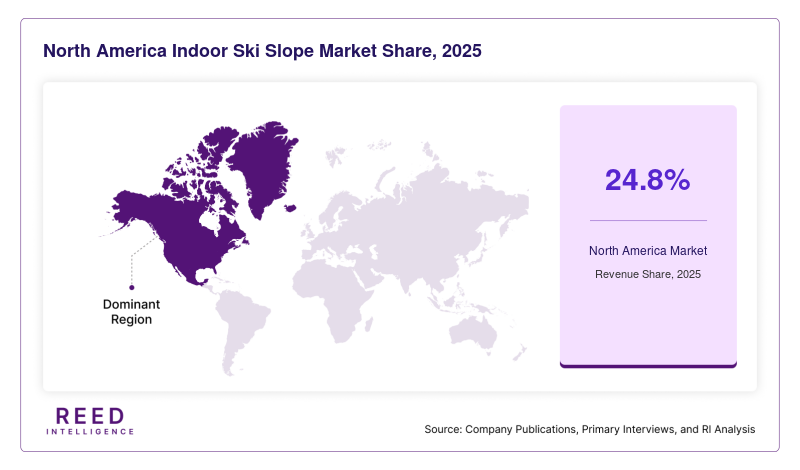
North America accounted for 24.8% of the global Indoor Ski Slope Market share in 2025. The region benefited from strong consumer spending on recreational activities and established winter sports participation rates. Market expansion will occur at a CAGR of 7.2% during 2026–2034.
The United States remained the dominant country market due to increasing investment in family entertainment centers and premium indoor recreation destinations. Developers have focused on creating multi-purpose venues that combine sports, leisure, dining, and event facilities.
Europe
Europe held the largest market share of 37.6% in 2025. The region benefited from a mature skiing culture, widespread sports participation, and established tourism infrastructure. The market will expand at a CAGR of 6.8% through 2034.
Germany emerged as the leading country due to strong demand for recreational sports facilities and consistent investments in experiential entertainment venues. Urban consumers increasingly preferred indoor skiing options that provide accessibility and year-round availability.
Asia Pacific
Asia Pacific represented 22.4% of global market revenue in 2025. The region is expected to register the fastest growth, with a projected CAGR of 9.4% between 2026 and 2034.
China dominated regional revenue generation owing to rapid urbanization and increasing investments in sports tourism infrastructure. Rising middle-class spending and expanding interest in winter sports continue to support demand for indoor snow-based attractions.
Middle East & Africa
The Middle East & Africa accounted for 8.1% market share in 2025. The region will grow at a CAGR of 8.6% during the forecast period.
The United Arab Emirates remained the dominant country due to its focus on creating landmark entertainment attractions. Indoor ski facilities complement broader tourism diversification initiatives and attract both residents and international visitors seeking unique leisure experiences.
Latin America
Latin America captured 7.1% of global revenue in 2025 and is forecast to expand at a CAGR of 7.5% through 2034.
Brazil led the regional market as developers increasingly invested in modern entertainment infrastructure targeting urban consumers. Demand for premium family recreation and destination-based experiences continues to support market development.
Competitive Landscape
The Indoor Ski Slope Market is moderately consolidated, with participants focusing on facility expansion, technology upgrades, visitor experience enhancement, and strategic partnerships. Operators compete through facility size, snow quality, integrated entertainment offerings, and customer engagement initiatives.
Merlin Entertainments maintained a leadership position through its diversified entertainment portfolio and continued investment in premium visitor experiences. The company recently announced modernization initiatives involving digital ticketing integration and energy-efficient facility upgrades across selected indoor recreation venues.
Majid Al Futtaim Entertainment continues to strengthen its position through innovative snow park concepts and tourism-focused developments.
Compagnie des Alpes leverages expertise in mountain tourism and recreational facility management to expand its indoor sports presence.
Wanda Group remains active in large-scale entertainment infrastructure projects across major urban centers.
SnowWorld Group focuses on operational excellence, sports training programs, and customer experience innovation within indoor snow facilities.
Key Players List
- Merlin Entertainments
- Majid Al Futtaim Entertainment
- Compagnie des Alpes
- SnowWorld Group
- Wanda Group
- Snowplanet
- The Snow Centre
- Chill Factore
- Ski Dubai
- Ski Egypt
- Wittenburg SnowWorld
- Snow Arena Druskininkai
- Big Snow American Dream
- Shanghai Yaoxue Snow World
- Alpincenter Hamburg-Wittenburg
Indoor Ski Slope Market Segments
Facility Type
- Full-Scale Indoor Ski Resorts
- Snow Parks
- Training Centers
- Hybrid Entertainment Ski Centers
Activity Type
- Recreational Skiing
- Snowboarding
- Professional Training
- Snow Play Activities
Revenue Source
- Ticket Sales & Passes
- Equipment Rentals
- Food & Beverage
- Corporate Events
- Training Programs
Visitor Category
- Families
- Young Adults
- Professional Athletes
- Tourists
Booking Channel
- Direct Booking
- Travel Agencies
- Online Travel Platforms
By Region
- North America
- Europe
- APAC
- Middle East and Africa
- LATAM