Industrial Liquid Tight Flexible Metal Conduit Market Size, Share Demand Report By Type (Metallic, Non-Metallic), By Material (Steel, Stainless Steel, Aluminum), By Application (Industrial Machinery, Energy & Power, Transportation, Others), By End-Use Industry (Manufacturing, Oil & Gas, Food & Beverage, Pharmaceuticals, Others), By Distribution Channel (Direct Sales, Distributors, Online) By Region & Segment Forecasts, 2025–2034
USD 3950
Market Overview
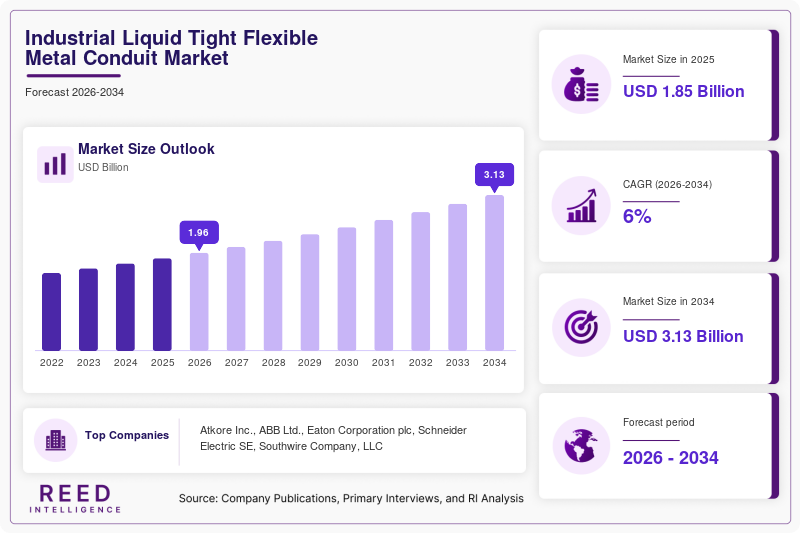
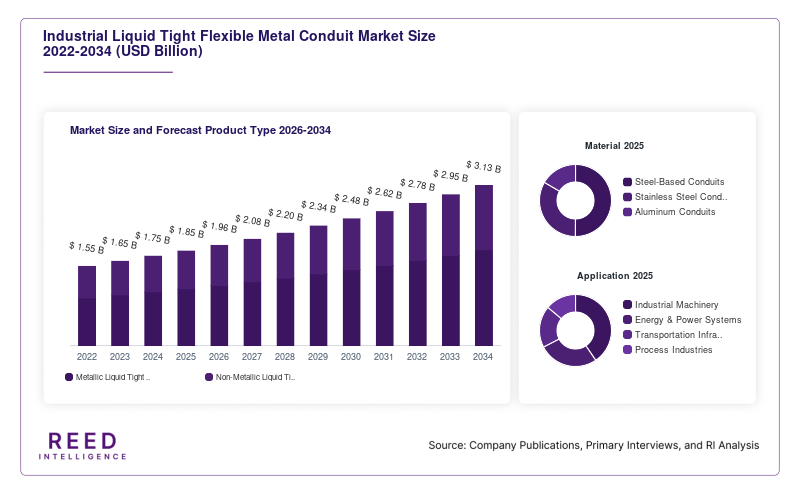
The Industrial Liquid Tight Flexible Metal Conduit Market size was valued at approximately USD 1.85 billion in 2025 and is projected to reach USD 3.12 billion by 2034, expanding at a CAGR of 6.0% during the forecast period (2025–2034). The market growth is primarily supported by the increasing need for secure and durable wiring solutions in harsh industrial environments, including manufacturing plants, oil & gas facilities, and infrastructure projects.
A key global factor contributing to the expansion of the Industrial Liquid Tight Flexible Metal Conduit Market is the rising emphasis on industrial safety compliance and equipment protection standards. Industries are increasingly adopting liquid-tight conduits to protect electrical systems from moisture, dust, and chemical exposure, ensuring operational continuity and minimizing downtime.
Key Highlights
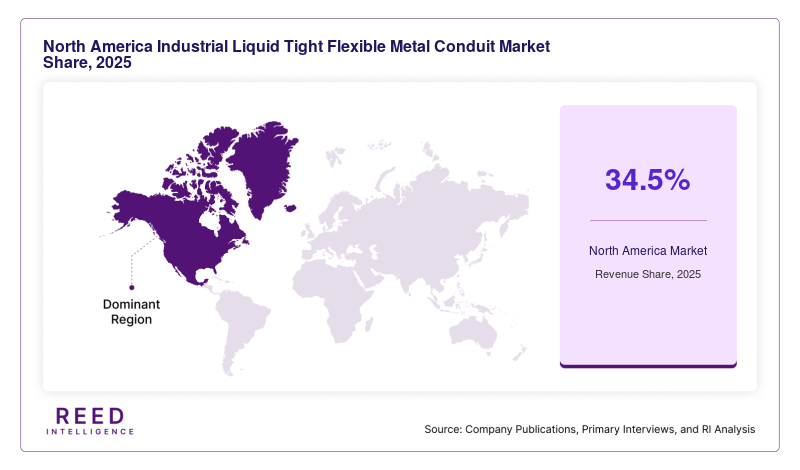
- Dominant Region: North America held approximately 34.5% market share in 2025, while Asia Pacific is projected to register the fastest CAGR of 7.2%.
- Leading Subsegments: Metallic conduits dominated the type segment with 61.3% share, while PVC-coated conduits are expected to grow fastest at a CAGR of 6.8%.
- Dominant Country: The United States market was valued at USD 510 million in 2025 and is estimated to reach USD 535 million in 2026
Market Trends
Rising Adoption of Corrosion-Resistant Conduit Materials
The Industrial Liquid Tight Flexible Metal Conduit Market is witnessing increased demand for advanced materials such as stainless steel and polymer-coated metals. These materials offer enhanced resistance to corrosion, chemicals, and extreme temperatures, making them suitable for industries like pharmaceuticals, food processing, and marine applications. Manufacturers are focusing on product innovations to extend product lifespan and reduce maintenance costs.
Integration with Smart Industrial Infrastructure
With the growth of Industry 4.0, the need for reliable and flexible electrical conduit systems is increasing. Liquid-tight conduits are being integrated into smart factories and automated production lines to ensure uninterrupted data and power transmission. Their flexibility allows easy installation in dynamic environments with robotic systems and moving equipment, supporting evolving industrial infrastructure.
Market Drivers
Expansion of Industrial Automation
The rapid adoption of automation across manufacturing, automotive, and electronics industries is a key driver for the Industrial Liquid Tight Flexible Metal Conduit Market. Automated systems require highly reliable cable protection solutions to ensure safety and operational efficiency. Liquid-tight conduits protect sensitive wiring from environmental hazards, enabling seamless operations in automated facilities.
Growing Infrastructure Development Activities
Infrastructure development, particularly in emerging economies, is boosting demand for durable electrical protection systems. Industrial projects such as power plants, transportation systems, and construction facilities require robust conduit solutions to safeguard electrical networks. Liquid-tight flexible conduits are preferred due to their adaptability and ease of installation in complex structural layouts.
Market Restraint
High Installation and Material Costs
One of the primary challenges in the Industrial Liquid Tight Flexible Metal Conduit Market is the relatively high cost associated with installation and material procurement. Compared to non-metallic alternatives, metal conduits with liquid-tight coatings involve higher manufacturing costs due to the use of premium materials and specialized coatings.
Additionally, installation requires skilled labor to ensure proper sealing and compliance with safety standards. This increases the overall project cost, particularly for small and medium-scale industrial operations. Cost-sensitive markets may prefer alternative solutions, limiting the widespread adoption of liquid-tight flexible metal conduits.
Market Opportunities
Growth in Renewable Energy Projects
The expansion of renewable energy installations such as solar and wind farms presents a significant opportunity for the Industrial Liquid Tight Flexible Metal Conduit Market. These environments require robust cable protection systems capable of withstanding harsh outdoor conditions. Liquid-tight conduits are well-suited for such applications, offering durability and resistance to weather elements.
Increasing Demand in Food and Beverage Industry
The food and beverage sector requires hygienic and corrosion-resistant electrical components. Liquid-tight flexible metal conduits are ideal for these environments due to their ability to prevent contamination and withstand frequent washdowns. The growing demand for processed food and strict safety regulations are expected to drive adoption in this segment.
Segmental Analysis
By Type
Metallic conduits dominated the Industrial Liquid Tight Flexible Metal Conduit Market, accounting for approximately 61.3% of the market share in 2025. Their superior strength, durability, and resistance to mechanical stress make them ideal for industrial environments requiring robust cable protection.
Non-metallic conduits are expected to witness the fastest growth, with a projected CAGR of 6.5% during the forecast period. Their lightweight nature, ease of installation, and cost-effectiveness make them suitable for applications where flexibility and corrosion resistance are critical.
By Material
Steel-based conduits held the largest share, contributing around 54.7% in 2025, due to their widespread use in heavy industrial applications. Steel offers excellent durability and protection against external damage.
Stainless steel conduits are anticipated to grow at the fastest CAGR of 6.9%, driven by their corrosion resistance and suitability for harsh environments such as marine and chemical industries.
By Application
The industrial machinery segment dominated the market with approximately 38.6% share in 2025. The use of flexible conduits in machinery ensures protection of wiring from vibrations, moisture, and mechanical damage.
Energy and power applications are expected to grow at a CAGR of 6.7%, supported by increasing investments in renewable energy and power infrastructure.
By End-Use Industry
The manufacturing sector held the largest share at 41.2% in 2025, driven by high demand for reliable cable management systems in production facilities.
The food & beverage industry is projected to grow at the fastest CAGR of 6.8%, due to increasing hygiene requirements and regulatory standards.
By Distribution Channel
Direct sales accounted for the dominant share of 63.5% in 2025, as industrial buyers prefer direct procurement from manufacturers for customized solutions.
Online distribution channels are expected to grow at a CAGR of 7.0%, driven by digital transformation and increasing adoption of e-commerce platforms in industrial procurement.
Regional Analysis
North America
North America accounted for approximately 34.5% of the Industrial Liquid Tight Flexible Metal Conduit Market share in 2025 and will expand at a CAGR of 5.5% during the forecast period. The region’s growth is supported by established industrial infrastructure and strong regulatory frameworks emphasizing electrical safety standards. The presence of advanced manufacturing sectors also contributes to steady demand.
The United States dominated the regional market due to stringent safety regulations and high adoption of advanced conduit systems. The growing modernization of industrial facilities and increasing investments in smart manufacturing technologies are key factors driving market growth in the country.
Europe
Europe held around 26.8% market share in 2025 and is expected to grow at a CAGR of 5.3% through 2034. The region benefits from strict environmental and safety regulations that encourage the use of durable and compliant electrical components. Industrial upgrades and sustainability initiatives are also contributing to market expansion.
Germany emerged as the leading country in Europe, driven by its strong manufacturing base and emphasis on industrial automation. The adoption of high-quality conduit systems in automotive and engineering industries supports the regional market growth.
Asia Pacific
Asia Pacific accounted for approximately 22.4% market share in 2025 and will register the fastest CAGR of 7.2% over the forecast period. Rapid industrialization and infrastructure development in countries such as China and India are key factors driving demand.
China led the regional market due to its large-scale manufacturing sector and continuous investments in industrial expansion. The increasing demand for reliable electrical systems in factories and infrastructure projects is fueling the adoption of liquid-tight conduits.
Middle East & Africa
The Middle East & Africa region held around 9.1% market share in 2025 and is projected to grow at a CAGR of 5.8%. Growth is driven by investments in oil & gas, construction, and industrial sectors, where durable conduit systems are essential.
Saudi Arabia dominated the regional market, supported by ongoing industrial diversification initiatives and infrastructure development projects. The need for corrosion-resistant solutions in harsh environmental conditions contributes to market growth.
Latin America
Latin America accounted for approximately 7.2% of the market share in 2025 and is expected to grow at a CAGR of 5.6%. Industrial development and increasing investments in energy and construction sectors are key drivers.
Brazil led the regional market due to its expanding industrial base and infrastructure projects. The demand for reliable cable protection systems in industrial facilities supports the growth of the market in the country.
Competitive Landscape
The Industrial Liquid Tight Flexible Metal Conduit Market is characterized by the presence of several global and regional players focusing on product innovation and strategic expansion. Key companies are investing in advanced materials and expanding their product portfolios to meet evolving industrial requirements.
Atkore Inc. is recognized as a leading player in the market, driven by its comprehensive product offerings and strong distribution network. The company recently introduced enhanced corrosion-resistant conduit solutions to address the growing demand from harsh industrial environments.
Other major players are focusing on partnerships, acquisitions, and regional expansions to strengthen their market presence and improve supply chain capabilities.
Key Players
- Atkore Inc.
- ABB Ltd.
- Eaton Corporation plc
- Schneider Electric SE
- Southwire Company, LLC
- Anamet Electrical Inc.
- Electri-Flex Company
- AFC Cable Systems, Inc.
- Thomas & Betts Corporation
- Flexa GmbH
- Delikon Electric Flexible Conduit
- Kopex International Ltd.
- Calpipe Industries, Inc.
- Zhejiang Flexible Technology Co., Ltd.
- Shanghai Weyer Electric Co., Ltd.
Recent Developments
- 2024: Atkore Inc. launched a new line of high-performance liquid-tight conduits designed for extreme industrial conditions.
- 2024: ABB Ltd. expanded its manufacturing facility to increase production capacity for conduit systems.
- 2023: Eaton Corporation introduced advanced flexible conduit solutions with improved chemical resistance.
- 2023: Schneider Electric partnered with regional distributors to strengthen its supply chain network.
- 2023: Southwire Company expanded its product portfolio with eco-friendly conduit materials.
Industrial Liquid Tight Flexible Metal Conduit Market Segments
Product Type
- Metallic Liquid Tight Flexible Metal Conduits
- Non-Metallic Liquid Tight Flexible Conduits
Material
- Steel-Based Conduits
- Stainless Steel Conduits
- Aluminum Conduits
Application
- Industrial Machinery
- Energy & Power Systems
- Transportation Infrastructure
- Process Industries
End-Use Industry
- Manufacturing Sector
- Oil & Gas Industry
- Food & Beverage Industry
- Pharmaceutical Industry
- Other Industrial Sectors
Distribution Channel
- Direct Sales
- Authorized Distributors
- Online Sales Channels
By Region
- North America
- Europe
- APAC
- Middle East and Africa
- LATAM