Instant Coffee Market Size, Share & Demand Report By Product Type (Spray-Dried Instant Coffee, Freeze-Dried Instant Coffee, Agglomerated Instant Coffee), By Distribution Channel (Supermarkets & Hypermarkets, Convenience Stores, Specialty Stores, Online Retail, Others), By Packaging Format (Glass Jars, Pouches, Single-Serve Sachets, Cans, Others), By Region & Segment Forecasts, 2026–2034
USD 3950
Market Overview
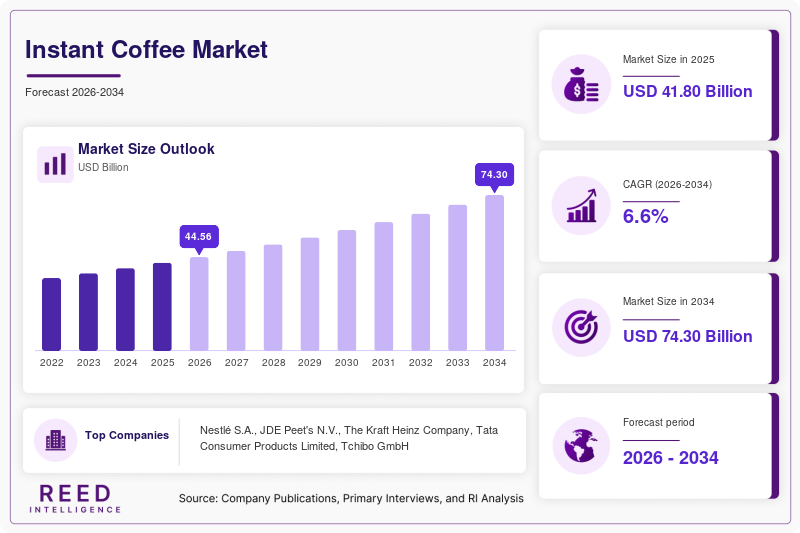
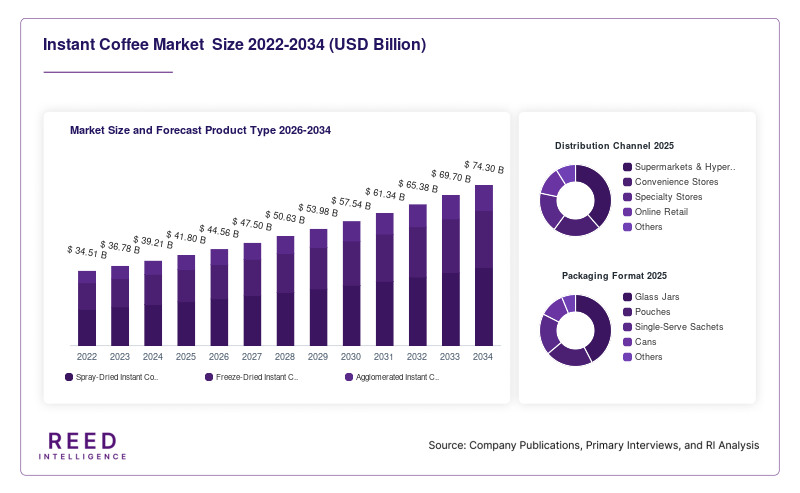
The global Instant Coffee Market size was valued at USD 41.8 billion in 2026 and is projected to reach USD 69.7 billion by 2034, expanding at a CAGR of 6.6% during 2026–2034. The market continues to benefit from evolving consumer lifestyles, increasing demand for convenient beverage solutions, and the rapid expansion of modern retail and e-commerce channels. Instant coffee has become a preferred option among working professionals, students, travelers, and urban consumers seeking quick preparation without compromising flavor and caffeine content.
A major global factor supporting market expansion is the growing demand for convenience-oriented food and beverage products. Rising urbanization and fast-paced work schedules have increased the need for ready-to-prepare beverages that fit modern consumption patterns. Instant coffee offers longer shelf life, portability, affordability, and ease of storage compared to traditional brewed coffee, making it attractive across both developed and developing economies.
Manufacturers are investing in premiumization strategies, including freeze-dried formulations, specialty blends, organic variants, and functional coffee products enriched with vitamins, adaptogens, and plant-based ingredients. Product innovation is further enhancing consumer engagement and broadening market penetration across younger demographics.
Key Highlights
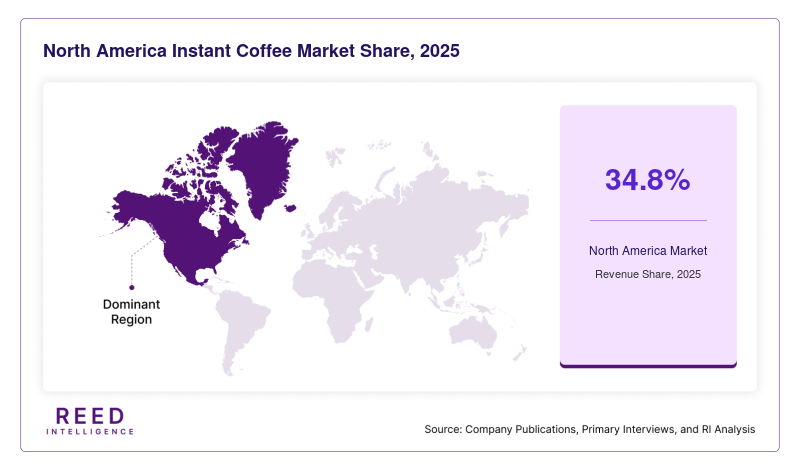
- North America dominated the market with a 34.8% share in 2025.
- while Asia Pacific is expected to grow at the fastest CAGR of 8.9% during 2026–2034.
- By product type, spray-dried instant coffee accounted for the largest share of 46.3%.
- while freeze-dried instant coffee is projected to grow at a CAGR of 8.7%.
- By distribution channel, supermarkets and hypermarkets held the largest share of 44.1%.
- whereas online retail is expected to expand at a CAGR of 10.1%.
- By packaging format, glass jars led the market with a 39.6% share.
- while single-serve sachets are anticipated to grow at a CAGR of 9.4%.
- The United States remained the dominant country, with market values of USD 8.4 billion in 2024 and USD 8.9 billion in 2025.
Market Trends
Premium Instant Coffee Products Gaining Consumer Acceptance
Consumer preferences are shifting from basic coffee products toward premium instant coffee offerings that provide improved taste, aroma, and brewing experiences. Manufacturers are introducing freeze-dried formulations, specialty coffee blends, and single-origin products to address changing consumer expectations. Premium instant coffee products are increasingly positioned as alternatives to café-style beverages, enabling consumers to enjoy high-quality coffee at home or in workplaces. This trend is particularly visible among millennials and younger consumers who seek quality and convenience simultaneously. Continuous investments in advanced processing technologies are improving product consistency and helping brands differentiate themselves in an increasingly competitive marketplace.
Growth of Functional and Health-Oriented Coffee Solutions
Health-conscious consumers are driving demand for instant coffee products that deliver benefits beyond caffeine stimulation. Companies are launching products containing collagen, probiotics, plant extracts, mushrooms, vitamins, and energy-support ingredients. Functional coffee products are attracting consumers seeking wellness-focused beverages without changing existing consumption habits. The trend is gaining momentum across North America, Europe, and Asia Pacific due to rising awareness regarding nutrition and preventive healthcare. As consumer interest in personalized nutrition continues to grow, manufacturers are expected to develop innovative formulations that combine convenience with targeted health benefits, supporting long-term market expansion.
Market Drivers
Increasing Demand for Convenient Beverage Consumption
The growing need for convenient food and beverage options remains a primary growth driver for the Instant Coffee Market. Urban consumers increasingly seek products that require minimal preparation time while maintaining acceptable taste and quality standards. Instant coffee can be prepared quickly without specialized equipment, making it suitable for homes, offices, educational institutions, and travel applications. Rising workforce participation and changing lifestyle patterns have further accelerated demand. As consumers continue prioritizing convenience in daily routines, instant coffee manufacturers are likely to benefit from sustained consumption growth across both mature and emerging markets.
Expansion of Coffee Consumption in Emerging Economies
Coffee consumption is increasing significantly in developing regions where tea has historically dominated beverage preferences. Rising disposable income, urbanization, western lifestyle influence, and expanding café culture are encouraging new consumer adoption. Younger populations in Asia Pacific, Latin America, and the Middle East are becoming more receptive to coffee-based beverages, including instant coffee products. The affordability of instant coffee compared to specialty coffee beverages makes it accessible to broader consumer groups. Manufacturers are leveraging localized marketing strategies and regional flavor preferences to strengthen market presence, creating favorable conditions for long-term industry development.
Market Restraint
Volatility in Coffee Bean Prices Affecting Profit Margins
Price fluctuations in coffee beans remain a significant challenge for market participants. Coffee production is highly dependent on climatic conditions, agricultural yields, labor availability, and geopolitical factors affecting producing countries. Unexpected weather events, including droughts and excessive rainfall, can reduce harvest volumes and increase raw material costs. These fluctuations create uncertainty across the supply chain and impact manufacturing profitability. Smaller producers often face difficulties managing cost pressures without passing increases to consumers. For example, substantial changes in arabica and robusta bean prices can influence production expenses and packaging decisions. Continued volatility may limit profit margins, complicate procurement planning, and create pricing challenges in highly competitive retail markets where consumer price sensitivity remains an important factor.
Market Opportunities
Expansion of E-Commerce and Direct-to-Consumer Channels
Digital commerce platforms are creating substantial growth opportunities for instant coffee manufacturers worldwide. Online retail enables companies to reach consumers beyond traditional distribution networks while offering wider product portfolios and subscription-based purchasing options. Consumers increasingly prefer online shopping due to convenience, product variety, and promotional offers. Direct-to-consumer strategies also allow brands to gather customer insights, improve engagement, and strengthen loyalty programs. As internet penetration and smartphone adoption continue increasing globally, online sales channels are expected to become a major contributor to future revenue growth within the Instant Coffee Market.
Rising Demand for Sustainable and Ethical Coffee Products
Sustainability initiatives are becoming increasingly important purchasing factors among modern consumers. Demand for responsibly sourced coffee, recyclable packaging, and environmentally conscious production processes is creating new opportunities for manufacturers. Companies that invest in transparent supply chains and sustainability certifications can strengthen brand value and attract environmentally aware consumers. Ethical sourcing programs supporting coffee farmers are also gaining attention among retailers and consumers. As governments and organizations promote sustainability objectives, manufacturers adopting environmentally responsible practices may achieve stronger market positioning and improved long-term competitiveness across global markets.
Segmental Analysis
By Product Type
Spray-dried instant coffee dominated the product type segment and accounted for approximately 46.3% of market share in 2024. The segment maintains leadership due to its cost-effectiveness, large-scale manufacturing capabilities, and widespread availability across retail channels. Spray-dried products are commonly preferred in price-sensitive markets because they offer affordability while meeting everyday consumption needs. Manufacturers benefit from efficient production processes and the ability to supply substantial volumes to both domestic and international markets. The segment also enjoys strong demand from institutional buyers, hospitality providers, and workplace beverage programs. Continuous improvements in flavor retention and packaging quality have further strengthened consumer acceptance, enabling spray-dried products to maintain a significant presence across mature and emerging markets.
Freeze-dried instant coffee is expected to record the fastest growth with a CAGR of 8.7% through 2034. The segment is gaining popularity because it preserves aroma, flavor, and texture more effectively than conventional alternatives. Consumers increasingly associate freeze-dried products with premium quality and superior taste experiences. Growing demand for specialty coffee and café-inspired beverages is encouraging manufacturers to expand freeze-dried product portfolios. Premiumization strategies adopted by leading brands are further supporting segment growth. Rising disposable income among urban consumers and increasing willingness to pay for higher-quality coffee experiences continue to create favorable conditions for freeze-dried instant coffee adoption worldwide.
By Distribution Channel
Supermarkets and hypermarkets represented the largest distribution channel, accounting for approximately 44.1% of market share in 2024. Their dominance is supported by extensive product variety, convenient shopping experiences, and strong consumer trust. These retail formats provide manufacturers with significant visibility and shelf space, enabling effective product promotion and brand recognition. Consumers frequently purchase instant coffee during routine grocery shopping, reinforcing the importance of physical retail outlets. Promotional campaigns, discounts, and bundled offerings further contribute to sales growth. In many developing economies, expanding supermarket networks continue to enhance accessibility, supporting sustained channel leadership within the Instant Coffee Market.
Online retail is anticipated to register the fastest CAGR of 10.1% through 2034. The growth of e-commerce platforms has transformed purchasing behavior by enabling consumers to compare products, access reviews, and receive home deliveries. Digital channels allow manufacturers to engage directly with customers while introducing niche and premium products not always available in physical stores. Subscription services and personalized recommendations are increasing consumer retention and purchase frequency. The continued expansion of digital payment systems, logistics infrastructure, and smartphone usage is expected to support rapid growth of online coffee sales throughout the forecast period.
By Packaging Format
Glass jars accounted for approximately 39.6% of market share in 2024, making them the dominant packaging format. Consumers often perceive glass packaging as premium, durable, and capable of preserving product freshness. Manufacturers favor glass jars for premium and mid-range product lines because they enhance shelf appeal and support brand differentiation. The format also offers reusability and strong protection against moisture and contamination. Retailers frequently allocate prominent shelf placement to jar-packaged products due to their visual appeal. These advantages continue to support segment leadership across developed and emerging markets.
Single-serve sachets are projected to grow at the fastest CAGR of 9.4% during 2026–2034. Increasing demand for portability, convenience, and portion-controlled consumption is driving adoption. Sachets are particularly popular among travelers, office workers, students, and consumers seeking affordable purchasing options. Manufacturers benefit from lower packaging costs and the ability to reach price-sensitive customer groups. The format also supports product sampling and promotional campaigns, helping brands introduce new flavors and formulations. Rising demand in emerging economies and growing on-the-go consumption trends are expected to accelerate sachet segment expansion throughout the forecast period.
Regional Analysis
North America
North America accounted for approximately 34.8% of the global Instant Coffee Market in 2025 and continues to represent the largest regional market. The region is expected to expand at a CAGR of 5.8% through 2034, supported by strong coffee consumption habits and widespread product availability. Consumers increasingly prefer premium instant coffee variants that provide convenience while maintaining quality. Product innovation, including functional formulations and specialty blends, continues to attract a broad customer base across retail and online channels.
The United States remains the dominant country within the region. A key growth factor is the increasing adoption of premium home-consumption beverages. Consumers are spending more on premium coffee experiences while seeking affordable alternatives to coffee shop purchases. This behavioral shift has encouraged manufacturers to launch premium freeze-dried and specialty instant coffee products designed to replicate café-style beverages in home environments.
Europe
Europe held approximately 28.1% market share in 2025 and is projected to grow at a CAGR of 5.6% during the forecast period. The region benefits from strong coffee-drinking traditions and a mature retail infrastructure. Instant coffee remains popular due to convenience and affordability, particularly among households and office consumers. Growing interest in organic, ethically sourced, and specialty coffee products is supporting market diversification and encouraging manufacturers to introduce premium product lines.
Germany represents the leading country market in Europe. A unique growth factor is the increasing preference for sustainable and certified coffee products. Consumers actively seek transparency regarding sourcing practices and environmental impact. This trend is encouraging manufacturers to strengthen sustainability initiatives while expanding product offerings that align with evolving consumer expectations regarding ethical consumption and environmental responsibility.
Asia Pacific
Asia Pacific represented 22.4% of global market revenue in 2025 and is anticipated to record the fastest CAGR of 8.9% through 2034. Rapid urbanization, rising disposable income, and growing coffee awareness are contributing significantly to market growth. Younger consumers are increasingly adopting coffee consumption habits, while modern retail expansion and digital commerce platforms are improving product accessibility across both metropolitan and secondary cities.
China leads regional growth due to expanding coffee culture and changing beverage preferences among younger consumers. A distinct growth factor is the strong influence of digital retail ecosystems that facilitate widespread product availability. E-commerce platforms enable brands to introduce innovative products efficiently while educating consumers about premium coffee experiences, supporting continued demand expansion throughout the forecast period.
Middle East & Africa
The Middle East & Africa accounted for approximately 7.5% of global market share in 2025 and is forecast to grow at a CAGR of 6.7% through 2034. Rising urban populations, expanding retail infrastructure, and growing exposure to international beverage trends are driving demand. Instant coffee products benefit from convenience and affordability, making them attractive across diverse consumer groups. Market participants continue introducing localized flavors and packaging formats to strengthen regional penetration.
Saudi Arabia remains the dominant country within the region. A unique growth factor is the increasing number of modern cafés and coffee-focused retail establishments that promote coffee consumption culture. While consumers frequently visit coffee shops, many also purchase instant coffee products for household use, creating complementary demand patterns that support broader market development.
Latin America
Latin America captured approximately 7.2% of the global Instant Coffee Market in 2025 and is expected to expand at a CAGR of 6.3% during the forecast period. The region benefits from strong coffee production capabilities and growing domestic consumption. Rising urbanization and changing consumer lifestyles are increasing demand for convenient beverage solutions. Manufacturers are focusing on affordable product offerings and expanding retail availability to attract a wider customer base.
Brazil remains the leading country market across Latin America. A key growth factor is the region's strong coffee heritage combined with increasing demand for value-added coffee products. Consumers are becoming more interested in premium instant coffee formulations that provide enhanced flavor and convenience. This shift is encouraging investment in product innovation and supporting steady market expansion.
Competitive Landscape
The global Instant Coffee Market remains moderately consolidated, with multinational beverage companies competing alongside regional manufacturers and private-label producers. Competition is driven by product innovation, pricing strategies, distribution expansion, and premiumization initiatives. Companies are increasingly focusing on specialty blends, sustainable sourcing programs, and functional coffee products to differentiate their offerings.
Nestlé S.A. continues to lead the market through its extensive product portfolio, strong global distribution network, and established brand recognition. The company recently expanded its premium instant coffee portfolio in several high-growth markets to address evolving consumer preferences for specialty coffee experiences.
Other major participants, including JDE Peet's, The Kraft Heinz Company, Tata Consumer Products, and Tchibo GmbH, continue investing in product innovation and geographic expansion. Strategic partnerships, e-commerce development, and sustainability programs remain important competitive strategies. Market participants are also strengthening direct-to-consumer capabilities and introducing environmentally responsible packaging solutions to align with changing consumer expectations and regulatory requirements.
Key Players
- Nestlé S.A.
- JDE Peet's N.V.
- The Kraft Heinz Company
- Tata Consumer Products Limited
- Tchibo GmbH
- Strauss Group Ltd.
- Unilever PLC
- Starbucks Corporation
- Luigi Lavazza S.p.A.
- Massimo Zanetti Beverage Group
- UCC Holdings Co., Ltd.
- Caféa Group
- Keurig Dr Pepper Inc.
- Trung Nguyen Coffee Corporation
- The J.M. Smucker Company
Recent Developments
- Nestlé expanded its premium freeze-dried instant coffee product line across several Asia Pacific markets to strengthen its premium beverage portfolio.
- JDE Peet's introduced new sustainable sourcing initiatives focused on improving supply chain transparency and farmer support programs.
- Tata Consumer Products launched multiple flavored instant coffee variants targeting younger consumers and expanding urban retail penetration.
- Tchibo enhanced its e-commerce infrastructure and subscription-based coffee services to improve direct-to-consumer engagement.
- Lavazza expanded sustainable packaging adoption across selected instant coffee product categories to support environmental objectives
Instant Coffee Market Segments
Product Type
- Spray-Dried Instant Coffee
- Freeze-Dried Instant Coffee
- Agglomerated Instant Coffee
Distribution Channel
- Supermarkets & Hypermarkets
- Convenience Stores
- Specialty Stores
- Online Retail
- Others
Packaging Format
- Glass Jars
- Pouches
- Single-Serve Sachets
- Cans
- Others
By Region
- North America
- Europe
- APAC
- Middle East and Africa
- LATAM