Insulated Glass Market Size, Share, Demand Report By Glass Type (Double-Glazed Insulated Glass, Triple-Glazed Insulated Glass, Vacuum Insulated Glass), By Application (Residential Buildings, Commercial Buildings, Industrial Buildings), By End-Use (New Construction, Renovation & Retrofit), By Region & Segment Forecasts, 2026–2034
USD 3950
Market Overview
The global Insulated Glass Market size was valued at USD 16.84 billion in 2026 and is projected to reach USD 29.67 billion by 2034, expanding at a CAGR of 7.3% during 2026–2034. The market is witnessing steady growth due to increasing demand for energy-efficient building materials across residential, commercial, and industrial construction projects. Insulated glass, also known as double glazing or insulating glass units (IGUs), consists of two or more glass panes separated by a sealed air or gas-filled space that improves thermal insulation, reduces energy consumption, and enhances indoor comfort.
A major factor supporting global market expansion is the growing emphasis on sustainable construction and energy conservation. Governments worldwide are implementing stricter building energy codes and green building regulations, encouraging the adoption of advanced glazing solutions. Insulated glass helps reduce heating and cooling costs while improving acoustic performance, making it a preferred choice in modern infrastructure projects. The rapid urbanization occurring across emerging economies, coupled with rising investments in commercial real estate, further strengthens demand.
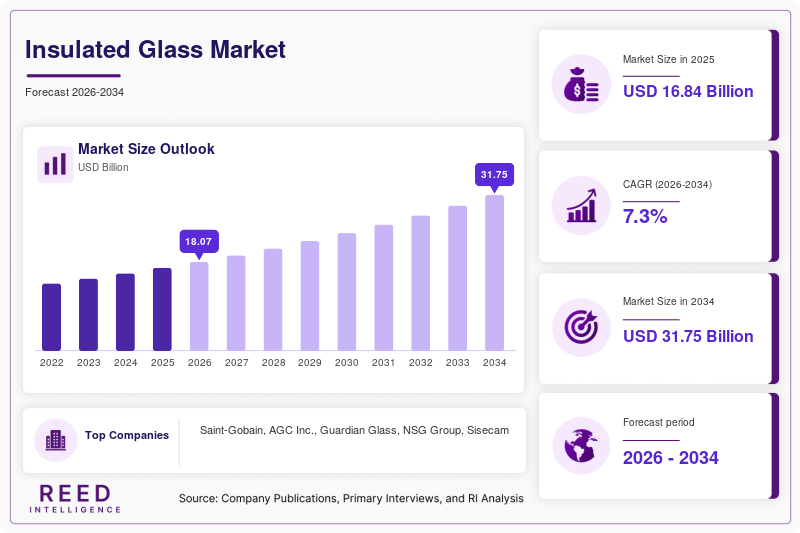
Key Highlights
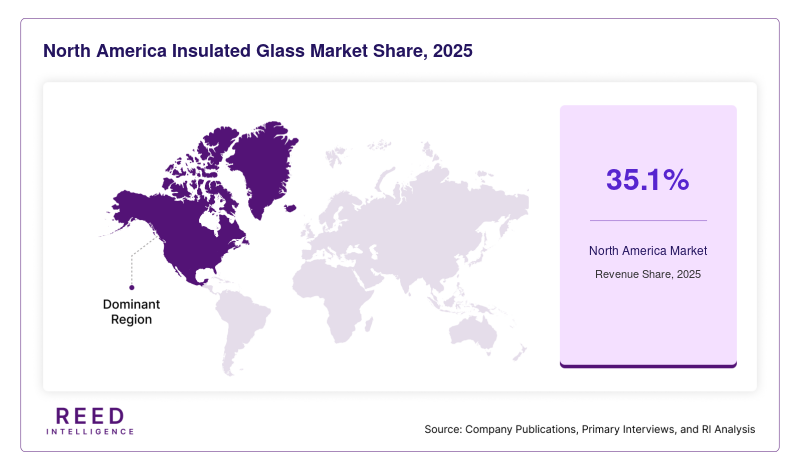
- North America dominated the market with a 35.1% share in 2025, while Asia Pacific is expected to grow at the fastest CAGR of 8.9% during 2026–2034.
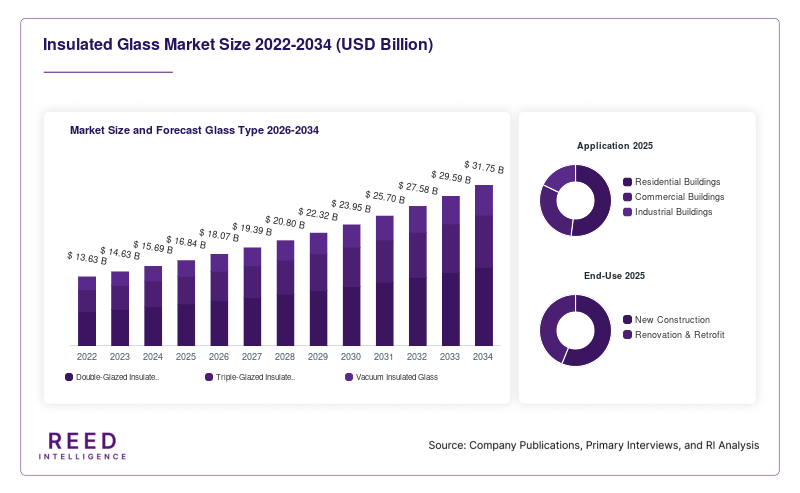
- By glass type, double-glazed insulated glass accounted for the largest share of 47.6%, while triple-glazed insulated glass is projected to grow at a CAGR of 8.7%.
- By application, commercial buildings led with a 42.3% share, whereas residential buildings are expected to expand at a CAGR of 8.4%.
- By end-use, new construction held the largest share of 61.4%, while the renovation and retrofit segment is anticipated to grow at a CAGR of 8.1%.
- The United States remained the dominant country, with market values of USD 4.68 billion in 2024 and USD 5.02 billion in 2025.
Market Trends
Rising Adoption of Low-Emissivity and High-Performance Glass Technologies
The insulated glass industry is increasingly shifting toward low-emissivity (Low-E) coatings and high-performance glazing technologies. Building owners and developers are prioritizing solutions that improve energy efficiency without compromising natural lighting. Low-E insulated glass reduces heat transfer, minimizes ultraviolet radiation penetration, and enhances thermal performance, making it highly suitable for commercial offices, residential complexes, and institutional buildings. Manufacturers are investing in advanced coating technologies that provide improved insulation characteristics and long-term durability. The trend is particularly strong in regions with stringent energy-efficiency regulations, where building developers seek compliance with evolving standards. Growing awareness regarding operational cost savings and environmental sustainability continues to accelerate adoption across both new construction and renovation projects.
Integration of Smart and Sustainable Building Solutions
The integration of insulated glass with smart building technologies is becoming a significant market trend. Modern infrastructure projects increasingly utilize automated systems that regulate indoor temperature, lighting, and energy consumption. Insulated glass products are being combined with smart glazing technologies, sensors, and building management systems to improve occupant comfort and energy performance. Demand is also increasing for recyclable and environmentally responsible glazing solutions that support green building certifications. Architects and developers are incorporating advanced insulated glass systems into sustainable building designs to meet environmental targets and enhance property value. As smart city initiatives expand globally, the use of intelligent and energy-efficient glass systems is expected to become more widespread.
Market Drivers
Expanding Global Construction and Infrastructure Development Activities
The growth of construction activities worldwide remains a major driver for the insulated glass market. Rapid urbanization, population growth, and increasing investments in commercial and residential infrastructure continue to create substantial demand for energy-efficient building materials. Governments across developed and developing economies are allocating significant resources to transportation hubs, office complexes, educational institutions, healthcare facilities, and residential housing projects. Insulated glass plays a critical role in improving thermal efficiency and reducing energy consumption within these structures. Rising demand for aesthetically appealing building façades further supports product adoption. As construction spending continues to rise across key regions, manufacturers are experiencing increased opportunities to supply advanced insulated glass products for a diverse range of projects.
Increasing Focus on Energy Efficiency and Carbon Emission Reduction
Growing concerns regarding climate change and energy consumption are driving widespread adoption of insulated glass solutions. Buildings account for a substantial portion of global energy usage, prompting governments and regulatory bodies to introduce stringent efficiency standards. Insulated glass helps reduce heating and cooling requirements, thereby lowering overall energy consumption and carbon emissions. Property owners are increasingly investing in energy-efficient upgrades to reduce operational costs and improve sustainability performance. Financial incentives, tax benefits, and green building certification programs are further encouraging the installation of insulated glass systems. This growing focus on environmental responsibility and energy conservation continues to create strong momentum for market expansion throughout the forecast period.
Market Restraint
High Initial Installation and Manufacturing Costs
The relatively high cost of insulated glass products compared to conventional glazing solutions remains a key challenge for market growth. Manufacturing insulated glass requires advanced production equipment, specialized coatings, precision sealing technologies, and quality control processes that increase production expenses. The use of inert gases such as argon and krypton further contributes to higher product costs. For budget-sensitive construction projects, particularly in developing economies, the initial investment required for insulated glass installation may discourage adoption despite long-term energy savings. Small-scale builders and residential property owners often prioritize lower upfront costs when selecting construction materials. In addition, fluctuations in raw material prices, including glass, aluminum spacers, and sealants, can affect profit margins and pricing strategies. While energy savings and improved building performance support long-term value creation, the higher acquisition cost continues to act as a restraint, especially in markets where energy-efficiency regulations remain less stringent and awareness of lifecycle benefits is comparatively limited.
Market Opportunities
Growing Demand for Building Renovation and Retrofit Projects
The renovation and retrofit sector presents significant opportunities for insulated glass manufacturers. Many commercial and residential buildings constructed decades ago lack modern energy-efficient glazing systems. Property owners are increasingly upgrading existing structures to improve thermal performance, reduce energy bills, and comply with updated building regulations. Retrofitting projects often involve replacing single-pane windows with insulated glass units, creating a substantial demand stream. Developed regions with aging infrastructure are particularly attractive markets for retrofit solutions. Additionally, government-backed energy-efficiency improvement programs encourage building modernization efforts. As sustainability goals become more prominent, retrofit activities are expected to generate considerable growth opportunities for insulated glass suppliers and installers throughout the forecast period.
Expansion of Green Building and Smart City Initiatives
The increasing number of green building projects and smart city developments worldwide offers attractive growth prospects for the insulated glass market. Governments and urban planners are focusing on sustainable infrastructure that reduces environmental impact while enhancing energy efficiency. Insulated glass aligns well with these objectives by improving building performance and supporting green certification requirements. Smart city projects frequently incorporate advanced building materials that contribute to energy optimization and occupant comfort. The development of eco-friendly residential communities, commercial districts, and mixed-use developments is driving demand for high-performance glazing solutions. Manufacturers that invest in innovative products tailored to sustainability requirements are likely to benefit from expanding opportunities across emerging and developed markets alike.
Segmental Analysis
By Glass Type
Double-glazed insulated glass remained the dominant subsegment, accounting for 47.6% of the market share in 2024. Its widespread adoption is attributed to its balance between thermal efficiency, affordability, and ease of installation. Commercial offices, educational facilities, healthcare institutions, and residential buildings extensively utilize double-glazed units to reduce heat transfer and improve indoor comfort. The segment also benefits from established manufacturing infrastructure and broad product availability across global markets. As energy-efficiency standards continue to evolve, double-glazed solutions remain a preferred option for builders seeking cost-effective compliance. Furthermore, ongoing demand from both new construction and retrofit projects contributes to sustained segment leadership across developed and emerging economies.
Triple-glazed insulated glass is anticipated to be the fastest-growing subsegment, registering a CAGR of 8.7% during 2026–2034. The segment is gaining traction due to its superior thermal insulation capabilities and ability to reduce energy consumption in extreme climate conditions. Increasing demand for high-performance building envelopes, particularly in colder regions, is supporting adoption. Property developers seeking advanced sustainability credentials are incorporating triple-glazed units into premium residential and commercial projects. Technological improvements that reduce product weight and enhance durability further support market growth. As governments continue promoting low-energy and net-zero buildings, demand for triple-glazed insulated glass is expected to increase significantly.
By Application
Commercial buildings accounted for the largest share of the insulated glass market, representing 42.3% of total revenue in 2024. Office towers, retail centers, hospitality facilities, educational institutions, and healthcare complexes increasingly rely on insulated glass systems to improve energy efficiency and occupant comfort. Large façade installations and curtain wall systems contribute significantly to demand within this segment. Building owners recognize the long-term economic benefits associated with reduced energy consumption and lower operating costs. Additionally, commercial projects frequently pursue sustainability certifications that encourage the adoption of advanced glazing technologies. Continued investments in modern commercial infrastructure are expected to sustain the segment’s leading market position throughout the forecast period.
Residential buildings are projected to be the fastest-growing application segment, expanding at a CAGR of 8.4% during 2026–2034. Rising consumer awareness regarding energy conservation and indoor comfort is driving adoption across housing developments. Homeowners increasingly seek solutions that reduce utility expenses while improving noise insulation and living conditions. Government incentives supporting energy-efficient housing construction also contribute to market growth. Urbanization trends, rising disposable incomes, and expanding middle-class populations in emerging economies are encouraging residential construction activities. As sustainable housing becomes a priority across global markets, insulated glass demand within residential applications is expected to experience robust growth.
By End-Use
New construction represented the dominant end-use segment, accounting for 61.4% of market revenue in 2024. Large-scale infrastructure investments, expanding urban populations, and rising demand for energy-efficient buildings continue to support this segment. Architects and developers increasingly integrate insulated glass into building designs from the planning stage to achieve thermal performance targets and enhance aesthetics. Commercial complexes, residential communities, transportation hubs, and institutional facilities contribute substantially to demand. The growing adoption of green building standards further strengthens the role of insulated glass within new construction projects. Continued urban development across emerging regions is expected to maintain strong segment performance.
Renovation and retrofit activities are anticipated to register the fastest growth, achieving a CAGR of 8.1% during the forecast period. Aging building stock across developed economies presents substantial opportunities for insulated glass replacement projects. Property owners are upgrading outdated windows to improve energy efficiency, reduce maintenance costs, and comply with evolving building regulations. Retrofit projects often deliver measurable reductions in heating and cooling expenses, making them attractive investments. Government-sponsored energy modernization programs and sustainability initiatives further support market expansion. As demand for building upgrades continues to increase, renovation and retrofit applications are expected to play a critical role in future market growth.
Regional Analysis
North America
North America accounted for 35.1% of the global insulated glass market share in 2025 and continues to represent the largest regional market. The region is projected to expand at a CAGR of 6.8% during 2026–2034. Strong demand from commercial construction, office modernization projects, and energy-efficient residential developments supports market growth. Regulatory requirements promoting reduced energy consumption in buildings continue to accelerate adoption of insulated glass products across the United States and Canada.
The United States remains the dominant country in the region due to extensive investments in sustainable infrastructure and green building initiatives. A unique growth factor is the increasing replacement of aging windows in existing buildings. Property owners are upgrading glazing systems to improve energy performance, reduce utility costs, and comply with stricter efficiency standards. These retrofit activities create a stable demand environment for insulated glass manufacturers.
Europe
Europe represented approximately 28.4% of global market revenue in 2025 and is expected to register a CAGR of 6.5% through 2034. The region benefits from stringent environmental regulations, ambitious carbon reduction targets, and widespread adoption of sustainable building practices. Demand remains strong across residential, commercial, and institutional construction projects as developers seek materials that support energy-efficient building performance.
Germany is the leading country within the European market owing to its strong construction sector and emphasis on energy conservation. A unique growth factor is the widespread implementation of building renovation programs aimed at improving energy efficiency across older structures. Government support for sustainable building upgrades continues to encourage the replacement of conventional glazing with advanced insulated glass systems.
Asia Pacific
Asia Pacific held approximately 24.7% of the insulated glass market in 2025 and is forecast to grow at the fastest CAGR of 8.9% during 2026–2034. Rapid urbanization, industrialization, and expanding infrastructure development activities are contributing significantly to regional growth. Large-scale residential projects, commercial complexes, airports, and transportation infrastructure are generating substantial demand for energy-efficient glazing solutions throughout the region.
China dominates the Asia Pacific market due to its extensive construction industry and large-scale urban development projects. A unique growth factor is the increasing adoption of green building standards across major metropolitan areas. Government initiatives promoting sustainable urbanization and energy-efficient construction practices are accelerating the use of insulated glass products in both public and private infrastructure developments.
Middle East & Africa
The Middle East & Africa region accounted for 6.2% of global market revenue in 2025 and is expected to achieve a CAGR of 7.1% through 2034. Growing investments in commercial real estate, tourism infrastructure, and mixed-use developments are supporting market expansion. Demand for insulated glass is particularly strong in areas characterized by high temperatures, where improved thermal insulation contributes to reduced cooling costs.
The United Arab Emirates remains the leading country in the regional market. A unique growth factor is the increasing development of smart and sustainable urban projects. Large-scale commercial towers, hospitality facilities, and residential communities are integrating advanced glazing technologies to improve energy efficiency and indoor comfort. This trend continues to create opportunities for insulated glass suppliers operating in the region.
Latin America
Latin America captured approximately 5.6% of the global insulated glass market share in 2025 and is projected to grow at a CAGR of 6.7% during the forecast period. Economic development, urban expansion, and increasing investments in residential and commercial construction are supporting market demand. Growing awareness of energy-efficient building materials is encouraging broader adoption of insulated glass across several countries.
Brazil represents the dominant market within Latin America due to its large construction sector and expanding urban population. A unique growth factor is the increasing number of modern commercial developments seeking enhanced energy performance and acoustic insulation. Developers are incorporating insulated glass systems into office buildings, shopping centers, and residential projects to improve sustainability and occupant comfort.
Competitive Landscape
The insulated glass market remains moderately fragmented, with established manufacturers competing through product innovation, geographic expansion, and strategic partnerships. Leading companies focus on developing advanced glazing technologies that improve thermal insulation, solar control, and energy efficiency. Investments in automation and sustainable manufacturing practices are becoming increasingly important competitive differentiators.
Saint-Gobain continues to hold a leading position in the market due to its extensive product portfolio and strong global presence. The company recently expanded its energy-efficient glazing offerings to support sustainable construction projects. Other significant participants include AGC Inc., Guardian Glass, NSG Group, and Sisecam, all of which continue investing in advanced insulated glass technologies and production capacity expansion.
Competition is also influenced by regional manufacturers serving local construction markets. Companies increasingly focus on smart glass integration, low-emissivity coatings, and environmentally responsible production processes to strengthen market positioning and address evolving customer requirements.
Key Players
- Saint-Gobain
- AGC Inc.
- Guardian Glass
- NSG Group
- Sisecam
- Cardinal Glass Industries
- Vitro Architectural Glass
- Central Glass Co., Ltd.
- Xinyi Glass Holdings Limited
- Fuyao Glass Industry Group
- SCHOTT AG
- Press Glass
- Sedak GmbH
- Trulite Glass & Aluminum Solutions
- Nippon Sheet Glass Co., Ltd.
- Taiwan Glass Industry Corporation
Recent Developments
- In 2025, Saint-Gobain introduced a next-generation insulated glass solution featuring enhanced thermal insulation and reduced carbon footprint for commercial construction projects.
- In 2025, AGC Inc. expanded production capacity at a major manufacturing facility to meet increasing demand for energy-efficient glazing products.
- In 2024, Guardian Glass launched advanced low-emissivity insulated glass units designed to improve solar control and building energy performance.
- In 2024, NSG Group invested in manufacturing modernization initiatives focused on improving production efficiency and sustainability.
- In 2025, Sisecam expanded its architectural glass portfolio with new insulated glazing products targeting green building applications.
Insulated Glass Market Segments
Glass Type
- Double-Glazed Insulated Glass
- Triple-Glazed Insulated Glass
- Vacuum Insulated Glass
Application
- Residential Buildings
- Commercial Buildings
- Industrial Buildings
End-Use
- New Construction
- Renovation & Retrofit
By Region
- North America
- Europe
- APAC
- Middle East and Africa
- LATAM