Internal Combustion Engine Market Size, Share & Demand Report By Fuel Type (Gasoline, Diesel, Gas, Hybrid-Compatible), By Application (Automotive, Industrial Machinery, Marine, Power Generation), By Engine Type (Diesel Engine, Gasoline Engine, Gas Engine) By Region & Segment Forecasts, 2026–2034
USD 3950
Market Overview
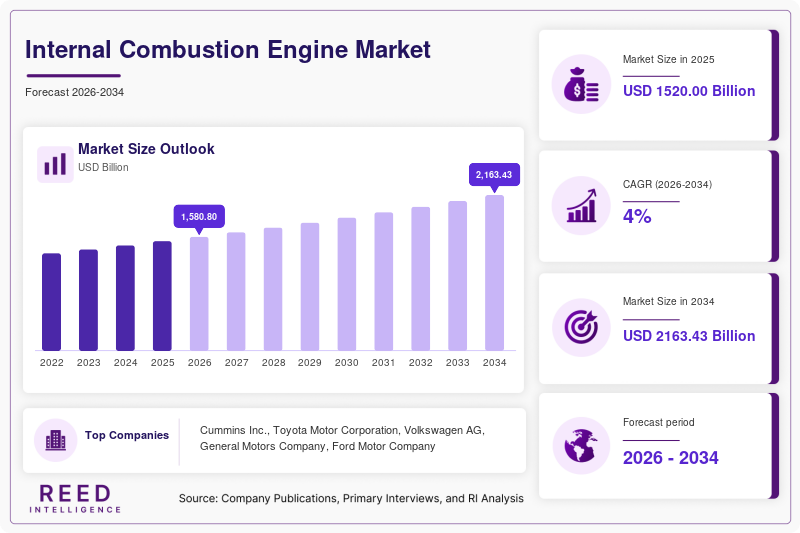
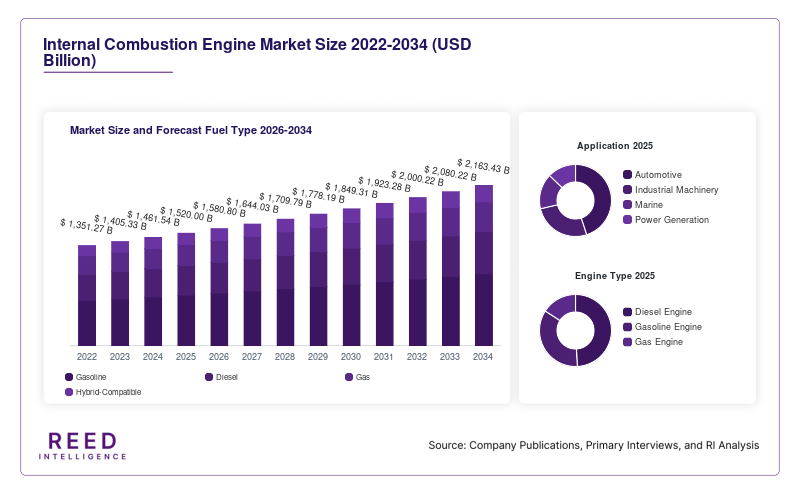
The Internal Combustion Engine Market size was valued at approximately USD 1,520 billion in 2026 and is projected to reach USD 2,080 billion by 2034, expanding at a CAGR of 4.0% during the forecast period (2026–2034). The market continues to demonstrate steady growth despite the global shift toward electrification, supported by ongoing demand in commercial transportation, industrial machinery, and emerging economies. Internal combustion engines (ICEs) remain critical in sectors where high energy density, reliability, and established infrastructure are essential for operations.
A major global factor supporting market expansion is the sustained demand for heavy-duty transportation and off-highway equipment. Industries such as construction, mining, agriculture, and logistics rely heavily on diesel-powered engines due to their torque output and durability. Additionally, the rising population and urbanization in developing economies have increased demand for passenger vehicles and commercial fleets, further strengthening ICE adoption. Technological advancements such as turbocharging, direct fuel injection, and hybrid integration have also improved fuel efficiency and emission performance, allowing ICEs to remain competitive in a transitioning energy landscape.
Key Highlights
- North America dominated the market with a 32.8% share in 2025.
- Asia Pacific is expected to grow at the fastest CAGR of 5.3% during 2026–2034.
- By fuel type, gasoline engines accounted for the largest share of 46.2%, while hybrid-compatible engines are projected to grow at a CAGR of 6.1%.
- By application, automotive led with a 58.7% share, whereas industrial machinery is expected to expand at a CAGR of 4.8%.
- The United States remained the dominant country, with market values of USD 410 billion in 2024 and USD 430 billion in 2025.
Market Trends
Advancements in Fuel Efficiency and Emission Reduction Technologies
The internal combustion engine industry is experiencing continuous innovation focused on improving fuel efficiency and reducing emissions. Manufacturers are integrating advanced technologies such as variable valve timing, exhaust gas recirculation systems, and high-pressure direct injection to meet stringent regulatory requirements. These advancements have enabled ICEs to achieve lower fuel consumption and reduced carbon output, making them viable in regions with strict environmental policies. Additionally, the development of synthetic fuels and biofuels is enhancing the sustainability profile of ICEs. Automakers are also investing in lightweight engine components and optimized combustion processes to maximize efficiency. These improvements ensure that ICE technology remains relevant, particularly in hybrid systems where engines operate alongside electric powertrains to optimize energy usage.
Integration of Hybrid Powertrain Systems
Another prominent trend shaping the market is the increasing integration of internal combustion engines with hybrid powertrain systems. Hybrid vehicles combine electric motors with ICEs to improve fuel efficiency and reduce emissions without fully relying on battery infrastructure. This approach is gaining traction in regions where electric vehicle charging infrastructure is still developing. Automakers are designing smaller, more efficient engines specifically for hybrid applications, enabling better energy management and reduced fuel consumption. Mild hybrid and plug-in hybrid systems are being widely adopted across passenger vehicles and commercial fleets. This trend is particularly significant in bridging the transition from traditional ICE vehicles to fully electric mobility, ensuring continued demand for advanced combustion engines in the coming years.
Market Drivers
Rising Demand for Commercial Transportation and Logistics
The growth of global trade and e-commerce has significantly increased the demand for commercial transportation, which continues to rely heavily on internal combustion engines. Trucks, buses, and delivery vehicles predominantly use diesel engines due to their efficiency and durability in long-distance operations. Expanding logistics networks and last-mile delivery services have further accelerated the deployment of ICE-powered vehicles. Developing economies are witnessing rapid infrastructure development, which increases the need for construction equipment and heavy-duty vehicles powered by internal combustion engines. Additionally, the lack of widespread charging infrastructure for electric alternatives in many regions reinforces the reliance on ICE technology. This sustained demand across multiple sectors ensures consistent market growth and highlights the critical role of ICEs in global transportation systems.
Strong Presence in Industrial and Off-Highway Applications
Internal combustion engines remain essential in industrial and off-highway applications, including agriculture, mining, and construction. These sectors require high-performance engines capable of operating under extreme conditions, where electric alternatives often face limitations in energy storage and power output. Diesel engines, in particular, offer superior torque and reliability, making them ideal for heavy machinery and equipment. The ongoing expansion of infrastructure projects worldwide is driving demand for construction equipment powered by ICEs. Additionally, agricultural mechanization in emerging markets is increasing the adoption of tractors and harvesters equipped with internal combustion engines. This strong presence in non-automotive sectors provides a stable foundation for market growth, even as passenger vehicle electrification gains momentum.
Market Restraint
Increasing Regulatory Pressure and Shift Toward Electrification
The internal combustion engine market faces significant challenges due to stringent emission regulations and the global shift toward electric mobility. Governments across regions are implementing policies aimed at reducing greenhouse gas emissions, including stricter fuel efficiency standards and bans on new ICE vehicle sales in the coming decades. These regulations increase compliance costs for manufacturers, requiring continuous investment in advanced emission control technologies. Additionally, the growing adoption of electric vehicles is gradually reducing the demand for traditional ICE-powered passenger cars. Automakers are reallocating resources toward electric powertrain development, which may limit innovation in conventional engine technologies. For example, several European countries have announced timelines to phase out ICE vehicles, impacting long-term market prospects. While ICEs remain dominant in certain applications, these regulatory and technological shifts pose a significant constraint on overall market expansion.
Market Opportunities
Development of Alternative and Synthetic Fuels
The emergence of alternative fuels presents a notable opportunity for the internal combustion engine market. Biofuels, synthetic fuels, and hydrogen-based combustion technologies are being explored as sustainable alternatives to conventional fossil fuels. These fuels can significantly reduce carbon emissions while utilizing existing engine infrastructure, making them attractive for industries seeking cost-effective decarbonization solutions. Governments and private organizations are investing in research and development to improve fuel production and distribution capabilities. Additionally, synthetic fuels can be used in existing ICE vehicles without major modifications, enabling a smoother transition toward cleaner energy. This opportunity allows the ICE market to align with environmental goals while maintaining its relevance across various applications.
Growth in Emerging Economies and Infrastructure Development
Emerging economies offer substantial growth potential for the internal combustion engine market due to increasing industrialization and urbanization. Countries in Asia, Africa, and Latin America are experiencing rising demand for transportation, construction equipment, and power generation systems. Limited access to electric infrastructure in these regions supports the continued use of ICE-powered machinery and vehicles. Additionally, government initiatives aimed at improving transportation networks and industrial output are driving the adoption of internal combustion engines. The affordability and established supply chains of ICE technology further enhance its appeal in cost-sensitive markets. This growth opportunity is expected to sustain demand and provide a strong revenue base for manufacturers operating in developing regions.
Segmental Analysis
By Fuel Type
Gasoline engines held the dominant share of 46.2% in 2024, driven by their widespread use in passenger vehicles. These engines are preferred for their lower initial cost, smooth operation, and availability of fuel infrastructure. Gasoline-powered vehicles continue to dominate urban transportation, particularly in regions with established fueling networks. The segment also benefits from continuous improvements in engine efficiency and emission control technologies, which enhance performance and compliance with environmental standards.
Hybrid-compatible engines represent the fastest-growing subsegment, projected to expand at a CAGR of 6.1% during the forecast period. The growth is driven by increasing adoption of hybrid vehicles, which combine internal combustion engines with electric motors. These engines are specifically designed for improved efficiency and reduced emissions, making them suitable for modern mobility solutions. The rising demand for fuel-efficient vehicles and government incentives for hybrid adoption further support this growth.
By Application
The automotive segment accounted for the largest share of 58.7% in 2024, driven by the extensive use of internal combustion engines in passenger and commercial vehicles. The segment benefits from global vehicle production and the continued demand for personal mobility. Despite the rise of electric vehicles, ICE-powered vehicles remain dominant in many regions due to affordability and infrastructure availability.
The industrial machinery segment is expected to grow at the fastest CAGR of 4.8% during the forecast period. This growth is attributed to increasing infrastructure development and industrialization worldwide. Internal combustion engines are widely used in construction equipment, generators, and agricultural machinery due to their reliability and performance. The expansion of industrial activities in emerging economies further accelerates demand for ICE-powered equipment.
By Engine Type
Diesel engines held the dominant share of 42.9% in 2024, supported by their high efficiency and torque output. These engines are widely used in commercial vehicles and heavy machinery, where performance and durability are critical. Diesel engines also offer better fuel efficiency compared to gasoline engines, making them suitable for long-distance transportation and industrial applications.
Gas engines are the fastest-growing subsegment, projected to expand at a CAGR of 4.5% during the forecast period. The growth is driven by increasing demand for cleaner fuel options and advancements in natural gas infrastructure. Gas engines produce lower emissions compared to traditional fuels, making them an attractive option for power generation and industrial applications. The shift toward sustainable energy solutions further supports the adoption of gas-powered internal combustion engines.
Regional Analysis
North America
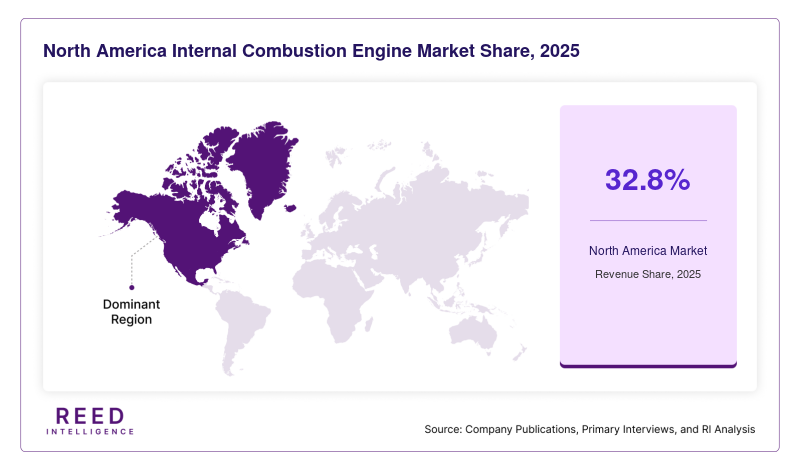
North America accounted for a significant share of 32.8% in 2025 and is projected to grow at a CAGR of 3.6% during the forecast period. The region benefits from a well-established automotive industry and strong demand for commercial vehicles. The presence of leading manufacturers and advanced research facilities supports continuous innovation in engine technologies. Additionally, the demand for pickup trucks and heavy-duty vehicles remains high, sustaining the adoption of internal combustion engines.
The United States dominates the regional market, driven by its extensive transportation and logistics network. A key growth factor is the continued reliance on diesel engines in freight transportation and industrial applications. Despite increasing electric vehicle adoption, the country’s vast infrastructure and long-distance transportation requirements ensure sustained demand for ICE-powered vehicles and machinery.
Europe
Europe held a market share of 27.5% in 2025 and is expected to grow at a CAGR of 3.2% through 2034. The region is characterized by stringent emission regulations and a strong focus on sustainability. While electric vehicle adoption is increasing, internal combustion engines continue to play a role in hybrid vehicles and commercial transportation. Technological advancements in engine efficiency are helping manufacturers comply with regulatory standards.
Germany remains the dominant country in the European market, supported by its robust automotive manufacturing sector. A unique growth factor is the region’s emphasis on hybrid vehicle development, where ICEs are integrated with electric systems. This approach allows manufacturers to balance performance and emissions while maintaining competitiveness in a transitioning market.
Asia Pacific
Asia Pacific captured a market share of 29.1% in 2025 and is projected to grow at the fastest CAGR of 5.3% during the forecast period. Rapid urbanization, population growth, and industrial expansion are driving demand for transportation and machinery. The region’s diverse economic landscape supports widespread adoption of internal combustion engines across automotive and industrial sectors.
China dominates the regional market due to its large-scale manufacturing capabilities and high vehicle production. A key growth factor is the increasing demand for commercial vehicles and construction equipment, supported by infrastructure development projects. Additionally, the affordability of ICE vehicles compared to electric alternatives contributes to their continued popularity.
Middle East & Africa
The Middle East & Africa region accounted for 5.4% of the market share in 2025 and is expected to grow at a CAGR of 4.1%. The region’s reliance on oil and gas industries supports the continued use of internal combustion engines. Additionally, the demand for power generation equipment and heavy machinery contributes to market growth.
Saudi Arabia leads the regional market, driven by its energy sector and infrastructure development initiatives. A unique growth factor is the extensive use of ICE-powered equipment in oil extraction and processing activities. The availability of fuel resources further supports the adoption of internal combustion engines in various applications.
Latin America
Latin America held a market share of 5.2% in 2025 and is projected to grow at a CAGR of 3.9% during the forecast period. The region’s economic development and increasing industrial activities are driving demand for transportation and machinery. Internal combustion engines remain a cost-effective solution for many industries.
Brazil dominates the regional market, supported by its agricultural and automotive sectors. A key growth factor is the widespread use of biofuels, which enhances the sustainability of ICE-powered vehicles. The country’s focus on renewable energy integration provides a unique advantage for the adoption of alternative fuel-based internal combustion engines.
Competitive Landscape
The internal combustion engine market is moderately consolidated, with key players focusing on technological advancements and strategic partnerships to maintain competitiveness. Companies are investing in research and development to enhance engine efficiency and reduce emissions. The market leader, Cummins Inc., continues to expand its portfolio through the development of hybrid-compatible and alternative fuel engines. A recent development includes the introduction of hydrogen-powered internal combustion engines, aimed at reducing carbon emissions while leveraging existing infrastructure.
Other major players such as Toyota Motor Corporation, Volkswagen AG, General Motors Company, and Caterpillar Inc. are actively investing in hybrid technologies and advanced combustion systems. These companies are focusing on integrating ICEs with electric powertrains to meet evolving market demands. Strategic collaborations and product innovations remain key strategies for maintaining market position and addressing regulatory challenges.
Key Players
- Cummins Inc.
- Toyota Motor Corporation
- Volkswagen AG
- General Motors Company
- Ford Motor Company
- Caterpillar Inc.
- Honda Motor Co., Ltd.
- Hyundai Motor Company
- Daimler Truck AG
- Volvo Group
- Mitsubishi Heavy Industries Ltd.
- Isuzu Motors Limited
- MAN Energy Solutions
- Yanmar Holdings Co., Ltd.
- Perkins Engines Company Limited
Recent Developments
- Cummins Inc. launched a hydrogen-powered internal combustion engine platform aimed at reducing emissions in heavy-duty applications.
- Toyota Motor Corporation expanded its hybrid engine lineup with improved fuel efficiency and lower emissions.
- Caterpillar Inc. introduced advanced diesel engines with enhanced fuel efficiency for construction equipment.
Internal Combustion Engine Market Segments
Fuel Type
- Gasoline
- Diesel
- Gas
- Hybrid-Compatible
Application
- Automotive
- Industrial Machinery
- Marine
- Power Generation
Engine Type
- Diesel Engine
- Gasoline Engine
- Gas Engine
By Region
- North America
- Europe
- APAC
- Middle East and Africa
- LATAM