Intravaginal Device Market Size, Share & Demand Report By Product Type (Vaginal Rings, Pessaries, Drug Delivery Systems), By Application (Contraception, Pelvic Organ Prolapse, Urinary Incontinence, Hormone Therapy), By End-Use (Hospitals, Clinics, Homecare Settings) & Segment Forecasts, 2026–2034
USD 3950
Market Overview
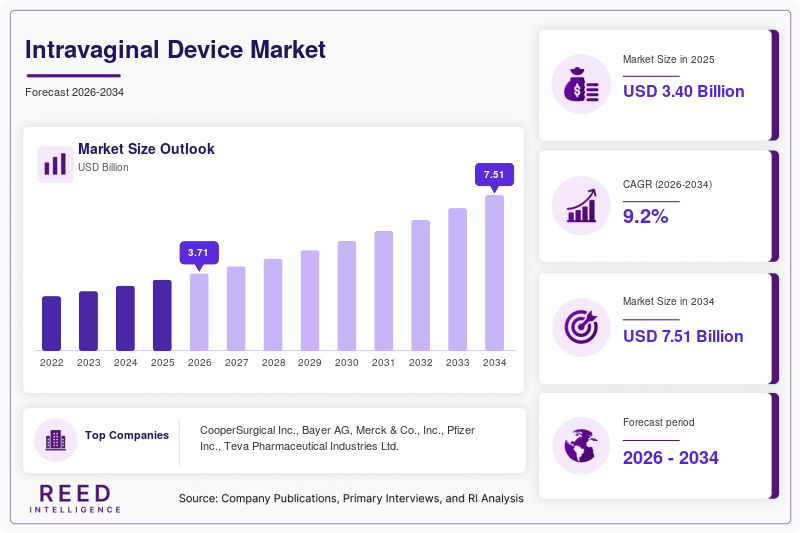
The global Intravaginal Device Market was valued at approximately USD 3.4 billion in 2026 and is projected to reach USD 6.9 billion by 2034, expanding at a compound annual growth rate (CAGR) of 9.2% during 2026–2034. The market is experiencing consistent expansion due to increasing awareness of women’s health, rising demand for minimally invasive medical solutions, and broader access to gynecological care across both developed and emerging economies. Intravaginal devices, including pessaries, vaginal rings, and drug delivery systems, are increasingly used for contraception, hormone therapy, pelvic organ prolapse, and urinary incontinence management.
One major global factor supporting market growth is the increasing prevalence of gynecological disorders and hormonal imbalances among women, particularly in aging populations. Healthcare systems are placing greater emphasis on preventive care and non-surgical treatment options, which has accelerated the adoption of intravaginal devices. Additionally, the shift toward self-administered therapies and patient-centric solutions is encouraging product innovation and improving adherence rates.
Key Highlights
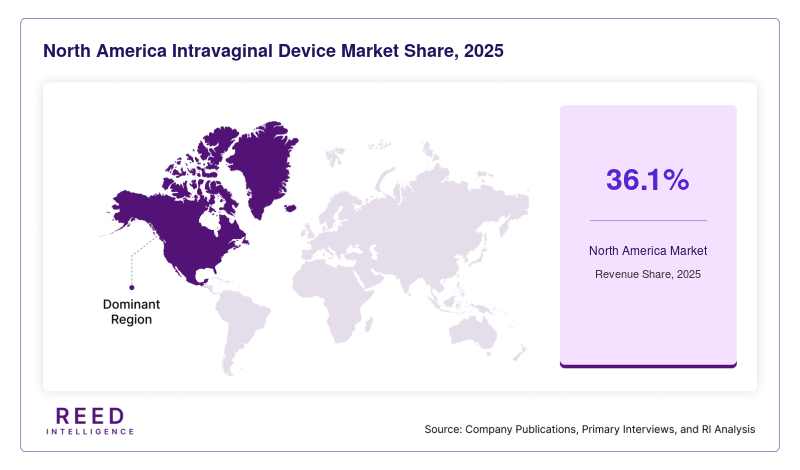
- North America dominated the market with a 36.1% share in 2025.
- while Asia Pacific is expected to grow at the fastest CAGR of 10.8% during 2026–2034.
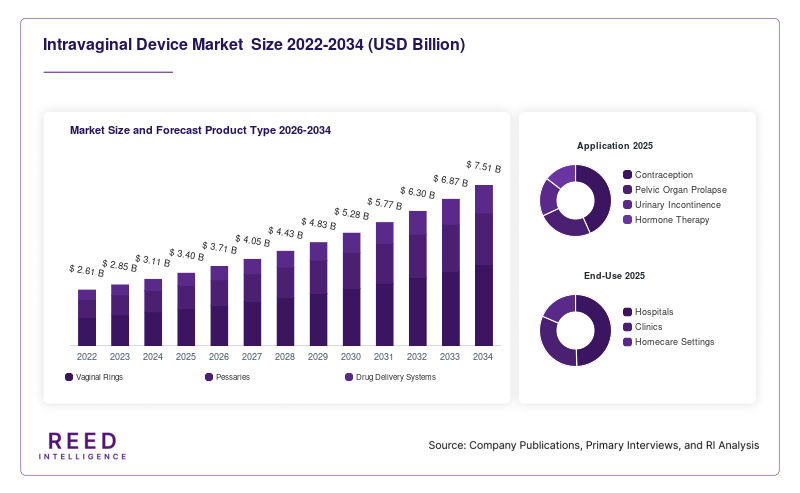
- By product type, vaginal rings accounted for the largest share of 39.4%.
- while drug delivery systems are projected to grow at a CAGR of 11.6%.
- By application, contraception led with a 44.2% share, whereas pelvic organ prolapse treatment is expected to expand at a CAGR of 10.9%.
- The United States remained the dominant country, with market values of USD 920 million in 2024 and USD 1.01 billion in 2025.
Market Trends
Increasing Adoption of Hormone-Releasing Vaginal Rings
Hormone-releasing vaginal rings are gaining traction as a preferred contraceptive and therapeutic option due to their convenience and long-acting nature. These devices offer controlled drug release over extended periods, reducing the need for daily medication and improving compliance among users. The trend is supported by increasing awareness regarding hormonal health and the benefits of localized drug delivery systems. Healthcare providers are recommending vaginal rings as a reliable alternative to oral contraceptives, particularly for women seeking fewer systemic side effects. Furthermore, advancements in polymer technology have enabled the development of more efficient and comfortable devices, enhancing patient experience. This trend is expected to continue as manufacturers invest in research to expand the range of indications for vaginal rings.
Growing Focus on Personalized and Self-Administered Healthcare Solutions
The shift toward personalized healthcare is significantly influencing the intravaginal device market. Patients increasingly prefer solutions that can be self-administered and tailored to their specific medical needs. Intravaginal devices align well with this trend, offering discreet, user-friendly options for managing various gynecological conditions. Digital health integration, such as mobile apps for tracking usage and outcomes, is also emerging as a complementary trend. Additionally, healthcare providers are emphasizing patient education and empowerment, which has improved acceptance rates. This trend is particularly evident in developed markets, where consumers actively seek innovative and convenient healthcare solutions. As awareness grows globally, the demand for personalized intravaginal devices is expected to rise steadily.
Market Drivers
Rising Prevalence of Gynecological Disorders
The increasing incidence of gynecological conditions such as pelvic organ prolapse, urinary incontinence, and hormonal imbalances is a major driver for the intravaginal device market. Aging populations, particularly in developed regions, are more susceptible to these conditions, leading to higher demand for non-invasive treatment options. Intravaginal devices offer an effective solution by providing mechanical support or localized drug delivery without the need for surgery. Additionally, lifestyle changes, including delayed childbirth and higher obesity rates, have contributed to the rising prevalence of these disorders. Healthcare systems are focusing on early diagnosis and management, further boosting the adoption of intravaginal devices. This driver is expected to remain significant as awareness and screening programs expand globally.
Increasing Demand for Minimally Invasive Treatment Options
Patients and healthcare providers are increasingly favoring minimally invasive treatments that reduce recovery time and lower the risk of complications. Intravaginal devices meet this demand by offering non-surgical alternatives for various conditions. The convenience of use, combined with reduced healthcare costs, makes these devices an attractive option. Technological advancements have improved device design, ensuring better efficacy and comfort for users. Moreover, the shift toward outpatient care and home-based treatments has further accelerated demand. Governments and healthcare organizations are promoting minimally invasive solutions to optimize resource utilization, which is contributing to market growth.
Market Restraint
Limited Awareness and Cultural Barriers in Emerging Markets
Despite the growing adoption of intravaginal devices, limited awareness and cultural sensitivities in certain regions pose a significant challenge to market growth. In many developing countries, discussions around women’s reproductive health remain restricted, leading to low acceptance of such devices. Misconceptions regarding safety, hygiene, and long-term effects further hinder adoption rates. Healthcare infrastructure limitations and lack of trained professionals also contribute to the slow penetration of these products in rural and underserved areas.
The impact of this restraint is evident in uneven market growth across regions. While developed markets show high adoption rates, emerging economies lag due to socio-cultural factors. For example, patients may prefer traditional treatment methods or avoid seeking medical help altogether. This limits the potential customer base for manufacturers and slows overall market expansion. To address this issue, companies and healthcare organizations need to invest in awareness campaigns, education programs, and community outreach initiatives. Overcoming these barriers will be essential for unlocking growth opportunities in high-potential markets.
Market Opportunities
Expansion in Emerging Economies
Emerging economies present significant growth opportunities for the intravaginal device market due to improving healthcare infrastructure and rising awareness of women’s health. Governments in these regions are increasing healthcare spending and implementing programs to enhance access to reproductive health services. Urbanization and growing middle-class populations are also contributing to higher demand for advanced medical solutions. Manufacturers can capitalize on these opportunities by offering cost-effective products tailored to local needs. Partnerships with healthcare providers and distribution networks will be crucial for market penetration. As awareness continues to improve, emerging markets are expected to contribute substantially to overall market growth.
Technological Advancements in Drug Delivery Systems
Advancements in drug delivery technologies are creating new opportunities in the intravaginal device market. Innovations such as biodegradable materials, smart polymers, and controlled-release mechanisms are enhancing the effectiveness of these devices. These developments enable targeted treatment with reduced side effects, improving patient outcomes. Additionally, the integration of digital monitoring features can provide real-time data on device usage and effectiveness, supporting personalized treatment plans. Pharmaceutical companies are increasingly collaborating with device manufacturers to develop combination products, further expanding the market scope. This opportunity is expected to drive innovation and open new avenues for growth in the coming years.
Segmental Analysis
By Product Type
Vaginal rings dominated the product type segment, accounting for a 39.4% share in 2024. Their popularity is attributed to ease of use, long-acting nature, and effectiveness in delivering hormones for contraception and therapy. These devices provide consistent drug release, reducing the need for frequent administration. Healthcare providers often recommend vaginal rings due to their reliability and convenience. The increasing adoption of hormone-based treatments has further boosted demand. Additionally, advancements in materials and design have improved patient comfort, contributing to their widespread use across various regions.
Drug delivery systems represent the fastest-growing subsegment, with a projected CAGR of 11.6%. These systems offer targeted treatment with minimal systemic side effects, making them highly effective for managing various conditions. Innovations in biodegradable materials and controlled-release technologies are driving growth in this segment. Pharmaceutical companies are collaborating with device manufacturers to develop combination products, expanding the range of applications. The growing focus on personalized medicine and patient-centric solutions is also contributing to the rapid adoption of drug delivery systems.
By Application
Contraception remains the dominant application segment, holding a 44.2% share in 2024. The widespread use of intravaginal devices for birth control is driven by their effectiveness and convenience. Increasing awareness of family planning and reproductive health has significantly boosted demand. Governments and healthcare organizations are promoting contraceptive use to control population growth and improve maternal health outcomes. Intravaginal devices offer a reliable alternative to traditional methods, which has contributed to their growing popularity.
Pelvic organ prolapse treatment is the fastest-growing application segment, with a CAGR of 10.9%. The rising prevalence of this condition, particularly among aging populations, is a key driver. Intravaginal devices such as pessaries provide a non-surgical treatment option, reducing the need for invasive procedures. Increasing awareness and early diagnosis are also contributing to growth in this segment. Healthcare providers are recommending these devices as a first-line treatment, further boosting adoption.
By End-Use
Hospitals dominate the end-use segment, accounting for a 41.8% share in 2024. These facilities offer comprehensive diagnostic and treatment services, making them the primary point of care for patients. The availability of skilled healthcare professionals and advanced equipment ensures effective treatment outcomes. Hospitals also play a key role in educating patients about the benefits of intravaginal devices, which supports market growth.
Homecare settings are the fastest-growing subsegment, with a CAGR of 11.2%. The shift toward self-administered treatments and patient convenience is driving growth in this segment. Intravaginal devices are well-suited for home use due to their ease of application and minimal need for medical supervision. The increasing adoption of telehealth services is further supporting this trend, enabling patients to manage their conditions effectively from home.
Regional Analysis
North America
North America held a dominant share of 36.1% in 2025 and is expected to maintain steady growth at a CAGR of 8.7% during the forecast period. The region benefits from advanced healthcare infrastructure, high awareness of women’s health issues, and strong adoption of innovative medical technologies. Favorable reimbursement policies and the presence of leading market players further support growth. Additionally, increasing demand for minimally invasive treatments continues to drive market expansion.
The United States remains the dominant country in this region due to its well-established healthcare system and high prevalence of gynecological conditions. A key growth factor is the increasing adoption of hormone-based therapies, supported by strong clinical research and product availability. Continuous investment in healthcare innovation also contributes to market stability and growth.
Europe
Europe accounted for a significant share of 27.4% in 2025 and is projected to grow at a CAGR of 8.9% through 2034. The region’s growth is driven by rising awareness of reproductive health and supportive government initiatives. Countries are focusing on preventive healthcare measures, which has increased the adoption of intravaginal devices. The presence of established healthcare systems ensures access to advanced treatment options.
Germany leads the European market, supported by strong healthcare infrastructure and high healthcare expenditure. A unique growth factor is the increasing acceptance of non-surgical treatments among patients, which aligns with the benefits offered by intravaginal devices. Additionally, ongoing research and development activities contribute to market growth.
Asia Pacific
Asia Pacific is expected to grow at the fastest CAGR of 10.8% during the forecast period, with a 2025 share of 22.6%. Rapid urbanization, increasing healthcare investments, and growing awareness of women’s health are key drivers in this region. The expanding middle-class population and improving access to healthcare services further support market growth.
China dominates the Asia Pacific market due to its large population and increasing healthcare spending. A key growth factor is the rising awareness of reproductive health and government initiatives aimed at improving women’s healthcare services. These factors are driving demand for intravaginal devices across the country.
Middle East & Africa
The Middle East & Africa region held a smaller share of 7.3% in 2025 but is expected to grow at a CAGR of 9.5%. Growth is supported by improving healthcare infrastructure and increasing government focus on women’s health. However, cultural barriers and limited awareness continue to pose challenges in certain areas.
Saudi Arabia leads the market in this region, driven by increasing healthcare investments and modernization efforts. A unique growth factor is the expansion of private healthcare facilities, which are improving access to advanced medical treatments. This is expected to boost the adoption of intravaginal devices.
Latin America
Latin America accounted for 6.6% of the market in 2025 and is projected to grow at a CAGR of 9.1%. The region is witnessing improvements in healthcare infrastructure and rising awareness of reproductive health. Government initiatives aimed at expanding healthcare access are also contributing to market growth.
Brazil is the dominant country in this region, supported by a large population and increasing healthcare expenditure. A key growth factor is the rising demand for cost-effective and minimally invasive treatment options. This trend is expected to drive the adoption of intravaginal devices in the coming years.
Competitive Landscape
The intravaginal device market is moderately competitive, with several established players focusing on product innovation and strategic collaborations. Leading companies are investing in research and development to enhance device performance and expand their product portfolios. The market is characterized by the presence of both global and regional players, which intensifies competition.
A leading company in the market is CooperSurgical, known for its extensive range of women’s health products. The company has recently introduced advanced vaginal ring solutions aimed at improving patient comfort and efficacy. Other key players are focusing on expanding their geographic presence and strengthening distribution networks. Strategic partnerships with healthcare providers and research institutions are also common, enabling companies to develop innovative solutions and gain a competitive edge.
Key Players List
- CooperSurgical Inc.
- Bayer AG
- Merck & Co., Inc.
- Pfizer Inc.
- Teva Pharmaceutical Industries Ltd.
- Allergan plc
- TherapeuticsMD, Inc.
- Agile Therapeutics
- Novartis AG
- Johnson & Johnson
- AbbVie Inc.
- Ferring Pharmaceuticals
- Mylan N.V.
- Amgen Inc.
- Gedeon Richter Plc
Recent Developments
- In 2025, CooperSurgical launched a next-generation vaginal ring with improved hormone release technology.
- In 2024, Bayer AG expanded its women’s health portfolio by introducing a new intravaginal contraceptive device in emerging markets.
- In 2025, TherapeuticsMD announced a collaboration with a biotech firm to develop advanced drug delivery systems for gynecological treatments.
Intravaginal Device Market Segments
Product Type
- Vaginal Rings
- Pessaries
- Drug Delivery Systems
Application
- Contraception
- Pelvic Organ Prolapse
- Urinary Incontinence
- Hormone Therapy
End-Use
- Hospitals
- Clinics
- Homecare Settings
By Region
- North America
- Europe
- APAC
- Middle East and Africa
- LATAM