Isoamylene Market Size, Share, Demand Report By Purity Grade (High-Purity Isoamylene, Chemical-Grade Isoamylene), By Application (Fuel Additives, Pharmaceutical Intermediates, Fragrance & Aroma Chemicals, Polymer Modifiers), By End-Use Industry (Petrochemical Industry, Automotive Industry, Personal Care & Cosmetics, Pharmaceutical Industry, Industrial Manufacturing), By Region & Segment Forecasts, 2026–2034
USD 3950
Market Overview
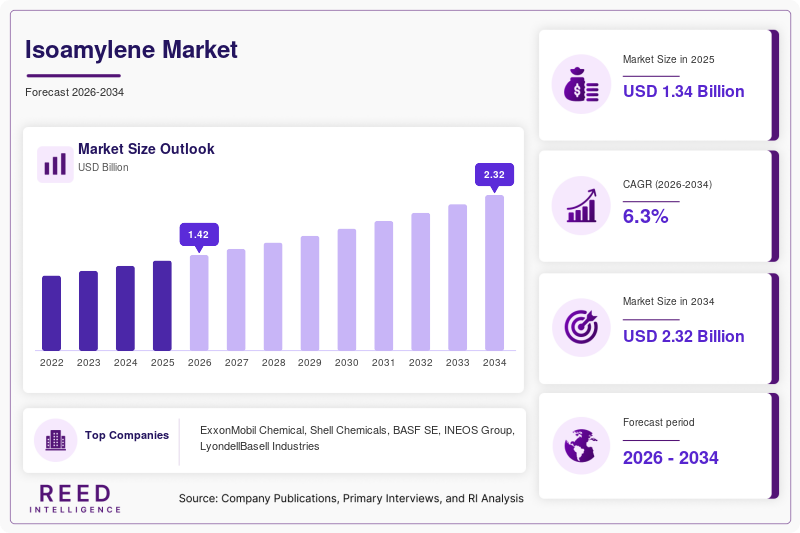
The global Isoamylene Market size is witnessing steady expansion, with a base valuation of approximately USD 1.42 billion in 2026 and is projected to reach around USD 2.31 billion by 2034, registering a CAGR of 6.3% during the forecast period (2026–2034). Isoamylene, a branched-chain olefin, is widely used as a chemical intermediate in the production of fragrances, fuel additives, pharmaceutical intermediates, and polymer modifiers. Its demand is strongly influenced by the expansion of downstream chemical manufacturing and increasing consumption of specialty chemicals across industrial applications.
A key global factor supporting market growth is the rising demand for high-performance fuel additives and specialty intermediates in petrochemical refining processes. As industries transition toward cleaner combustion efficiency and optimized fuel performance, isoamylene derivatives such as tert-amyl methyl ether (TAME) are increasingly adopted, strengthening market penetration across developed and emerging economies. Additionally, the expansion of fragrance and personal care industries further contributes to sustained consumption growth.
Key Highlights
- North America dominated the market with a 34.2% share in 2025.
- Asia Pacific is expected to grow at the fastest CAGR of 11.2% during 2026–2034.
- By application, fuel additives accounted for the largest share of 36.8%, while pharmaceutical intermediates are projected to grow at a CAGR of 10.9%.
- By purity grade, high-purity isoamylene led with a 42.5% share, whereas chemical-grade isoamylene is expected to expand at a CAGR of 9.8%.
- The United States remained the dominant country, with market values of USD 410 million in 2024 and USD 445 million in 2025.
Market Trends
Expansion of Specialty Chemical Applications
The Isoamylene Market is experiencing a notable shift toward specialty chemical applications, particularly in fragrance synthesis and pharmaceutical intermediates. Manufacturers are increasingly utilizing isoamylene as a building block in the production of esters and aldehydes used in fine fragrances and personal care formulations. This trend is driven by rising consumer preference for premium cosmetic products and innovative scent profiles. Additionally, pharmaceutical companies are integrating isoamylene derivatives into active pharmaceutical ingredient synthesis, improving process efficiency and molecular stability. The growing demand for customized chemical formulations across industries is further strengthening the adoption of isoamylene in high-value applications.
Rising Integration in Cleaner Fuel Technologies
Another significant trend shaping the market is the integration of isoamylene in cleaner fuel technologies, especially in the formulation of oxygenate additives such as TAME. Refiners are increasingly adopting isoamylene-based additives to enhance octane ratings and reduce emissions in gasoline blends. This trend aligns with global environmental regulations aimed at lowering vehicular emissions and improving fuel efficiency standards. Moreover, advancements in catalytic processing technologies are enabling higher conversion efficiency of isoamylene into fuel-grade derivatives, supporting its growing importance in sustainable energy applications across developed economies.
Market Drivers
Growing Demand from Petrochemical and Refining Industries
The Isoamylene Market is primarily driven by its increasing utilization in petrochemical refining and downstream processing industries. Isoamylene serves as a key intermediate in the production of fuel additives, solvents, and synthetic compounds, making it essential for refinery operations. The expansion of global refining capacity, particularly in Asia Pacific and the Middle East, is significantly boosting demand. Additionally, the need for high-octane blending components in gasoline production is accelerating consumption. As energy demand rises globally, refiners are investing in advanced chemical processing solutions, further strengthening isoamylene demand across industrial value chains.
Expansion of Personal Care and Fragrance Industry
Another major driver is the rapid growth of the personal care and fragrance industry, where isoamylene is used in the synthesis of aroma chemicals and specialty esters. Rising disposable incomes, urbanization, and changing lifestyle patterns are fueling demand for perfumes, skincare, and cosmetic products. Manufacturers are increasingly focusing on innovative fragrance formulations, which require high-purity chemical intermediates like isoamylene. This demand is particularly strong in Europe and Asia Pacific, where premium beauty product consumption is increasing. The continuous innovation in fragrance chemistry is expected to sustain long-term market growth.
Market Restraint
Volatility in Raw Material Prices and Supply Chain Constraints
A key restraint affecting the Isoamylene Market is the volatility in raw material prices, particularly those derived from crude oil and petrochemical feedstocks. Since isoamylene production is closely tied to petroleum refining processes, fluctuations in crude oil prices directly impact production costs and profit margins. Additionally, supply chain disruptions, geopolitical tensions, and transportation bottlenecks can hinder consistent raw material availability. This unpredictability affects manufacturers’ ability to maintain stable pricing structures and long-term contracts, especially in emerging economies where procurement efficiency is critical for industrial competitiveness.
Market Opportunities
Increasing Demand for Green and Sustainable Chemical Processes
The shift toward sustainable and environmentally friendly chemical processes presents a significant opportunity for the Isoamylene Market. Companies are investing in bio-based and low-emission production technologies to reduce environmental impact. Isoamylene, when integrated into green chemistry frameworks, supports the production of cleaner fuel additives and biodegradable chemical intermediates. Regulatory support for sustainable manufacturing practices is encouraging innovation in catalytic processes and energy-efficient production systems, creating long-term growth potential for market players focused on eco-friendly solutions.
Expansion in Emerging Economies and Industrialization
Emerging economies in Asia Pacific, Latin America, and parts of Africa are witnessing rapid industrialization, creating substantial opportunities for isoamylene producers. Growing investments in petrochemical infrastructure, automotive fuels, and consumer goods manufacturing are driving demand for chemical intermediates. Countries such as India, China, and Brazil are expanding their refining and specialty chemical capacities, increasing isoamylene consumption. Additionally, favorable government policies supporting domestic chemical production are encouraging foreign investments, further strengthening market expansion opportunities in these regions.
Segmental Analysis
By Purity Grade
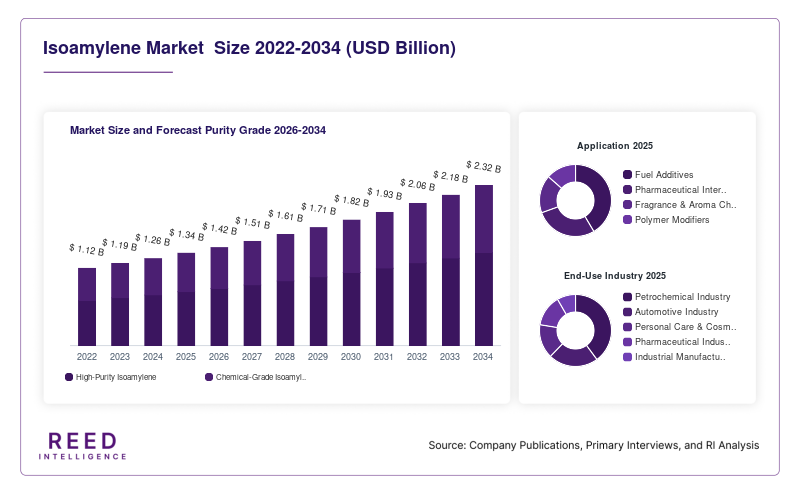
High-purity isoamylene accounted for approximately 42.5% market share in 2024, driven by its extensive use in pharmaceutical and fragrance applications. Its superior chemical stability and performance characteristics make it highly preferred in advanced formulations.
Chemical-grade isoamylene is expected to grow at a CAGR of 9.8%, supported by its cost-effectiveness and widespread use in fuel additive production. Increasing demand from refining industries is a major growth factor.
By Application
Fuel additives dominated with a 38.7% share in 2024, primarily due to the extensive use of isoamylene in octane enhancement and gasoline blending solutions. This segment benefits from global fuel consumption trends.
Pharmaceutical intermediates are projected to grow at a CAGR of 10.9%, driven by rising demand for complex drug synthesis processes and increasing R&D investments in healthcare chemistry.
By End-Use Industry
The petrochemical industry held a 40.2% share in 2024, supported by strong demand for chemical intermediates and refinery-based production processes. Isoamylene plays a critical role in downstream chemical manufacturing.
The personal care and cosmetics industry is expected to expand at a CAGR of 10.4%, driven by rising demand for fragrance compounds and specialty esters used in premium skincare products.
Regional Analysis
North America
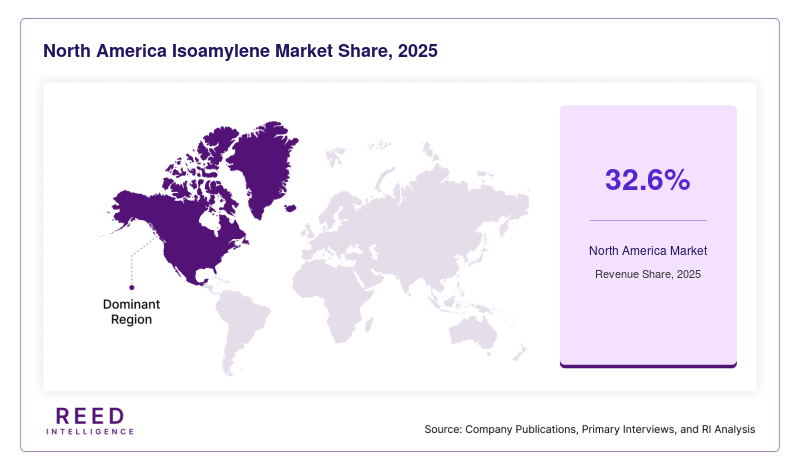
North America accounted for approximately 32.6% market share in 2025, with a projected CAGR of 5.8% from 2026 to 2034. The region benefits from a well-established petrochemical infrastructure and advanced refining technologies. Strong demand for fuel additives and specialty chemicals continues to support market stability and growth.
The United States leads the regional market due to its extensive refinery network and high consumption of gasoline additives. A key growth factor is the increasing investment in sustainable fuel technologies and advanced chemical processing systems, which enhance isoamylene utilization across industrial applications.
Europe
Europe held nearly 25.4% market share in 2025, with a forecasted CAGR of 5.5% through 2034. The region’s demand is driven by strict environmental regulations and the adoption of cleaner fuel technologies. Isoamylene is increasingly used in regulated fuel blending applications.
Germany dominates the European market due to its strong chemical manufacturing base. The growth factor includes rising demand from the fragrance and personal care industry, supported by Europe’s strong luxury goods sector.
Asia Pacific
Asia Pacific represented about 28.1% market share in 2025, with the highest projected CAGR of 11.2% through 2034. Rapid industrialization and expanding petrochemical capacity are key growth drivers in this region.
China leads the market due to large-scale refining operations and chemical production facilities. A major growth factor is the increasing domestic demand for fuel additives and industrial chemicals driven by automotive and manufacturing expansion.
Middle East & Africa
The Middle East & Africa accounted for 8.7% market share in 2025, with a projected CAGR of 7.4%. The region benefits from abundant crude oil reserves and expanding downstream processing industries.
Saudi Arabia dominates the market due to strong investments in petrochemical diversification. A key growth factor is the expansion of integrated refinery complexes producing high-value chemical intermediates.
Latin America
Latin America accounted for approximately 8.3% of the global Isoamylene Market share in 2025, with a market size of around USD 13.08 million in 2025. The region is expected to expand at a CAGR of 3.6% during 2025–2033, driven by steady growth in petrochemical production and downstream chemical industries. The market remains relatively smaller compared to Asia Pacific and North America, but it is gradually gaining traction due to increasing industrial investments and rising demand for fuel additives and specialty chemicals.
Competitive Landscape
The Isoamylene Market is moderately consolidated, with key players focusing on capacity expansion, technological innovation, and strategic partnerships. Major companies include ExxonMobil Chemical, Shell Chemicals, BASF SE, INEOS Group, and LyondellBasell Industries. ExxonMobil Chemical remains a leading player due to its integrated refining and petrochemical operations. Recently, BASF SE announced an expansion of its specialty chemicals portfolio, strengthening its isoamylene-based product offerings. Competitive strategies revolve around production efficiency, feedstock integration, and sustainable chemical processing technologies.
Key Players List
- ExxonMobil Chemical
- Shell Chemicals
- BASF SE
- INEOS Group
- LyondellBasell Industries
- SABIC
- Chevron Phillips Chemical Company
- Dow Inc.
- Mitsui Chemicals
- Evonik Industries
- TotalEnergies Petrochemicals
- Reliance Industries Limited
- China Petrochemical Corporation (Sinopec)
- LG Chem
- Formosa Plastics Corporation
Recent Developments
- ExxonMobil expanded its refining-based chemical output to improve isoamylene conversion efficiency for fuel additive applications.
- BASF introduced process optimization technologies aimed at reducing emissions in isoamylene-based chemical production.
- INEOS Group announced capacity enhancement in its olefin production facilities to support growing demand for specialty intermediates
Isoamylene Market Segments
Purity Grade
- High-Purity Isoamylene
- Chemical-Grade Isoamylene
Application
- Fuel Additives
- Pharmaceutical Intermediates
- Fragrance & Aroma Chemicals
- Polymer Modifiers
End-Use Industry
- Petrochemical Industry
- Automotive Industry
- Personal Care & Cosmetics
- Pharmaceutical Industry
- Industrial Manufacturing
By Region
- North America
- Europe
- APAC
- Middle East and Africa
- LATAM