IV Poles Market Size, Share & Demand Report By Type (Mobile IV Poles, Fixed IV Poles, Wall-Mounted IV Poles), By Material (Stainless Steel, Aluminum, Plastic/Composite), By Application (Fluid & Medication Administration, Blood Transfusion, Nutritional Infusion), By End-Use (Hospitals, Ambulatory Surgical Centers, Home Healthcare, Specialty Clinics), By Region & Segment Forecasts, 2025–2034
USD 3950
Market Overview
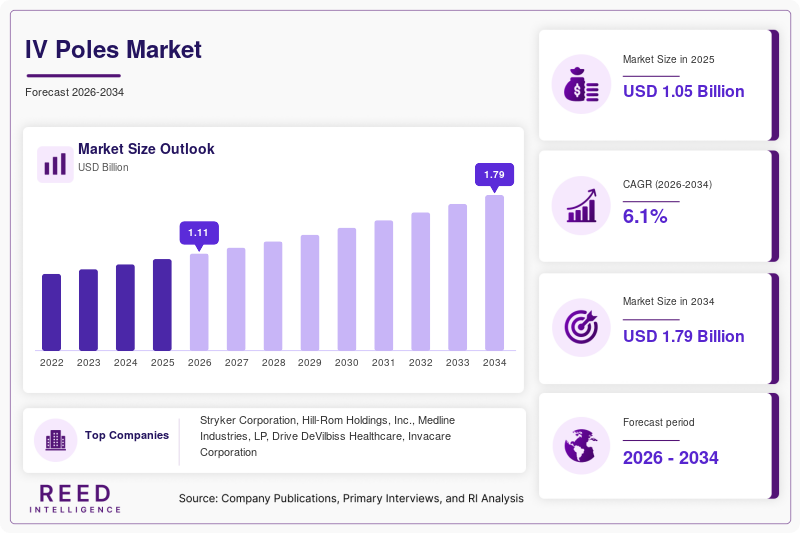
The global Iv Poles Market was valued at USD 1.05 billion in 2025 and is projected to reach USD 1.78 billion by 2033, expanding at a compound annual growth rate (CAGR) of 6.1% during 2025–2034. The market growth reflects the steady expansion of healthcare infrastructure, increasing hospital admissions, and rising demand for intravenous therapy across acute and chronic care settings. Intravenous (IV) poles remain essential equipment in hospitals, ambulatory centers, and home care environments because they support safe fluid delivery and medication administration.
A major global factor supporting market expansion is the growing burden of chronic diseases requiring infusion therapy, including oncology, kidney disorders, and metabolic conditions. As healthcare systems continue to adopt infusion-based treatments, the demand for durable and ergonomic IV pole solutions is increasing. Manufacturers are also introducing mobile and adjustable IV poles designed to enhance patient mobility and caregiver efficiency. These design improvements are encouraging healthcare providers to upgrade existing equipment inventories.
Key Highlights
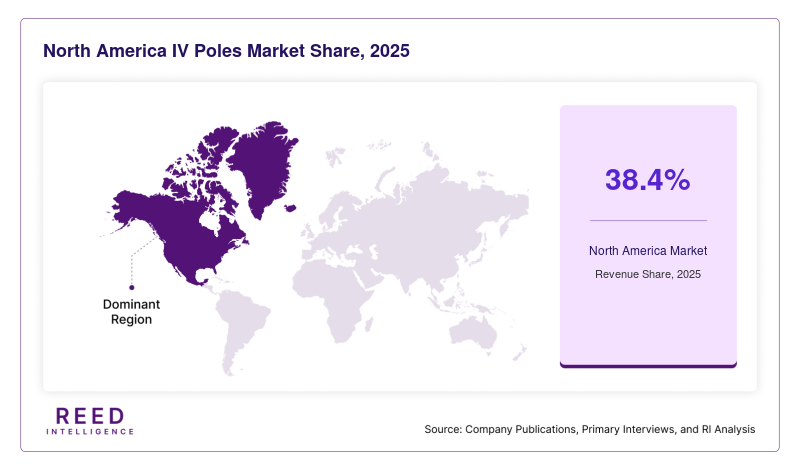
- Dominant region: North America accounted for 38.4% of the Iv Poles Market share in 2025, while Asia Pacific will register the fastest CAGR of 7.2% during 2025–2034.
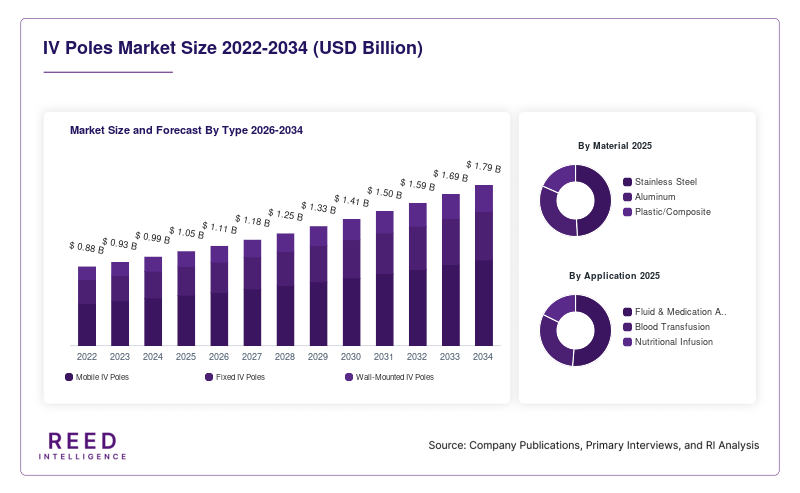
- Leading subsegments: Mobile IV poles led the type segment with 54.6% share, while stainless steel poles dominated the material segment with 46.8% share. The hospital end-use segment held 63.2% share, while home healthcare will grow at 7.8% CAGR.
- Dominant country: The United States market reached USD 332 million in 2025 and is estimated to reach USD 351 million in 2026
Market Trends
Integration of Mobility-Focused Equipment Designs
Healthcare facilities are increasingly adopting mobile IV pole systems designed to improve patient mobility and workflow efficiency. Hospitals are focusing on equipment that supports flexible care delivery in emergency rooms, intensive care units, and outpatient departments. Modern IV poles include features such as multi-hook supports, telescopic height adjustment, lockable caster wheels, and ergonomic handles. These functional improvements allow medical staff to reposition equipment quickly while maintaining infusion safety. The growing emphasis on patient mobility during treatment has therefore increased the demand for lightweight and highly maneuverable IV poles. Manufacturers are also designing compact models that can be integrated with infusion pumps and monitoring devices, supporting streamlined bedside care environments.
Growth of Home Infusion Therapy Infrastructure
The expansion of home infusion therapy services is shaping the Iv Poles Market trends globally. Healthcare providers are encouraging outpatient treatment for conditions such as antibiotic therapy, parenteral nutrition, and chemotherapy. This transition has increased the demand for IV poles designed for home settings, where portability and ease of use are essential. Compact and foldable designs are gaining traction because they simplify storage and transportation. Home healthcare providers are also prioritizing equipment with simplified adjustment mechanisms and stable bases. As the global healthcare industry shifts toward decentralized treatment models, the demand for IV poles suitable for residential use will continue to influence product development strategies.
Market Drivers
Rising Demand for Infusion-Based Treatments
The increasing use of intravenous therapy across medical specialties is a primary driver of the Iv Poles Market growth. Infusion therapy is widely used for delivering medications, fluids, blood products, and nutritional solutions. Treatments for cancer, infectious diseases, immune disorders, and metabolic conditions often rely on continuous or intermittent IV administration. As hospitals expand infusion services, the demand for reliable support equipment continues to rise. Healthcare providers are also establishing dedicated infusion centers that require large numbers of IV poles for patient treatment stations. The expanding therapeutic use of infusion therapy across healthcare systems is therefore contributing to consistent equipment demand.
Expansion of Healthcare Infrastructure
Global investment in healthcare infrastructure is another factor supporting Iv Poles Market size expansion. Governments in developing economies are increasing healthcare budgets to improve hospital capacity and patient access to medical services. Construction of new hospitals, clinics, and ambulatory surgical centers directly increases demand for essential medical furniture and equipment. IV poles are standard items required in patient wards, emergency departments, and intensive care units. As healthcare facilities modernize their equipment inventories, procurement of durable stainless-steel or aluminum IV poles continues to increase. The expansion of healthcare facilities across both developed and emerging markets is therefore supporting stable market demand.
Market Restraint
Limited Product Differentiation and Price Competition
One restraint affecting the Iv Poles Market outlook is the limited level of technological differentiation among standard IV pole products. Many IV poles perform similar basic functions such as supporting infusion bags and providing adjustable height mechanisms. As a result, purchasing decisions by hospitals and clinics often focus on price rather than advanced features. This price-sensitive procurement environment can limit profit margins for manufacturers and create intense competition among suppliers.
Additionally, healthcare facilities frequently purchase IV poles in bulk during infrastructure expansion or equipment replacement cycles. Procurement departments often prioritize cost efficiency and durability, which encourages competition among low-cost manufacturers. Smaller suppliers and regional manufacturers may offer lower-priced alternatives that compete with global brands. This situation can create challenges for companies attempting to introduce premium products with additional design features.
Another factor affecting market growth is the long product lifespan of IV poles. Because these devices are durable and require minimal maintenance, replacement cycles can extend over several years. Hospitals may delay new purchases until existing equipment reaches the end of its operational life. These factors collectively create moderate pricing pressure across the industry.
Market Opportunities
Development of Smart Infusion Equipment Integration
Manufacturers have an opportunity to expand the Iv Poles Market analysis by integrating IV poles with digital healthcare technologies. Modern infusion environments increasingly include infusion pumps, patient monitoring devices, and electronic medical record systems. IV poles that support mounting brackets or integrated device management systems can improve workflow efficiency. Healthcare facilities are seeking equipment that supports compact bedside setups and reduces clutter around patient beds. Companies that develop IV poles capable of supporting smart infusion devices or modular attachments may benefit from this demand. These innovations could allow healthcare providers to integrate infusion pumps, cable management systems, and monitoring equipment into a single structure.
Growing Demand from Emerging Healthcare Markets
Emerging economies represent a significant opportunity for Iv Poles Market forecast expansion. Countries in Asia, Latin America, and Africa are investing in hospital construction and healthcare modernization programs. As these healthcare systems expand, demand for essential hospital equipment such as IV poles will increase. Local manufacturing partnerships and distribution networks may help companies access these growing markets. In addition, healthcare reforms focused on improving patient access to treatment are increasing the number of inpatient beds and outpatient infusion facilities. These developments create long-term procurement demand for IV poles across public and private healthcare institutions.
Segmental Analysis
By Type
Mobile IV poles dominated the Iv Poles Market share with 54.6% in 2025. These poles are widely used in hospitals and treatment centers because they allow healthcare providers to move patients between departments while maintaining continuous infusion therapy. Mobile designs typically include caster wheels, adjustable height mechanisms, and multiple hooks for supporting infusion bags. Hospitals prefer mobile IV poles in emergency departments, surgical recovery rooms, and intensive care units where flexibility and mobility are essential. Their ability to support patient movement while maintaining infusion stability contributed to their strong adoption across healthcare facilities.
Wall-mounted IV poles will represent the fastest-growing subsegment with a CAGR of 6.8% during the forecast period. These poles are designed to save floor space and improve equipment organization in compact hospital rooms. Healthcare facilities with high patient volumes are increasingly installing wall-mounted systems in infusion rooms and outpatient treatment areas. Their fixed design reduces equipment clutter and improves accessibility for healthcare professionals. The demand for space-efficient equipment in hospitals will support the expansion of this subsegment.
By Material
Stainless steel IV poles accounted for 46.8% of the Iv Poles Market size in 2025. Stainless steel is widely used because it offers durability, corrosion resistance, and ease of cleaning. Hospitals require equipment that can withstand frequent disinfection and long-term use in high-traffic medical environments. Stainless steel IV poles also provide structural stability when supporting multiple infusion bags and medical devices. These characteristics have made stainless steel the preferred material for hospital-grade infusion support equipment.
Aluminum IV poles will grow at a CAGR of 7.1% through 2034. Aluminum structures are lightweight and easier to transport, making them suitable for home healthcare and portable medical equipment applications. Healthcare providers are increasingly adopting aluminum designs because they simplify patient mobility and reduce equipment weight during transportation. As home infusion therapy services expand, the demand for lightweight IV pole solutions will continue to increase.
By Application
Fluid and medication administration represented the largest application segment with 48.7% share in 2025. IV poles are primarily used to support infusion bags delivering saline solutions, medications, and blood products. Hospitals rely heavily on these poles in inpatient wards, surgical units, and emergency departments. Because intravenous therapy is widely used across multiple medical specialties, the demand for IV poles for medication and fluid administration remains consistently high.
Blood transfusion applications will grow at a CAGR of 6.9% during the forecast period. Healthcare facilities are expanding transfusion services to address surgical procedures and trauma cases. Blood banks and emergency departments require reliable equipment to support safe transfusion procedures. IV poles designed to hold multiple infusion bags and maintain stability during transfusion procedures will support growth in this application segment.
By End-Use
Hospitals dominated the Iv Poles Market analysis with 63.2% share in 2025. Hospitals maintain large inventories of infusion equipment because intravenous therapy is used across multiple departments including emergency rooms, surgical units, and intensive care wards. Large hospital networks also frequently purchase IV poles during facility expansion or renovation projects. Their extensive usage across patient wards and treatment rooms has contributed to the strong share of this segment.
Home healthcare will expand at the fastest CAGR of 7.8% during 2025–2034. Increasing adoption of home-based treatment for chronic conditions has created demand for portable infusion equipment. Patients receiving long-term therapies such as antibiotic infusion or parenteral nutrition often require IV pole systems designed for residential environments. Portable and lightweight designs will support the growth of this segment during the forecast period.
Regional Analysis
North America
North America accounted for 38.4% of the Iv Poles Market share in 2025, reflecting the presence of advanced healthcare infrastructure and high adoption of infusion therapy services. The region will expand at a CAGR of 5.8% during 2025–2034 as healthcare facilities continue to upgrade equipment and expand outpatient treatment capabilities. The United States and Canada maintain extensive hospital networks, and infusion therapy is widely used in oncology, emergency medicine, and chronic disease management. Medical equipment procurement in the region emphasizes durable materials, ergonomic design, and compatibility with infusion pumps and monitoring systems. As healthcare providers prioritize efficient patient care environments, demand for mobile and adjustable IV poles will continue to grow.
The United States dominated the regional market due to high healthcare spending and strong hospital infrastructure. The growing prevalence of chronic diseases requiring infusion therapy has increased equipment demand across hospitals and outpatient infusion centers. Additionally, the country has a large number of home healthcare service providers offering infusion-based treatments. These providers require portable IV poles suitable for residential environments. The combination of hospital procurement and home infusion services has therefore strengthened market demand within the United States.
Europe
Europe represented 27.1% of the Iv Poles Market size in 2025 and will grow at a CAGR of 5.6% through 2034. The region benefits from well-established public healthcare systems and a large number of hospitals and specialty clinics. Healthcare facilities across Europe continue to invest in patient care infrastructure, which includes upgrading hospital equipment and improving ward efficiency. Demand for IV poles remains stable because intravenous therapy is widely used in surgical recovery, intensive care units, and chronic disease treatment. Additionally, healthcare institutions are emphasizing durable medical equipment capable of long-term usage, supporting consistent procurement demand.
Germany held the largest market share in Europe due to its extensive hospital network and high healthcare expenditure. The country has a large number of inpatient beds and advanced treatment facilities that require reliable infusion support equipment. Healthcare providers are also focusing on improving hospital logistics and workflow efficiency, which has encouraged the adoption of mobile IV pole systems. These factors have contributed to steady market expansion within Germany.
Asia Pacific
Asia Pacific accounted for 22.6% of the Iv Poles Market share in 2025 and is projected to expand at the fastest CAGR of 7.2% during 2025–2034. Rapid healthcare infrastructure development and rising patient populations are supporting market growth in the region. Many countries are increasing investments in hospitals, clinics, and diagnostic centers to improve access to medical services. As healthcare capacity expands, procurement of essential medical equipment such as IV poles is increasing. The growing prevalence of chronic diseases and surgical procedures has also contributed to rising demand for infusion therapy across hospitals and outpatient treatment facilities.
China dominated the regional market due to its expanding healthcare infrastructure and growing hospital capacity. Government healthcare reforms have encouraged hospital modernization and equipment procurement across public healthcare facilities. Additionally, the increasing number of patients requiring intravenous treatments in urban hospitals has increased demand for durable infusion support equipment. These developments have supported strong market growth within China.
Middle East & Africa
The Middle East & Africa accounted for 6.1% of the Iv Poles Market share in 2025 and will grow at a CAGR of 6.3% through 2034. The region is gradually improving healthcare infrastructure through government initiatives and private healthcare investments. Hospitals and clinics are expanding capacity to address increasing patient demand and improve treatment accessibility. As healthcare providers invest in medical equipment procurement, the demand for IV poles continues to increase. The growing presence of private hospitals and specialized treatment centers has also supported equipment purchases.
Saudi Arabia represented the largest market within the region due to healthcare modernization initiatives. The government has been investing in hospital construction and advanced medical facilities as part of national healthcare development programs. These projects have increased demand for essential hospital equipment including infusion support devices. The expansion of private healthcare providers has also contributed to equipment procurement across the country.
Latin America
Latin America held 5.8% of the Iv Poles Market share in 2025 and will expand at a CAGR of 6.0% through 2034. Healthcare systems across the region are gradually improving infrastructure and expanding access to treatment. Hospitals and clinics are increasing investments in patient care equipment to support rising patient volumes. The demand for IV poles remains steady because intravenous therapy is commonly used in emergency care, surgery recovery, and infectious disease treatment. Healthcare institutions are also focusing on cost-efficient equipment procurement, which influences purchasing decisions.
Brazil led the regional market due to its large healthcare system and growing hospital network. The country has numerous public and private hospitals that require essential medical equipment for patient treatment. Additionally, healthcare reforms aimed at improving service capacity have encouraged hospitals to upgrade medical equipment inventories. These developments have strengthened the demand for IV poles in Brazil.
Competitive Landscape
The Iv Poles Market is moderately fragmented with the presence of global medical equipment manufacturers and regional suppliers. Companies compete primarily through product durability, ergonomic design, and distribution networks. Many manufacturers focus on developing lightweight materials, adjustable designs, and integrated mounting systems for infusion devices.
Among leading participants, Stryker Corporation maintains a strong market position due to its extensive medical equipment portfolio and hospital distribution network. The company has introduced improved mobile IV pole systems designed for integration with infusion pumps and patient monitoring devices. Other companies in the market emphasize durable stainless steel designs and cost-efficient manufacturing to serve hospital procurement requirements.
Manufacturers are also expanding partnerships with hospital equipment distributors and healthcare service providers to strengthen market reach. Product development efforts increasingly focus on portable designs for outpatient and home healthcare environments.
Key Players
- Stryker Corporation
- Hill-Rom Holdings
- Medline Industries
- Drive DeVilbiss Healthcare
- Invacare Corporation
- Vygon Group
- Cardinal Health
- Fresenius Kabi
- B. Braun Melsungen AG
- Baxter International
- Narang Medical Limited
- Midmark Corporation
- GF Health Products
- Better Enterprise Co. Ltd.
- Hong Kong Medi Co. Ltd.
- Jiangsu Saikang Medical Equipment
- Zhangjiagang Medi Medical Equipment
Recent Developments
- Several medical equipment manufacturers introduced lightweight aluminum IV pole designs intended for home infusion therapy services.
- Healthcare equipment suppliers expanded distribution partnerships with hospital procurement networks to strengthen global sales coverage.
- Manufacturers launched mobile IV poles with multi-device mounting systems, enabling integration with infusion pumps and monitoring equipment.
- Regional medical device companies increased local production capacity to support hospital equipment demand in emerging healthcare markets.
IV Poles Market Segments
By Type
- Mobile IV Poles
- Fixed IV Poles
- Wall-Mounted IV Poles
By Material
- Stainless Steel
- Aluminum
- Plastic/Composite
By Application
- Fluid & Medication Administration
- Blood Transfusion
- Nutritional Infusion
By End-Use
- Hospitals
- Ambulatory Surgical Centers
- Home Healthcare
- Specialty Clinics
By Region
- North America
- Europe
- APAC
- Middle East and Africa
- LATAM