Jet Skis Market Size, Share & Demand Report By Product Type (Recreational Jet Skis, Luxury Performance Jet Skis), By Propulsion Type (Gasoline-Powered Jet Skis), By Seating Capacity (Single-Seater Models, Two-Seater Models, Three-Seater Models), By End User (Individual Owners, Rental & Tourism Operators, Sports & Racing Organizations), By Distribution Channel (Authorized Dealers, Online Sales Platforms), By Region & Segment Forecasts, 2026–2034
USD 3950
Market Overview
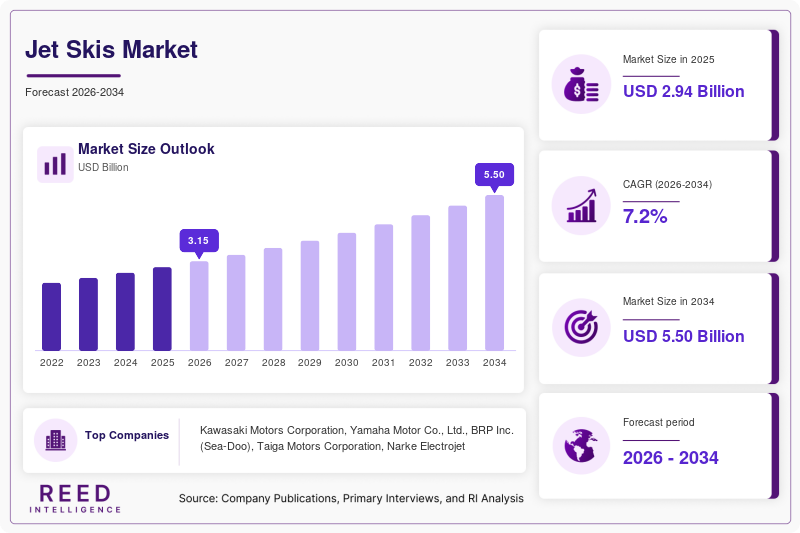
The Jet Skis Market was valued at USD 2.94 billion in 2026 and is projected to reach USD 5.12 billion by 2034, expanding at a CAGR of 7.2% during the forecast period (2026–2034). The market continues to grow steadily as recreational marine activities gain popularity across coastal destinations, inland waterways, and tourism hubs. Jet skis, also referred to as personal watercraft (PWC), have become a preferred option for leisure boating enthusiasts due to their speed, maneuverability, and relatively lower ownership costs compared to larger recreational vessels.
A significant global factor supporting market growth has been the expansion of marine tourism and water-based recreational infrastructure. Governments and private tourism operators are investing in marinas, waterfront resorts, adventure sports facilities, and recreational boating ecosystems to attract domestic and international tourists. These developments have increased accessibility to personal watercraft activities and stimulated demand for both rental fleets and private ownership.
Key Highlights
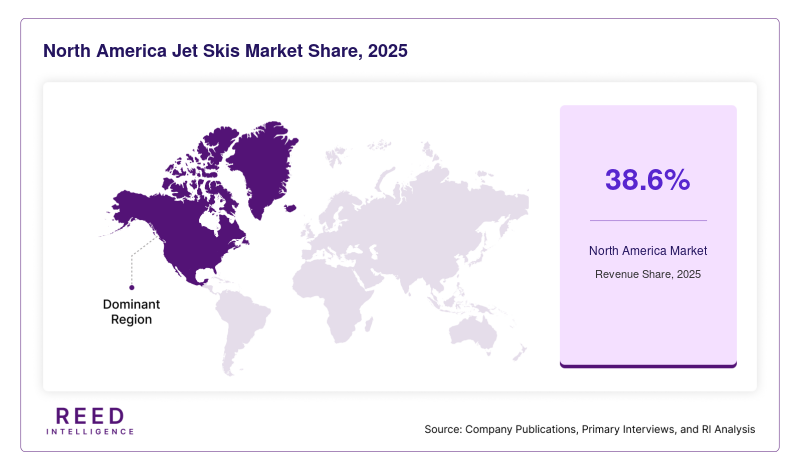
- North America dominated the market with 38.6% share in 2025, while Asia Pacific is projected to register the fastest CAGR of 8.9% during 2026–2034.
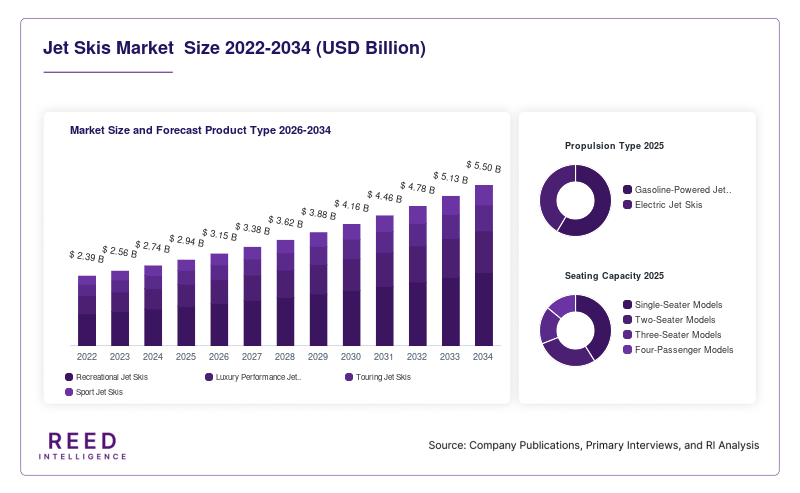
- By Product Type, Recreational Jet Skis accounted for 52.4% share in 2025, while Luxury Performance Jet Skis are expected to grow at a CAGR of 8.5%.
- By Propulsion Type, Gasoline-Powered Jet Skis held 87.3% share in 2025, whereas Electric Jet Skis are forecast to expand at a CAGR of 12.8%.
- By Seating Capacity, Three-Seater Models represented 46.7% share in 2025, while Four-Passenger Models are projected to grow at a CAGR of 8.1%.
- By End User, Individual Owners accounted for 61.8% share in 2025, while Rental & Tourism Operators are expected to grow at a CAGR of 9.3%.
- The United States remained the dominant country market, valued at USD 842 million in 2024 and USD 908 million in 2025.
Market Trends
Integration of Smart Connectivity Features
Manufacturers are increasingly integrating smart technologies into personal watercraft platforms. Modern jet skis now feature GPS navigation, digital instrument clusters, smartphone connectivity, ride analytics, geofencing capabilities, and remote diagnostics. These technologies improve convenience and enhance safety while creating a more personalized riding experience. As connected marine ecosystems continue to evolve, smart-enabled watercraft are expected to gain broader adoption among recreational users.
Emergence of Electric Personal Watercraft
The shift toward environmentally conscious recreational products is influencing product development strategies across the marine industry. Electric jet skis are attracting interest due to lower emissions, reduced maintenance requirements, and quieter operation. Improvements in battery technology and charging infrastructure are supporting commercialization efforts. Although gasoline-powered models continue to dominate sales volumes, electric alternatives are gradually gaining market visibility across premium recreational segments.
Market Drivers
Growing Participation in Recreational Watersports
Increasing consumer interest in outdoor adventure activities is driving demand for personal watercraft worldwide. Water-based recreation has become a preferred leisure option among younger demographics and affluent travelers seeking experiential tourism. The accessibility of jet skiing at resorts, beaches, and recreational lakes has contributed to rising participation rates and supported market expansion.
Expansion of Personal Watercraft Rental Networks
The rapid growth of rental service providers has improved access to jet skiing activities without requiring ownership. Tourism operators are expanding rental fleets to accommodate increasing visitor demand for marine recreation. Flexible rental options, guided adventure packages, and organized watersport experiences continue to attract first-time users and occasional participants, creating a strong foundation for market growth.
Market Restraint
Seasonal Demand and Weather Dependency
Demand for jet skis remains highly dependent on favorable weather conditions and tourism seasons. Adverse climate conditions, shorter recreational seasons in colder regions, and unpredictable weather events can impact sales and rental activity. These seasonal fluctuations create operational challenges for manufacturers, dealers, and tourism operators.
Market Opportunities
Development of Sustainable Electric Watercraft
Growing environmental awareness is creating opportunities for manufacturers to develop zero-emission personal watercraft. Advances in marine battery systems and lightweight composite materials are enabling the introduction of practical electric jet ski models. Regulatory support for cleaner recreational transportation solutions may further accelerate adoption.
Expansion into Emerging Coastal Tourism Destinations
Several developing countries are investing in coastal tourism infrastructure and recreational marine activities. New resorts, waterfront developments, and adventure tourism initiatives are increasing demand for watercraft fleets and rental operations. These emerging tourism destinations present substantial opportunities for manufacturers and distributors seeking geographic expansion.
Segmental Analysis
By Product Type
Recreational Jet Skis
Recreational jet skis accounted for 52.4% of market share in 2025. Their affordability, ease of operation, and suitability for leisure riding contributed to widespread consumer adoption. These models remained popular among first-time buyers and rental fleet operators seeking versatile personal watercraft solutions.
Luxury Performance Jet Skis
Luxury performance jet skis are projected to grow at a CAGR of 8.5% through 2034. Growth will be supported by increasing consumer demand for high-powered engines, advanced digital features, and premium comfort enhancements. Rising spending on luxury recreational products will strengthen adoption within affluent consumer segments.
By Propulsion Type
Gasoline-Powered Jet Skis
Gasoline-powered jet skis held 87.3% share in 2025. The segment maintained leadership because of established fueling infrastructure, proven reliability, and broad availability across global markets. Manufacturers continued introducing more fuel-efficient engines to improve operational performance.
Electric Jet Skis
Electric jet skis are expected to expand at a CAGR of 12.8% during the forecast period. Growth will be driven by advancements in battery capacity, environmental regulations encouraging cleaner recreational technologies, and increasing consumer preference for sustainable transportation alternatives.
By Seating Capacity
Three-Seater Models
Three-seater models represented 46.7% market share in 2025. These products offered an effective balance between passenger capacity, stability, and maneuverability. Their versatility made them popular among families, recreational riders, and rental service providers.
Four-Passenger Models
Four-passenger models are forecast to grow at a CAGR of 8.1% through 2034. Increasing demand for group recreational experiences and family-oriented watersport activities will encourage greater adoption of higher-capacity personal watercraft.
By End User
Individual Owners
Individual owners accounted for 61.8% share in 2025. Personal ownership remained prevalent among recreational boating enthusiasts seeking convenience and unrestricted access to water-based activities. Increasing interest in outdoor leisure experiences contributed to sustained demand.
Rental & Tourism Operators
Rental and tourism operators are expected to register a CAGR of 9.3% during the forecast period. Expansion will be supported by rising visitor demand for adventure tourism experiences and increasing investment in watersport service offerings across tourist destinations.
By Distribution Channel
Authorized Dealers
Authorized dealers held 58.6% market share in 2025. Consumers preferred dealership networks due to access to certified products, financing options, maintenance services, and warranty support. Established dealer relationships also strengthened brand loyalty among buyers.
Online Sales Platforms
Online sales platforms are projected to grow at a CAGR of 10.2% through 2034. Digital retail channels will benefit from improved product comparison tools, virtual demonstrations, and streamlined purchasing experiences that enhance customer convenience.
Regional Analysis
North America
North America accounted for 38.6% of the Jet Skis Market share in 2025 and is expected to grow at a CAGR of 6.8% through 2034. The region maintained a strong market position due to extensive recreational boating culture, established marina infrastructure, and widespread availability of water-based leisure facilities. The United States dominated the regional market owing to a large network of recreational lakes and coastal destinations that support year-round personal watercraft activities in multiple states.
Europe
Europe represented 24.1% market share in 2025 and is projected to expand at a CAGR of 6.9% during the forecast period. The region benefited from growing marine tourism activity and increasing interest in premium recreational boating experiences. France led the regional market due to strong participation in coastal watersports and the availability of extensive waterfront tourism infrastructure that supports recreational watercraft usage.
Asia Pacific
Asia Pacific held 26.8% share in 2025 and is forecast to witness the fastest CAGR of 8.9% from 2026 to 2034. Rising disposable income levels and increasing investment in recreational tourism supported regional demand. Australia emerged as the leading country market because of its extensive coastline, strong watersport culture, and growing participation in marine leisure activities among domestic consumers.
Middle East & Africa
The Middle East & Africa accounted for 5.7% market share in 2025 and is anticipated to register a CAGR of 7.8% during the forecast period. Expanding luxury tourism developments and waterfront entertainment projects contributed to market growth. The United Arab Emirates dominated the region owing to the development of premium coastal destinations and increasing demand for recreational marine experiences among tourists and residents.
Latin America
Latin America captured 4.8% market share in 2025 and is expected to grow at a CAGR of 6.5% through 2034. Growth was supported by increasing investment in beach tourism and recreational boating facilities. Brazil remained the leading country due to its extensive coastline and growing popularity of watersport activities across major tourist destinations.
Competitive Landscape
The Jet Skis Market remains competitive, with manufacturers focusing on innovation, product differentiation, fuel efficiency improvements, and expansion of dealer networks. Companies are investing in connected technologies, lightweight materials, and environmentally sustainable propulsion systems to strengthen market positioning.
Kawasaki Motors Corporation
Kawasaki remains one of the leading participants in the personal watercraft industry. The company continues to expand its Jet Ski product portfolio through performance-focused designs and advanced engine technologies. A recent development involved the introduction of upgraded digital connectivity features across selected premium models to enhance user experience and operational monitoring.
Yamaha Motor Co., Ltd.
Yamaha maintains a strong presence through its WaveRunner product range. The company focuses on rider safety technologies, fuel-efficient propulsion systems, and expanded recreational product offerings.
BRP Inc. (Sea-Doo)
BRP continues to strengthen its position through innovative Sea-Doo watercraft platforms. The company emphasizes comfort-oriented designs, modular accessories, and advanced stability systems.
Taiga Motors Corporation
Taiga Motors specializes in electric recreational vehicles and continues developing next-generation electric personal watercraft solutions designed for environmentally conscious consumers.
Narke Electrojet
Narke focuses exclusively on electric jet ski development and has expanded its premium electric watercraft portfolio with enhanced battery performance and extended operational range capabilities.
Key Players List
- Kawasaki Motors Corporation
- Yamaha Motor Co., Ltd.
- BRP Inc. (Sea-Doo)
- Taiga Motors Corporation
- Narke Electrojet
- Belassi GmbH
- Krash Industries
- Gibbs Sports Amphibians Inc.
- Lampuga GmbH
- Nikola Corporation Marine Division
- Electro Nautic
- Orca Performance
- Watercraft Innovations Ltd.
- Green Marine Technologies
- AquaJet Mobility Systems
Recent Developments
- In 2025, several manufacturers launched connected jet ski platforms equipped with GPS tracking, ride analytics, and smartphone integration features.
- In 2025, marine recreation companies expanded electric personal watercraft development programs focused on improving battery efficiency and operating range.
- In 2024, multiple tourism operators increased investment in premium rental fleets to support growing demand for water-based adventure activities.
- In 2024, manufacturers introduced lightweight composite hull technologies designed to improve maneuverability and fuel efficiency.
- In 2025, several marine equipment suppliers expanded dealership networks across emerging coastal tourism destinations.
- In 2025, watercraft companies integrated advanced safety systems, including automated emergency alerts and improved rider assistance technologies.
- In 2024, recreational boating organizations increased promotional initiatives aimed at encouraging participation in personal watercraft activities worldwide.
Jet Skis Market Segments
Product Type
- Recreational Jet Skis
- Luxury Performance Jet Skis
- Touring Jet Skis
- Sport Jet Skis
Propulsion Type
- Gasoline-Powered Jet Skis
- Electric Jet Skis
Seating Capacity
- Single-Seater Models
- Two-Seater Models
- Three-Seater Models
- Four-Passenger Models
End User
- Individual Owners
- Rental & Tourism Operators
- Sports & Racing Organizations
Distribution Channel
- Authorized Dealers
- Online Sales Platforms
- Marine Equipment Retail Stores
By Region
- North America
- Europe
- APAC
- Middle East and Africa
- LATAM