Kenya Used Car Market Size, Share & Demand Report By Vehicle Type (Passenger Cars, SUVs, Commercial Vehicles), By Fuel Type (Petrol, Diesel, Hybrid, Electric), By Vendor Type (Organized Dealers, Unorganized Dealers), By Region & Segment Forecasts, 2026–2034
USD 3950
Market Overview
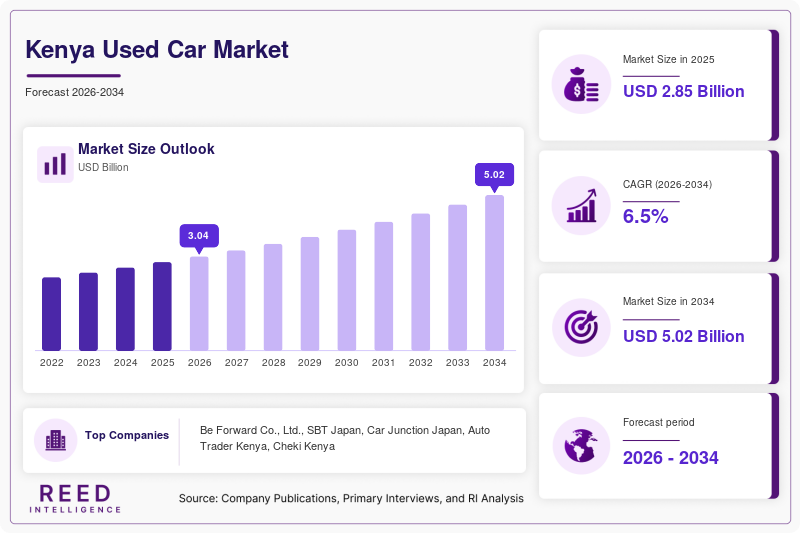
The Kenya Used Car Market size was valued at approximately USD 2.85 billion in 2026 and is projected to reach USD 4.72 billion by 2034, expanding at a CAGR of 6.5% during the forecast period (2026–2034). The market continues to demonstrate stable growth, supported by increasing urbanization, rising middle-income households, and growing demand for affordable personal mobility solutions. Used vehicles remain a preferred option among Kenyan consumers due to cost sensitivity, import-driven supply chains, and favorable availability of reconditioned vehicles from international markets.
A key global factor supporting market growth is the steady increase in vehicle replacement cycles in developed economies. Countries such as Japan, the United Kingdom, and the United Arab Emirates export large volumes of used vehicles to African nations, including Kenya. This consistent supply of relatively new, fuel-efficient, and well-maintained vehicles has enhanced accessibility and affordability for Kenyan buyers, thereby strengthening market expansion.
Key Highlights
- Asia Pacific dominated the global used car supply landscape with a 39.6% share in 2025.
- The Middle East & Africa region is expected to grow at the fastest CAGR of 7.1% during 2026–2034.
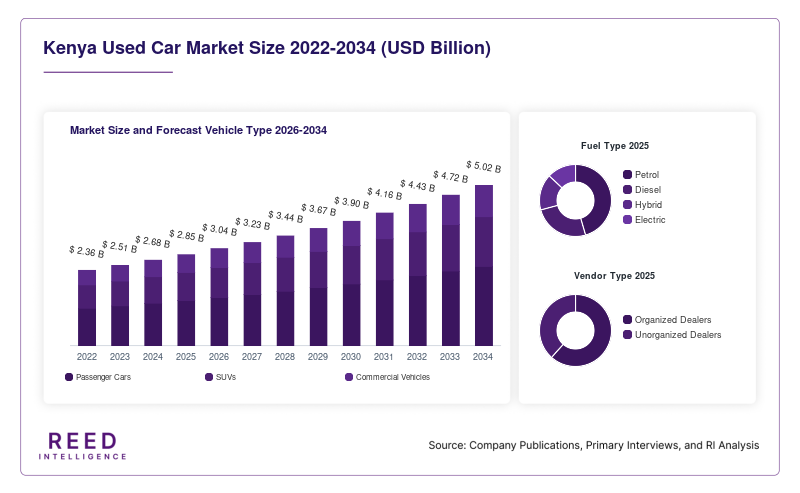
- By vehicle type, passenger cars accounted for the largest share of 68.4%.
- while SUVs are projected to grow at a CAGR of 7.8%.
- By fuel type, petrol vehicles led with a 52.1% share, whereas hybrid vehicles are expected to expand at a CAGR of 8.5%.
- Kenya remained the dominant country within East Africa, with market values of USD 2.55 billion in 2024 and USD 2.68 billion in 2025.
Market Trends
Rising adoption of digital marketplaces for used car transactions
The Kenya Used Car Market is experiencing a shift toward digital platforms that facilitate buying and selling vehicles. Online marketplaces, mobile applications, and dealer-integrated platforms are improving accessibility and transparency for consumers. These platforms allow users to compare prices, evaluate vehicle conditions, and access financing options without physical visits. The increasing penetration of smartphones and internet connectivity in urban and semi-urban regions has further accelerated this trend.
Digitalization is also enabling dealerships to expand their customer base beyond traditional geographic limitations. Sellers can reach a wider audience, while buyers benefit from verified listings and inspection reports. Additionally, integration of AI-based pricing tools and vehicle history tracking systems is helping to reduce information asymmetry. This trend is expected to continue, driven by younger consumers who prefer digital-first purchasing experiences and demand greater convenience in vehicle acquisition.
Increasing demand for fuel-efficient and low-emission vehicles
Consumer preferences in Kenya are gradually shifting toward fuel-efficient and environmentally friendly vehicles. Rising fuel prices and growing awareness of environmental sustainability are key factors influencing this trend. Imported used vehicles, particularly from Japan, often include hybrid and compact models that offer better fuel economy compared to older domestic vehicles.
Government policies aimed at reducing emissions and improving air quality are also encouraging the adoption of cleaner vehicles. Buyers are increasingly prioritizing mileage, engine efficiency, and maintenance costs when selecting used cars. This shift is particularly evident in urban areas such as Nairobi and Mombasa, where traffic congestion and fuel consumption are major concerns. As a result, demand for hybrid vehicles and newer-generation petrol engines is expected to grow steadily over the forecast period.
Market Drivers
Growing affordability gap between new and used vehicles
The widening price gap between new and used vehicles is a significant driver for the Kenya Used Car Market. New vehicles often remain out of reach for a large portion of the population due to high import duties, taxes, and overall ownership costs. In contrast, used vehicles provide a cost-effective alternative, allowing consumers to access reliable transportation at a lower upfront investment.
This affordability advantage is particularly important in a price-sensitive market like Kenya, where household incomes are relatively moderate. Additionally, financing options for used vehicles are becoming more accessible, further supporting demand. Financial institutions and digital lenders are introducing tailored loan products, making it easier for buyers to acquire used cars. As a result, the market continues to expand, driven by consumers seeking value-oriented mobility solutions.
Expansion of vehicle import channels and logistics infrastructure
The availability of used vehicles in Kenya is closely linked to import channels and logistics networks. Improvements in shipping infrastructure, port operations, and customs clearance processes have enhanced the efficiency of vehicle imports. The Port of Mombasa serves as a key entry point for used vehicles, facilitating a steady flow of inventory into the country.
Importers are also leveraging international partnerships to source high-quality vehicles from established markets. These vehicles often meet regulatory requirements and are inspected before shipment, ensuring reliability. The expansion of logistics capabilities has reduced lead times and improved supply consistency. This driver is expected to remain crucial as the market continues to rely on imported vehicles to meet growing demand.
Market Restraint
Regulatory restrictions on vehicle age and emissions standards
One of the primary challenges facing the Kenya Used Car Market is the regulatory framework governing vehicle imports. The government imposes restrictions on the age of imported vehicles, typically limiting them to a maximum of eight years. While this policy aims to reduce environmental impact and improve road safety, it also limits the availability of lower-cost vehicles for consumers.
These restrictions can increase the overall cost of used vehicles, as newer models tend to be more expensive. Additionally, compliance with emission standards and inspection requirements adds to the import process complexity. Small-scale importers may face challenges in meeting these regulations, leading to reduced competition and higher prices. For example, stricter enforcement of emission standards has led to the rejection of certain vehicle shipments, affecting supply consistency. This restraint continues to influence market dynamics and may impact affordability for some consumer segments.
Market Opportunities
Growth of financing and leasing solutions for used vehicles
The expansion of financing and leasing options presents a significant opportunity for the Kenya Used Car Market. Financial institutions are increasingly recognizing the potential of the used vehicle segment and are introducing innovative products tailored to consumer needs. These include low-interest loans, flexible repayment terms, and digital approval processes.
Leasing models are also gaining traction, particularly among small businesses and urban professionals. These solutions reduce the financial burden of ownership and provide access to newer vehicles. The integration of fintech platforms is further enhancing accessibility, enabling consumers to secure financing through mobile applications. This opportunity is expected to drive market growth by expanding the customer base and improving affordability.
Rising demand for commercial and ride-hailing vehicles
The growth of ride-hailing services and small-scale logistics businesses is creating new opportunities in the Kenya Used Car Market. Platforms such as taxi-hailing and delivery services require cost-effective vehicles, making used cars an attractive option for drivers and entrepreneurs. This demand is particularly strong in urban areas, where mobility services are expanding rapidly.
Used vehicles offer a lower entry barrier for individuals seeking to participate in these services. Additionally, the increasing popularity of e-commerce is driving demand for delivery vehicles, including vans and pickups. This trend is expected to support market growth by creating a steady demand for specific vehicle types. As the gig economy continues to evolve, the used car market is likely to benefit from increased commercial utilization.
Segmental Analysis
By Vehicle Type
Passenger cars dominated the Kenya Used Car Market in 2024, accounting for a 68.4% share. This dominance is attributed to their affordability, fuel efficiency, and suitability for urban commuting. Consumers prefer compact and mid-sized cars due to lower maintenance costs and ease of navigation in congested cities. The availability of a wide range of models from international markets further supports this segment. Additionally, passenger cars are commonly used for personal transportation and ride-hailing services, contributing to their strong demand.
SUVs are emerging as the fastest-growing subsegment, projected to expand at a CAGR of 7.8%. The growth is driven by increasing consumer preference for larger vehicles with higher ground clearance and enhanced safety features. SUVs are particularly popular in regions with challenging road conditions, where durability and performance are critical. The rising availability of affordable used SUVs from global markets is also contributing to this trend, making them accessible to a broader consumer base.
By Fuel Type
Petrol vehicles held the largest share of 52.1% in 2024, driven by their widespread availability and lower initial cost compared to diesel and hybrid options. Petrol engines are commonly found in imported used vehicles, making them a preferred choice among Kenyan consumers. Additionally, petrol vehicles typically require less maintenance, which aligns with the cost-sensitive nature of the market.
Hybrid vehicles are the fastest-growing subsegment, with a projected CAGR of 8.5%. This growth is supported by increasing awareness of fuel efficiency and environmental sustainability. Hybrid vehicles offer lower fuel consumption and reduced emissions, making them attractive in urban areas. The availability of used hybrid models from Japan is further accelerating adoption, as consumers seek cost-effective and eco-friendly alternatives.
By Vendor Type
Unorganized dealers dominated the market in 2024, accounting for a 57.3% share. These dealers operate independently and offer a wide range of vehicles at competitive prices. Their flexibility in pricing and negotiation makes them appealing to budget-conscious buyers. However, the lack of standardized processes and quality assurance can pose challenges in terms of reliability and transparency.
Organized dealerships are the fastest-growing subsegment, expected to grow at a CAGR of 7.2%. The growth is driven by increasing consumer demand for certified vehicles and transparent transactions. Organized players offer warranties, inspection reports, and financing options, enhancing buyer confidence. The expansion of dealership networks and digital platforms is further supporting this segment’s growth, as consumers seek reliable and convenient purchasing experiences.
Regional Analysis
North America
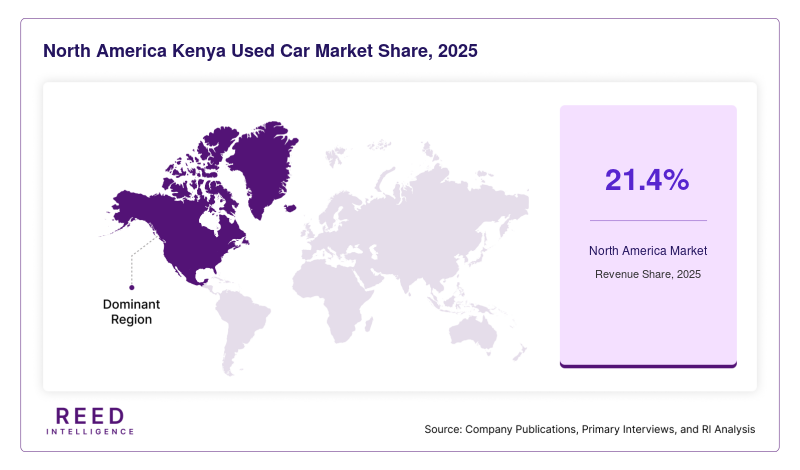
North America accounted for a 21.4% share of the global used car ecosystem in 2025, with a projected CAGR of 5.8% during the forecast period. The region plays a significant role as a source market for used vehicles exported to countries like Kenya. High vehicle ownership rates and shorter replacement cycles contribute to a consistent supply of used cars. The presence of advanced inspection systems and certification programs ensures quality, making North American vehicles attractive in international markets.
The United States remains the dominant country in this region, driven by its large automotive fleet and established resale market. A unique growth factor is the increasing adoption of electric vehicles, which leads to a higher turnover of conventional vehicles entering the used market. This trend indirectly supports the Kenya Used Car Market by expanding the global inventory of affordable vehicles available for export.
Europe
Europe held a 19.7% share in 2025 and is expected to grow at a CAGR of 5.5% through 2034. The region is a key exporter of used vehicles, particularly from countries with stringent emission regulations. European consumers often replace vehicles more frequently due to regulatory changes, resulting in a steady supply of relatively new used cars.
Germany is the dominant country in this region, supported by its strong automotive industry and high vehicle quality standards. A unique growth factor is the implementation of low-emission zones in major cities, which encourages the resale of older vehicles. These vehicles are often exported to markets like Kenya, where they remain in demand due to their durability and performance.
Asia Pacific
Asia Pacific dominated the global supply landscape with a 39.6% share in 2025 and is projected to grow at a CAGR of 6.2%. The region is a major source of used vehicles, particularly from Japan. The availability of well-maintained, right-hand-drive vehicles aligns with Kenya’s road infrastructure, making imports from this region highly compatible.
Japan is the leading country, driven by its strict vehicle inspection system and high replacement rates. A unique growth factor is the cultural preference for new vehicles, which results in a large volume of low-mileage used cars entering the export market. This dynamic significantly supports the Kenya Used Car Market by ensuring a consistent supply of quality vehicles.
Middle East & Africa
The Middle East & Africa region accounted for 12.8% of the market in 2025 and is expected to grow at the fastest CAGR of 7.1%. The region includes key importing countries like Kenya, where used vehicles are essential for transportation. Economic growth and urbanization are driving demand for affordable mobility solutions.
Kenya is the dominant country in East Africa, supported by its established import infrastructure and growing consumer base. A unique growth factor is the expansion of urban transportation networks, which increases the need for personal and commercial vehicles. This trend is expected to drive sustained demand for used cars across the country.
Latin America
Latin America held a 6.5% share in 2025 and is projected to grow at a CAGR of 5.9%. The region has a developing used car market, influenced by economic conditions and vehicle affordability. While it is not a major supplier to Kenya, it shares similar market dynamics in terms of consumer preferences and regulatory challenges.
Brazil is the dominant country in this region, driven by its large population and automotive industry. A unique growth factor is the increasing adoption of digital sales platforms, which is improving market transparency. This trend mirrors developments in Kenya and highlights the global shift toward online vehicle transactions.
Competitive Landscape
The Kenya Used Car Market is moderately fragmented, with a mix of local dealers, importers, and organized platforms competing for market share. Leading players are focusing on expanding their inventory, improving customer experience, and leveraging digital technologies to enhance operations. Partnerships with international suppliers and financial institutions are also common strategies to strengthen market presence.
Be Forward Co., Ltd. is recognized as a leading player, benefiting from its extensive global network and wide vehicle selection. The company has recently expanded its digital platform to include advanced search and financing options, improving customer accessibility. Other key players are investing in logistics and inspection services to ensure quality and reliability. The competitive landscape is expected to evolve as more organized players enter the market and digitalization continues to transform the industry.
Key Players
- Be Forward Co., Ltd.
- Car Junction Japan
- SBT Japan
- Auto Trader Kenya
- Cheki Kenya
- Jiji Kenya
- Toyota Kenya
- Simba Corporation
- CFAO Motors Kenya
- Inchcape Kenya
- Maridady Motors
- Kenyans.co.ke Auto
- Cars45 Kenya
- Autobox Kenya
- Motorhub Kenya
Recent Developments
- In 2025, a major online marketplace in Kenya introduced AI-based vehicle pricing tools to enhance transparency and accuracy in used car listings.
- In 2024, a leading importer expanded its logistics operations at the Port of Mombasa, reducing delivery timelines for imported vehicles.
- In 2025, a financial institution partnered with a digital auto platform to offer instant loan approvals for used car purchases, improving accessibility for buyers.
Kenya Used Car Market Segments
Vehicle Type
- Passenger Cars
- SUVs
- Commercial Vehicles
Fuel Type
- Petrol
- Diesel
- Hybrid
- Electric
Vendor Type
- Organized Dealers
- Unorganized Dealers
By Region
- North America
- Europe
- APAC
- Middle East and Africa
- LATAM