Kidney Beans Market Size, Share & Demand Report By Product Type (Red Kidney Beans, White Kidney Beans, Black Kidney Beans, Organic Kidney Beans), By Application (Food Processing, Household Consumption, Plant-Based Protein Products, Foodservice), By Distribution Channel (Supermarkets & Hypermarkets, Convenience Stores, Specialty Stores, Online Retail), By Region & Segment Forecasts, 2026–2034
USD 3950
Market Overview
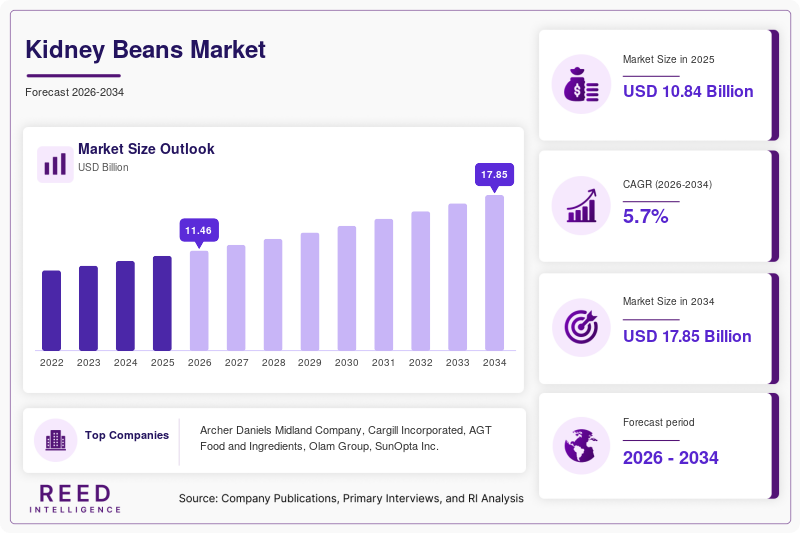
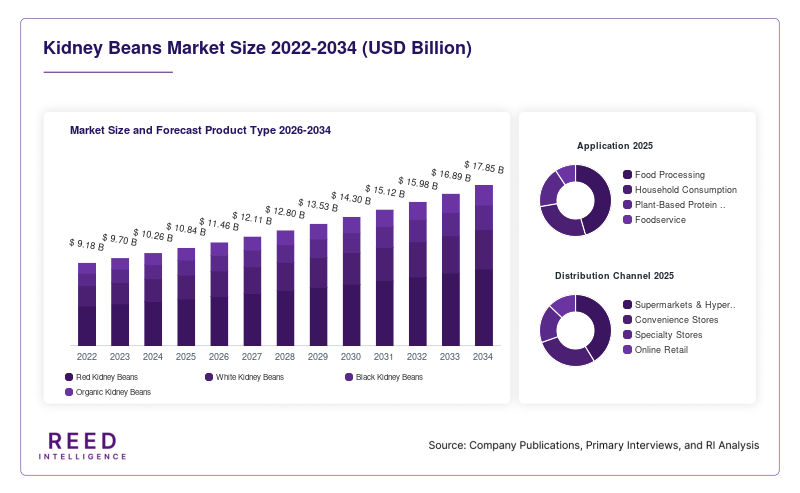
The Kidney Beans Market size was valued at approximately USD 10.84 billion in 2026 and is projected to reach USD 16.92 billion by 2034, expanding at a CAGR of 5.7% during the forecast period from 2026 to 2034. Kidney beans remain one of the most widely consumed legumes across global food systems due to their affordability, nutritional value, long shelf life, and versatility in food processing applications. The market continues to witness steady demand from household consumers, food manufacturers, restaurants, and institutional buyers seeking protein-rich plant-based ingredients.
A major global factor supporting market growth is the increasing adoption of plant-based diets. Rising consumer awareness regarding sustainable food consumption, environmental concerns associated with animal protein production, and growing interest in nutrient-dense food products have encouraged greater consumption of legumes, including kidney beans. These beans provide essential proteins, dietary fiber, iron, potassium, and antioxidants, making them attractive for health-conscious consumers.
Key Highlights
- North America dominated the market with a 33.8% share in 2025, while Asia Pacific is expected to grow at the fastest CAGR of 7.4% during 2026–2034.
- By product type, red kidney beans accounted for the largest share of 44.6%, while organic kidney beans are projected to grow at a CAGR of 8.1%.
- By application, food processing led with a 47.9% share, whereas plant-based protein products are expected to expand at a CAGR of 8.6%.
- The United States remained the dominant country, with market values of USD 1.42 billion in 2024 and USD 1.50 billion in 2025.
Market Trends
Growing Preference for Plant-Based Protein Ingredients
The global shift toward plant-based nutrition continues to influence purchasing patterns across food categories, creating favorable conditions for the Kidney Beans Market. Consumers are increasingly seeking protein sources that offer nutritional benefits while supporting environmental sustainability goals. Kidney beans have become a preferred ingredient because they contain high levels of protein, fiber, vitamins, and minerals. Food manufacturers are responding by incorporating kidney beans into meat substitutes, vegan meals, protein snacks, soups, and functional foods. Product innovation involving bean-based flours and protein concentrates is also increasing. The trend is particularly visible among younger consumers and urban populations seeking healthier dietary options without significantly increasing food expenses.
Expansion of Convenient and Value-Added Bean Products
Demand for convenience foods has encouraged producers to develop innovative kidney bean products that reduce preparation time while maintaining nutritional quality. Ready-to-eat canned beans, frozen bean blends, seasoned bean snacks, and microwaveable meal kits are gaining popularity across developed and emerging markets. Consumers increasingly prioritize convenience without sacrificing health benefits. Retailers are expanding shelf space dedicated to packaged pulse products, while foodservice operators are using kidney beans in menu diversification strategies. Improved packaging technologies and enhanced preservation methods are further extending product shelf life. This trend supports market growth by attracting consumers who may not traditionally purchase dry beans but prefer convenient alternatives.
Market Drivers
Rising Awareness of Nutritional Benefits
The increasing awareness of healthy eating habits serves as a major growth driver for the Kidney Beans Market. Consumers are becoming more informed about the relationship between diet and long-term health outcomes. Kidney beans are recognized for their high protein content, low fat levels, dietary fiber, antioxidants, and essential micronutrients. Healthcare professionals and nutrition experts frequently recommend legumes as part of balanced diets aimed at weight management, heart health, and digestive wellness. Educational campaigns promoting healthy food choices have encouraged greater bean consumption across various age groups. As chronic lifestyle-related conditions continue to rise globally, consumers are expected to increasingly incorporate nutrient-rich foods such as kidney beans into their daily diets.
Growth of Food Processing and Ready Meal Industries
The expansion of food processing industries has significantly increased commercial demand for kidney beans. Manufacturers utilize kidney beans in soups, canned foods, frozen meals, salads, snacks, and protein-rich formulations. The growing popularity of convenience foods among working populations has encouraged producers to incorporate legumes into innovative product offerings. Restaurants and institutional food providers are also expanding bean-based menu options to satisfy changing dietary preferences. Furthermore, advancements in processing technologies have improved product consistency and shelf stability, enabling wider distribution. The growing integration of kidney beans into mainstream food manufacturing applications continues to strengthen market demand across both developed and emerging economies.
Market Restraint
Agricultural Production Vulnerability and Price Fluctuations
The Kidney Beans Market faces challenges associated with agricultural production variability and raw material price fluctuations. Kidney bean cultivation remains highly dependent on climatic conditions, including rainfall patterns, temperature stability, and soil quality. Unfavorable weather events such as droughts, floods, and prolonged heat waves can significantly affect crop yields and reduce market supply. These disruptions often result in volatile pricing, creating uncertainty for processors, distributors, and retailers.
Supply chain disruptions can further amplify pricing pressures, especially in regions dependent on imports. Farmers may also shift cultivation toward higher-value crops when market conditions become unfavorable, reducing kidney bean production capacity. For example, a poor harvest season in a major producing region can trigger shortages that affect global trade volumes and increase procurement costs for food manufacturers. Such volatility may limit profit margins and create challenges for long-term planning. Consequently, market participants continue investing in improved farming practices, climate-resilient seed varieties, and supply chain diversification strategies to reduce exposure to agricultural risks.
Market Opportunities
Increasing Demand for Organic and Clean-Label Products
Growing consumer preference for organic and clean-label foods presents significant opportunities for the Kidney Beans Market. Buyers increasingly evaluate food products based on ingredient transparency, production methods, and environmental impact. Organic kidney beans align with these expectations by offering products cultivated without synthetic pesticides or chemical fertilizers. Retailers are expanding organic product portfolios to capture premium consumer segments willing to pay higher prices for perceived quality and sustainability benefits. Manufacturers are also introducing certified organic bean products across packaged food categories. As disposable incomes rise and awareness of food sourcing practices increases, organic kidney bean products are expected to experience substantial demand growth throughout the forecast period.
Expansion of Emerging Markets and Export Opportunities
Emerging economies offer considerable growth potential due to rising urbanization, improving incomes, and changing dietary preferences. Consumers in many developing regions are increasing their consumption of nutritious and affordable protein sources. Government programs supporting pulse production and food security initiatives are further encouraging market development. Export opportunities are also expanding as international trade networks improve and demand for plant-based ingredients grows worldwide. Producers are investing in modern storage facilities, logistics infrastructure, and quality certification programs to access new markets. These developments create opportunities for both domestic suppliers and international exporters seeking to strengthen their presence in high-growth regions while meeting evolving consumer requirements.
Segmental Analysis
By Product Type
Red kidney beans represented the dominant subsegment, accounting for approximately 44.6% of the market share in 2024. Their widespread popularity is linked to strong consumer familiarity, broad culinary applications, and extensive availability across retail channels. Red kidney beans are commonly used in soups, stews, chili dishes, salads, and processed food products. Their nutritional profile and appealing appearance make them a preferred choice among households and food manufacturers. The subsegment benefits from strong production volumes in major agricultural regions and well-established supply chains. Continued demand from foodservice operators and packaged food manufacturers further supports the leading position of red kidney beans within the overall market.
Organic kidney beans are projected to be the fastest-growing subsegment, expanding at a CAGR of 8.1% during the forecast period. Rising consumer demand for chemical-free food products and increasing awareness regarding sustainable agricultural practices are driving growth. Organic certification provides an additional value proposition that appeals to premium consumer segments seeking transparency and environmental responsibility. Retailers continue expanding organic product selections, while manufacturers introduce new organic bean-based offerings. Improvements in organic farming methods and growing availability of certified cultivation land further support expansion. As consumer confidence in clean-label products strengthens globally, organic kidney beans are expected to experience accelerated adoption across multiple distribution channels.
By Application
Food processing emerged as the dominant application segment, holding approximately 47.9% of market share in 2024. Kidney beans are extensively used in canned foods, frozen meals, ready-to-eat products, soups, sauces, and snack formulations. Food manufacturers value kidney beans for their nutritional attributes, affordability, and functional properties. Increasing consumer demand for convenient yet healthy meal solutions has encouraged processors to incorporate legumes into diverse product categories. Advancements in preservation and packaging technologies have further enhanced product quality and shelf life. The segment continues benefiting from growing investments in food manufacturing facilities and expanding global distribution networks, reinforcing its leadership position within the market.
Plant-based protein products are expected to register the fastest CAGR of 8.6% during the forecast period. The growing popularity of vegetarian, vegan, and flexitarian lifestyles has increased demand for alternative protein sources. Kidney beans serve as a valuable ingredient in meat substitutes, protein-rich snacks, and nutritional formulations due to their high protein and fiber content. Food companies are investing heavily in research and development activities to create innovative plant-based products that replicate traditional meat textures and flavors. Consumer concerns regarding sustainability and animal welfare further accelerate adoption. These factors collectively position plant-based protein applications as a major growth area for kidney bean utilization.
By Distribution Channel
Supermarkets and hypermarkets accounted for the largest market share of approximately 51.3% in 2024, making them the dominant distribution channel. These retail formats offer extensive product variety, competitive pricing, and convenient access to both conventional and specialty kidney bean products. Consumers often prefer supermarkets due to the ability to compare brands, packaging options, and quality characteristics in a single location. Large retail chains continue strengthening supplier relationships and expanding pulse product assortments to address evolving consumer preferences. Promotional campaigns, private-label offerings, and efficient inventory management further enhance sales performance. The widespread presence of supermarkets across urban and suburban areas contributes significantly to their leadership within the distribution landscape.
Online retail is anticipated to be the fastest-growing distribution channel, achieving a CAGR of 9.2% through 2034. Digital commerce platforms provide consumers with convenient access to a broad selection of kidney bean products, including organic and specialty varieties that may not be available in traditional stores. The increasing adoption of smartphones, secure digital payment systems, and home delivery services supports channel expansion. Manufacturers and retailers are investing in direct-to-consumer strategies and digital marketing initiatives to strengthen online visibility. Subscription-based grocery services and personalized shopping experiences are further driving consumer engagement. These developments position online retail as a significant contributor to future market growth.
Regional Analysis
North America
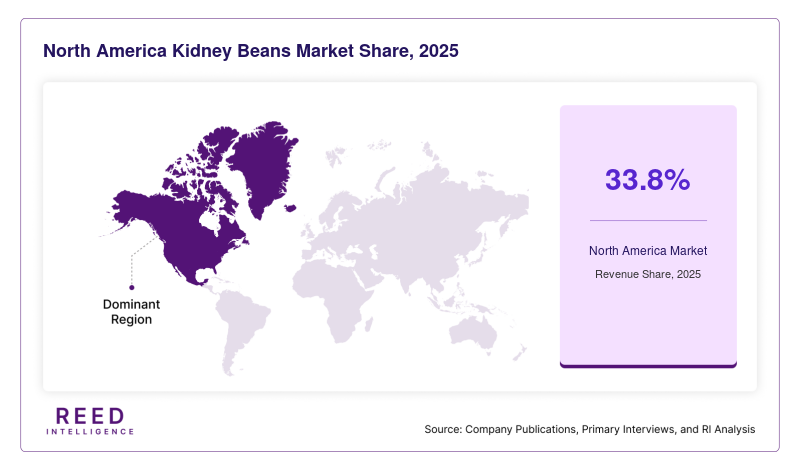
North America accounted for approximately 33.8% of the global Kidney Beans Market in 2025 and maintained its position as the largest regional market. The region is projected to expand at a CAGR of 5.1% through 2034. Strong consumer awareness regarding plant-based nutrition, established food processing industries, and widespread availability of packaged bean products continue to support market growth. Demand remains particularly strong in retail and foodservice sectors where kidney beans are widely used in soups, salads, chili preparations, and protein-focused meal offerings.
The United States represents the dominant country within the region. A key growth factor is the expanding demand for plant-based protein alternatives among health-conscious consumers. Food manufacturers continue launching innovative bean-based products targeting vegan and flexitarian populations. Growing investments in sustainable agriculture and improved pulse cultivation techniques further contribute to stable production and long-term market expansion throughout the country.
Europe
Europe held approximately 25.6% of the global market share in 2025 and is expected to register a CAGR of 5.4% during the forecast period. Demand for kidney beans is supported by increasing interest in healthy diets, sustainable food consumption, and meat reduction initiatives. Consumers across the region are incorporating legumes into daily meals as part of nutritional and environmental goals. Retail expansion and strong demand for organic food products continue to strengthen regional consumption patterns.
Germany remains the dominant country within Europe. A unique growth factor is the increasing adoption of sustainable dietary practices supported by government and institutional programs promoting plant-based nutrition. Food manufacturers are expanding product offerings that incorporate kidney beans into ready meals, snacks, and meat substitutes. These developments continue to enhance market penetration and support steady demand growth across the country.
Asia Pacific
Asia Pacific represented approximately 22.1% of the global Kidney Beans Market in 2025 and is forecast to achieve the fastest CAGR of 7.4% through 2034. Rapid urbanization, population growth, and rising awareness regarding nutritious foods are driving regional demand. Consumers increasingly seek affordable protein sources, making kidney beans an attractive dietary option. Expanding retail infrastructure and growing food processing activities further support market growth throughout the region.
China remains the leading country in the Asia Pacific market. A significant growth factor is the expansion of domestic food manufacturing and convenience food production. Increasing utilization of kidney beans in processed food products, combined with growing demand for plant-based ingredients, supports market development. Government support for agricultural modernization and food security initiatives also contributes to the region's strong growth outlook.
Middle East & Africa
The Middle East & Africa region accounted for approximately 9.4% of the global market in 2025 and is projected to grow at a CAGR of 5.9% through 2034. Rising population levels, increasing food imports, and greater awareness of affordable nutrition are contributing to market expansion. Kidney beans are widely consumed in several countries due to their nutritional profile and versatility in traditional cuisines. Improvements in food distribution networks are further supporting accessibility.
Saudi Arabia represents the dominant market within the region. A key growth factor is the increasing demand for imported pulse products driven by limited domestic agricultural production. Government initiatives focused on food security and diversified food sourcing strategies continue to encourage bean consumption. The expansion of modern retail channels and packaged food sales also supports market growth across the country.
Latin America
Latin America captured approximately 9.1% of the global Kidney Beans Market share in 2025 and is expected to grow at a CAGR of 5.8% during the forecast period. The region benefits from strong cultural acceptance of legumes and established agricultural production capabilities. Kidney beans remain a staple food ingredient in many countries, supporting consistent demand. Expanding exports and improvements in farming productivity continue to strengthen the regional market outlook.
Brazil is the dominant country in Latin America. One unique growth factor is the country's strong domestic production base supported by favorable agricultural conditions. Government programs encouraging pulse cultivation and investments in modern farming technologies contribute to supply stability. Additionally, increasing exports to international markets create new revenue opportunities for producers while supporting overall market growth.
Competitive Landscape
The Kidney Beans Market remains moderately fragmented, with a combination of multinational agribusiness firms, regional processors, and specialty pulse suppliers competing across global markets. Companies focus on product quality, sourcing efficiency, organic certifications, distribution expansion, and value-added product development to strengthen their competitive positions.
Archer Daniels Midland Company remains one of the leading participants due to its extensive agricultural sourcing network and global distribution capabilities. The company recently expanded investments in plant-based ingredient solutions to address rising demand for protein-rich food products. Other significant market participants include Cargill Incorporated, AGT Food and Ingredients, Olam Group, and SunOpta Inc. These companies continue enhancing supply chain efficiency and expanding pulse processing operations.
Key Players
- Archer Daniels Midland Company
- Cargill Incorporated
- AGT Food and Ingredients
- Olam Group
- SunOpta Inc.
- B&G Foods Inc.
- Conagra Brands Inc.
- Goya Foods Inc.
- Diefenbaker Spice & Pulse
- Columbia Grain International
- BroadGrain Commodities
- Arbel Group
- Hensall Co-op
- Parakh Group
- Bean Growers Australia
Recent Developments
- In 2025, a major pulse processing company expanded its kidney bean cleaning and packaging facility to increase export capacity and improve supply chain efficiency.
- In 2025, a leading food manufacturer launched a new range of plant-based protein products incorporating kidney bean ingredients for health-conscious consumers.
- In 2024, several agricultural cooperatives introduced climate-resilient kidney bean seed varieties designed to improve productivity under changing weather conditions.
- In 2024, a global retailer expanded its organic pulse portfolio by adding certified organic kidney bean products across multiple international markets.
- In 2025, a large agribusiness firm invested in advanced pulse sorting technologies to improve product quality and reduce processing losses.
Kidney Beans Market Segments
Product Type
- Red Kidney Beans
- White Kidney Beans
- Black Kidney Beans
- Organic Kidney Beans
Application
- Food Processing
- Household Consumption
- Plant-Based Protein Products
- Foodservice
Distribution Channel
- Supermarkets & Hypermarkets
- Convenience Stores
- Specialty Stores
- Online Retail
By Region
- North America
- Europe
- APAC
- Middle East and Africa
- LATAM