Kinetic Tiles Market Size, Share & Demand Report By Type (Piezoelectric Tiles, Electromagnetic Tiles), By Application (Commercial, Transportation, Residential), By End-Use (Public Infrastructure, Private Infrastructure, Residential) By Region & Segment Forecasts, 2025–2034
USD 3950
Market Overview
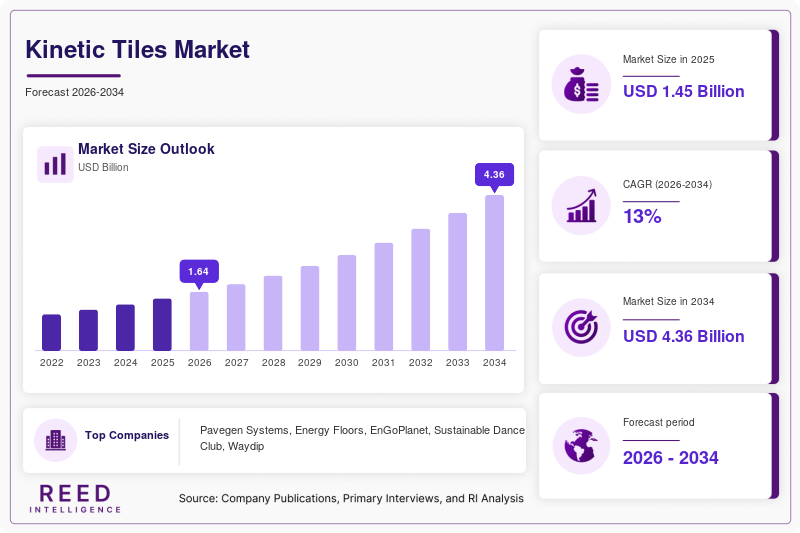
The Kinetic Tiles Market size is estimated at USD 1.45 billion, rising to USD 1.62 billion in 2026. The market is projected to reach approximately USD 4.85 billion by 2034, expanding at a CAGR of 13.0% from 2025 to 2034.
The increasing demand for sustainable energy solutions is a key growth driver. Kinetic tiles contribute to energy harvesting by converting foot traffic into usable electricity, aligning with global decarbonization goals. Another factor supporting growth is the rapid development of smart cities and intelligent infrastructure, where interactive flooring systems enhance both energy efficiency and user engagement. Additionally, the integration of IoT technologies into building systems has enabled kinetic tiles to function as data collection tools, monitoring footfall patterns and optimizing space usage.
Key Highlights
- North America dominated the Kinetic Tiles Market with approximately 32% market share in 2025, driven by strong adoption in smart infrastructure and commercial projects
- Asia Pacific is the fastest-growing region, expected to register a CAGR of 14.2% during 2025–2034, supported by rapid urbanization and smart city initiatives
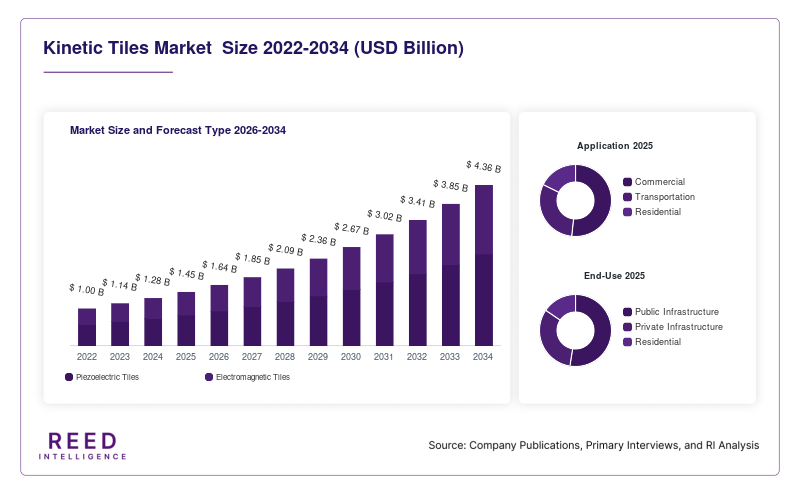
- By type, piezoelectric kinetic tiles led the market with around 58% share in 2024 due to high efficiency in energy conversion
- By application, the commercial segment accounted for nearly 52% of the market share in 2024, driven by retail and office space adoption
- By end-use, public infrastructure dominated with approximately 49% share in 2024, supported by government sustainability initiatives
- The transportation application segment is projected to grow at the fastest CAGR of 15.2%, fueled by deployment in high-footfall areas such as airports and metro stations
Market Trends
Integration with Smart Building Ecosystems
The integration of kinetic tiles into smart building ecosystems is becoming a defining trend in the market. These tiles are now embedded with sensors and connectivity features that allow seamless interaction with building management systems. By collecting real-time data on foot traffic and energy generation, kinetic tiles enable facility managers to optimize energy usage and space utilization. This trend is particularly evident in commercial real estate, where developers prioritize intelligent infrastructure to improve operational efficiency and tenant experience. The growing deployment of IoT-enabled devices is further accelerating this integration, making kinetic tiles a functional component of smart environments rather than just a novelty feature.
Rising Demand for Experiential Design in Commercial Spaces
Another significant trend is the increasing use of kinetic tiles in experiential design applications. Retailers, event organizers, and hospitality providers are leveraging interactive flooring to create engaging and memorable experiences. These installations often include lighting effects and real-time feedback mechanisms that respond to user movement, enhancing customer interaction. This trend is driven by the need to differentiate physical spaces in an increasingly digital world. As consumer expectations evolve, businesses are investing in technologies that blend functionality with entertainment, positioning kinetic tiles as a strategic design element in modern commercial environments.
Market Drivers
Growing Focus on Renewable Energy Generation
The increasing emphasis on renewable energy sources is a primary driver of the kinetic tiles market. Governments and organizations worldwide are seeking innovative solutions to reduce reliance on conventional energy sources and lower carbon emissions. Kinetic tiles provide a unique method of energy generation by harnessing human movement, making them suitable for high-traffic areas such as airports, train stations, and shopping malls. This capability aligns with sustainability goals and supports the transition toward decentralized energy systems. The ability to generate clean energy without additional land or infrastructure requirements further enhances their appeal across urban environments.
Expansion of Smart City Projects Globally
The rapid development of smart city initiatives is another key factor driving market growth. Urban planners are increasingly incorporating advanced technologies to improve infrastructure efficiency, safety, and sustainability. Kinetic tiles play a role in these projects by offering energy-efficient solutions and data-driven insights. Their ability to integrate with smart grids and IoT platforms makes them suitable for modern urban planning. Additionally, public sector investments in smart infrastructure are creating opportunities for large-scale deployment of kinetic tiles in public spaces, including walkways, transportation hubs, and civic buildings.
Market Restraint
High Initial Installation Costs and Limited ROI Visibility
One of the primary restraints in the kinetic tiles market is the high initial installation cost associated with these systems. The technology involves advanced materials, sensors, and energy conversion components, which increase overall project expenses. For many end-users, particularly in developing regions, the upfront investment can be a significant barrier to adoption. Additionally, the return on investment (ROI) is often not immediately visible, as the energy generated may not offset installation costs in the short term.
This challenge is further compounded by the lack of standardized performance metrics, making it difficult for stakeholders to evaluate the long-term benefits of kinetic tiles. For example, in commercial buildings with moderate foot traffic, the energy output may not justify the cost, leading to hesitation among potential adopters. As a result, the market faces slower penetration in cost-sensitive sectors, despite its long-term sustainability advantages.
Market Opportunities
Adoption in Transportation Infrastructure
The integration of kinetic tiles in transportation infrastructure presents a significant growth opportunity. High-footfall areas such as metro stations, airports, and bus terminals offer ideal conditions for energy generation through kinetic flooring systems. These environments can generate substantial amounts of electricity, which can be used for lighting, signage, and other operational needs. Governments and transportation authorities are increasingly exploring innovative solutions to improve energy efficiency, making kinetic tiles a viable option. This opportunity is particularly strong in urban centers with dense populations and extensive public transit networks.
Growth in Sustainable Real Estate Development
The rise of sustainable real estate development is creating new opportunities for the kinetic tiles market. Developers are focusing on achieving green building certifications and improving energy efficiency in both residential and commercial projects. Kinetic tiles contribute to these objectives by providing renewable energy generation and enhancing building performance. The growing demand for eco-friendly construction materials and technologies is encouraging developers to incorporate kinetic flooring into their projects. This trend is expected to drive market growth, particularly in regions with stringent environmental regulations and sustainability targets.
Segmental Analysis
By Type
The piezoelectric kinetic tiles segment dominated the market in 2024, accounting for approximately 58% share. These tiles utilize piezoelectric materials to convert mechanical stress into electrical energy, making them highly efficient for energy harvesting applications. Their widespread adoption is driven by their reliability and ability to generate consistent power output in high-traffic areas. Additionally, advancements in piezoelectric materials have improved durability and efficiency, making them suitable for long-term installations in commercial and public infrastructure projects.
The electromagnetic kinetic tiles segment is expected to be the fastest-growing, with a CAGR of 14.8% during the forecast period. This growth is driven by their ability to generate higher energy output compared to traditional systems. Electromagnetic tiles are increasingly being adopted in large-scale applications such as transportation hubs and smart city projects. Their scalability and improved performance make them a preferred choice for high-energy-demand environments, supporting their rapid market expansion.
By Application
The commercial segment held the largest share in 2024, accounting for approximately 52% of the market. This dominance is attributed to the increasing use of kinetic tiles in retail stores, shopping malls, and office spaces. Businesses are leveraging these tiles to enhance customer experience while contributing to sustainability goals. The integration of interactive features such as lighting and data analytics further strengthens their appeal in commercial applications.
The transportation segment is expected to grow at the fastest CAGR of 15.2% over the forecast period. The growth is driven by the increasing adoption of kinetic tiles in airports, metro stations, and bus terminals. These environments provide high foot traffic, enabling efficient energy generation. Additionally, government investments in sustainable transportation infrastructure are supporting the expansion of this segment.
By End-Use
The public infrastructure segment dominated the market in 2024, accounting for approximately 49% share. This segment includes applications in sidewalks, public squares, and civic buildings. The adoption of kinetic tiles in these areas is driven by government initiatives to promote renewable energy and sustainable urban development. Their ability to generate electricity from pedestrian movement makes them an attractive solution for public infrastructure projects.
The residential segment is projected to grow at the fastest CAGR of 13.6% during the forecast period. This growth is driven by increasing awareness of sustainable living and the adoption of smart home technologies. Homeowners are incorporating kinetic tiles into their properties to reduce energy consumption and enhance functionality. The availability of cost-effective solutions and improved product designs is further supporting the growth of this segment.
Regional Analysis
North America
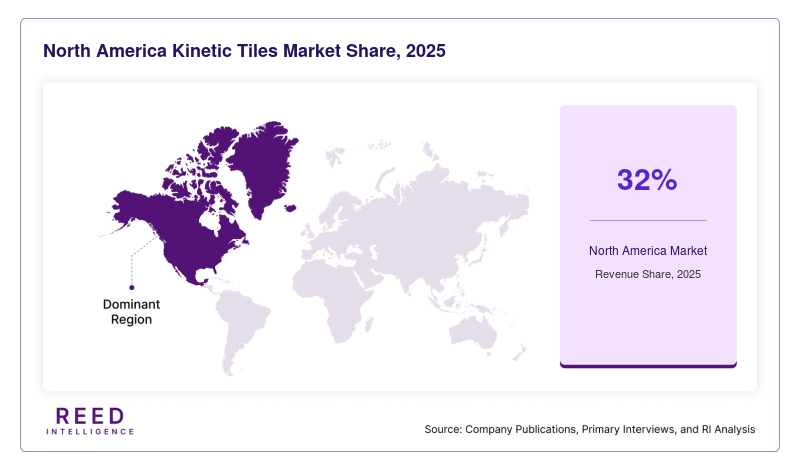
North America accounted for approximately 32% of the global kinetic tiles market share in 2025, driven by strong adoption in commercial and public infrastructure projects. The region is expected to grow at a CAGR of 12.5% through 2034, supported by increasing investments in smart building technologies. The presence of advanced infrastructure and high awareness of sustainable energy solutions contribute to the region’s market leadership.
The United States dominates the North American market due to its extensive smart city initiatives and technological advancements. A unique growth factor in this region is the integration of kinetic tiles in large-scale entertainment venues and sports arenas, where high foot traffic enhances energy generation potential. This application is expanding rapidly as organizations seek innovative ways to improve sustainability and user engagement.
Europe
Europe held around 27% market share in 2025 and is projected to grow at a CAGR of 12.8% during the forecast period. The region’s strong focus on sustainability and energy efficiency is driving the adoption of kinetic tiles across various sectors. Government policies promoting renewable energy and green building practices are key contributors to market growth.
Germany is the dominant country in the European market, driven by its leadership in sustainable infrastructure development. A unique growth factor is the widespread adoption of green building certifications, which encourage the use of innovative technologies like kinetic tiles. This trend is particularly evident in commercial real estate and public infrastructure projects.
Asia Pacific
Asia Pacific accounted for approximately 24% of the market share in 2025 and is expected to register the highest CAGR of 14.2% through 2034. Rapid urbanization and infrastructure development are major factors driving market growth in this region. Increasing investments in smart cities and transportation networks further support demand.
China leads the Asia Pacific market due to its large-scale infrastructure projects and urban development initiatives. A unique growth factor is the integration of kinetic tiles in public transportation systems, where high population density ensures significant energy generation potential. This application is expanding as cities aim to improve energy efficiency and sustainability.
Middle East & Africa
The Middle East & Africa region held around 9% market share in 2025 and is projected to grow at a CAGR of 13.1%. The adoption of kinetic tiles is supported by increasing investments in smart infrastructure and sustainable development projects, particularly in urban areas.
The United Arab Emirates is the leading country in this region, driven by its focus on innovative and sustainable urban development. A unique growth factor is the use of kinetic tiles in luxury commercial projects and tourism infrastructure, where interactive design elements enhance visitor experience and support sustainability goals.
Latin America
Latin America accounted for approximately 8% of the market share in 2025 and is expected to grow at a CAGR of 12.3% during the forecast period. The region is witnessing gradual adoption of kinetic tiles, supported by increasing awareness of renewable energy solutions.
Brazil dominates the Latin American market due to its expanding urban infrastructure and sustainability initiatives. A unique growth factor is the deployment of kinetic tiles in public spaces such as parks and pedestrian zones, where they contribute to energy generation and community engagement. This trend is gaining traction as cities explore innovative solutions for sustainable development.
Competitive Landscape
The kinetic tiles market is moderately fragmented, with several players focusing on innovation and strategic partnerships to strengthen their market position. Leading companies are investing in research and development to improve energy conversion efficiency and reduce production costs. The market leader, Pavegen Systems, has established a strong presence through its advanced kinetic energy solutions and global project portfolio.
Recent developments include collaborations between technology providers and construction companies to integrate kinetic tiles into large-scale infrastructure projects. Companies are also expanding their product offerings to cater to diverse applications, including residential and commercial sectors. The competitive landscape is characterized by continuous innovation and increasing emphasis on sustainability.
Key Players
- Pavegen Systems
- Energy Floors
- EnGoPlanet
- Sustainable Dance Club
- Waydip
- Soundpower Corporation
- Veranu
- Kinergy Power Systems
- Smart Energy Floor
- Flux Flooring
- PowerLeap
- GreenStep Solutions
- Urban Kinetics
- MotionTile Technologies
- EcoFloor Innovations
Recent Developments
- In 2024, Pavegen Systems launched an upgraded kinetic tile system with improved energy conversion efficiency and enhanced durability.
- In 2023, Energy Floors partnered with a major retail chain to deploy interactive kinetic flooring across multiple locations.
- In 2025, EnGoPlanet introduced a hybrid kinetic tile solution integrated with solar panels to maximize energy generation.
Kinetic Tiles Market Segments
Type
- Piezoelectric Tiles
- Electromagnetic Tiles
Application
- Commercial
- Transportation
- Residential
End-Use
- Public Infrastructure
- Private Infrastructure
- Residential
By Region
- North America
- Europe
- APAC
- Middle East and Africa
- LATAM