Krill Meal Market Size, Share & Demand Report By Type (Conventional, Organic), By Application (Aquaculture, Pet Food, Livestock Feed), By End-Use (Animal Feed, Nutraceuticals), By Distribution Channel (Direct Sales, Distributors, Online) & Segment Forecasts, 2025–2033
USD 3950
Market Overview
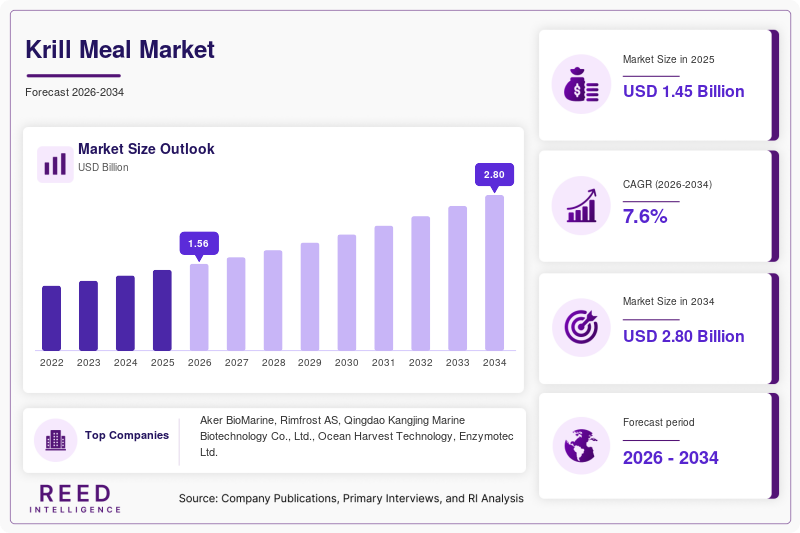
The global Krill Meal Market size was valued at approximately USD 1.45 billion in 2025 and is projected to reach USD 2.78 billion by 2034, expanding at a CAGR of 7.6% during the forecast period (2025–2034). The market growth has been supported by increasing demand for high-protein, nutrient-rich feed ingredients in aquaculture and animal nutrition industries. Krill meal, derived from Antarctic krill, is recognized for its superior digestibility, high omega-3 fatty acid content, and natural palatability enhancers, making it a preferred ingredient in premium feed formulations.
A major global factor driving the Krill Meal Market is the expansion of the aquaculture sector, particularly in emerging economies. The growing need for sustainable and efficient feed solutions has accelerated the adoption of krill-based products as alternatives to traditional fishmeal. Additionally, technological advancements in krill harvesting and processing have improved yield efficiency while maintaining ecological sustainability standards, further strengthening market growth.
Key Highlights
- Europe dominated the market with a share of 34.2% in 2025, while Asia Pacific is expected to register the fastest CAGR of 8.9% during the forecast period.
- The aquaculture application segment led with a share of 52.6%, while pet food is projected to grow at the fastest CAGR of 9.3%.
- Conventional krill meal held the largest share at 63.4%, whereas organic krill meal is anticipated to grow at a CAGR of 8.7%.
- Norway remained the dominant country, with market values estimated at USD 310 million in 2025 and USD 332 million in 2026.
Market Trends
Rising Demand for Sustainable Marine Feed Ingredients
Sustainability has become a central focus in the Krill Meal Market, driven by regulatory frameworks and consumer awareness regarding marine ecosystem preservation. Producers are increasingly adopting eco-friendly harvesting techniques, including regulated quotas and traceability systems. Certifications from environmental organizations have also enhanced product credibility, making sustainably sourced krill meal a preferred choice among feed manufacturers. This trend is particularly strong in Europe and North America, where sustainability compliance is influencing procurement decisions.
Expansion of Krill Meal in Premium Pet Nutrition
The integration of krill meal into high-end pet food formulations is gaining traction due to its functional benefits, including improved coat health, joint support, and enhanced palatability. Pet owners are increasingly opting for nutritionally enriched diets, leading manufacturers to incorporate krill-based ingredients. The premiumization trend in pet food is expected to significantly contribute to market expansion, especially in urban regions with higher disposable incomes.
Market Drivers
Increasing Aquaculture Production Globally
The rapid growth of aquaculture production is a primary driver of the Krill Meal Market. As global fish consumption rises, aquaculture producers are seeking high-performance feed ingredients that enhance growth rates and feed efficiency. Krill meal’s nutritional profile, including essential amino acids and phospholipids, makes it an ideal supplement, leading to increased adoption across fish and shrimp farming operations.
Superior Nutritional Profile Compared to Traditional Feed Ingredients
Krill meal offers advantages over conventional fishmeal, including higher bioavailability of nutrients and natural attractants that improve feed intake. This has led to its growing use in specialized feed formulations for high-value species. The ability of krill meal to improve animal health and reduce mortality rates further strengthens its demand across multiple end-use industries.
Market Restraint
Regulatory and Environmental Constraints on Krill Harvesting
The Krill Meal Market faces significant challenges due to stringent environmental regulations governing krill harvesting in Antarctic regions. International bodies impose strict quotas and monitoring systems to prevent overexploitation and ensure ecological balance. These limitations restrict supply availability and increase operational costs for manufacturers.
Additionally, concerns regarding the impact of krill fishing on marine biodiversity have led to increased scrutiny from environmental organizations. Compliance with sustainability standards often requires substantial investment in technology and monitoring systems, which can limit market entry for smaller players. The seasonal nature of krill harvesting further contributes to supply volatility, affecting pricing and availability. As a result, these factors collectively act as a constraint on market expansion despite growing demand.
Market Opportunities
Growth in Functional Animal Nutrition
The rising focus on animal health and productivity presents a significant opportunity for the Krill Meal Market. Functional feed ingredients that offer additional health benefits beyond basic nutrition are gaining popularity. Krill meal’s bioactive compounds, including antioxidants and omega-3 fatty acids, position it as a valuable component in advanced feed solutions, particularly in aquaculture and livestock sectors.
Expansion into Emerging Markets
Emerging economies in Asia Pacific and Latin America offer substantial growth potential due to increasing aquaculture activities and rising demand for high-quality animal protein. Market players are expected to expand their distribution networks and invest in localized production facilities to cater to these regions. The growing awareness of nutritional benefits and improvements in supply chain infrastructure will further support market penetration in these untapped markets.
Segmental Analysis
By Type
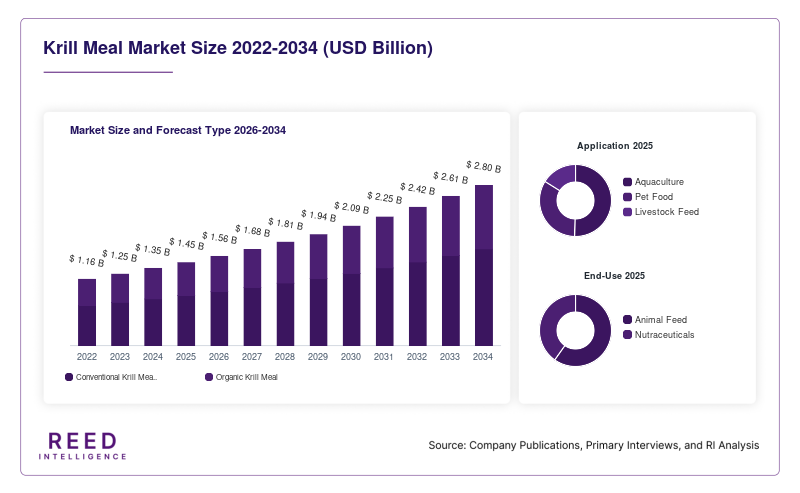
Conventional krill meal dominated the Krill Meal Market with a share of 63.4% in 2025. Its widespread availability and cost-effectiveness made it the preferred choice among feed manufacturers. The segment benefited from established supply chains and consistent quality, supporting its leading position.
Organic krill meal is expected to grow at the fastest CAGR of 8.7% during the forecast period. Increasing demand for organic and sustainable products will drive this segment’s growth. The rising preference for chemical-free feed ingredients and stringent regulatory standards will further support its expansion.
By Application
Aquaculture was the leading application segment, accounting for 52.6% of the market share in 2025. The segment’s dominance was driven by the high demand for nutrient-rich feed to enhance fish growth and health. Krill meal’s ability to improve feed conversion ratios contributed to its widespread use.
The pet food segment is projected to grow at the fastest CAGR of 9.3%. The increasing trend of premium pet nutrition and demand for functional ingredients will drive this growth. The inclusion of krill meal in specialized pet diets will further enhance its adoption.
By End-Use
The animal feed segment dominated the market with a share of 68.9% in 2025. The segment’s growth was supported by the rising demand for high-performance feed solutions across aquaculture and livestock industries.
Nutraceuticals are expected to witness the fastest growth, with a projected CAGR of 8.5%. The growing awareness of krill-derived health benefits will drive demand in this segment. The use of krill meal in dietary supplements will further expand its market presence.
By Distribution Channel
Direct sales accounted for the largest share of 57.2% in 2025. This dominance was attributed to strong relationships between manufacturers and large-scale buyers, ensuring consistent supply and competitive pricing.
Online distribution channels are expected to grow at the fastest CAGR of 9.1%. The increasing adoption of digital platforms and expanding e-commerce infrastructure will drive this segment’s growth, particularly among small and medium-scale buyers.
Regional Analysis
North America
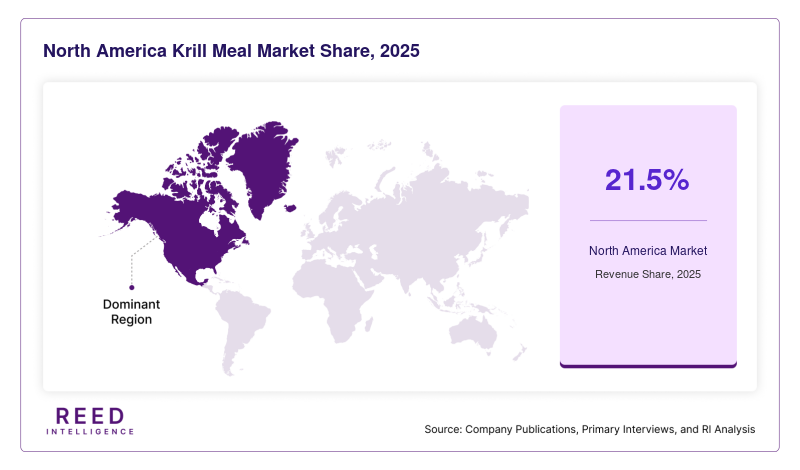
North America accounted for 21.5% of the Krill Meal Market share in 2025 and is expected to grow at a CAGR of 7.2% during the forecast period. The region’s growth is supported by strong demand for high-quality pet food and advanced aquaculture practices. Increasing investment in research and development for innovative feed formulations is also contributing to market expansion.
The United States dominated the regional market due to its well-established pet food industry. The growing trend of pet humanization has driven demand for premium nutrition products, including krill-based ingredients. Additionally, technological advancements in feed production have further supported the adoption of krill meal.
Europe
Europe held the largest share of 34.2% in 2025 and is projected to grow at a CAGR of 7.4%. The region’s dominance is attributed to strict sustainability regulations and high adoption of eco-friendly feed ingredients. The presence of leading krill harvesting companies also supports market growth.
Norway emerged as the dominant country, driven by its strong aquaculture industry. The country’s focus on sustainable fishing practices and innovation in feed technology has enabled widespread use of krill meal in salmon farming, contributing significantly to regional growth.
Asia Pacific
Asia Pacific represented 27.8% of the market in 2025 and is anticipated to register the fastest CAGR of 8.9%. The region’s growth is driven by expanding aquaculture production and increasing demand for protein-rich feed.
China led the regional market due to its large-scale aquaculture operations. Government initiatives to improve feed efficiency and reduce environmental impact have encouraged the adoption of krill meal as a sustainable alternative to traditional feed ingredients.
Middle East & Africa
The Middle East & Africa accounted for 8.6% of the market share in 2025 and is expected to grow at a CAGR of 6.8%. The region’s growth is supported by increasing investments in aquaculture and livestock farming.
South Africa dominated the market due to its expanding aquaculture sector. The country’s efforts to improve food security and enhance animal nutrition have driven the adoption of high-quality feed ingredients such as krill meal.
Latin America
Latin America held a 7.9% share in 2025 and is projected to grow at a CAGR of 7.1%. The region’s growth is driven by rising demand for seafood and increasing aquaculture activities.
Brazil emerged as the leading country, supported by its growing aquaculture industry. The adoption of advanced feed solutions and increasing awareness of nutritional benefits have contributed to the rising demand for krill meal in the region.
Competitive Landscape
The Krill Meal Market is moderately consolidated, with key players focusing on sustainability, product innovation, and strategic partnerships. The leading companies are investing in advanced harvesting technologies and expanding their global distribution networks to strengthen market presence.
Aker BioMarine emerged as the market leader, leveraging its vertically integrated operations and strong focus on sustainable krill harvesting. The company recently expanded its production capacity and introduced new product variants to cater to growing demand.
Other prominent players are actively engaged in research and development to enhance product quality and diversify applications. Strategic collaborations and mergers are also shaping the competitive landscape, enabling companies to access new markets and strengthen their position in the global Krill Meal Market.
Key Players List
- Aker BioMarine
- Rimfrost AS
- Qingdao Kangjing Marine Biotechnology Co., Ltd.
- Ocean Harvest Technology
- Enzymotec Ltd.
- NutriScience Innovations LLC
- Biocorp Co., Ltd.
- Great Pacific BioProducts Ltd.
- Norwegian Fish Oil AS
- Neptune Wellness Solutions Inc.
- Viva Naturals
- Nutrifynn Caps
- Polar Biology AS
- AKVA Group
- Pesquera Diamante S.A.
Recent Developments
- In 2025, Aker BioMarine expanded its krill harvesting capacity with a new vessel equipped with eco-friendly technology.
- Rimfrost AS introduced a high-purity krill meal variant targeting premium aquaculture applications.
- Neptune Wellness Solutions announced a partnership to expand its distribution network in Asia Pacific.
- Ocean Harvest Technology launched a new krill-based feed additive to enhance animal health.
- Qingdao Kangjing Marine Biotechnology invested in advanced processing facilities to improve product quality and output efficiency.
Krill Meal Market Segments
Type
- Conventional Krill Meal
- Organic Krill Meal
Application
- Aquaculture
- Pet Food
- Livestock Feed
End-Use
- Animal Feed
- Nutraceuticals
Distribution Channel
- Direct Sales
- Distributors
- Online Retail
By Region
- North America
- Europe
- APAC
- Middle East and Africa
- LATAM