L Carnitine Market Size, Share & Demand Report By Type (L-Carnitine, Acetyl-L-Carnitine, Propionyl-L-Carnitine), By Application (Dietary Supplements, Pharmaceuticals, Functional Foods & Beverages), By End-Use (Adults, Geriatrics, Athletes) By Region & Segment Forecasts, 2026–2034
USD 3950
Market Overview
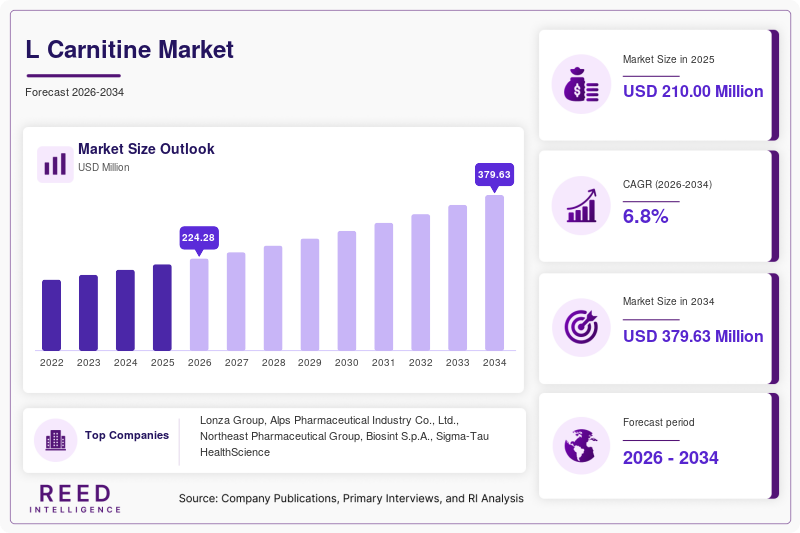
The global L Carnitine Market size was valued at approximately USD 210 million in 2026 and is projected to reach around USD 355 million by 2034, expanding at a CAGR of 6.8% during the forecast period (2026–2034). The market continues to evolve steadily due to increasing consumer awareness regarding metabolic health, sports nutrition, and preventive healthcare. L-carnitine, a naturally occurring amino acid derivative, plays a crucial role in energy production and fat metabolism, making it a key ingredient across dietary supplements, pharmaceuticals, and functional foods.
A major global factor supporting market growth is the rising inclination toward fitness-oriented lifestyles. Consumers are increasingly adopting supplements that enhance energy utilization and support weight management, particularly in urban populations. The expansion of e-commerce platforms has further improved accessibility to L-carnitine-based products, enabling manufacturers to penetrate emerging markets efficiently. In addition, the growing geriatric population is contributing to demand, as L-carnitine is often associated with improved cardiovascular and cognitive health.
Key Highlights
- North America accounted for approximately 36% of the global market share in 2025.
- Asia Pacific is expected to register the fastest growth with a CAGR of 8.1%.
- Among segments, dietary supplements dominated with a share of over 48%, while pharmaceutical applications are projected to grow at the fastest CAGR of 7.5%.
- The United States remained the dominant country, with market values estimated at USD 68 million in 2024 and USD 72 million in 2025.
Market Trends
Rising Demand for Sports Nutrition and Fitness Supplements
The increasing popularity of sports nutrition products is shaping the trajectory of the L Carnitine Market. Consumers are actively seeking supplements that enhance endurance, improve muscle recovery, and optimize fat metabolism. L-carnitine is widely recognized for its role in transporting fatty acids into mitochondria, making it a preferred ingredient in pre-workout and post-workout formulations. Fitness enthusiasts, athletes, and even casual gym-goers are incorporating L-carnitine supplements into their routines, driving consistent demand across developed and emerging economies.
Moreover, the growth of fitness culture through social media influence and digital fitness platforms has expanded consumer awareness. Brands are leveraging targeted marketing strategies to position L-carnitine as an essential supplement for performance optimization. The expansion of ready-to-drink formulations and flavored variants has also enhanced product appeal, encouraging adoption among younger demographics and first-time users.
Expansion of Functional Food and Beverage Applications
Another significant trend influencing the L Carnitine Market is its integration into functional foods and beverages. Manufacturers are increasingly incorporating L-carnitine into energy drinks, fortified beverages, and nutritional bars to cater to health-conscious consumers. This trend aligns with the growing preference for convenient and on-the-go nutrition solutions that deliver added health benefits.
The shift toward preventive healthcare is further supporting this trend, as consumers seek products that offer metabolic support and energy enhancement without relying solely on traditional supplements. Regulatory approvals in several regions have facilitated the inclusion of L-carnitine in food products, broadening its application scope. As a result, companies are investing in product innovation to create differentiated offerings that combine taste, convenience, and functionality.
Market Drivers
Increasing Awareness of Metabolic Health and Weight Management
The rising prevalence of obesity and metabolic disorders is a key driver of the L Carnitine Market. Consumers are increasingly focusing on weight management and metabolic efficiency, leading to higher demand for supplements that support fat oxidation. L-carnitine plays a crucial role in converting stored fat into energy, making it a preferred ingredient in weight loss formulations.
Healthcare professionals are also recommending L-carnitine supplements as part of comprehensive wellness programs, further boosting adoption. The growing emphasis on preventive healthcare has encouraged individuals to incorporate such supplements into their daily routines. Additionally, the expansion of online health communities and educational content has improved consumer understanding of L-carnitine’s benefits, contributing to sustained market growth.
Growth in Pharmaceutical Applications and Clinical Research
Another major driver is the expanding use of L-carnitine in pharmaceutical applications. The compound is widely used in the treatment of conditions such as cardiovascular diseases, chronic kidney disease, and certain metabolic disorders. Ongoing clinical research is exploring its potential benefits in neurological health and aging-related conditions, which could further broaden its application scope.
Pharmaceutical companies are investing in research and development to develop advanced formulations and delivery methods. The increasing availability of prescription-based L-carnitine products is also supporting market expansion. As healthcare systems emphasize personalized treatment approaches, the demand for specialized supplements like L-carnitine is expected to grow steadily.
Market Restraint
Regulatory Challenges and Variability in Product Quality
One of the primary challenges in the L Carnitine Market is the variability in regulatory frameworks across different regions. While L-carnitine is generally recognized as safe, the classification of products containing this compound varies between dietary supplements, pharmaceuticals, and functional foods. This inconsistency creates hurdles for manufacturers in terms of product approvals, labeling requirements, and marketing claims.
Additionally, the market faces issues related to product quality and standardization. Variations in raw material sourcing and manufacturing processes can lead to inconsistencies in product efficacy. This has raised concerns among consumers and regulatory authorities, potentially impacting market credibility. For instance, low-quality or counterfeit supplements in certain regions have affected consumer trust, prompting stricter regulations and quality checks. These factors can limit market growth, particularly for smaller players with limited resources to comply with evolving standards.
Market Opportunities
Emerging Markets and Expanding Consumer Base
The growing middle-class population in emerging economies presents significant opportunities for the L Carnitine Market. Countries in Asia Pacific, Latin America, and parts of the Middle East are witnessing increased disposable incomes and rising health awareness. This has led to higher demand for dietary supplements and functional foods, including L-carnitine-based products.
Manufacturers are focusing on expanding their distribution networks in these regions to tap into the growing consumer base. The adoption of digital marketing strategies and e-commerce platforms is further facilitating market penetration. Additionally, localized product offerings that cater to regional preferences are helping companies gain a competitive edge in these markets.
Innovation in Delivery Formats and Product Development
Innovation in product formulations and delivery formats is another key opportunity for market growth. Companies are developing new forms of L-carnitine supplements, such as liquid shots, gummies, and effervescent tablets, to enhance consumer convenience and compliance. These innovations are particularly appealing to younger consumers who prefer easy-to-consume products.
Furthermore, the integration of L-carnitine with other functional ingredients, such as vitamins and amino acids, is creating multi-benefit products that address various health needs. This approach not only enhances product value but also enables companies to differentiate their offerings in a competitive market. Continued investment in research and development is expected to drive further innovation and unlock new growth avenues.
Segmental Analysis
By Type
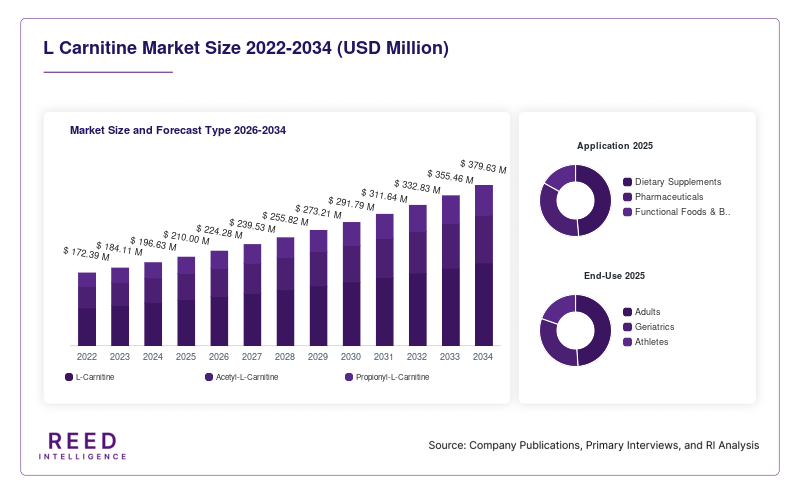
The L Carnitine Market is segmented into L-carnitine, acetyl-L-carnitine, and propionyl-L-carnitine. Among these, L-carnitine dominated the market with a share of over 52% in 2024. This dominance is attributed to its widespread use in dietary supplements and sports nutrition products. L-carnitine is preferred due to its effectiveness in fat metabolism and energy production, making it a key ingredient in weight management formulations.
Acetyl-L-carnitine is the fastest-growing subsegment, expected to register a CAGR of 7.6% during the forecast period. This growth is driven by its potential cognitive health benefits and increasing use in pharmaceutical applications. The rising demand for supplements that support brain health and aging-related conditions is contributing to the growth of this subsegment.
By Application
Based on application, the market is segmented into dietary supplements, pharmaceuticals, and functional foods & beverages. Dietary supplements accounted for the largest share of over 48% in 2024. This is due to the widespread use of L-carnitine in weight management and sports nutrition products.
Pharmaceutical applications are the fastest-growing segment, with a CAGR of 7.5%. The growth is driven by increasing research on the therapeutic benefits of L-carnitine and its use in treating various medical conditions. The rising prevalence of chronic diseases is also supporting the demand for pharmaceutical-grade L-carnitine products.
By End-Use
The market is further segmented by end-use into adults, geriatrics, and athletes. Adults represented the dominant subsegment, accounting for over 45% of the market share in 2024. This is due to the high adoption of dietary supplements among working professionals and health-conscious individuals.
Athletes are the fastest-growing subsegment, with a projected CAGR of 7.9%. The increasing popularity of fitness activities and sports events is driving demand for performance-enhancing supplements. L-carnitine’s role in improving endurance and recovery is making it a preferred choice among athletes.
Regional Analysis
North America
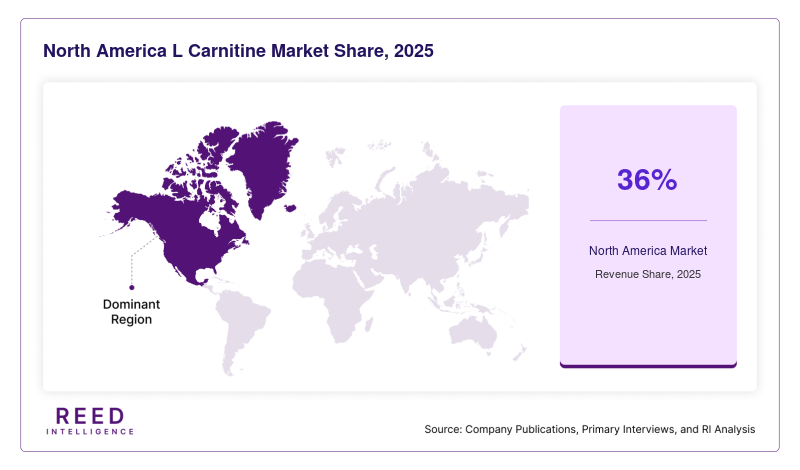
North America held a significant share of the L Carnitine Market, accounting for approximately 36% in 2025, and is projected to grow at a CAGR of 6.2% during the forecast period. The region’s dominance is attributed to high consumer awareness, advanced healthcare infrastructure, and strong demand for dietary supplements. The presence of established market players and widespread adoption of fitness trends further contribute to market growth.
The United States remains the dominant country in the region, driven by a well-developed sports nutrition industry. A unique growth factor is the increasing adoption of personalized nutrition, where consumers choose supplements based on individual health needs. This trend is encouraging companies to develop customized L-carnitine products, supporting sustained market expansion.
Europe
Europe accounted for around 28% of the market share in 2025 and is expected to grow at a CAGR of 5.9%. The region’s growth is supported by strong regulatory frameworks and increasing demand for functional foods. Consumers in Europe are increasingly focused on preventive healthcare, driving the adoption of L-carnitine supplements.
Germany leads the market in this region, with a unique growth factor being the high demand for organic and clean-label products. Consumers prefer supplements with transparent ingredient sourcing, prompting manufacturers to emphasize quality and sustainability. This trend is shaping product development and marketing strategies across the region.
Asia Pacific
Asia Pacific is the fastest-growing region, with a projected CAGR of 8.1% and a market share of approximately 22% in 2025. Rapid urbanization, rising disposable incomes, and increasing health awareness are key factors driving growth. The expanding middle-class population is also contributing to higher demand for dietary supplements.
China dominates the regional market, supported by a large consumer base and growing interest in fitness and wellness. A unique growth factor is the increasing influence of e-commerce platforms, which provide easy access to a wide range of L-carnitine products. This has significantly boosted market penetration in both urban and rural areas.
Middle East & Africa
The Middle East & Africa region accounted for around 8% of the market share in 2025 and is expected to grow at a CAGR of 6.5%. The market is driven by increasing awareness of health and wellness, along with a growing demand for dietary supplements.
Saudi Arabia leads the market in this region, with a unique growth factor being the rising prevalence of lifestyle-related diseases. This has prompted consumers to adopt preventive healthcare measures, including the use of L-carnitine supplements. Government initiatives promoting health awareness are also supporting market growth.
Latin America
Latin America held approximately 6% of the market share in 2025 and is projected to grow at a CAGR of 6.7%. The region’s growth is driven by increasing health awareness and expanding distribution networks for dietary supplements.
Brazil is the dominant country, with a unique growth factor being the growing popularity of fitness and bodybuilding culture. This has led to higher demand for sports nutrition products, including L-carnitine supplements. The expansion of retail and online channels is further supporting market growth.
Competitive Landscape
The L Carnitine Market is moderately competitive, with several global and regional players focusing on product innovation and strategic partnerships. The market leader is Lonza Group, known for its extensive portfolio of high-quality L-carnitine products and strong global presence. The company continues to invest in research and development to enhance product efficacy and expand its application scope.
Other key players are focusing on expanding their distribution networks and introducing new product formats to attract a broader consumer base. A recent development includes the launch of advanced L-carnitine formulations with improved bioavailability, which is expected to enhance product performance and consumer acceptance. Companies are also leveraging digital platforms to strengthen their market presence and engage with consumers effectively.
Key Players
- Lonza Group
- Alps Pharmaceutical Industry Co., Ltd.
- Northeast Pharmaceutical Group
- Biosint S.p.A.
- Sigma-Tau HealthScience
- NOW Foods
- GNC Holdings Inc.
- NutraKey
- MusclePharm Corporation
- Amway Corporation
- Nature’s Bounty
- Herbalife Nutrition Ltd.
- Kemin Industries
- DSM Nutritional Products
- Swanson Health Products
Recent Developments
- Several companies have introduced liquid L-carnitine formulations to improve absorption and convenience for consumers.
- A leading manufacturer expanded its production capacity in Asia to meet growing regional demand.
- A new clinical study highlighted the potential benefits of L-carnitine in improving cognitive function, encouraging further research and product development.
L Carnitine Market Segments
Type
- L-Carnitine
- Acetyl-L-Carnitine
- Propionyl-L-Carnitine
Application
- Dietary Supplements
- Pharmaceuticals
- Functional Foods & Beverages
End-Use
- Adults
- Geriatrics
- Athletes
By Region
- North America
- Europe
- APAC
- Middle East and Africa
- LATAM