Lamellar Ichthyosis Market Size, Share & Demand Report By Treatment Type (Topical Treatments (Emollients, Keratolytics, Retinoids), Systemic Treatments, Biologics), By Route of Administration (Topical, Oral, Injectable), By End-Use (Hospitals, Specialty Clinics, Homecare Settings), By Distribution Channel (Hospital Pharmacies, Retail Pharmacies, Online Pharmacies), By Region & Segment Forecasts, 2025–2034
USD 3950
Market Overview
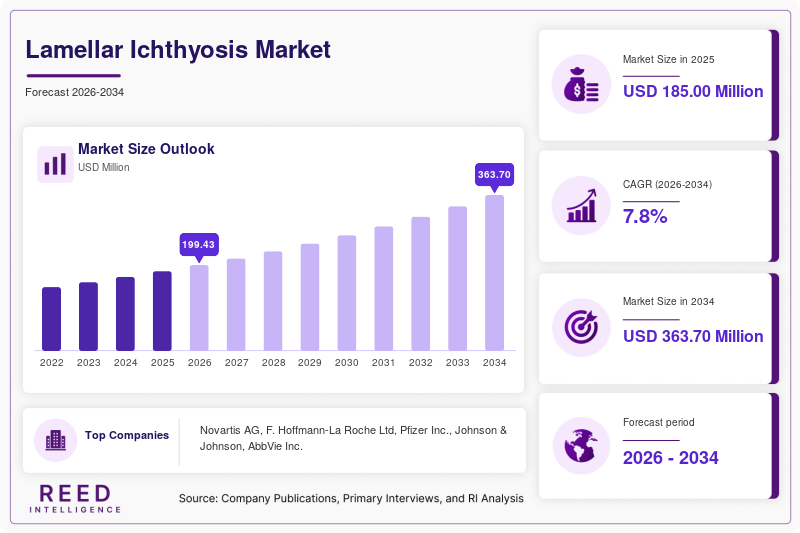
The Lamellar Ichthyosis Market size was valued at approximately USD 185 million in 2025 and is projected to reach USD 365 million by 2034, expanding at a CAGR of 7.8% from 2025 to 2034. The market reflects steady growth due to the increasing recognition of rare genetic dermatological disorders and advancements in targeted therapeutic approaches.
A key global factor supporting market expansion has been the growing adoption of precision medicine and orphan drug development frameworks, which have enabled pharmaceutical companies to invest in niche dermatological conditions such as lamellar ichthyosis. Regulatory incentives, including extended exclusivity and expedited approval pathways, have improved drug development pipelines and encouraged innovation in topical and systemic therapies.
Key Highlights
- Dominant Region: North America held approximately 38% market share in 2025, while Asia Pacific is expected to register the fastest CAGR of 9.2% during the forecast period.
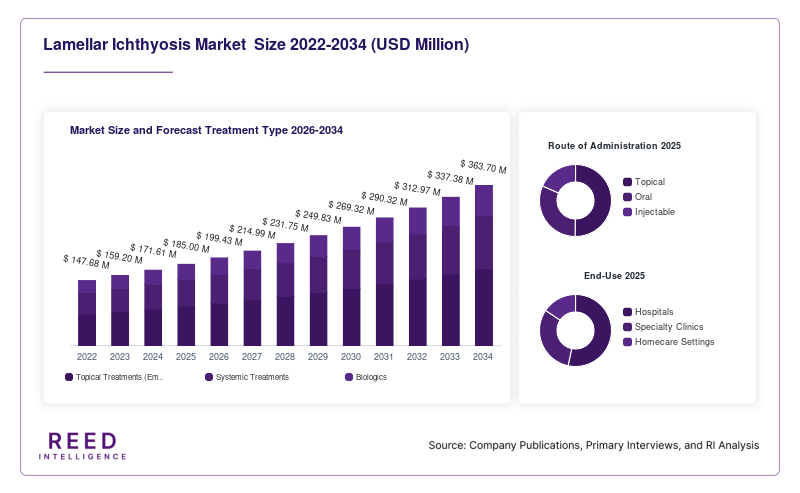
- Leading Subsegments: Topical treatments dominated the treatment segment with a 52% share in 2025, whereas biologics are projected to be the fastest-growing with a CAGR of 10.5%.
- Dominant Country: The United States recorded USD 70 million in 2025, expected to reach USD 75 million in 2026, maintaining leadership due to advanced healthcare infrastructure.
Market Trends
Increasing Focus on Orphan Drug Development
The Lamellar Ichthyosis Market has been shaped by a rising emphasis on orphan drug development. Pharmaceutical companies are increasingly targeting rare genetic conditions due to favorable regulatory frameworks and financial incentives. Governments and health authorities have introduced orphan drug designation programs that offer tax credits, fee waivers, and extended market exclusivity.
This trend has encouraged investment in research and development, particularly in therapies aimed at correcting underlying genetic mutations. Companies are leveraging novel drug delivery systems, including lipid-based topical formulations and gene-modulating therapies. The pipeline for lamellar ichthyosis treatments is gradually expanding, with several clinical trials focusing on improving skin barrier function and reducing scaling symptoms.
Advancements in Dermatological Formulations
Another key trend influencing the Lamellar Ichthyosis Market is the advancement in dermatological formulations. Traditional emollients and keratolytic agents are being replaced or enhanced by advanced formulations that improve efficacy and patient compliance.
Innovations include long-acting moisturizers, ceramide-based creams, and retinoid formulations with reduced side effects. These products are designed to provide sustained hydration and enhance skin repair mechanisms. Additionally, nanotechnology-based delivery systems are gaining traction, allowing for better penetration of active ingredients.
Digital health tools and teledermatology platforms are also supporting treatment adherence and monitoring, further enhancing patient outcomes. This shift toward advanced and patient-centric therapies is expected to significantly influence market dynamics over the forecast period.
Market Drivers
Rising Awareness and Early Diagnosis of Rare Skin Disorders
The Lamellar Ichthyosis Market is driven by increasing awareness of rare dermatological conditions among healthcare professionals and patients. Medical education initiatives and awareness campaigns have improved recognition of lamellar ichthyosis symptoms, leading to earlier diagnosis and intervention.
Genetic testing has become more accessible, enabling accurate identification of the disorder at an early stage. Early diagnosis allows for timely treatment, reducing complications and improving quality of life. Healthcare providers are also integrating multidisciplinary approaches, involving dermatologists, geneticists, and pediatric specialists, which enhances patient care outcomes.
Expansion of Specialized Dermatology Clinics and Treatment Centers
The growing number of specialized dermatology clinics and rare disease treatment centers has contributed significantly to the growth of the Lamellar Ichthyosis Market. These facilities provide targeted treatment solutions and access to advanced therapies.
Specialized centers are equipped with expertise in managing chronic and rare skin disorders, offering customized treatment plans. Increased investment in healthcare infrastructure, particularly in developed regions, has improved patient access to specialized care.
Moreover, collaborations between healthcare institutions and pharmaceutical companies have facilitated clinical research and treatment advancements. These developments are expected to sustain market growth throughout the forecast period.
Market Restraint
High Cost of Treatment and Limited Accessibility
One of the major challenges in the Lamellar Ichthyosis Market is the high cost associated with treatment and limited accessibility in developing regions. Advanced therapies, including systemic retinoids and emerging biologics, often involve significant expenses, making them inaccessible to a large patient population.
The rarity of the condition further limits economies of scale, resulting in higher pricing for treatments. Additionally, lack of reimbursement policies in certain regions restricts patient access to essential therapies.
Healthcare disparities between developed and developing countries also impact market growth. In low-income regions, limited awareness and insufficient healthcare infrastructure hinder diagnosis and treatment adoption. Addressing these challenges will be critical for expanding the global reach of lamellar ichthyosis therapies.
Market Opportunities
Development of Gene-Based Therapies
The emergence of gene-based therapies presents a significant opportunity in the Lamellar Ichthyosis Market. As the condition is primarily caused by genetic mutations, targeted gene therapies have the potential to address the root cause rather than just managing symptoms.
Advancements in gene editing technologies and RNA-based treatments are opening new avenues for therapeutic development. Pharmaceutical companies are investing in research to develop long-term or potentially curative solutions. Successful commercialization of such therapies could transform the treatment landscape and drive substantial market growth.
Expansion in Emerging Markets
Emerging economies offer untapped potential for the Lamellar Ichthyosis Market. Increasing healthcare expenditure, improving infrastructure, and rising awareness are creating favorable conditions for market expansion.
Governments in countries across Asia Pacific and Latin America are focusing on rare disease management, including funding programs and policy support. Additionally, the entry of global pharmaceutical companies into these markets is enhancing treatment availability.
Localized manufacturing and distribution strategies are expected to reduce costs and improve accessibility. As awareness continues to grow, these regions are likely to become key contributors to market growth during the forecast period.
Segmental Analysis
By Treatment Type
Topical treatments dominated the Lamellar Ichthyosis Market in 2025, accounting for approximately 52% of the total share. These treatments have been widely used due to their effectiveness in managing symptoms such as dryness and scaling. Emollients, keratolytics, and topical retinoids formed the core of this segment, offering accessible and non-invasive treatment options.
Biologics are expected to be the fastest-growing subsegment, projected to expand at a CAGR of 10.5%. This growth will be driven by advancements in targeted therapies that address underlying inflammatory pathways. Biologics offer improved efficacy and reduced side effects compared to conventional treatments, making them increasingly attractive to healthcare providers.
By Route of Administration
The topical route of administration held the dominant position in 2025 with a 60% market share. Its widespread adoption has been attributed to ease of use, patient preference, and direct application to affected areas.
The oral route is anticipated to be the fastest-growing segment, with a projected CAGR of 8.9%. Oral therapies, including systemic retinoids, provide comprehensive treatment for severe cases. Continuous innovation in drug formulations is expected to enhance safety profiles and drive adoption.
By End-Use
Hospitals and specialty clinics accounted for the largest share of the Lamellar Ichthyosis Market in 2025, capturing approximately 55%. These facilities have been primary centers for diagnosis and treatment, offering access to advanced therapies and expert care.
Homecare settings are projected to witness the fastest growth, with a CAGR of 9.0%. Increasing availability of user-friendly topical treatments and digital health tools is enabling patients to manage their condition at home effectively.
By Distribution Channel
Hospital pharmacies dominated the market in 2025 with a 48% share, supported by the high volume of prescriptions generated in clinical settings. These pharmacies play a crucial role in ensuring the availability of specialized treatments.
Online pharmacies are expected to grow at the fastest rate, with a CAGR of 9.5%. The convenience of online purchasing and increasing digital adoption are driving this growth. Patients are increasingly opting for home delivery services, especially for chronic conditions requiring long-term treatment.
Regional Analysis
North America
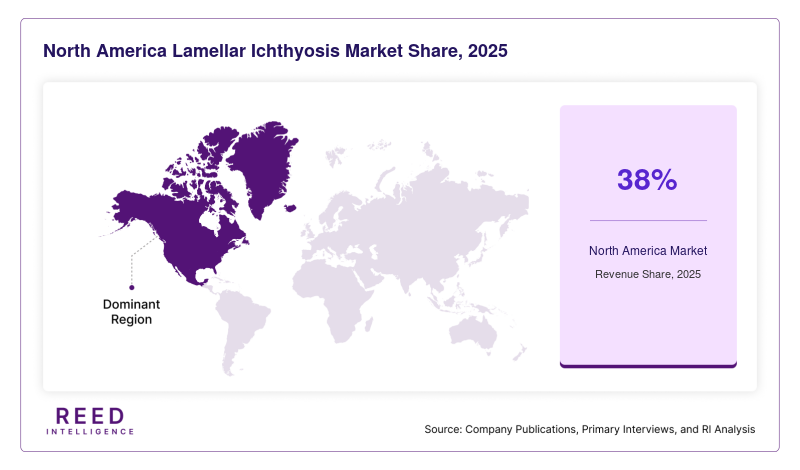
North America accounted for 38% of the Lamellar Ichthyosis Market share in 2025 and is expected to grow at a CAGR of 7.5% through 2034. The region benefited from advanced healthcare systems, strong research infrastructure, and widespread adoption of innovative therapies.
The United States dominated the regional market due to its well-established pharmaceutical industry and strong focus on rare disease treatment. The presence of leading research institutions and funding initiatives supported clinical advancements. Additionally, patient advocacy groups and awareness programs contributed to early diagnosis and treatment adoption.
Europe
Europe held approximately 27% market share in 2025 and is projected to expand at a CAGR of 7.2% during the forecast period. The region demonstrated steady growth supported by favorable healthcare policies and government support for orphan drug development.
Germany emerged as the dominant country, driven by its advanced healthcare infrastructure and strong dermatology research ecosystem. The country’s focus on innovation and collaboration between academia and industry has facilitated the development of new therapies.
Asia Pacific
Asia Pacific represented around 20% of the market share in 2025 and is expected to register the fastest CAGR of 9.2%. The region has been witnessing rapid growth due to increasing healthcare investments and rising awareness of rare diseases.
China dominated the regional market owing to its large population base and improving healthcare infrastructure. Government initiatives aimed at enhancing rare disease diagnosis and treatment have contributed to market expansion.
Middle East & Africa
The Middle East & Africa accounted for approximately 8% of the Lamellar Ichthyosis Market share in 2025 and is anticipated to grow at a CAGR of 6.5%. Growth in this region has been moderate due to limited healthcare resources and lower awareness levels.
Saudi Arabia led the regional market, supported by increasing healthcare investments and efforts to improve rare disease management. The country has been focusing on expanding specialized treatment centers and enhancing diagnostic capabilities.
Latin America
Latin America held about 7% market share in 2025 and is projected to grow at a CAGR of 6.8%. The region has shown gradual progress in healthcare development and rare disease awareness.
Brazil dominated the regional market due to its expanding healthcare infrastructure and increasing focus on dermatological conditions. Government initiatives aimed at improving access to treatment have supported market growth.
Competitive Landscape
The Lamellar Ichthyosis Market is moderately fragmented, with several pharmaceutical and biotechnology companies focusing on rare dermatological disorders. Key players are investing in research and development to introduce innovative therapies and expand their product portfolios.
A leading player in the market has been actively developing advanced topical formulations and exploring gene-based therapies. The company recently announced progress in clinical trials aimed at improving treatment efficacy and patient outcomes.
Strategic collaborations, mergers, and partnerships are common among market participants, enabling them to strengthen their market position and accelerate innovation. Companies are also focusing on expanding their presence in emerging markets to tap into new growth opportunities.
Key Players
- Novartis AG
- F. Hoffmann-La Roche Ltd
- Pfizer Inc.
- Johnson & Johnson
- AbbVie Inc.
- Sanofi S.A.
- Amgen Inc.
- Eli Lilly and Company
- Bayer AG
- GlaxoSmithKline plc
- Leo Pharma A/S
- Almirall S.A.
- Bausch Health Companies Inc.
- Galderma S.A.
- Regeneron Pharmaceuticals Inc.
Recent Developments
- In 2025, a major pharmaceutical company initiated a Phase II clinical trial for a novel gene therapy targeting lamellar ichthyosis.
- A dermatology-focused firm launched an advanced ceramide-based topical formulation designed for long-lasting hydration.
- Strategic collaboration between biotech companies accelerated research on RNA-based therapies for rare skin disorders.
- Expansion of teledermatology services improved patient access to specialized care globally.
- Increased funding from healthcare organizations supported rare disease research and treatment innovation.
Lamellar Ichthyosis Market Segments
Treatment Type
- Topical Treatments (Emollients, Keratolytics, Retinoids)
- Systemic Treatments
- Biologics
Route of Administration
- Topical
- Oral
- Injectable
End-Use
- Hospitals
- Specialty Clinics
- Homecare Settings
Distribution Channel
- Hospital Pharmacies
- Retail Pharmacies
- Online Pharmacies
By Region
- North America
- Europe
- APAC
- Middle East and Africa
- LATAM