Lassa Fever Treatment Market Size, Share Demand Report By Treatment Type (Antiviral Drugs, Supportive Care, Combination Therapy), By Route of Administration (Oral, Intravenous), By Distribution Channel (Hospital Pharmacies, Retail Pharmacies, Online Pharmacies), By End User (Hospitals, Clinics, Homecare Settings), By Region & Segment Forecasts, 2025–2034
USD 3950
Market Overview
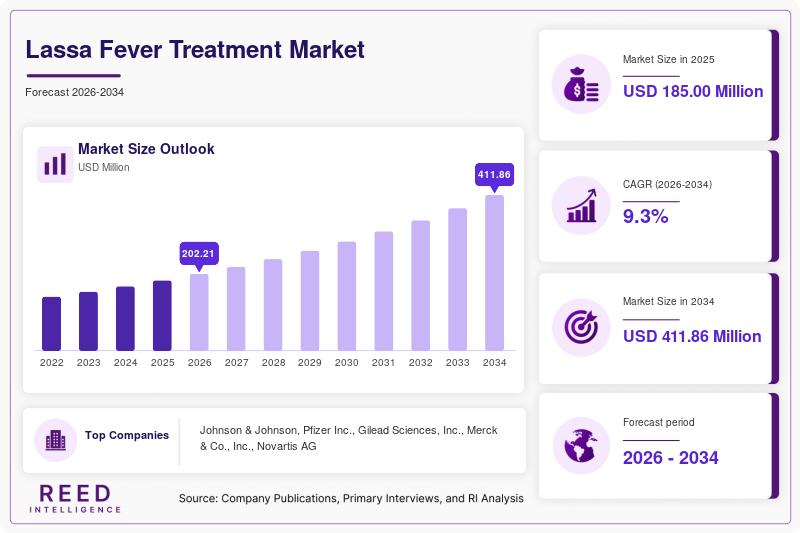
The Lassa Fever Treatment Market size was valued at approximately USD 185 million in 2025 and is projected to reach USD 412 million by 2034, expanding at a CAGR of 9.3% during the forecast period (2025–2034). The market is experiencing steady growth due to increasing global awareness of viral hemorrhagic fevers and improvements in infectious disease surveillance systems. Governments and international health organizations have strengthened response frameworks, which has supported early diagnosis and treatment access, especially in endemic regions.
A key global factor supporting market growth is the expansion of public health initiatives led by global organizations to control neglected tropical diseases. Increased funding for antiviral drug development, coupled with the expansion of healthcare infrastructure in West Africa, has contributed to the accessibility of Lassa fever treatment solutions. Furthermore, collaborations between pharmaceutical companies and research institutions are improving the availability of targeted therapeutics.
Key Highlights
- North America dominated the market with a 32.4% share in 2025, while Asia Pacific is expected to register the fastest CAGR of 10.8% during the forecast period.
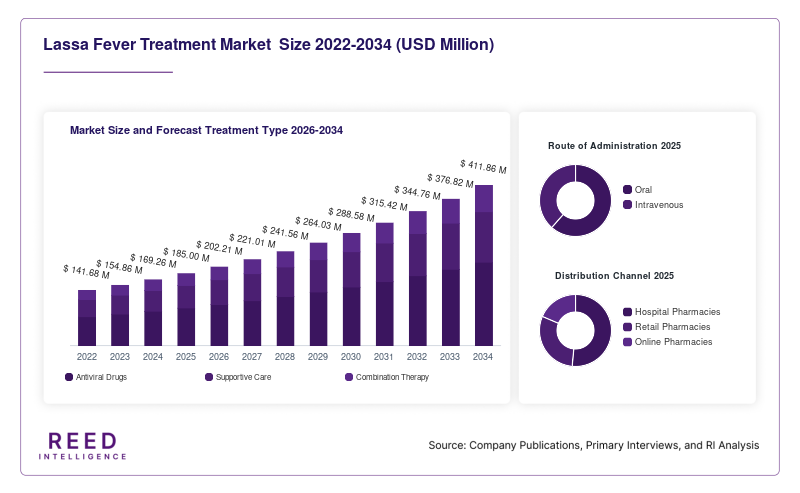
- The antiviral drugs segment led with a 58.7% share, while combination therapies are projected to grow at a CAGR of 11.2%.
- By distribution channel, hospital pharmacies dominated with 49.3% share, whereas online pharmacies are expected to grow at 12.1% CAGR.
- The United States accounted for USD 52 million in 2025 and is projected to reach USD 56 million in 2026, maintaining its position as the dominant country.
Market Trends
Increasing Focus on Antiviral Drug Innovation
The Lassa Fever Treatment Market is witnessing a shift toward the development of targeted antiviral therapies. Traditional treatment options such as ribavirin are being complemented by newer investigational drugs with improved efficacy and safety profiles. Pharmaceutical companies are investing in advanced clinical trials to develop next-generation antivirals that reduce mortality rates and improve patient recovery time. This trend is supported by increasing research grants and funding for infectious disease therapeutics.
Expansion of Public-Private Partnerships
Another significant trend shaping the market is the rise of collaborations between governments, global health agencies, and private pharmaceutical firms. These partnerships aim to enhance drug accessibility in endemic regions and accelerate regulatory approvals. Joint initiatives are also improving supply chain systems for essential medicines. As a result, treatment availability in rural and underserved regions is improving, which is expected to positively influence the market growth outlook.
Market Drivers
Rising Incidence of Lassa Fever in Endemic Regions
The increasing number of Lassa fever cases in West Africa is a primary driver of the market. Seasonal outbreaks and improved disease detection systems have led to higher diagnosis rates. This has resulted in a growing demand for effective treatment solutions, including antivirals and supportive care therapies. Governments are allocating higher budgets toward infectious disease management, further supporting market expansion.
Strengthening Healthcare Infrastructure and Surveillance Systems
Improvements in healthcare infrastructure, particularly in developing economies, are boosting the demand for Lassa fever treatments. The expansion of diagnostic laboratories and treatment centers has enabled early detection and timely intervention. Enhanced surveillance systems are helping track outbreaks more efficiently, thereby increasing the adoption of treatment solutions. This driver is particularly relevant in regions where healthcare systems are undergoing modernization.
Market Restraint
Limited Availability of Approved Treatment Options
A major restraint in the Lassa Fever Treatment Market is the limited number of approved therapeutics. Ribavirin remains the primary treatment option, and its effectiveness depends on early administration. The lack of diversified treatment options restricts the ability to manage severe cases effectively. Additionally, regulatory challenges and lengthy clinical trial processes delay the introduction of new drugs into the market.
Another concern is the limited accessibility of existing treatments in remote and low-resource settings. High costs associated with drug development and distribution further hinder market penetration. These factors collectively create barriers to market growth, particularly in regions with high disease prevalence but limited healthcare infrastructure.
Market Opportunities
Development of Vaccines and Novel Therapeutics
The ongoing research into Lassa fever vaccines presents a significant opportunity for market growth. Several vaccine candidates are in preclinical and clinical stages, which could transform the treatment landscape if successfully commercialized. The introduction of vaccines would not only reduce disease incidence but also create new revenue streams within the market.
Expansion into Emerging Markets
Emerging economies in Africa and Asia Pacific offer untapped potential for the Lassa Fever Treatment Market. Increasing healthcare investments and international funding are improving treatment accessibility in these regions. Companies are focusing on expanding their distribution networks and establishing partnerships with local healthcare providers. This expansion is expected to drive market growth over the forecast period.
Segmental Analysis
By Treatment Type
The antiviral drugs segment dominated the Lassa Fever Treatment Market with a 58.7% share in 2025. Ribavirin remained the most widely used treatment due to its established efficacy in early-stage disease management. The availability of generic formulations and widespread adoption in endemic regions contributed to the segment’s dominance.
Combination therapies are expected to be the fastest-growing subsegment, registering a CAGR of 11.2%. These therapies will gain traction due to their ability to enhance treatment effectiveness and reduce mortality rates. Ongoing research into multi-drug regimens is expected to drive growth.
By Route of Administration
The intravenous segment held the largest share at 54.5% in 2025, as severe cases require immediate and controlled drug delivery. Hospitals and specialized treatment centers primarily use intravenous administration for critical patients.
The oral segment is projected to grow at a CAGR of 10.5%, driven by increasing demand for convenient and accessible treatment options. Oral formulations will support outpatient care and improve patient compliance.
By Distribution Channel
Hospital pharmacies dominated with a 49.3% share in 2025, as most treatments are administered in clinical settings. The availability of specialized care and trained healthcare professionals contributed to this dominance.
Online pharmacies are expected to grow at a CAGR of 12.1%, supported by digital healthcare expansion and improved logistics. Increased internet penetration and telemedicine adoption will drive this segment.
By End User
Hospitals accounted for 46.8% share in 2025, driven by the need for intensive care and specialized treatment facilities. The presence of advanced diagnostic and therapeutic infrastructure supported this segment.
Homecare settings are projected to grow at a CAGR of 10.9%, as mild cases increasingly receive treatment outside hospital settings. The availability of oral medications and remote monitoring technologies will support this growth.
Regional Analysis
North America
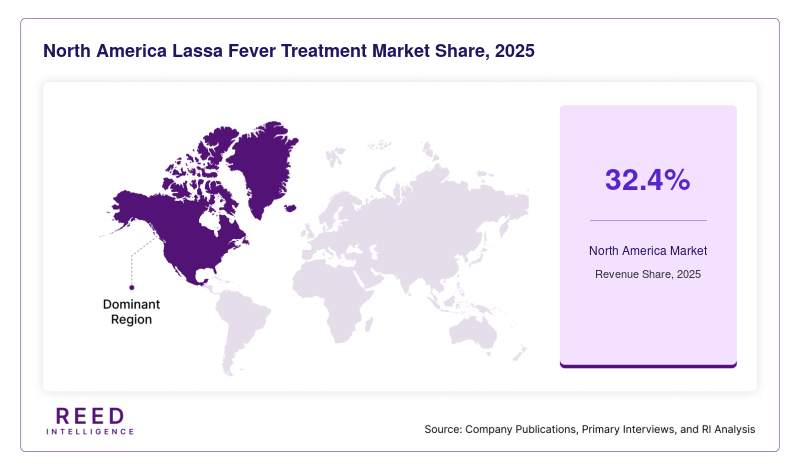
North America accounted for 32.4% of the Lassa Fever Treatment Market share in 2025 and is expected to grow at a CAGR of 8.7% during the forecast period. The region benefited from advanced healthcare systems and strong research capabilities. High awareness levels and government support for infectious disease preparedness contributed to market growth.
The United States dominated the regional market due to its well-established pharmaceutical industry and robust funding for infectious disease research. Increased investments in antiviral drug development and strategic stockpiling of treatments have supported market expansion.
Europe
Europe held 24.1% market share in 2025 and is projected to grow at a CAGR of 8.9%. The region experienced steady growth due to strong healthcare infrastructure and increasing focus on pandemic preparedness. European countries have been actively investing in research initiatives aimed at combating rare infectious diseases.
Germany emerged as the dominant country, supported by its advanced healthcare system and strong research institutions. The country’s emphasis on clinical research and collaborations with global health organizations has driven demand for Lassa fever treatment solutions.
Asia Pacific
Asia Pacific accounted for 18.7% share in 2025 and is anticipated to register the fastest CAGR of 10.8%. The region is witnessing rapid improvements in healthcare infrastructure and increasing awareness of infectious diseases. Government initiatives to strengthen disease surveillance systems are contributing to market growth.
India led the regional market due to its expanding pharmaceutical manufacturing capabilities and increasing investments in healthcare. The country’s focus on generic drug production and export has enhanced the availability of treatment options.
Middle East & Africa
The Middle East & Africa region held 17.6% share in 2025 and is expected to grow at a CAGR of 9.6%. This region represents the primary endemic area for Lassa fever, leading to consistent demand for treatment solutions. International support and funding have played a crucial role in improving healthcare access.
Nigeria dominated the regional market due to its high disease burden and government-led initiatives to control outbreaks. Increased funding from global organizations and the establishment of specialized treatment centers have supported market growth.
Latin America
Latin America accounted for 7.2% share in 2025 and is projected to grow at a CAGR of 8.5%. The region is gradually improving its healthcare infrastructure and increasing focus on infectious disease management.
Brazil emerged as the dominant country, driven by its large healthcare system and growing investments in public health programs. Efforts to enhance diagnostic capabilities and treatment access have contributed to market expansion.
Competitive Landscape
The Lassa Fever Treatment Market is moderately consolidated, with key players focusing on research collaborations and product development. Leading companies are investing in antiviral drug innovation and expanding their geographic presence.
A prominent market leader is Johnson & Johnson, which has been actively involved in infectious disease research and vaccine development. The company recently advanced its pipeline for viral hemorrhagic fever treatments, strengthening its market position.
Other major players are focusing on strategic partnerships and clinical trials to introduce new treatment options. The competitive landscape is characterized by ongoing innovation and increasing investment in neglected tropical diseases.
Key Players
- Johnson & Johnson
- Pfizer Inc.
- Gilead Sciences, Inc.
- Merck & Co., Inc.
- Novartis AG
- GlaxoSmithKline plc
- Sanofi S.A.
- Bavarian Nordic
- Emergent BioSolutions Inc.
- BioCryst Pharmaceuticals
- Regeneron Pharmaceuticals
- Takeda Pharmaceutical Company Limited
- AstraZeneca plc
- Cipla Limited
- Sun Pharmaceutical Industries Ltd.
Recent Developments
- In 2025, multiple pharmaceutical companies advanced clinical trials for novel antiviral therapies targeting Lassa fever.
- Strategic collaborations between global health organizations and drug manufacturers increased funding for treatment accessibility in Africa.
- New diagnostic and treatment centers were established in endemic regions to improve early detection and patient outcomes.
- Several companies expanded their distribution networks to enhance drug availability in remote areas.
Lassa Fever Treatment Market Segments
Treatment Type
- Antiviral Drugs
- Supportive Care
- Combination Therapy
Route of Administration
- Oral
- Intravenous
Distribution Channel
- Hospital Pharmacies
- Retail Pharmacies
- Online Pharmacies
End User
- Hospitals
- Clinics
- Homecare Settings
By Region
- North America
- Europe
- APAC
- Middle East and Africa
- LATAM