Lemierre Syndrome Treatment Market Size, Share & Demand Report By Drug Class (Antibiotics, Anticoagulants, Supportive Therapies), By Treatment Setting (Hospitals, Specialty Infection Clinics, Outpatient Care Centers), By Route of Administration (Intravenous, Oral), By Region & Segment Forecasts, 2025–2034
USD 3950
Market Overview
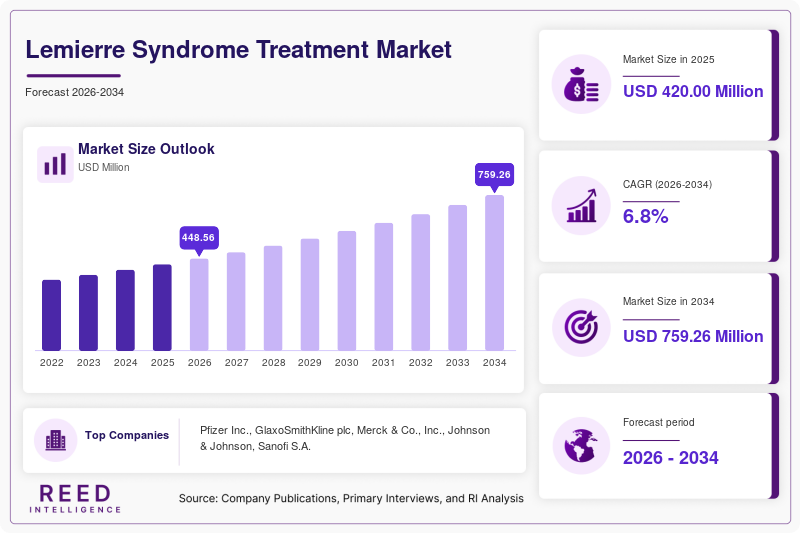
The global Lemierre Syndrome Treatment Market size was valued at USD 420 million in 2025 and is projected to reach USD 760 million by 2034, expanding at a CAGR of 6.8% during 2025–2034. Lemierre syndrome is a rare but severe bacterial infection that typically originates from oropharyngeal infections and can lead to septic thrombophlebitis of the internal jugular vein. Treatment typically includes prolonged antibiotic therapy, anticoagulants in certain cases, and surgical interventions when complications arise. The increasing recognition of this rare condition in clinical practice has contributed to steady market expansion.
One global factor supporting the growth of the Lemierre Syndrome Treatment Market is the improvement in early diagnostic practices and infection management protocols across healthcare systems. With advancements in imaging technologies, microbiological testing, and clinical awareness programs, healthcare providers are identifying Lemierre syndrome cases earlier than in previous decades. Earlier diagnosis enables timely antibiotic therapy and reduces complications, thereby increasing the demand for targeted treatment regimens.
Key Highlights
- North America accounted for 38% market share in 2025, while Asia Pacific is projected to grow at the fastest CAGR of 7.6% during 2025–2034.
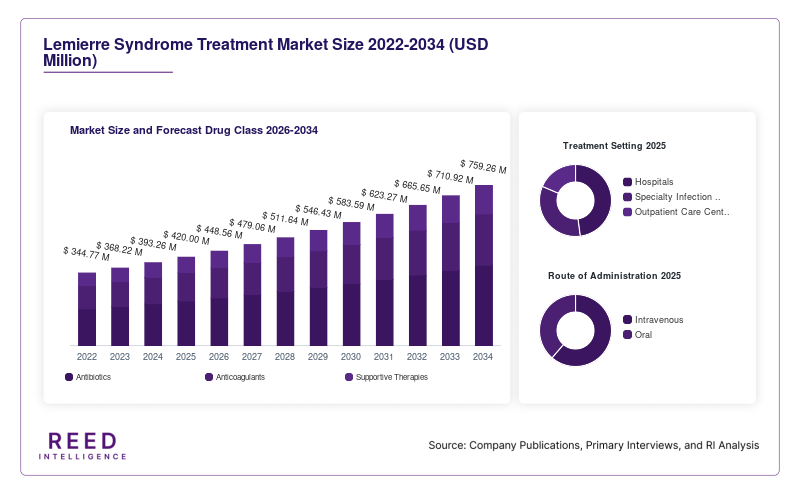
- In the drug class segment, antibiotics dominated with 62% share in 2025, while combination antibiotic therapy is expected to be the fastest-growing with a CAGR of 7.4%.
- In the treatment setting segment, hospital-based treatment held 71% share in 2025, while specialty infection clinics are projected to grow at a CAGR of 7.1%.
- The United States remained the dominant country market with USD 145 million in 2025 and is estimated to reach USD 154 million in 2026.
Market Trends
Rising Clinical Awareness of Rare Infectious Diseases
Growing awareness among healthcare professionals regarding rare infectious conditions is influencing the Lemierre Syndrome Treatment Market. Medical training programs, infectious disease conferences, and clinical guideline updates are increasing physician recognition of this condition. Historically, Lemierre syndrome was often misdiagnosed as general septicemia or throat infection complications. However, improved understanding of characteristic symptoms such as persistent fever, septic emboli, and jugular vein thrombosis has led to more accurate diagnoses.
Additionally, clinical research publications and case studies have improved knowledge among physicians and emergency care providers. As a result, healthcare institutions are adopting standardized diagnostic protocols for severe throat infections and septic conditions, contributing to increased treatment demand.
Expansion of Advanced Antimicrobial Therapies
Another trend shaping the Lemierre Syndrome Treatment Market is the expansion of advanced antimicrobial therapies. Pharmaceutical manufacturers are focusing on developing broad-spectrum antibiotics and combination drug therapies that target anaerobic bacteria such as Fusobacterium necrophorum, the primary pathogen responsible for Lemierre syndrome.
Hospitals are increasingly adopting combination antibiotic regimens to ensure effective bacterial eradication and reduce complications. Additionally, antimicrobial stewardship programs are optimizing treatment protocols, ensuring appropriate antibiotic use while minimizing resistance risks. These developments are expected to support continued market growth over the forecast period.
Market Drivers
Increasing Incidence of Severe Bacterial Infections
The increasing incidence of severe bacterial infections globally is a key factor driving the Lemierre Syndrome Treatment Market. Rising cases of pharyngeal infections, tonsillitis, and bacterial sepsis are contributing to the number of patients requiring intensive infection management. Although Lemierre syndrome remains rare, it often develops as a complication of untreated bacterial throat infections.
Healthcare systems are placing greater emphasis on rapid infection management and sepsis prevention strategies. This focus is driving demand for effective antibiotic therapies, diagnostic imaging, and supportive care solutions used in treating Lemierre syndrome.
Advancements in Diagnostic Technologies
Technological progress in diagnostic imaging and microbiological testing is another factor driving the Lemierre Syndrome Treatment Market. Modern diagnostic tools such as CT scans, MRI imaging, and blood culture testing are improving detection of jugular vein thrombosis and septic emboli associated with Lemierre syndrome.
Hospitals are increasingly investing in advanced diagnostic infrastructure, which helps clinicians identify infections earlier and initiate treatment more effectively. This improved detection capability is contributing to higher treatment adoption rates and expanding the market for associated therapies.
Market Restraint
Low Disease Prevalence and Limited Clinical Awareness in Developing Regions
One significant restraint affecting the Lemierre Syndrome Treatment Market is the low prevalence of the disease and limited clinical awareness in several developing regions. Lemierre syndrome is considered a rare condition, which results in relatively small patient populations compared to other infectious diseases.
In many developing healthcare systems, symptoms may be misdiagnosed due to limited access to specialized diagnostic tools and trained infectious disease specialists. As a result, some cases remain unreported or untreated until severe complications occur. This lack of early detection limits overall treatment demand in certain markets.
Additionally, healthcare providers often prioritize more common infectious diseases, which can restrict funding and research investment directed toward rare infection management.
Market Opportunities
Expansion of Rare Disease Research Programs
Increasing research investments in rare diseases present a promising opportunity for the Lemierre Syndrome Treatment Market. Governments, healthcare institutions, and pharmaceutical companies are expanding rare disease research initiatives to improve understanding of uncommon medical conditions.
Research programs focusing on microbial pathogenesis, antibiotic effectiveness, and improved diagnostic strategies are contributing to the development of more targeted treatment approaches. These initiatives may also encourage pharmaceutical companies to explore new antimicrobial compounds that could improve treatment outcomes.
Growth of Hospital Infection Management Programs
The expansion of hospital infection management programs represents another opportunity in the Lemierre Syndrome Treatment Market. Healthcare systems worldwide are implementing infection control strategies to manage severe bacterial infections and prevent complications such as septic thrombophlebitis.
Hospitals are establishing specialized infection management units and multidisciplinary care teams that include infectious disease specialists, radiologists, and critical care professionals. These integrated treatment models are expected to increase the adoption of comprehensive Lemierre syndrome treatment protocols.
Segmental Analysis
By Drug Class
Antibiotics dominated the Lemierre Syndrome Treatment Market, accounting for 62% share in 2025. Antibiotic therapy remains the primary treatment approach for Lemierre syndrome as it directly targets the bacterial infection responsible for the condition. Physicians typically prescribe broad-spectrum antibiotics that are effective against anaerobic bacteria. Hospitals widely utilize intravenous antibiotic regimens for severe cases, ensuring rapid infection control and preventing complications such as septic embolism.
Combination antibiotic therapy will likely be the fastest-growing subsegment with a CAGR of 7.4% through 2034. Physicians increasingly prefer combination regimens that include beta-lactam antibiotics with metronidazole or similar antimicrobial agents. This treatment approach ensures broader bacterial coverage and improves treatment effectiveness. The growing focus on reducing antibiotic resistance while maintaining treatment efficiency will further support this segment’s growth.
By Treatment Setting
Hospital-based treatment accounted for 71% share of the Lemierre Syndrome Treatment Market in 2025. Most patients with Lemierre syndrome require hospitalization due to the severity of the infection and the need for intravenous antibiotic therapy. Hospitals provide intensive monitoring, advanced diagnostic imaging, and multidisciplinary care that includes infectious disease specialists and critical care physicians.
Specialty infection clinics are projected to grow at a CAGR of 7.1% during the forecast period. These clinics are increasingly focusing on complex bacterial infection management and follow-up care after hospital discharge. The expansion of specialized outpatient care centers will enable continued antibiotic therapy and monitoring without extended hospital stays.
By Route of Administration
Intravenous administration dominated the Lemierre Syndrome Treatment Market, representing 66% share in 2025. Intravenous antibiotics are widely used during the early stages of treatment because they deliver rapid therapeutic concentrations in the bloodstream. Hospitals rely heavily on IV antibiotics to manage severe infections and prevent septic complications.
Oral antibiotic therapy is expected to grow at a CAGR of 6.9% during 2025–2034. Oral medications are commonly used during the recovery phase after initial intravenous therapy. Improved oral antibiotic formulations and patient compliance with outpatient treatment regimens will support the expansion of this segment.
Regional Analysis
North America
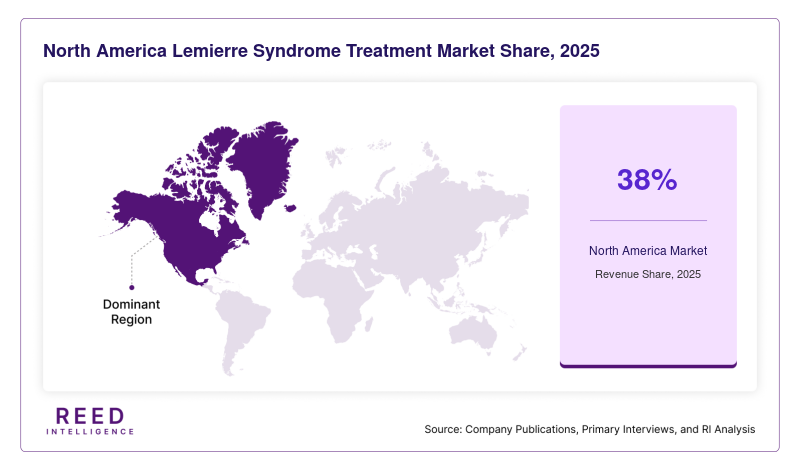
North America held 38% share of the Lemierre Syndrome Treatment Market in 2025 and will likely grow at a CAGR of 6.4% during 2025–2034. The region accounted for the largest share due to strong healthcare infrastructure, advanced diagnostic capabilities, and established infectious disease treatment protocols.
The presence of well-developed hospital systems and research institutions also supported early diagnosis and management of rare infections such as Lemierre syndrome. Additionally, high healthcare expenditure and access to specialized antibiotics contributed to regional market dominance.
The United States dominated the North American market due to the presence of specialized infectious disease centers and strong clinical research activity. Hospitals in the country widely adopt imaging-based diagnostic protocols for severe infections. Furthermore, national clinical guidelines for sepsis management support early treatment, which has strengthened the demand for Lemierre syndrome therapies.
Europe
Europe represented 27% share of the Lemierre Syndrome Treatment Market in 2025 and will expand at a CAGR of 6.6% through 2034. Regional market growth has been supported by strong healthcare systems and increased focus on rare infectious disease management.
European countries have been strengthening hospital infection control programs and clinical training initiatives to improve diagnosis of uncommon bacterial conditions. Additionally, several healthcare organizations are promoting antimicrobial stewardship programs to ensure responsible antibiotic use.
The United Kingdom remained the leading country market within Europe. The country has developed extensive clinical research networks that focus on infectious disease management. Universities and teaching hospitals frequently publish research on Lemierre syndrome, which contributes to physician awareness and improved diagnosis rates.
Asia Pacific
Asia Pacific accounted for 20% share of the Lemierre Syndrome Treatment Market in 2025 and is projected to grow at the fastest CAGR of 7.6% through 2034. The region’s growth will be supported by expanding healthcare infrastructure and increasing investments in hospital diagnostic technologies.
Several countries in Asia Pacific are improving their infectious disease treatment capacity through hospital expansion and physician training programs. Rising patient awareness and improving access to healthcare services are also supporting market growth.
China emerged as the dominant country in the region due to its rapidly expanding healthcare system and growing hospital network. Major urban hospitals are adopting advanced imaging technologies and laboratory testing methods for diagnosing complex infections. The country’s expanding healthcare investment is expected to further strengthen the demand for Lemierre syndrome treatment.
Middle East & Africa
The Middle East & Africa held 8% share of the Lemierre Syndrome Treatment Market in 2025 and is anticipated to grow at a CAGR of 6.3% during the forecast period. Market development in this region has been influenced by gradual improvements in healthcare infrastructure and increasing hospital investments.
Governments in several Middle Eastern countries are investing in healthcare modernization programs, including hospital expansion and infectious disease research initiatives. These developments are expected to improve diagnostic and treatment capabilities.
Saudi Arabia remained the leading country in the region. The government has been expanding tertiary care hospitals and strengthening infectious disease management programs. Increased investment in modern diagnostic equipment has enhanced physicians’ ability to detect complex bacterial infections.
Latin America
Latin America captured 7% share of the Lemierre Syndrome Treatment Market in 2025 and will likely grow at a CAGR of 6.5% between 2025 and 2034. Market growth in this region has been supported by improvements in healthcare access and the modernization of hospital facilities.
Healthcare systems across Latin America are increasing investment in infection management programs and expanding clinical training for physicians. These initiatives are improving early recognition of severe bacterial infections and related complications.
Brazil remained the dominant country market in the region due to its large healthcare network and growing hospital infrastructure. The country has increased investments in medical imaging and diagnostic laboratories, enabling improved detection of complex infections such as Lemierre syndrome.
Competitive Landscape
The Lemierre Syndrome Treatment Market features several pharmaceutical companies and healthcare providers involved in the development and distribution of antimicrobial therapies. The market is moderately fragmented, with companies focusing on antibiotic innovation and infection management solutions.
Pfizer Inc. remains a leading player due to its extensive antibiotic portfolio and global distribution network. The company has strengthened its infectious disease product line by investing in antimicrobial research programs aimed at improving treatment effectiveness for severe bacterial infections.
Other companies operating in the market include global pharmaceutical manufacturers that supply broad-spectrum antibiotics widely used in hospital infection management. Many of these companies are also focusing on developing advanced antimicrobial agents and supporting hospital-based infection management programs.
Key Players
- Pfizer Inc.
- GlaxoSmithKline plc
- Merck & Co., Inc.
- Johnson & Johnson
- Sanofi S.A.
- AstraZeneca plc
- Novartis AG
- Bayer AG
- AbbVie Inc.
- Teva Pharmaceutical Industries Ltd.
- Cipla Limited
- Sun Pharmaceutical Industries Ltd.
- Lupin Limited
- Dr. Reddy’s Laboratories Ltd.
- Aurobindo Pharma Ltd.
Recent Developments
- Several pharmaceutical companies have expanded research initiatives focused on developing new broad-spectrum antimicrobial agents for severe bacterial infections.
- Hospitals across developed markets have adopted improved diagnostic protocols for identifying rare infections including Lemierre syndrome.
- Healthcare institutions have strengthened infection management programs to improve early diagnosis and treatment outcomes for complex bacterial conditions.
Lemierre Syndrome Treatment Market Segments
Drug Class
- Antibiotics
- Anticoagulants
- Supportive Therapies
Treatment Setting
- Hospitals
- Specialty Infection Clinics
- Outpatient Care Centers
Route of Administration
- Intravenous
- Oral
By Region
- North America
- Europe
- APAC
- Middle East and Africa
- LATAM