Lemon Essential Oil Market Size, Share & Demand Report By Product Type (Conventional Lemon Essential Oil, Organic Lemon Essential Oil), By Application (Personal Care & Cosmetics, Food & Beverages, Aromatherapy, Household Cleaning, Pharmaceuticals & Nutraceuticals), By Distribution Channel (Business-to-Business, Online Retail, Specialty Stores, Supermarkets & Hypermarkets, Pharmacies & Wellness Stores), By Region & Segment Forecasts, 2026–2034
USD 3950
Market Overview
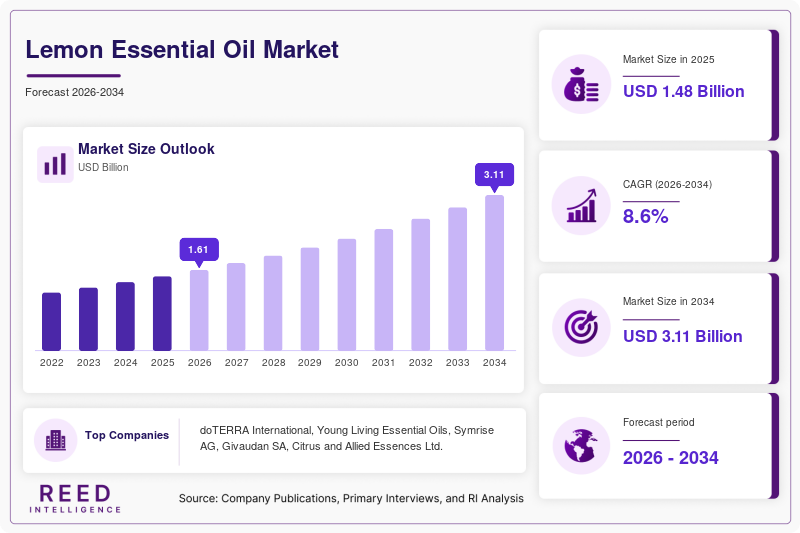
The Lemon Essential Oil Market size was valued at USD 1.48 billion in 2026 and is projected to reach USD 2.87 billion by 2034, expanding at a CAGR of 8.6% during 2026–2034. Lemon essential oil, extracted primarily through cold pressing of lemon peels, has gained wider commercial relevance across aromatherapy, cosmetics, personal care, food flavoring, household cleaning, and pharmaceutical formulations. Rising consumer preference for plant-derived ingredients has strengthened demand across both developed and emerging economies. A key global factor supporting market expansion is the accelerating shift toward natural wellness and clean-label consumer products. As synthetic fragrances and chemical additives face increasing scrutiny, manufacturers are incorporating lemon essential oil into skincare serums, diffusers, detergents, and functional beverages due to its antimicrobial, uplifting, and preservative properties. The wellness economy’s expansion, particularly in organic beauty and homecare, has further improved product penetration. Digital retail channels and direct-to-consumer wellness brands are also enabling broader product access, especially in urban populations seeking holistic lifestyle solutions. Increased cultivation of citrus crops in Mediterranean countries, India, and South America has supported raw material availability, while technological improvements in extraction efficiency are helping producers improve margins and maintain consistent quality standards. Regulatory support for botanical ingredients in food and cosmetics applications has additionally enhanced commercialization potential.
Key Highlights
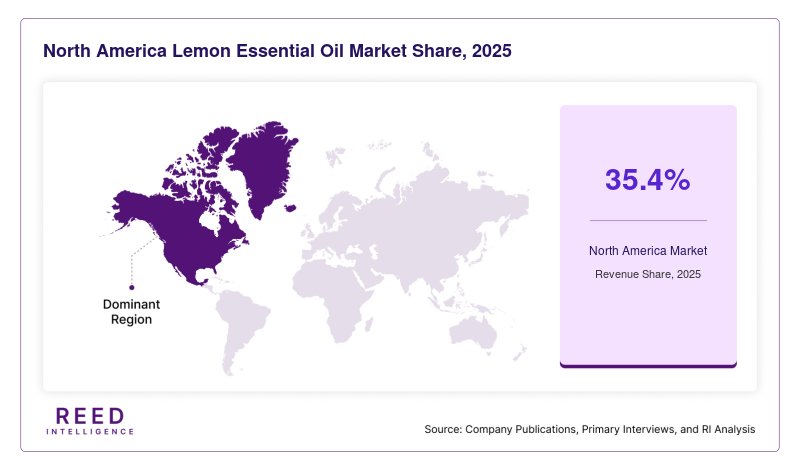
- North America dominated the market with a 35.4% share in 2025.
- Asia Pacific is expected to grow at the fastest CAGR of 10.8% during 2026–2034.
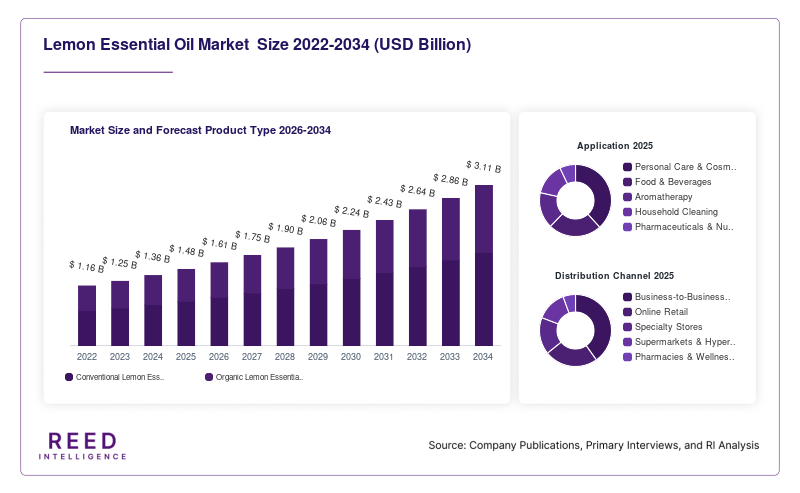
- By product type, conventional lemon essential oil accounted for the largest share of 62.8%, while organic lemon essential oil is projected to grow at a CAGR of 11.6%.
- By application, personal care & cosmetics led with a 36.9% share, whereas food & beverages is expected to expand at a CAGR of 10.9%.
- The United States remained the dominant country, with market values of USD 402 million in 2024 and USD 438 million in 2025.
Market Trends
Expansion of clean-label beauty and personal care formulations
The global beauty and skincare industry is increasingly integrating lemon essential oil into formulations that emphasize botanical sourcing, ingredient transparency, and multifunctional benefits. Consumers are actively choosing products with recognizable natural ingredients over synthetic chemicals, particularly in facial cleansers, anti-acne products, scalp care, and body oils. Lemon essential oil’s antibacterial and antioxidant properties make it attractive for brands focused on wellness positioning. Premium cosmetic companies are using lemon oil in serums and aromatherapy-based skincare collections, while mass-market brands are introducing affordable citrus-infused products. This trend is especially visible in North America and Europe, where ingredient-conscious purchasing behavior continues to influence product innovation and shelf placement.
Rising use in household cleaning and air care products
Lemon essential oil is experiencing increasing integration into household cleaning solutions due to its natural degreasing properties, fresh scent profile, and antimicrobial capabilities. As consumers seek alternatives to chemical-heavy disinfectants, manufacturers are developing lemon-based floor cleaners, kitchen sprays, laundry products, and air fresheners. The shift accelerated as hygiene awareness expanded globally and consumers became more cautious about indoor chemical exposure. Eco-conscious households increasingly prefer biodegradable cleaning products with essential oils, creating new market opportunities. Subscription-based homecare brands and refillable packaging models are further strengthening this trend, particularly in urban centers where sustainability and wellness purchasing patterns overlap.
Market Drivers
Growth of aromatherapy and holistic wellness industries
The increasing popularity of aromatherapy has become a major driver for the Lemon Essential Oil Market. Lemon oil is widely used in diffusers, massage blends, and stress-relief formulations because of its energizing aroma and perceived mood-enhancing properties. Wellness centers, spas, yoga studios, and home users are expanding demand for citrus essential oils. The growing emphasis on emotional wellness, stress reduction, and self-care routines has created stable product demand across multiple demographics. Younger consumers are also purchasing essential oils for home office productivity and mental clarity, while wellness influencers and online retail channels are driving education and awareness regarding lemon oil applications.
Demand for natural food flavoring ingredients
Food and beverage manufacturers are increasingly using lemon essential oil as a flavoring and preservative ingredient in confectionery, beverages, baked goods, and nutraceuticals. Consumers are showing stronger preference for natural flavor systems over artificial additives, particularly in premium food categories. Lemon essential oil offers concentrated flavor intensity and aligns with clean-label product development goals. Functional beverages, herbal teas, flavored waters, and organic snacks are contributing to this shift. Expanding regulations on ingredient disclosure in developed markets are also encouraging brands to reformulate products using plant-based ingredients, thereby improving lemon essential oil adoption in processed food systems.
Market Restraint
Volatility in citrus crop production and raw material pricing
The Lemon Essential Oil Market faces notable challenges due to seasonal fluctuations, crop diseases, and climate-related agricultural instability affecting lemon production. Citrus greening disease, irregular rainfall, drought conditions, and supply chain disruptions can significantly reduce lemon peel availability, directly influencing oil extraction costs. Since lemon essential oil production relies heavily on consistent citrus yields, price volatility can create margin pressure for manufacturers and lead to unstable pricing for end-use industries. Smaller producers are particularly vulnerable to supply shocks, while large-scale buyers may shift temporarily toward synthetic alternatives during high-cost periods. This instability can also affect product quality consistency, particularly in lower-cost markets where sourcing standards vary widely. Such challenges may slow adoption among price-sensitive industries despite strong consumer demand.
Market Opportunities
Expansion in pharmaceutical and nutraceutical formulations
Lemon essential oil presents growing opportunities in pharmaceutical and nutraceutical applications due to its antioxidant, antimicrobial, and digestive-support properties. Manufacturers are exploring its use in dietary supplements, herbal capsules, cough remedies, and immunity-focused formulations. Consumer interest in preventive healthcare and plant-based wellness products is creating favorable market conditions. As botanical extraction science advances, companies can develop more standardized formulations for regulated health markets. Emerging economies with expanding herbal medicine industries also represent untapped demand. Product diversification into therapeutic blends, immunity boosters, and wellness supplements may significantly broaden revenue streams for lemon essential oil suppliers.
Growth potential in emerging Asia Pacific consumer markets
Rapid urbanization, rising disposable income, and expanding digital commerce in Asia Pacific are creating substantial opportunities for lemon essential oil brands. Countries such as India, China, Indonesia, and Thailand are witnessing growing consumer awareness of natural beauty, wellness, and aromatherapy products. Local and international brands are increasingly launching affordable essential oil ranges through e-commerce marketplaces, beauty chains, and pharmacy networks. The expansion of spa culture and herbal product acceptance further strengthens this opportunity. Manufacturers that tailor pricing, packaging, and education strategies for middle-income consumers can benefit from high-volume growth in this region.
Segmental Analysis
By Product Type
Conventional lemon essential oil dominated the market in 2024, accounting for 62.8% of total share. This segment benefits from large-scale commercial availability, lower production costs, and widespread use across food flavoring, cleaning agents, and personal care products. Conventional variants remain highly preferred among mass-market manufacturers due to affordability and scalable sourcing. Large household cleaner brands, packaged food manufacturers, and affordable cosmetic companies continue to rely on conventional lemon oil to maintain competitive pricing structures. Established citrus processing systems also support broader availability, especially in North America, Europe, and Latin America. Despite sustainability discussions, price-conscious industries continue prioritizing conventional sourcing models.
Organic lemon essential oil is projected to grow at the fastest CAGR of 11.6% during 2026–2034. Rising demand for pesticide-free, eco-certified, and premium-grade ingredients is driving this growth. Organic lemon oil is increasingly favored in luxury skincare, wellness, and therapeutic sectors where clean-label credibility is central to branding. Consumers are willing to pay premium prices for traceable botanical products, especially in Europe and North America. Certification frameworks and sustainable farming practices are expanding commercial trust. Brands focused on wellness subscriptions and organic lifestyle positioning are significantly contributing to this segment’s accelerated expansion.
By Application
Personal care & cosmetics emerged as the leading application segment in 2024, capturing 36.9% of market share. Lemon essential oil is widely used in facial cleansers, anti-acne creams, shampoos, perfumes, and body oils due to its refreshing aroma and antimicrobial profile. Beauty brands use lemon oil for both functional and sensory purposes, making it highly versatile. Premium and mass-market formulations increasingly emphasize botanical ingredients, supporting sustained category leadership. Product innovation in vegan, cruelty-free, and herbal beauty solutions further reinforces segment growth. The broad use of lemon oil in skincare and haircare supports stable commercial demand.
Food & beverages is anticipated to register the fastest CAGR of 10.9% through 2034. Lemon essential oil’s role as a natural flavoring agent and preservative is expanding across beverages, confectionery, baked goods, and dietary supplements. Clean-label reformulation trends are accelerating demand, particularly as consumers seek natural ingredients over synthetic additives. Beverage companies are using lemon oil in flavored waters, immunity drinks, and herbal infusions. Functional nutrition and premium food categories are expected to drive stronger segment penetration, especially in Asia Pacific and Europe.
By Distribution Channel
Business-to-business sales dominated the distribution channel segment in 2024 with 68.4% share. Bulk procurement by cosmetics manufacturers, food processors, pharmaceutical formulators, and cleaning product companies remains the primary revenue source. Industrial buyers require standardized quality, consistent volume, and long-term supplier contracts, making B2B channels commercially dominant. Manufacturers benefit from stable procurement cycles and predictable revenue through direct partnerships. Ingredient processors and formulation companies particularly rely on this model.
Online retail is projected to expand at the fastest CAGR of 12.1% from 2026 to 2034. The growth of e-commerce, wellness marketplaces, and direct-to-consumer essential oil brands is transforming consumer accessibility. Online channels allow small and mid-sized brands to educate consumers, offer transparency, and provide niche blends. Social commerce, influencer marketing, and subscription wellness kits are key drivers. Asia Pacific and North America are expected to remain leading contributors to this digital growth trajectory.
Regional Analysis
North America
North America held 35.4% of the global Lemon Essential Oil Market share in 2025 and is projected to grow at a CAGR of 7.9% through 2034. The region benefits from mature aromatherapy, personal care, and organic household product industries. Strong consumer awareness regarding ingredient transparency and wellness-based purchasing supports stable demand across multiple categories, including skincare, diffusers, and natural cleaners.
The United States remains the dominant country due to advanced retail infrastructure and strong consumer spending on premium wellness products. A unique growth factor is the rapid expansion of clean-label homecare brands, which increasingly use lemon essential oil in surface cleaners, laundry solutions, and fragrance systems. Subscription commerce has also strengthened repeat purchases.
Europe
Europe accounted for 27.1% of the market in 2025 and is forecast to expand at a CAGR of 8.1% during the study period. Consumer demand is driven by sustainability preferences, natural cosmetics regulations, and strong adoption of essential oils in beauty and therapeutic applications. Western European countries continue to lead premium product consumption.
Germany dominates the European market due to its advanced natural healthcare culture and established botanical product manufacturing sector. A distinctive growth factor is the region’s regulatory emphasis on eco-certified ingredients, which encourages manufacturers to incorporate lemon essential oil into certified organic skincare and environmentally friendly homecare products.
Asia Pacific
Asia Pacific captured 22.8% of the Lemon Essential Oil Market in 2025 and is expected to register the fastest CAGR of 10.8% through 2034. Rising urban populations, increasing disposable income, and broader wellness product accessibility are fueling regional demand. E-commerce and mobile retail are accelerating product penetration.
China leads regional consumption due to expanding personal care manufacturing and growing demand for essential oils in cosmetics and wellness products. A unique growth factor is the rapid development of domestic beauty brands focused on botanical ingredients, creating sustained procurement demand for lemon oil in skincare and fragrance categories.
Middle East & Africa
Middle East & Africa represented 8.2% of global share in 2025 and is projected to grow at a CAGR of 7.4%. Demand is supported by increasing interest in luxury fragrance, wellness tourism, and herbal remedies. GCC countries are major importers due to limited local citrus oil production.
The United Arab Emirates is the dominant market, supported by high-end retail and spa industries. A key growth factor is the region’s tourism-linked hospitality sector, where essential oils are increasingly used in spa services, luxury cleaning products, and aromatherapy experiences.
Latin America
Latin America held 6.5% market share in 2025 and is expected to grow at a CAGR of 8.5% by 2034. Regional expansion is supported by citrus agriculture, increasing export capabilities, and rising local demand for natural consumer products. Brazil and Mexico are major contributors.
Brazil leads due to its agricultural capacity and expanding citrus processing infrastructure. A unique growth factor is vertical integration between citrus producers and essential oil extractors, which improves supply chain efficiency and supports export competitiveness for both raw and finished lemon oil products.
Competitive Landscape
The Lemon Essential Oil Market is moderately fragmented, with multinational ingredient companies and specialized botanical extractors competing through product purity, sourcing standards, and application diversification. Leading companies include doTERRA International, Young Living Essential Oils, Symrise AG, Givaudan, and Citrus and Allied Essences Ltd. doTERRA remains a leading player due to its strong global distribution network and wellness branding. Recent developments include expanded citrus sourcing partnerships to improve supply chain consistency. Major players are focusing on organic certifications, sustainable extraction, and new formulations for cosmetics and nutraceuticals. Strategic partnerships with wellness brands and personal care manufacturers are also shaping competitive positioning.
Key Players
- doTERRA International
- Young Living Essential Oils
- Symrise AG
- Givaudan
- Citrus and Allied Essences Ltd.
- Lionel Hitchen Essential Oils
- Biolandes SAS
- Ultra International B.V.
- Citromax Group
- Moksha Lifestyle Products
- AOS Products Pvt. Ltd.
- Plant Therapy Essential Oils
- Mountain Rose Herbs
- NOW Foods
- Farotti S.R.L.
Recent Developments
- doTERRA expanded citrus oil sourcing partnerships in South America in 2025 to improve raw material stability.
- Symrise introduced a new lemon-derived natural fragrance platform for personal care brands in 2024.
- Givaudan expanded its botanical extraction portfolio with additional clean-label citrus ingredient solutions in 2025.
Lemon Essential Oil Market Segments
Product Type
- Conventional Lemon Essential Oil
- Organic Lemon Essential Oil
Application
- Personal Care & Cosmetics
- Food & Beverages
- Aromatherapy
- Household Cleaning
- Pharmaceuticals & Nutraceuticals
Distribution Channel
- Business-to-Business (B2B)
- Online Retail
- Specialty Stores
- Supermarkets & Hypermarkets
- Pharmacies & Wellness Stores
By Region
- North America
- Europe
- APAC
- Middle East and Africa
- LATAM