Lemon Juice Concentrate Market Size, Share Demand Report By Type (Conventional, Organic), By Form (Liquid, Powder), By Application (Beverages, Food Processing, Nutraceuticals, Cosmetics), By Distribution Channel (B2B, B2C) By Region & Segment Forecasts, 2026–2034
USD 3950
Market Overview
The global Lemon Juice Concentrate Market size was valued at approximately USD 2.15 billion in 2026 and is projected to reach USD 3.48 billion by 2034, expanding at a CAGR of 6.2% during the forecast period (2026–2034). The market continues to expand steadily due to rising demand for citrus-based ingredients across food, beverage, and nutraceutical industries. A major global factor supporting this growth is the increasing consumer preference for natural flavoring agents and clean-label products, which has encouraged manufacturers to incorporate lemon juice concentrate into a wide range of applications.
The Lemon Juice Concentrate Market growth is also influenced by the expansion of the ready-to-drink beverage segment and the global foodservice industry. Additionally, advancements in processing technologies that help preserve flavor and extend shelf life have improved product usability across industrial and retail applications.
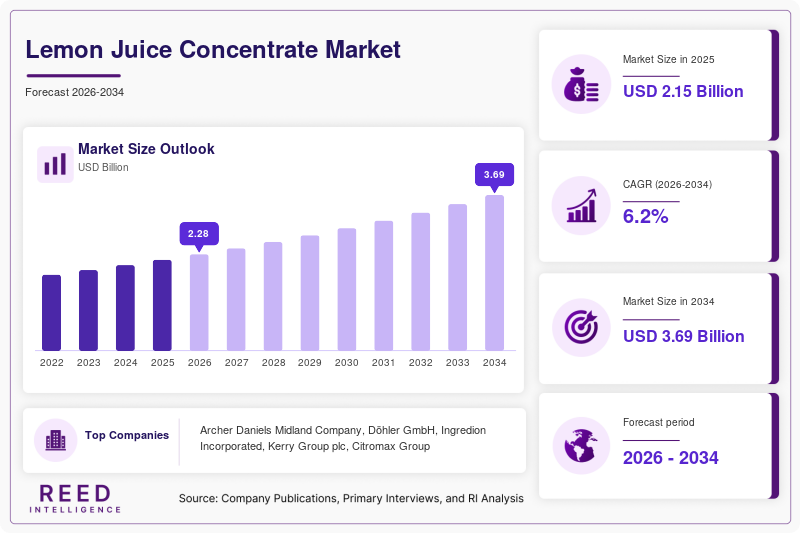
Key Highlights
- North America dominated the market with 34.6% share in 2025, while Asia Pacific is expected to grow at the fastest CAGR of 7.4%
- Conventional type led with 68.2% share, while organic type is projected to grow at a CAGR of 8.1%
- Beverages segment held 41.5% share, while nutraceuticals are expected to grow at a CAGR of 7.8%
- The United States market was valued at USD 620 million in 2024 and reached USD 655 million in 2025
Market Trends
Rising Demand for Clean-Label and Natural Ingredients
The shift toward transparency in food labeling has increased the use of natural ingredients. Lemon juice concentrate is widely used as a natural preservative and flavor enhancer, supporting the clean-label movement. This trend has encouraged manufacturers to reformulate products and develop new offerings aligned with consumer preferences.
Expansion of Functional and Health-Oriented Beverages
The growing focus on health and wellness has led to increased consumption of functional beverages enriched with vitamins and antioxidants. Lemon juice concentrate is commonly used in immunity-boosting drinks, detox beverages, and hydration solutions, shaping key Lemon Juice Concentrate Market trends.
Market Drivers
Growth in Beverage Industry Applications
The rapid expansion of the beverage industry, particularly in ready-to-drink products, flavored water, and juices, has driven demand for lemon juice concentrate. Its consistent flavor profile and long shelf life make it a preferred ingredient, contributing to overall market growth.
Increasing Use in Food Processing Industry
The rising demand for processed and convenience foods has increased the need for standardized flavoring ingredients. Lemon juice concentrate is extensively used in sauces, bakery products, and confectionery, supporting the expansion of the Lemon Juice Concentrate Market.
Market Restraint
Volatility in Raw Material Supply
Fluctuations in lemon production due to climatic conditions, pest issues, and seasonal factors can affect raw material availability. This leads to price instability and supply chain challenges, restraining consistent market growth.
Market Opportunities
Growth in Organic Product Segment
The demand for organic food products is rising globally, creating opportunities for organic lemon juice concentrate. Manufacturers are expanding their organic product lines to cater to health-conscious consumers and premium markets.
Emerging Markets Expansion
Developing regions such as Asia Pacific and Latin America present strong growth potential due to increasing disposable incomes and changing dietary patterns. Expanding retail infrastructure and urbanization are expected to boost the Lemon Juice Concentrate Market forecast in these regions.
Segmental Analysis
By Type
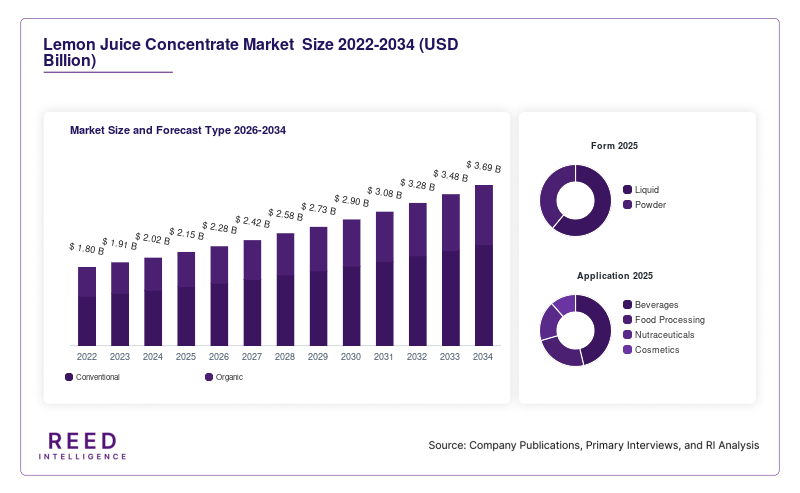
The conventional segment dominated the Lemon Juice Concentrate Market with 68.2% share in 2025 due to its affordability and widespread use in industrial applications. The organic segment is expected to grow at the fastest CAGR of 8.1%, driven by rising demand for natural and chemical-free products.
By Form
The liquid segment held the largest share of 72.5% in 2025 due to ease of use in beverage formulations and food processing. The powdered segment is projected to grow at a CAGR of 7.0%, supported by longer shelf life and easier transportation.
By Application
The beverages segment led with 41.5% share in 2025, driven by high consumption of flavored drinks and juices. The nutraceutical segment is expected to grow at a CAGR of 7.8%, supported by increasing demand for health-focused products.
By Distribution Channel
The B2B segment accounted for 64.7% share in 2025 as manufacturers remain the primary consumers. The B2C segment is projected to grow at a CAGR of 6.9%, driven by increasing retail and online availability.
Regional Analysis
North America
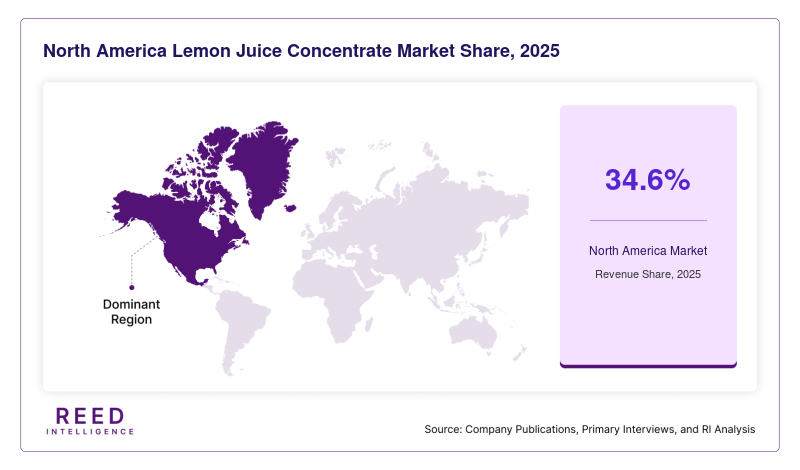
North America accounted for 34.6% of the market share in 2025 and is expected to grow at a CAGR of 5.8% through 2034. The United States dominated the region due to strong consumption of processed foods and beverages and the presence of advanced food processing infrastructure.
Europe
Europe held 27.3% share in 2025 and is projected to expand at a CAGR of 5.5%. Germany led the market, supported by increasing demand for organic and clean-label products along with strict regulatory standards promoting natural ingredients.
Asia Pacific
Asia Pacific captured 21.8% share in 2025 and is expected to grow at the fastest CAGR of 7.4%. China dominated the region due to rapid urbanization, growing middle-class population, and increasing demand for packaged beverages.
Middle East & Africa
The Middle East & Africa region held 8.4% share in 2025 and is projected to grow at a CAGR of 6.0%. The UAE led the market due to rising demand for imported food ingredients and growth in the hospitality sector.
Latin America
Latin America accounted for 7.9% share in 2025 and is expected to grow at a CAGR of 6.3%. Brazil dominated the region, supported by strong citrus production and export activities.
Competitive Landscape
The Lemon Juice Concentrate Market is moderately fragmented, with companies focusing on product innovation, expansion strategies, and sustainable sourcing. Leading players are investing in advanced processing technologies to improve product quality and shelf life. One key market leader has strengthened its position by expanding its organic portfolio and entering new regional markets through partnerships.
Other companies are adopting strategies such as mergers, acquisitions, and collaborations to enhance their market presence. Sustainability initiatives and traceability systems are also becoming important competitive factors as consumers increasingly demand transparency.
Key Players List
- Archer Daniels Midland Company
- Döhler GmbH
- Ingredion Incorporated
- Kerry Group plc
- Citromax Group
- LemonConcentrate S.L.
- Sunkist Growers, Inc.
- SVZ International B.V.
- Louis Dreyfus Company
- Ventura Coastal, LLC
- China Haisheng Juice Holdings Co., Ltd.
- Prodalim Group
- Tree Top Inc.
- AGRANA Beteiligungs-AG
- Cape Fruit P
Recent Developments
- In 2025, a leading company expanded its production capacity in Europe to meet growing demand for organic lemon juice concentrate
- In 2024, a manufacturer introduced a new range of cold-pressed lemon concentrates for premium beverage applications
- In 2025, partnerships between citrus growers and processors improved supply chain stability
- In 2024, advancements in spray-drying technology enhanced powdered product quality and shelf life
- In 2025, companies increased investments in sustainable sourcing and traceability systems
Lemon Juice Concentrate Market Segments
Type
- Conventional
- Organic
Form
- Liquid
- Powder
Application
- Beverages
- Food Processing
- Nutraceuticals
- Cosmetics
Distribution Channel
- B2B
- B2C
By Region
- North America
- Europe
- APAC
- Middle East and Africa
- LATAM