Leukapheresis Market Size, Share & Demand Report By Product Type (Leukapheresis Devices, Disposable Kits, Anticoagulants, Accessories), By Application (Research Applications, Therapeutic Applications, Stem Cell Collection, Oncology Treatment Support), By End Use (Hospitals and Specialty Clinics, Blood Centers, Research Institutes, Biotechnology and Pharmaceutical Companies) By Region & Segment Forecasts, 2026–2034
USD 3950
Market Overview
The global Leukapheresis Market size was valued at USD 92.4 million in 2026 and is projected to reach USD 201.7 million by 2034, expanding at a CAGR of 10.2% during the forecast period from 2026 to 2034. The market is witnessing consistent growth due to the increasing prevalence of blood-related disorders, rising adoption of cell-based therapies, and growing use of leukapheresis procedures in oncology and immunology research. Leukapheresis is widely used to separate white blood cells from donated blood for therapeutic applications and advanced treatment development, particularly in stem cell transplantation and CAR-T cell therapy manufacturing.
A major global factor supporting market expansion is the increasing investment in personalized medicine and regenerative healthcare technologies. Healthcare institutions, biotechnology firms, and pharmaceutical companies are increasing research spending on immunotherapies that require efficient leukocyte collection procedures. In addition, the expansion of blood collection infrastructure in emerging economies and rising awareness regarding blood donation programs are improving procedure accessibility. Technological improvements in automated apheresis devices are also reducing procedure time and improving patient safety, contributing to broader market adoption.
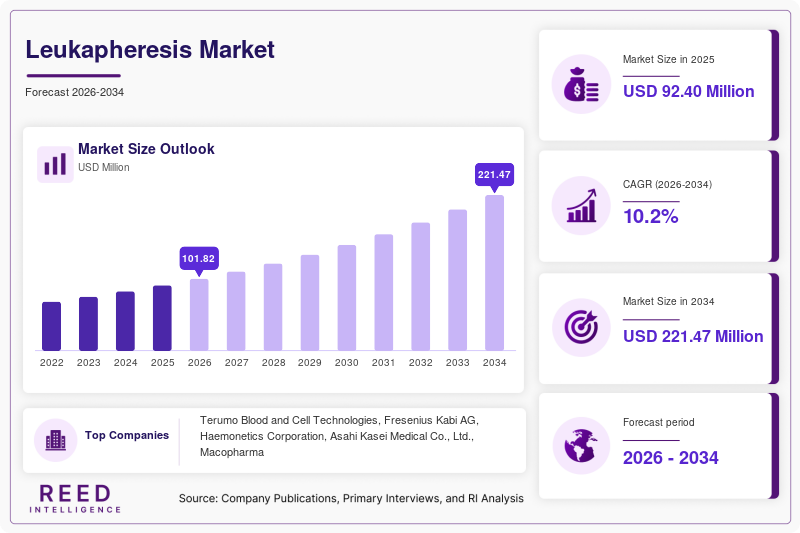
Key Highlights
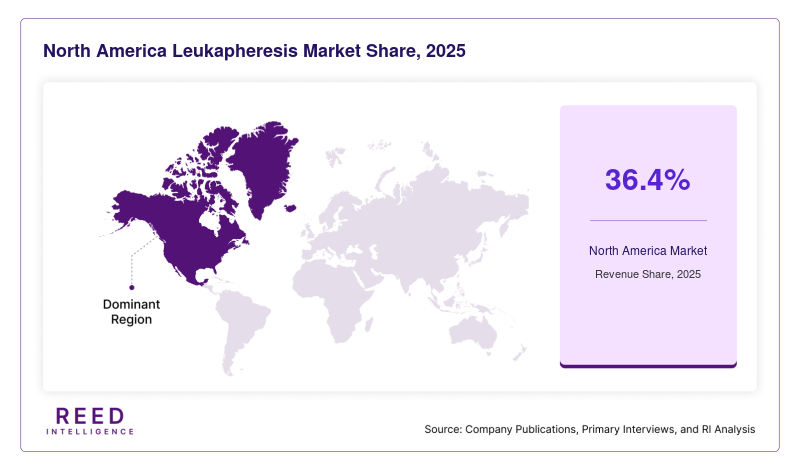
- North America dominated the market with a 36.4% share in 2025, while Asia Pacific is expected to grow at the fastest CAGR of 11.8% during 2026–2034.
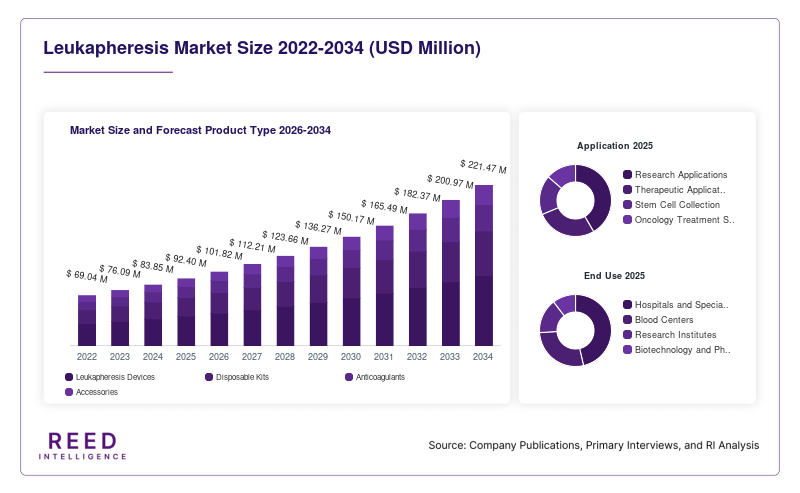
- By product type, leukapheresis devices accounted for the largest share of 47.1%, while disposable kits are projected to grow at a CAGR of 12.3%.
- By application, research applications led with a 42.8% share, whereas therapeutic applications are expected to expand at a CAGR of 11.5%.
- The United States remained the dominant country, with market values of USD 28.5 million in 2024 and USD 31.4 million in 2025.
Market Trends
Rising integration of leukapheresis in cell and gene therapy manufacturing
The growing commercialization of cell and gene therapies is significantly influencing the Leukapheresis Market. Pharmaceutical and biotechnology companies are increasingly using leukapheresis procedures to collect high-quality white blood cells for CAR-T therapy development, stem cell processing, and immunotherapy manufacturing. The expansion of clinical pipelines for lymphoma, leukemia, and autoimmune disorders has increased the demand for reliable leukocyte collection technologies across research facilities and treatment centers. Automated leukapheresis systems are becoming more common because they improve collection efficiency, maintain cell viability, and reduce operational variability. In addition, contract development and manufacturing organizations are expanding processing capabilities to support rising demand for cellular therapies, which is creating long-term opportunities for leukapheresis equipment providers and disposable kit manufacturers.
Growing adoption of automated and portable apheresis systems
Healthcare facilities are increasingly adopting automated and portable leukapheresis systems to improve operational efficiency and patient comfort. Modern systems offer real-time monitoring, improved safety controls, and reduced procedure duration, making them suitable for high-volume blood centers and hospitals. Manufacturers are focusing on compact device development to support mobile donation centers and outpatient settings. Digital integration features such as data tracking, automated reporting, and cloud-based monitoring are also becoming more common in advanced systems. These innovations are helping healthcare providers improve workflow management and reduce labor-intensive manual procedures. Growing demand for minimally invasive blood collection technologies and rising awareness regarding donor safety are expected to accelerate the adoption of technologically advanced leukapheresis devices across developed and emerging healthcare markets.
Market Drivers
Increasing prevalence of hematological disorders and cancer cases
The rising incidence of leukemia, lymphoma, and other hematological disorders is a major growth driver for the Leukapheresis Market. Leukapheresis procedures are widely used for therapeutic treatment and white blood cell collection in patients requiring advanced cancer therapies. The increasing global cancer burden has resulted in higher demand for stem cell transplantation and immunotherapy procedures that rely on efficient leukocyte separation technologies. Hospitals and specialty treatment centers are investing in advanced apheresis infrastructure to manage increasing patient volumes and improve treatment outcomes. In addition, growing awareness regarding early diagnosis and improved access to oncology treatment in developing economies are contributing to greater utilization of leukapheresis procedures. Expanding clinical applications in autoimmune and inflammatory diseases are also supporting market growth.
Expansion of blood donation programs and healthcare infrastructure
The expansion of blood donation initiatives and healthcare infrastructure development is supporting the growth of the Leukapheresis Market across multiple regions. Government agencies and healthcare organizations are conducting awareness campaigns to encourage blood and stem cell donation, increasing the availability of leukocyte-rich blood components for therapeutic use and research activities. Blood banks and transfusion centers are investing in advanced apheresis technologies to improve collection quality and operational efficiency. Emerging economies are also improving healthcare accessibility through investments in specialty hospitals, diagnostic laboratories, and biotechnology research centers. This infrastructure growth is increasing the availability of leukapheresis procedures in urban and semi-urban regions. The rising focus on public-private healthcare partnerships is further strengthening market expansion and encouraging the adoption of automated collection systems.
Market Restraint
High procedural costs and limited accessibility in developing regions
The high cost associated with leukapheresis procedures and advanced apheresis equipment remains a major restraint for the Leukapheresis Market. Automated leukapheresis systems require significant capital investment, regular maintenance, and skilled healthcare professionals for operation. Disposable kits and anticoagulant materials also contribute to recurring operational expenses, limiting adoption among small healthcare facilities and blood collection centers. In many developing countries, inadequate reimbursement policies and limited healthcare funding restrict patient access to specialized therapeutic procedures involving leukocyte collection.
The shortage of trained personnel capable of operating sophisticated apheresis systems further affects procedural efficiency and patient safety in underdeveloped healthcare environments. Rural healthcare centers often lack the infrastructure needed to support advanced blood component separation procedures. In some cases, hospitals continue using conventional blood processing methods due to budget constraints, reducing demand for modern leukapheresis technologies. Delays in regulatory approvals for innovative collection systems and varying clinical standards across regions also create operational challenges for manufacturers seeking global market expansion.
Market Opportunities
Increasing research investments in regenerative medicine and immunotherapy
Rising global investment in regenerative medicine and immunotherapy research is creating substantial opportunities for the Leukapheresis Market. Biotechnology firms and academic research institutes are increasing clinical studies involving stem cells, immune cells, and personalized therapies that require leukocyte collection and processing. Pharmaceutical companies are collaborating with specialized blood centers to establish integrated collection networks capable of supporting large-scale clinical trials. The expansion of precision medicine is also encouraging the development of customized therapeutic solutions that rely heavily on high-quality cellular material obtained through leukapheresis procedures. Emerging research areas such as gene-modified immune therapies and allogeneic cell therapies are expected to increase demand for advanced collection technologies throughout the forecast period.
Expansion potential in emerging healthcare economies
Emerging healthcare economies across Asia Pacific, Latin America, and the Middle East are presenting strong growth opportunities for the Leukapheresis Market. Governments in these regions are increasing healthcare spending and improving blood transfusion infrastructure to support advanced treatment capabilities. International healthcare organizations are also supporting awareness campaigns related to blood donation and cancer treatment accessibility. As urban hospitals and specialty clinics adopt modern apheresis technologies, manufacturers are expanding distribution networks and strategic partnerships in high-growth countries. The increasing number of medical tourism facilities and oncology treatment centers in developing economies is creating additional demand for leukapheresis systems. Rising disposable income levels and improving health insurance coverage are further expected to strengthen procedural adoption in emerging regional markets.
Segmental Analysis
By Product Type
Leukapheresis devices represented the dominant subsegment within the product type category and accounted for 47.1% of the global market share in 2024. The strong market position of these systems is linked to their widespread use in hospitals, blood banks, and biotechnology research centers for automated white blood cell collection procedures. Advanced leukapheresis devices provide improved collection efficiency, enhanced donor safety, and reduced contamination risk, making them highly preferred across therapeutic and research applications. Healthcare facilities are increasingly investing in automated systems capable of handling high patient volumes while maintaining precise cell separation quality. The expansion of stem cell transplantation procedures and immunotherapy development programs is also supporting demand for sophisticated leukapheresis equipment. Manufacturers are focusing on user-friendly interfaces, real-time monitoring features, and portable designs to improve procedural efficiency and support broader clinical adoption.
Disposable kits are expected to witness the fastest growth within the product type segment, expanding at a CAGR of 12.3% during the forecast period. The increasing use of single-use collection kits is driven by rising concerns regarding infection control, contamination prevention, and regulatory compliance in blood processing procedures. Disposable components reduce the risk of cross-contamination and simplify operational workflows, making them suitable for high-frequency clinical and research environments. The growing number of leukapheresis procedures linked to CAR-T therapy manufacturing and stem cell collection is further supporting demand for specialized consumables. In addition, healthcare providers are increasingly adopting customized disposable kits compatible with automated apheresis systems to improve collection accuracy and procedural consistency. Expanding clinical research activities and increasing regulatory emphasis on patient safety are expected to continue driving strong growth within this subsegment.
By Application
Research applications accounted for the largest share of the Leukapheresis Market in 2024, contributing 42.8% of total revenue. The increasing use of leukocyte collection procedures in biotechnology research, immunotherapy development, and clinical trial activities has strengthened the position of this subsegment. Pharmaceutical companies and academic research institutions rely on leukapheresis procedures to obtain high-quality immune cells for regenerative medicine, gene therapy, and cancer research programs. The rapid expansion of precision medicine and personalized therapeutic development is also increasing the demand for advanced blood component collection technologies. Research organizations are establishing dedicated cell processing facilities equipped with automated leukapheresis systems to support growing clinical study volumes. In addition, increasing collaboration between biotechnology firms and hospitals is improving access to donor material and strengthening market demand for research-focused leukapheresis applications.
Therapeutic applications are projected to register the fastest CAGR of 11.5% during the forecast period due to the increasing prevalence of hematological disorders and growing adoption of immunotherapy treatments. Leukapheresis procedures are widely used in patients with leukemia, hyperleukocytosis, and autoimmune diseases to remove excess white blood cells and improve treatment outcomes. Rising awareness regarding advanced therapeutic procedures and improved access to specialty oncology care are supporting procedural adoption across hospitals and treatment centers. The increasing commercialization of cell-based therapies is also encouraging healthcare providers to expand therapeutic leukocyte collection capabilities. Technological improvements in automated apheresis systems are reducing procedure time and improving patient comfort, further supporting clinical utilization. Expanding healthcare infrastructure in emerging economies is expected to create additional growth opportunities for therapeutic leukapheresis applications.
By End Use
Hospitals and specialty clinics dominated the end-use segment of the Leukapheresis Market and accounted for 51.3% of the market share in 2024. These healthcare facilities perform a high volume of therapeutic leukapheresis procedures for patients with blood disorders, cancer, and autoimmune diseases. The availability of trained healthcare professionals, advanced diagnostic equipment, and integrated treatment capabilities supports the strong position of hospitals within the market. Many large hospitals are investing in automated apheresis technologies to improve operational efficiency and support growing demand for stem cell transplantation and immunotherapy procedures. Increasing patient preference for specialized treatment centers with comprehensive oncology and hematology services is also contributing to market growth. In addition, partnerships between hospitals and biotechnology companies are expanding access to clinical research programs and advanced cell therapy manufacturing services.
Blood centers and research institutes are expected to experience the fastest growth within the end-use segment, registering a CAGR of 11.9% during the forecast period. The increasing demand for donor-derived immune cells and expanding clinical trial activities are driving investments in specialized blood collection and research infrastructure. Research institutes are adopting advanced leukapheresis systems to support cell and gene therapy development programs, while blood centers are improving collection efficiency to meet rising demand for high-quality cellular material. Government funding for biotechnology innovation and public awareness initiatives regarding blood donation are further supporting market expansion. The growing role of contract research organizations and cell processing laboratories in therapeutic development is also encouraging the establishment of dedicated leukocyte collection facilities. Rising global focus on personalized medicine is expected to strengthen demand within this rapidly growing subsegment.
Regional Analysis
North America
North America accounted for the largest share of the Leukapheresis Market in 2025, representing 36.4% of global revenue. The region is expected to maintain stable growth at a CAGR of 9.8% during the forecast period due to strong biotechnology investments and advanced healthcare infrastructure. The United States and Canada continue to expand research activities related to immunotherapy and regenerative medicine, increasing demand for high-quality leukocyte collection procedures. The region also benefits from a strong presence of leading apheresis equipment manufacturers and established blood donation networks. Growing adoption of CAR-T therapies and stem cell transplantation procedures is supporting long-term market expansion.
The United States remained the dominant country in North America due to rising oncology treatment volumes and significant investment in cell therapy manufacturing facilities. The country recorded market values of USD 28.5 million in 2024 and USD 31.4 million in 2025. One major growth factor is the rapid expansion of clinical trials involving gene-modified immune cells and personalized therapeutic solutions. Healthcare providers are increasingly partnering with biotechnology firms to improve patient access to advanced immunotherapies. In addition, favorable reimbursement structures and strong regulatory support for biologics development continue to encourage adoption of automated leukapheresis systems.
Europe
Europe represented a significant share of the Leukapheresis Market in 2025 and is projected to grow at a CAGR of 9.4% through 2034. The region benefits from strong healthcare systems, increasing cancer prevalence, and expanding research activities related to hematological disorders. Countries across Western Europe are investing in advanced blood processing technologies to improve therapeutic outcomes and support clinical research. Public healthcare organizations are also promoting blood donation awareness programs and strengthening collaboration with biotechnology companies. Growing demand for minimally invasive therapeutic procedures and improved access to stem cell therapies are supporting regional market growth.
Germany emerged as the dominant country within the European market due to its advanced medical infrastructure and strong pharmaceutical research capabilities. A unique growth factor supporting the German market is the increasing integration of automated apheresis technologies in university hospitals and research institutions. The country is also experiencing growing demand for leukocyte collection procedures linked to regenerative medicine and cancer treatment research. In addition, collaborations between academic centers and biotechnology firms are supporting innovation in cell processing technologies. Expanding government support for biotechnology research is expected to further strengthen market development across Germany.
Asia Pacific
Asia Pacific is expected to register the fastest growth in the Leukapheresis Market, with a projected CAGR of 11.8% during the forecast period. The region is benefiting from rapid healthcare infrastructure expansion, rising healthcare expenditure, and increasing awareness regarding advanced cancer therapies. Countries such as China, India, Japan, and South Korea are investing in blood collection systems and biotechnology research facilities to improve access to innovative treatment solutions. Growing patient populations and increasing diagnosis rates of hematological diseases are also driving procedural demand. International manufacturers are expanding regional partnerships and local production facilities to strengthen market penetration.
China remained the dominant country in the Asia Pacific region due to large-scale healthcare investments and expanding clinical research activities. One important growth factor is the rising number of domestic biotechnology firms involved in CAR-T therapy and stem cell therapy development. The Chinese government continues to support innovation in biologics manufacturing and advanced treatment technologies through funding programs and regulatory reforms. In addition, the increasing establishment of specialized cancer treatment centers and blood banks is improving procedural accessibility. Growing awareness regarding blood component donation and regenerative medicine is expected to sustain strong regional demand.
Middle East & Africa
The Middle East & Africa region is gradually expanding within the Leukapheresis Market and is forecast to grow at a CAGR of 8.1% through 2034. Growth is supported by improving healthcare infrastructure, increasing cancer awareness, and rising investment in specialty medical services. Gulf countries are strengthening healthcare modernization initiatives and increasing funding for advanced treatment technologies, including apheresis systems. The market is also benefiting from the expansion of private healthcare providers and growing demand for high-quality diagnostic and therapeutic services. Increasing collaboration with international healthcare organizations is supporting technology transfer and clinical training initiatives across the region.
Saudi Arabia emerged as the dominant country in the Middle East & Africa market due to growing healthcare expenditure and ongoing hospital expansion projects. A unique growth factor driving the Saudi Arabian market is the development of advanced oncology treatment centers under national healthcare transformation initiatives. The country is investing in specialized medical equipment and clinical workforce development to improve access to complex therapeutic procedures. In addition, rising prevalence of blood disorders and increasing demand for stem cell transplantation procedures are encouraging hospitals to adopt automated leukapheresis systems. Government-backed healthcare modernization strategies are expected to continue supporting market growth.
Latin America
Latin America accounted for a developing share of the Leukapheresis Market in 2025 and is projected to expand at a CAGR of 8.7% during the forecast period. Market growth is being supported by increasing awareness regarding blood disorders, expanding healthcare access, and rising investment in medical technology infrastructure. Countries across the region are modernizing blood banks and transfusion centers to improve collection quality and patient safety. International healthcare collaborations are also helping regional hospitals adopt advanced therapeutic procedures and laboratory technologies. The growing incidence of leukemia and lymphoma is increasing the need for efficient leukocyte collection procedures in major urban healthcare facilities.
Brazil dominated the Latin American market due to its large healthcare network and increasing investment in oncology treatment services. One major growth factor is the expansion of public healthcare initiatives focused on blood donation awareness and specialized cancer care accessibility. Hospitals in Brazil are increasingly adopting automated apheresis technologies to improve operational efficiency and support growing patient demand. The country is also witnessing rising participation in international clinical research programs involving cell-based therapies. In addition, partnerships between healthcare providers and biotechnology companies are encouraging the development of modern blood component processing capabilities.
Competitive Landscape
The Leukapheresis Market is moderately consolidated, with leading companies focusing on product innovation, strategic collaborations, and geographic expansion to strengthen competitive positioning. Major manufacturers are investing in automated collection technologies, disposable consumables, and digital monitoring capabilities to improve procedural efficiency and patient safety. Companies are also expanding partnerships with biotechnology firms and research organizations involved in cell and gene therapy development.
Terumo Blood and Cell Technologies remained one of the leading participants in the market due to its strong portfolio of automated apheresis systems and global distribution network. The company recently expanded its collaboration initiatives with biotechnology firms involved in CAR-T therapy manufacturing to strengthen its role in advanced cellular therapy applications. Other prominent companies are focusing on expanding production capacity and introducing portable collection systems suitable for outpatient and mobile blood donation settings.
Key Players
- Terumo Blood and Cell Technologies
- Fresenius Kabi AG
- Haemonetics Corporation
- Asahi Kasei Medical Co., Ltd.
- Macopharma
- Cerus Corporation
- B. Braun SE
- Baxter International Inc.
- Nikkiso Co., Ltd.
- HemaCare Corporation
- STEMCELL Technologies
- Miltenyi Biotec
- Fenwal Inc.
- Kawasumi Laboratories Inc.
- BioIVT LLC
Recent Developments
- In February 2026, Terumo Blood and Cell Technologies introduced an upgraded automated leukapheresis platform designed to improve cell collection efficiency for CAR-T therapy manufacturing.
- In September 2025, Fresenius Kabi AG expanded its blood component collection operations in Asia Pacific through a strategic partnership with regional oncology treatment centers.
- In June 2025, Haemonetics Corporation launched a next-generation disposable collection kit focused on improving donor safety and reducing contamination risk during leukapheresis procedures.
- In January 2026, Asahi Kasei Medical Co., Ltd. announced investment in research collaborations focused on regenerative medicine and immune cell processing technologies.
- In October 2025, Macopharma expanded production capacity for single-use apheresis consumables to support increasing demand from biotechnology research organizations.
Leukapheresis Market Segments
Product Type
- Leukapheresis Devices
- Disposable Kits
- Anticoagulants
- Accessories
Application
- Research Applications
- Therapeutic Applications
- Stem Cell Collection
- Oncology Treatment Support
End Use
- Hospitals and Specialty Clinics
- Blood Centers
- Research Institutes
- Biotechnology and Pharmaceutical Companies
By Region
- North America
- Europe
- APAC
- Middle East and Africa
- LATAM