Li Fraumeni Syndrome Market Size, Share & Demand Report By Diagnosis Type (Genetic Testing, Imaging Techniques, Biomarker Testing), By Treatment Type (Targeted Therapy, Chemotherapy, Radiation Therapy, Preventive Care), By End-Use (Hospitals, Specialty Clinics, Research Institutes) & By Region – Segment Forecasts, 2025–2034
USD 3950
Market Overview
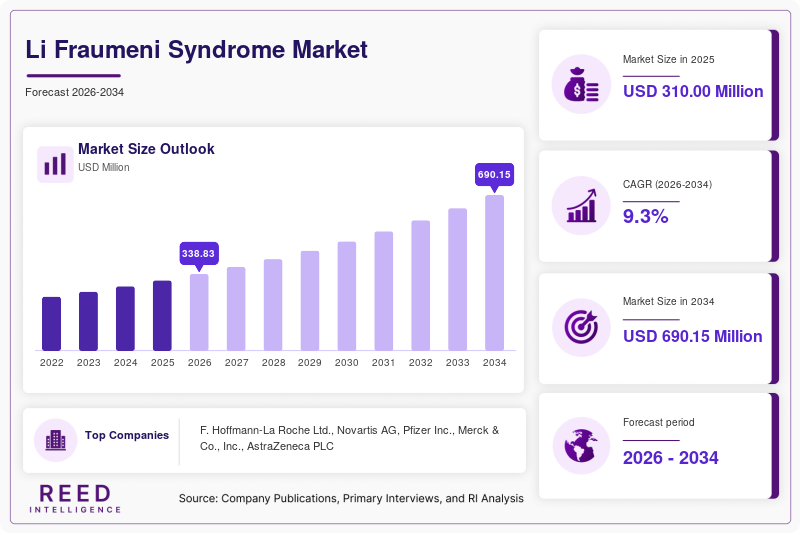
The global Li Fraumeni Syndrome Market size was valued at USD 310 million in 2025 and is projected to reach USD 690 million by 2034, expanding at a CAGR of 9.3% during the forecast period (2025–2034). The market growth is primarily driven by increasing awareness of rare genetic disorders and advancements in genetic testing and precision medicine. Li Fraumeni syndrome (LFS), a hereditary cancer predisposition condition associated with TP53 gene mutations, requires continuous surveillance, early diagnosis, and personalized treatment strategies, contributing to the steady expansion of the market.
A key global factor supporting the growth of the Li Fraumeni Syndrome Market is the rapid adoption of next-generation sequencing (NGS) technologies and genetic screening programs. These advancements enable early identification of high-risk individuals and facilitate timely intervention, improving patient outcomes. Governments and healthcare organizations are increasingly investing in rare disease research, leading to enhanced diagnostic capabilities and development of targeted therapies. Furthermore, the integration of genomic medicine into routine clinical practice is driving demand for specialized diagnostics and long-term monitoring solutions.
Key Highlights:
- North America dominated the Li Fraumeni Syndrome Market with a share of 41% in 2025, while Asia Pacific is expected to register the fastest CAGR of 10.4% during the forecast period.
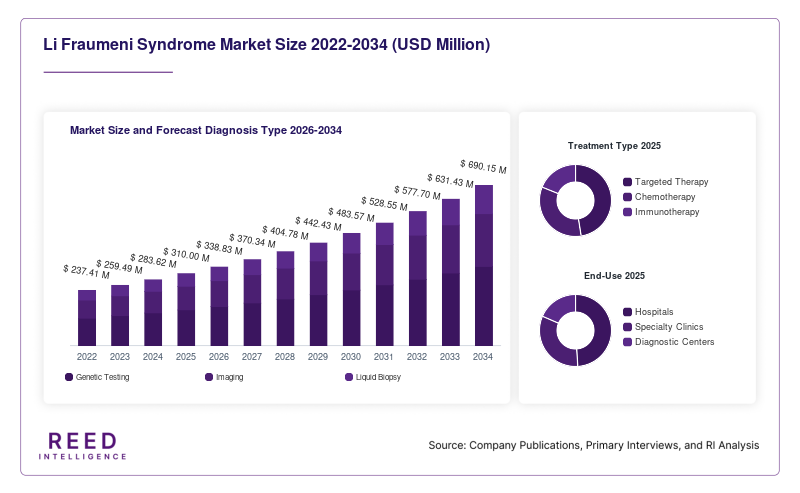
- By diagnosis type, genetic testing accounted for the largest share, while liquid biopsy is projected to grow at the fastest CAGR of 10.8%.
- By treatment type, targeted therapy led the segment, whereas immunotherapy is expected to grow at a CAGR of 10.2%.
- The United States remained the dominant country, with market values of USD 132 million in 2025 and USD 140 million in 2026.
Market Trends
Increasing Adoption of Precision Oncology Approaches
The Li Fraumeni Syndrome Market is witnessing a strong shift toward precision oncology, where treatment strategies are tailored based on genetic profiles. Advances in genomic sequencing and biomarker identification have enabled healthcare providers to develop targeted therapies that specifically address TP53 mutations. This trend is improving treatment outcomes and reducing adverse effects, making precision medicine a central component of LFS management. As healthcare systems increasingly adopt personalized treatment protocols, demand for advanced diagnostics and targeted drugs is expected to rise.
Expansion of Surveillance and Early Detection Programs
Another significant trend shaping the Li Fraumeni Syndrome Market is the expansion of surveillance programs aimed at early cancer detection. Patients with LFS require regular monitoring through imaging and diagnostic tests to identify malignancies at an early stage. Healthcare providers are implementing comprehensive screening protocols, including whole-body MRI and advanced imaging techniques. This proactive approach enhances survival rates and drives demand for diagnostic services and monitoring solutions, contributing to market growth.
Market Drivers
Growing Awareness of Hereditary Cancer Syndromes
Increasing awareness of hereditary cancer syndromes is a key driver for the Li Fraumeni Syndrome Market. Educational campaigns, patient advocacy groups, and genetic counseling services are helping individuals understand the importance of early detection and family history assessment. As more people undergo genetic screening, the diagnosis rate of LFS is rising, leading to increased demand for treatment and monitoring solutions.
Advancements in Genetic Testing Technologies
Technological advancements in genetic testing are significantly driving the Li Fraumeni Syndrome Market. The development of cost-effective and highly accurate sequencing methods has made genetic screening more accessible. These technologies enable early identification of TP53 mutations, allowing healthcare providers to implement preventive and therapeutic measures. As testing becomes more widely available, the market is expected to experience sustained growth.
Market Restraint
High Cost of Genetic Testing and Treatment
A major restraint in the Li Fraumeni Syndrome Market is the high cost associated with genetic testing and long-term treatment. Comprehensive genetic screening, regular surveillance, and advanced therapies require significant financial resources, which may limit access for patients in low- and middle-income regions. The cost burden is further increased by the need for continuous monitoring and specialized care.
Additionally, limited insurance coverage for rare genetic conditions can restrict patient access to necessary diagnostic and treatment services. Healthcare systems in many regions are still adapting to the integration of genomic medicine, which can create disparities in access to care. These financial and systemic challenges may hinder market growth to some extent, despite ongoing efforts to improve affordability and accessibility.
Market Opportunities
Development of Targeted Gene Therapies
The development of gene therapies targeting TP53 mutations presents a significant opportunity in the Li Fraumeni Syndrome Market. Advances in gene editing technologies, such as CRISPR, are enabling researchers to explore innovative treatment approaches. These therapies have the potential to address the root cause of the condition, offering long-term solutions and improving patient outcomes.
Expansion of Genetic Counseling Services
The growing demand for genetic counseling services offers another promising opportunity. As more individuals undergo genetic testing, the need for professional guidance in interpreting results and managing risk increases. Healthcare providers are expanding counseling services to support patients and families, creating new avenues for market growth.
Segmental Analysis
By Diagnosis Type
Genetic testing dominated the Li Fraumeni Syndrome Market in 2025, accounting for 63% of the total share due to its accuracy in identifying TP53 mutations.
Liquid biopsy is expected to grow at the fastest CAGR of 10.8%, driven by its non-invasive nature and ability to detect cancer biomarkers early.
By Treatment Type
Targeted therapy held the largest share of 47% in 2025, as it offers personalized treatment options based on genetic profiles.
Immunotherapy is projected to grow at a CAGR of 10.2%, supported by advancements in cancer treatment and increasing adoption of immune-based therapies.
By End-Use
Hospitals accounted for 52% of the market share in 2025 due to the availability of specialized diagnostic and treatment facilities.
Specialty clinics are expected to grow at a CAGR of 9.9%, driven by increasing focus on personalized care and outpatient services.
By Distribution Channel
Hospital pharmacies dominated with a 58% share in 2025, as they are primary providers of advanced therapies.
Online pharmacies are anticipated to grow at a CAGR of 9.6%, supported by digitalization and improved access to medications.
Regional Analysis
North America
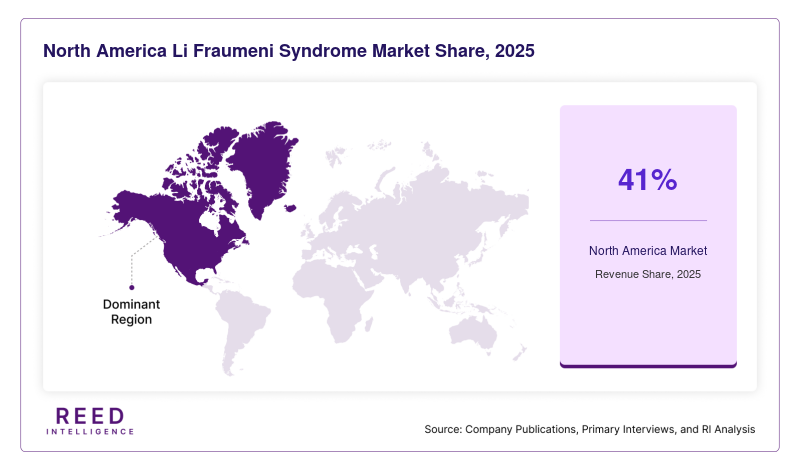
North America accounted for 41% of the Li Fraumeni Syndrome Market share in 2025 and will grow at a CAGR of 8.7% during the forecast period. The region benefits from advanced healthcare infrastructure and widespread adoption of genetic testing technologies.
The United States dominates the regional market due to its strong focus on precision medicine and rare disease research. The presence of leading research institutions and well-established healthcare systems supports the development and adoption of advanced diagnostic and treatment solutions.
Europe
Europe held a 25% share of the Li Fraumeni Syndrome Market in 2025 and is expected to grow at a CAGR of 8.5% through 2034. The region’s growth is supported by government initiatives and increasing awareness of genetic disorders.
Germany leads the European market due to its robust healthcare system and emphasis on research and innovation. The country’s focus on integrating genomic medicine into clinical practice drives demand for advanced diagnostics and therapies.
Asia Pacific
Asia Pacific represented 23% of the market in 2025 and is projected to grow at the fastest CAGR of 10.4%. The region’s growth is driven by expanding healthcare infrastructure and increasing adoption of genetic testing.
China dominates the regional market due to its large population and growing investments in healthcare. The government’s focus on improving diagnostic capabilities supports market expansion.
Middle East & Africa
The Middle East & Africa accounted for 6% of the Li Fraumeni Syndrome Market in 2025 and will grow at a CAGR of 8.1%. Increasing awareness and improving healthcare infrastructure support growth.
Saudi Arabia is a key contributor, driven by investments in healthcare modernization and genetic research initiatives.
Latin America
Latin America held a 5% share of the market in 2025 and is expected to grow at a CAGR of 8.3%. Growth is supported by improving access to healthcare services and rising awareness.
Brazil dominates the regional market due to its expanding healthcare sector and focus on genetic disease management.
Competitive Landscape
The Li Fraumeni Syndrome Market is characterized by a combination of pharmaceutical companies and diagnostic solution providers focusing on innovation and strategic partnerships. Companies are investing in research to develop targeted therapies and improve diagnostic accuracy.
Roche Holding AG is a leading player, known for its strong presence in oncology diagnostics and therapeutics. The company recently expanded its genetic testing portfolio to enhance early detection capabilities for hereditary cancers. Other key players include Illumina, Inc., Thermo Fisher Scientific Inc., and Novartis AG, which are actively engaged in advancing genomic technologies and personalized medicine solutions. Strategic collaborations and product launches remain key strategies for maintaining competitive advantage.
Key Players List
- Roche Holding AG
- Illumina, Inc.
- Thermo Fisher Scientific Inc.
- Novartis AG
- Pfizer Inc.
- AstraZeneca plc
- Bristol-Myers Squibb Company
- Merck & Co., Inc.
- Amgen Inc.
- Gilead Sciences, Inc.
- Guardant Health, Inc.
- Invitae Corporation
- Qiagen N.V.
- Exact Sciences Corporation
- Myriad Genetics, Inc.
Recent Developments
- Roche expanded its genetic testing solutions for hereditary cancer detection.
- Illumina introduced advanced sequencing platforms for rare disease diagnosis.
- Thermo Fisher Scientific launched new genomic testing kits for oncology research.
- Novartis advanced targeted therapy research for genetic cancer conditions.
- Guardant Health expanded liquid biopsy applications for early cancer detection.
Li Fraumeni Syndrome Market Segments
Diagnosis Type
- Genetic Testing
- Imaging
- Liquid Biopsy
Treatment Type
- Targeted Therapy
- Chemotherapy
- Immunotherapy
End-Use
- Hospitals
- Specialty Clinics
- Diagnostic Centers
Distribution Channel
- Hospital Pharmacies
- Retail Pharmacies
- Online Pharmacies
By Region
- North America
- Europe
- APAC
- Middle East and Africa
- LATAM