Life Sciences And Laboratory Equipment Market Size, Share & Demand Report By Equipment Type (Analytical Instruments, Laboratory Automation Systems, Centrifuges, Incubators, Microscopes, Spectroscopy Equipment, Chromatography Systems, Laboratory Consumables), By Application (Pharmaceutical and Biotechnology Research, Clinical Diagnostics, Genomics and Proteomics, Environmental Testing, Food and Beverage Testing, Academic Research, Forensic Testing), By End Use (Pharmaceutical and Biotechnology Co
USD 3950
Market Overview
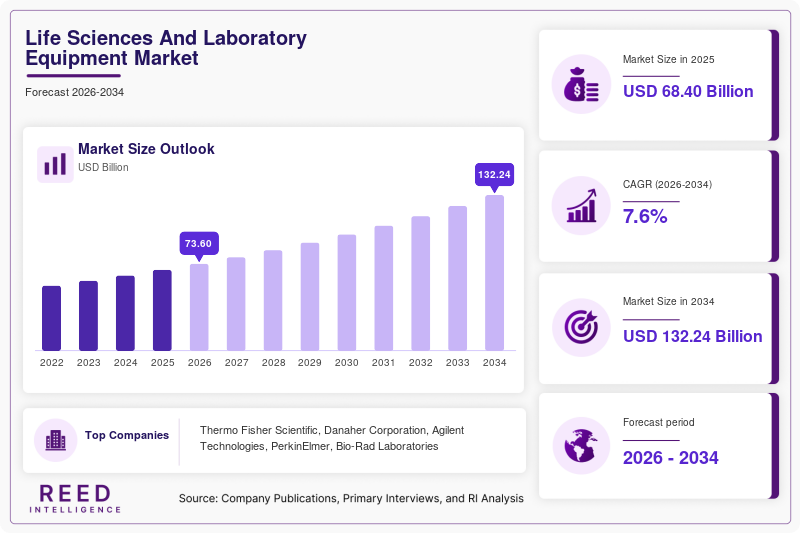
The global Life Sciences And Laboratory Equipment Market size was valued at USD 68.4 billion in 2026 and is projected to reach USD 122.7 billion by 2034, expanding at a CAGR of 7.6% during 2026–2034. The market is experiencing steady expansion due to the rising demand for advanced analytical systems, growing pharmaceutical research activities, and increasing investments in biotechnology infrastructure across developed and emerging economies. The expansion of precision medicine programs and genomics-based diagnostics has also strengthened the adoption of laboratory instruments across academic institutes, hospitals, and research organizations.
Government-backed research funding and private investments in biotechnology innovation continue to support market development. Many pharmaceutical and biotechnology companies are increasing spending on drug discovery and biologics manufacturing, creating sustained demand for chromatography systems, spectroscopy equipment, centrifuges, incubators, and laboratory automation platforms. In addition, the integration of digital technologies such as artificial intelligence-enabled analytics and cloud-connected laboratory systems is improving operational efficiency in research laboratories and diagnostic facilities.
Key Highlights
- North America dominated the market with a 36.1% share in 2025, while Asia Pacific is expected to grow at the fastest CAGR of 9.8% during 2026–2034.
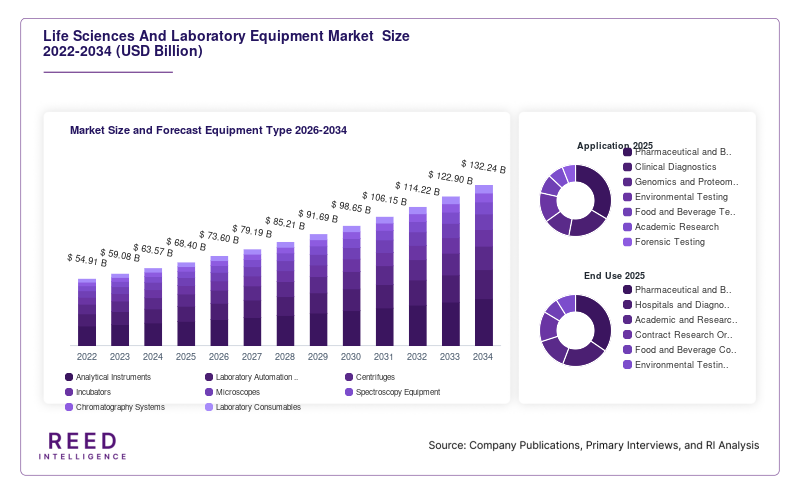
- By equipment type, analytical instruments accounted for the largest share of 39.4%, while laboratory automation systems are projected to grow at a CAGR of 10.6%.
- By application, pharmaceutical and biotechnology research led with a 44.8% share, whereas clinical diagnostics is expected to expand at a CAGR of 9.9%.
- By end use, pharmaceutical and biotechnology companies held the dominant share of 42.3%, while contract research organizations are forecast to grow at a CAGR of 10.2%.
- The United States remained the dominant country, with market values of USD 19.8 billion in 2024 and USD 21.1 billion in 2025.
Market Trends
Growing Adoption of Laboratory Automation and Smart Workflow Systems
The increasing adoption of laboratory automation platforms is emerging as a major trend in the Life Sciences And Laboratory Equipment Market. Research laboratories and healthcare facilities are deploying robotic sample handling systems, automated liquid handlers, and digital monitoring solutions to improve productivity and minimize human error. Automation technologies are enabling laboratories to process larger testing volumes while maintaining consistent analytical accuracy. Pharmaceutical companies are also implementing integrated workflow platforms that combine sample preparation, data analysis, and reporting functions into a single ecosystem. This trend is becoming important in drug discovery and genomics research, where high-throughput screening requires rapid processing of thousands of biological samples. Cloud-based laboratory information management systems are further supporting automation by improving remote access to research data and operational transparency.
Expansion of Genomics and Personalized Medicine Research
The rapid growth of genomics research and personalized medicine programs is significantly influencing equipment demand across research institutions and biotechnology companies. Laboratories are increasing investments in sequencing instruments, polymerase chain reaction systems, and advanced imaging technologies to support genetic analysis and biomarker identification. Healthcare providers are also adopting molecular diagnostic equipment to improve disease detection and treatment planning. The expansion of precision medicine initiatives in oncology and rare disease treatment is creating long-term opportunities for laboratory instrument manufacturers. Governments in several countries are funding national genomics projects to strengthen healthcare innovation capabilities. This trend is encouraging the development of compact, high-speed, and cost-efficient laboratory instruments that can support large-scale genomic testing and clinical research activities.
Market Drivers
Rising Pharmaceutical and Biotechnology Research Investments
Increasing investments in pharmaceutical and biotechnology research activities are supporting the growth of the Life Sciences And Laboratory Equipment Market. Drug manufacturers are expanding research programs focused on biologics, vaccines, and cell-based therapies, creating strong demand for analytical and processing equipment. Biotechnology startups are also increasing spending on laboratory infrastructure to support product development and clinical trials. Governments and private organizations are allocating larger budgets for healthcare innovation and biomedical research initiatives. Advanced laboratory instruments are becoming essential for improving testing precision, accelerating experimental timelines, and supporting regulatory compliance requirements. The expansion of contract research organizations and collaborative research networks is further increasing procurement of laboratory equipment across multiple regions. These developments are strengthening long-term market demand for technologically advanced and automated laboratory systems.
Increasing Demand for Clinical Diagnostics and Disease Testing
The growing prevalence of chronic diseases, infectious conditions, and age-related disorders is driving demand for advanced clinical diagnostic systems. Hospitals and diagnostic laboratories are expanding testing capacities to manage rising patient volumes and improve disease detection efficiency. Laboratory equipment such as hematology analyzers, immunoassay systems, and molecular diagnostic platforms are becoming important for accurate and rapid testing processes. The need for early diagnosis and personalized treatment planning is encouraging healthcare providers to invest in advanced analytical technologies. Emerging economies are also strengthening healthcare infrastructure and laboratory networks, contributing to equipment adoption. In addition, increasing awareness regarding preventive healthcare and routine diagnostic testing is creating sustained demand for modern laboratory instruments in both public and private healthcare facilities.
Market Restraint
High Equipment Costs and Complex Regulatory Requirements
The high cost associated with advanced laboratory instruments remains a significant restraint for the Life Sciences And Laboratory Equipment Market. Sophisticated analytical systems, automation platforms, and molecular diagnostic equipment often require substantial capital investment, limiting adoption among small laboratories and research institutions with restricted budgets. In addition to procurement costs, laboratories must manage installation expenses, maintenance contracts, calibration requirements, and software upgrades. These operational costs can create financial pressure for organizations operating in developing economies. Regulatory compliance also presents challenges for manufacturers and end users, as laboratory equipment must meet strict quality and safety standards before commercialization. Delays in regulatory approvals and certification procedures may affect product launches and market expansion strategies. Smaller companies may struggle to compete with established manufacturers due to limited financial resources and technical expertise, which can reduce innovation speed within certain equipment categories.
Market Opportunities
Increasing Demand for Point-of-Care and Portable Laboratory Devices
The growing need for rapid diagnostic testing and decentralized healthcare services is creating opportunities for portable laboratory equipment manufacturers. Healthcare providers are increasingly adopting compact diagnostic instruments for use in clinics, emergency facilities, and remote healthcare centers. Portable laboratory systems can improve testing accessibility and reduce dependence on centralized laboratory infrastructure. This trend is becoming important in developing economies where healthcare access remains limited in rural areas. Manufacturers are focusing on lightweight, battery-operated, and digitally connected devices that support faster diagnosis and real-time data transmission. The demand for portable molecular testing systems and handheld analyzers is expected to increase further as healthcare systems prioritize faster disease detection and patient monitoring solutions.
Expansion of Research Infrastructure in Emerging Economies
Emerging economies are investing heavily in scientific research infrastructure, creating substantial growth opportunities for laboratory equipment suppliers. Governments across Asia Pacific, Latin America, and the Middle East are increasing healthcare and biotechnology spending to strengthen domestic research capabilities. Universities and public research institutes are establishing advanced laboratories to support biomedical innovation and pharmaceutical development. Foreign investments and collaborations with international biotechnology firms are also supporting infrastructure modernization projects. Rising demand for local vaccine production and biologics manufacturing is encouraging procurement of advanced laboratory systems. These developments are creating favorable conditions for equipment manufacturers seeking to expand their presence in high-growth regional markets with increasing research and healthcare expenditures.
Segmental Analysis
By Equipment Type
Analytical instruments represented the dominant subsegment within the equipment type category, accounting for 39.4% of the market share in 2024. This segment includes chromatography systems, spectroscopy instruments, microscopy equipment, and molecular analysis platforms widely used across pharmaceutical, biotechnology, and clinical research laboratories. The increasing need for accurate sample analysis and quality control procedures is supporting demand for these systems. Pharmaceutical manufacturers rely heavily on analytical instruments for drug development, formulation testing, and regulatory compliance activities. Academic institutions and healthcare laboratories are also increasing procurement of advanced imaging and molecular diagnostic systems. Technological advancements in sensitivity, automation, and data processing capabilities have improved laboratory efficiency, further strengthening adoption across both developed and emerging economies. Rising investments in genomics research and personalized medicine programs continue to create consistent demand for advanced analytical technologies.
Laboratory automation systems are expected to register the fastest CAGR of 10.6% during the forecast period. The increasing requirement for high-throughput testing and workflow optimization is encouraging laboratories to deploy automated liquid handlers, robotic sample processing systems, and digital laboratory management platforms. Automation technologies reduce manual intervention and improve testing consistency, making them increasingly valuable in pharmaceutical research and diagnostic laboratories. Healthcare institutions are adopting automated systems to manage growing patient testing volumes and improve operational productivity. Pharmaceutical companies are also integrating artificial intelligence-enabled software with automation platforms to enhance data accuracy and reduce turnaround times. The expansion of precision medicine and large-scale genomics research projects is further increasing the need for scalable laboratory automation solutions capable of handling complex analytical procedures and large datasets efficiently.
By Application
Pharmaceutical and biotechnology research accounted for the largest share of 44.8% in 2024 within the application segment. Increasing investments in drug discovery, vaccine development, and biologics manufacturing are supporting strong demand for laboratory instruments in this category. Research organizations require advanced analytical systems, incubators, centrifuges, and molecular biology tools to support experimental testing and product development activities. The rising prevalence of chronic diseases and infectious disorders is also encouraging pharmaceutical companies to accelerate research programs. Biotechnology firms are increasingly focusing on gene therapies, monoclonal antibodies, and cell-based treatments, which require sophisticated laboratory infrastructure. Government funding for biomedical research and public-private collaborations is further supporting demand for advanced research equipment across pharmaceutical and biotechnology laboratories worldwide.
Clinical diagnostics is anticipated to grow at the fastest CAGR of 9.9% during 2026–2034 due to the increasing demand for rapid and accurate disease testing. Hospitals and diagnostic laboratories are expanding molecular diagnostic capabilities to support early disease detection and personalized treatment planning. Rising adoption of automated analyzers and real-time polymerase chain reaction systems is improving testing efficiency across healthcare facilities. The growing burden of infectious diseases and chronic health conditions is driving investment in laboratory diagnostic infrastructure. Healthcare providers are increasingly adopting digital pathology systems and automated testing platforms to enhance workflow management and reduce human error. In addition, expanding healthcare access in emerging economies is contributing to increased procurement of diagnostic laboratory equipment across public and private healthcare institutions.
By End Use
Pharmaceutical and biotechnology companies held the dominant share of 42.3% in 2024 within the end-use segment. These organizations continue to invest heavily in laboratory infrastructure to support drug discovery, clinical trials, and manufacturing quality control activities. Increasing research spending on biologics, vaccines, and precision medicine therapies is creating sustained demand for advanced analytical and processing equipment. Pharmaceutical companies require laboratory instruments capable of meeting stringent regulatory and quality standards. Biotechnology firms are also adopting automated systems to accelerate research productivity and reduce operational costs. Growing collaboration between pharmaceutical manufacturers and academic research institutions is further expanding equipment procurement. Continuous innovation in molecular biology and genomics research is expected to maintain strong demand for sophisticated laboratory technologies across this end-user category.
Contract research organizations are projected to grow at the fastest CAGR of 10.2% during the forecast period. Pharmaceutical and biotechnology companies are increasingly outsourcing research and clinical trial activities to specialized service providers to reduce operational expenses and accelerate product development timelines. Contract research organizations are expanding laboratory capacities and investing in automated analytical systems to manage increasing project volumes. These organizations require advanced equipment for toxicology testing, biomarker analysis, and clinical diagnostics. Rising demand for outsourced research services in emerging economies is supporting market expansion within this segment. Additionally, the growing complexity of clinical trials and regulatory documentation requirements is encouraging contract research organizations to adopt technologically advanced laboratory systems that improve data quality, workflow efficiency, and compliance management capabilities.
Regional Analysis
North America
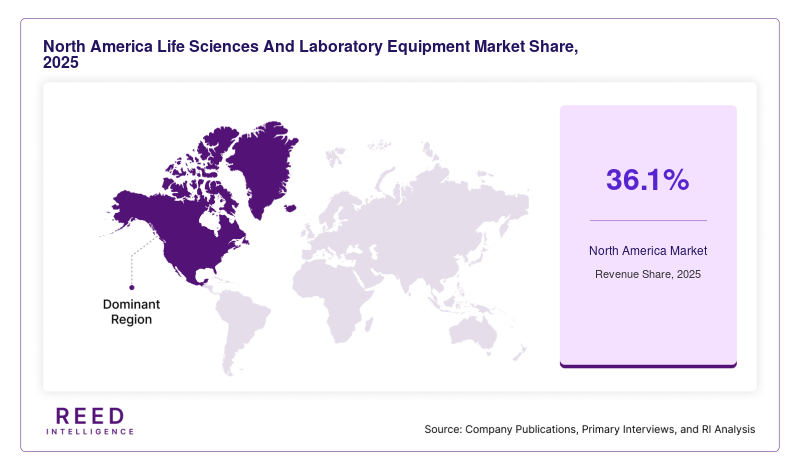
North America accounted for 36.1% of the global Life Sciences And Laboratory Equipment Market share in 2025 and is expected to maintain steady growth at a CAGR of 6.8% through 2034. The region benefits from strong pharmaceutical research spending, advanced healthcare infrastructure, and early adoption of laboratory automation technologies. Academic research institutions and biotechnology companies continue to invest in analytical instruments and genomics platforms. The presence of established market participants and consistent funding for biomedical innovation also supports regional expansion across clinical diagnostics and life sciences research applications.
The United States remained the dominant country in North America due to its extensive biotechnology ecosystem and large-scale pharmaceutical manufacturing activities. Federal funding for precision medicine and cancer research programs has strengthened demand for sequencing systems and advanced diagnostic instruments. The country also benefits from strong collaboration between universities, healthcare providers, and biotechnology firms. Growing investments in biologics development and clinical research trials are contributing to increased adoption of laboratory automation systems and data-driven research platforms throughout the country.
Europe
Europe represented 27.4% of the global market share in 2025 and is projected to expand at a CAGR of 6.9% during the forecast period. The region continues to witness stable demand for laboratory equipment due to increasing pharmaceutical production and expanding biotechnology research initiatives. Research laboratories across Germany, France, and the United Kingdom are modernizing analytical capabilities to support molecular biology and personalized medicine applications. Environmental testing and food safety analysis are also contributing to equipment demand. In addition, supportive government policies for scientific innovation are encouraging investments in advanced laboratory technologies across the region.
Germany emerged as the leading country within Europe because of its strong pharmaceutical manufacturing base and industrial research capabilities. The country has established a large network of research universities and biotechnology companies focused on life sciences innovation. Increasing adoption of digital laboratory solutions and automated testing systems is improving research productivity across healthcare and industrial laboratories. Germany is also experiencing growth in biopharmaceutical production, creating additional demand for chromatography systems, incubators, and laboratory quality control instruments used in biologics development and manufacturing processes.
Asia Pacific
Asia Pacific held 22.8% of the Life Sciences And Laboratory Equipment Market share in 2025 and is forecast to grow at the fastest CAGR of 9.8% through 2034. Rising healthcare investments, expanding pharmaceutical manufacturing activities, and increasing government support for biotechnology research are driving regional market growth. Countries across the region are strengthening healthcare infrastructure and establishing new research laboratories to improve domestic scientific capabilities. The growing demand for molecular diagnostics and laboratory automation is also contributing to market expansion. Increasing collaborations between international manufacturers and local distributors are further accelerating equipment availability across emerging economies.
China dominated the Asia Pacific market due to substantial investments in biotechnology innovation and healthcare modernization projects. The country continues to expand pharmaceutical production capacity and clinical research activities, creating strong demand for analytical and diagnostic instruments. Government initiatives supporting domestic biotechnology development and genomics research are encouraging laboratory infrastructure upgrades. China is also witnessing rapid adoption of automated laboratory systems in hospitals and academic institutions. The increasing focus on precision medicine and vaccine research is expected to sustain long-term equipment demand across multiple healthcare and research applications.
Middle East & Africa
The Middle East & Africa region accounted for 6.3% of the global market share in 2025 and is expected to grow at a CAGR of 7.5% during the forecast period. Healthcare modernization initiatives and increasing investments in medical research infrastructure are supporting regional market growth. Governments are expanding laboratory networks to improve disease surveillance and diagnostic testing capabilities. Demand for advanced laboratory equipment is increasing in public healthcare institutions, research laboratories, and private diagnostic centers. Rising awareness regarding healthcare quality standards is also encouraging adoption of automated analytical systems and laboratory information management platforms across the region.
Saudi Arabia emerged as the leading country in the Middle East & Africa market due to significant investments in healthcare transformation programs. The country is expanding biomedical research activities and establishing advanced diagnostic laboratories to improve healthcare service delivery. National healthcare diversification strategies are encouraging local pharmaceutical manufacturing and biotechnology development. These initiatives are increasing demand for laboratory instruments used in molecular diagnostics, microbiology, and pharmaceutical quality testing. Saudi Arabia is also strengthening partnerships with international healthcare companies to improve research capabilities and accelerate technology adoption within healthcare institutions.
Latin America
Latin America captured 7.4% of the global Life Sciences And Laboratory Equipment Market share in 2025 and is projected to register a CAGR of 7.1% through 2034. The region is witnessing increasing adoption of laboratory technologies due to rising healthcare expenditures and expanding pharmaceutical research activities. Governments are improving public healthcare infrastructure and encouraging modernization of diagnostic laboratories. Growing demand for infectious disease testing and food safety analysis is also supporting equipment procurement across hospitals and industrial laboratories. In addition, international manufacturers are increasing regional presence through partnerships and distribution agreements to address rising laboratory equipment demand.
Brazil remained the dominant country in Latin America due to its large healthcare industry and growing biotechnology sector. The country is investing in domestic vaccine production, clinical research programs, and pharmaceutical manufacturing expansion. Increasing demand for diagnostic testing and laboratory automation is supporting equipment adoption across hospitals and research centers. Brazil is also witnessing greater participation from private healthcare providers seeking to improve laboratory efficiency and analytical precision. These developments are contributing to stable growth in demand for analytical instruments, imaging systems, and automated laboratory workflow solutions.
Competitive Landscape
The Life Sciences And Laboratory Equipment Market remains moderately consolidated, with leading manufacturers focusing on technological innovation, strategic partnerships, and global expansion initiatives. Major companies are increasing investments in automation technologies, digital laboratory platforms, and molecular diagnostic systems to strengthen competitive positioning. Product portfolio diversification and acquisition strategies are also shaping the competitive environment. Manufacturers are prioritizing the development of integrated laboratory solutions that improve operational efficiency and analytical precision across research and diagnostic applications.
Thermo Fisher Scientific remained one of the leading market participants due to its broad product portfolio and strong global distribution network. The company recently expanded its laboratory automation capabilities through investments in cloud-based workflow solutions for pharmaceutical research laboratories. Other major companies are focusing on strategic collaborations with biotechnology firms and research institutes to strengthen innovation capabilities and expand regional presence. Increasing demand for advanced analytical technologies is encouraging continuous product development activities across the competitive landscape.
Key Players
- Thermo Fisher Scientific
- Danaher Corporation
- Agilent Technologies
- PerkinElmer
- Bio-Rad Laboratories
- Waters Corporation
- Shimadzu Corporation
- Bruker Corporation
- Eppendorf SE
- Illumina
- Roche Diagnostics
- Siemens Healthineers
- ZEISS Group
- Hitachi High-Tech Corporation
- Sartorius AG
Recent Developments
- In 2025, Thermo Fisher Scientific launched an advanced laboratory automation platform integrated with artificial intelligence-based workflow analytics for pharmaceutical and genomics research applications.
- In 2024, Agilent Technologies expanded its chromatography and spectroscopy manufacturing operations to strengthen production capacity for clinical diagnostics and biotechnology laboratories.
- In 2025, Danaher Corporation introduced a next-generation molecular diagnostic system designed to improve high-throughput disease testing and laboratory efficiency.
- In 2024, Sartorius AG announced the expansion of its bioprocess research equipment portfolio to support increasing demand for cell therapy and biologics manufacturing applications.
Life Sciences And Laboratory Equipment Market Segments
Equipment Type
- Analytical Instruments
- Laboratory Automation Systems
- Centrifuges
- Incubators
- Microscopes
- Spectroscopy Equipment
- Chromatography Systems
- Laboratory Consumables
Application
- Pharmaceutical and Biotechnology Research
- Clinical Diagnostics
- Genomics and Proteomics
- Environmental Testing
- Food and Beverage Testing
- Academic Research
- Forensic Testing
End Use
- Pharmaceutical and Biotechnology Companies
- Hospitals and Diagnostic Laboratories
- Academic and Research Institutes
- Contract Research Organizations
- Food and Beverage Companies
- Environmental Testing Laboratories
By Region
- North America
- Europe
- APAC
- Middle East and Africa
- LATAM