Lime Oil Market Size, Share & Demand Report By Extraction Method (Cold Pressed, Steam Distilled), By Application (Food & Beverages, Personal Care & Cosmetics, Pharmaceuticals, Household Products, Aromatherapy), By Distribution Channel (B2B Industrial Sales, Specialty Stores, Supermarkets, Online Retail), By Region & Segment Forecasts, 2026–2034
USD 3950
Market Overview
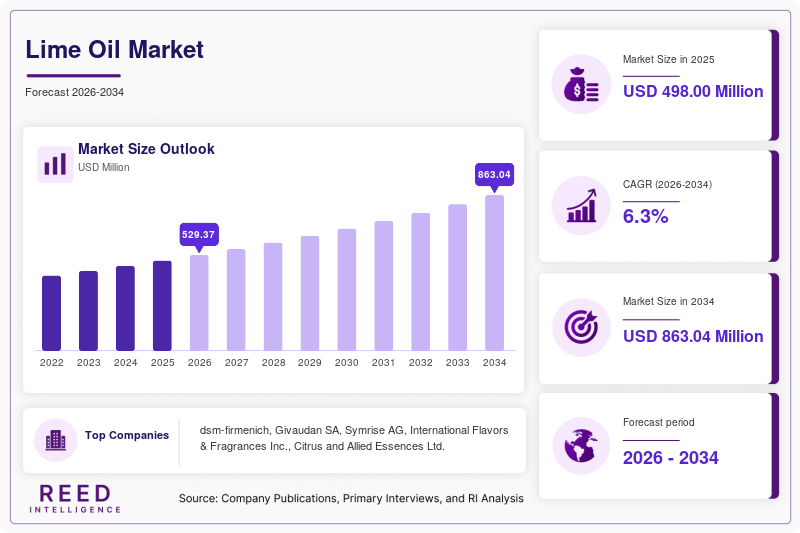
The Lime Oil Market size was valued at USD 498 million in 2026 and is projected to reach USD 812 million by 2034, expanding at a CAGR of 6.3% during 2026–2034. Lime oil, extracted mainly from peel through cold pressing or steam distillation, is widely used in food beverages, personal care, aromatherapy, household cleaners, and pharmaceutical formulations. Its fresh citrus aroma and functional properties have positioned it as a preferred natural ingredient across multiple industries. Rising consumer demand for plant-based flavors, clean-label formulations, and natural fragrance systems continues to support market expansion across developed and emerging economies.
A major global factor supporting market growth is the broad shift toward naturally derived ingredients in consumer goods manufacturing. Food brands are replacing synthetic flavors with botanical extracts, while cosmetics companies are reformulating products with essential oils that align with wellness-focused purchasing behavior. Lime oil also benefits from increased use in premium cleaning products, spa applications, and wellness blends. Improvements in citrus processing technology have enhanced yield recovery and oil consistency, allowing suppliers to serve larger industrial buyers. E-commerce has further widened access to niche aromatherapy and skincare brands that rely on lime oil inputs.
Key Highlights
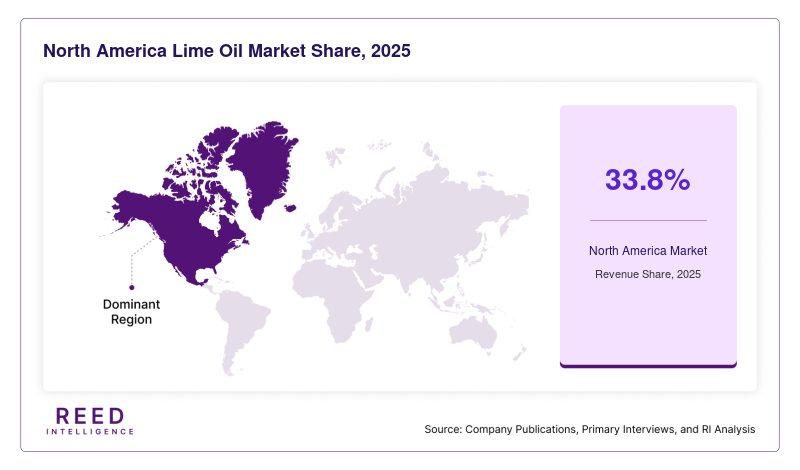
- North America dominated the market with a 33.8% share in 2025.
- Asia Pacific is expected to grow at the fastest CAGR of 7.9% during 2026–2034.
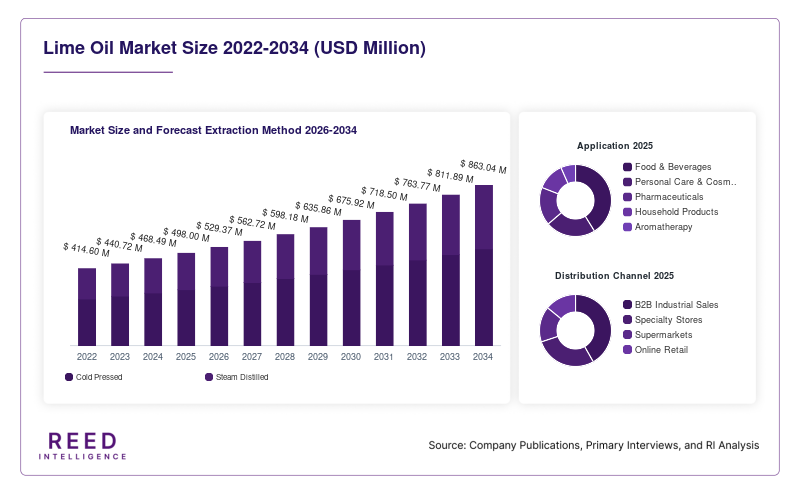
- By extraction method, cold pressed lime oil accounted for the largest share of 57.4%.
- while steam distilled lime oil is projected to grow at a CAGR of 6.8%.
- By application, food & beverages led with a 39.6% share, whereas personal care & cosmetics is expected to expand at a CAGR of 7.4%.
- By distribution channel, B2B industrial sales remained dominant with 61.2% share, while online retail is forecast to grow at 8.1% CAGR.
- The United States remained the dominant country, with market values of USD 141 million in 2024 and USD 151 million in 2025.
Market Trends
Premium citrus ingredients in functional beverages
Beverage manufacturers are increasingly using lime oil in sparkling waters, flavored teas, kombucha, sports hydration products, and reduced-sugar drinks. Consumers prefer recognizable fruit ingredients over artificial flavor labels, making lime oil valuable in premium beverage launches. Brands are blending lime with mint, ginger, cucumber, and tropical fruits to create differentiated taste profiles. Demand is especially visible in urban retail channels where ready-to-drink wellness beverages are expanding shelf space. Suppliers are responding with standardized food-grade lime oil formats designed for stable flavor performance in acidic and carbonated systems.
Wider use in wellness and home fragrance products
Lime oil is gaining traction in candles, diffusers, massage blends, bath products, and mood-support fragrance collections. Consumers increasingly purchase home wellness products that combine scent with emotional positioning such as freshness, clarity, or energy. Lime oil blends well with bergamot, eucalyptus, and lavender, supporting product innovation across premium lifestyle brands. Subscription commerce and online specialty stores have accelerated small-batch launches. This trend also benefits refillable and eco-positioned brands that use botanical ingredients to reinforce sustainable packaging and ingredient narratives.
Market Drivers
Clean-label demand across food manufacturing
Food processors continue to replace synthetic flavor systems with essential oils and fruit extracts. Lime oil offers strong aroma intensity, natural positioning, and compatibility with sauces, confectionery, bakery fillings, beverages, and marinades. As ingredient transparency becomes more important, brands are highlighting citrus-origin flavors on packaging. Retailers also prefer shorter ingredient lists in private-label categories. This shift creates recurring industrial demand for consistent, traceable lime oil supply. Suppliers that offer allergen documentation, quality certifications, and stable pricing are gaining long-term contracts with multinational food manufacturers.
Growth of natural personal care formulations
Skincare, haircare, soaps, and oral care products increasingly use botanical oils for fragrance and perceived functionality. Lime oil is used in cleansers, scrubs, deodorizing products, shampoos, and brightening formulations. Indie beauty brands and contract manufacturers are launching citrus-based collections aimed at younger consumers seeking fresh sensory experiences. The move away from petrochemical fragrance ingredients in selected categories further supports adoption. As premium personal care spending rises in Asia Pacific and North America, cosmetic-grade lime oil volumes are expected to increase steadily through the forecast period.
Market Restraint
Agricultural volatility and raw material price swings
The lime oil industry remains dependent on agricultural output, weather conditions, disease pressure, and seasonal harvesting cycles. Excess rainfall, drought, citrus greening, transport disruption, or labor shortages can reduce lime availability and weaken peel quality, directly affecting oil yield. These fluctuations create uneven pricing for processors and downstream buyers. Small cosmetics brands and regional food manufacturers often struggle to absorb sudden raw material cost increases, leading to reformulation delays or lower purchase volumes. In years of tight supply, some buyers shift temporarily to blended citrus alternatives or synthetic substitutes. This restraint is particularly relevant in countries with concentrated lime cultivation where crop shocks can rapidly affect export pricing and delivery schedules. Long-term supply agreements reduce some risk, but volatility remains a structural challenge for the Lime Oil Market.
Market Opportunities
Expansion in natural cleaning and hygiene products
Household cleaning brands are using lime oil in dish liquids, surface sprays, degreasers, and odor-control products because citrus notes are associated with freshness and cleanliness. Consumers increasingly prefer cleaners perceived as safer and less chemical-intensive. Lime oil can support fragrance systems in plant-based cleaners while helping premium brands differentiate product identity. Institutional cleaning suppliers are also exploring citrus blends for hospitality and office environments. As green cleaning regulations and eco-label demand increase, this segment offers meaningful growth opportunities for suppliers with scalable volumes.
Emerging demand from pharmaceutical and nutraceutical formulators
Lime oil is finding selective use in cough syrups, lozenges, digestive products, topical balms, and wellness supplements where flavor masking or aromatic support is needed. Pharmaceutical excipient developers value strong natural citrus notes for improving consumer acceptance of oral products. Nutraceutical gummies and chewables also benefit from lime flavor profiles. As self-care spending rises globally, especially in developing markets, manufacturers are searching for botanical ingredients that support branding and taste improvement. Certified, traceable lime oil suppliers can capture higher-margin specialty contracts in this channel.
Segmental Analysis
By Extraction Method
Cold pressed lime oil was the dominant subsegment and accounted for 57.4% share in 2024. It is preferred because the process preserves the fresh peel aroma associated with natural lime character. Food and beverage manufacturers favor cold pressed variants for flavor authenticity in sparkling drinks, sauces, candies, and frozen desserts. Personal care brands also use this format where bright citrus top notes are required. Strong availability from major citrus processing hubs and broad commercial familiarity keep this segment ahead in global demand.
Steam distilled lime oil is the fastest-growing subsegment and is expected to expand at a 6.8% CAGR through 2034. Buyers choose distilled formats for improved stability and different aromatic profiles suited to soaps, candles, industrial fragrances, and selected cosmetic products. Distillation can also help utilize lower-grade peel streams, improving processor economics. As fragrance houses diversify sourcing and industrial users seek longer shelf-life ingredients, demand for steam distilled lime oil is rising steadily.
By Application
Food & beverages remained the largest application segment with 39.6% share in 2024. Lime oil is widely used in carbonated beverages, flavored waters, confectionery, bakery fillings, savory marinades, dairy desserts, and cocktail mixers. Its concentrated flavor allows low inclusion rates, making it cost-efficient in formulation. Global beverage innovation continues to support high-volume purchases, while premium confectionery and snack producers use citrus notes to refresh mature product categories. Large recurring industrial contracts make this segment the volume leader.
Personal care & cosmetics is the fastest-growing application segment, projected to register a 7.4% CAGR through 2034. Lime oil is increasingly used in face cleansers, soaps, shampoos, deodorizing products, body scrubs, and fragrance mists. Consumers seek products with botanical ingredients and energizing scent profiles. Indie brands launch citrus-focused collections through digital channels, while contract manufacturers provide faster product development cycles. This combination of consumer preference and agile product launches supports above-average growth.
By Distribution Channel
B2B industrial sales held the leading position with 61.2% share in 2024. This channel includes direct supply to beverage makers, flavor houses, cosmetic formulators, pharmaceutical companies, and contract manufacturers. Bulk purchasing agreements ensure stable demand and predictable shipment schedules. Buyers often require customized specifications such as food grade, cosmetic grade, organic certification, or specific aroma intensity. Because large manufacturers consume significant volumes, industrial procurement remains the backbone of global lime oil revenues.
Online retail is the fastest-growing distribution channel and is estimated to expand at an 8.1% CAGR through 2034. E-commerce platforms allow essential oil brands, aromatherapy specialists, and small beauty labels to reach consumers directly. Product education through social media, influencer marketing, and subscription wellness boxes is driving sales. Consumers also compare purity claims, packaging formats, and blend suggestions more easily online. This digital accessibility is accelerating channel growth worldwide.
Regional Analysis
North America
North America held 33.8% of the Lime Oil Market share in 2025 and is projected to expand at a 5.8% CAGR through 2034. Mature food processing industries, advanced personal care manufacturing, and strong retail demand for natural wellness products support regional sales. Buyers in the United States and Canada prefer documented sourcing, food safety compliance, and consistent aromatic quality, which benefits established importers and blenders.
The United States remains the dominant country in the region. A unique growth factor is the rapid expansion of premium ready-to-drink beverages using botanical citrus flavor systems. Functional waters, mixers, and reduced-sugar sodas increasingly incorporate lime oil for clean-label positioning. Private-label retailers are also introducing natural home cleaning lines that use citrus fragrance systems.
Europe
Europe accounted for 26.4% share in 2025 and is forecast to grow at a 5.6% CAGR during the study period. Demand is supported by stringent ingredient transparency standards, developed cosmetics manufacturing, and rising consumer preference for natural aromatics. Western Europe leads volume consumption, while Central Europe shows steady gains through contract manufacturing and food innovation.
Germany is the leading country market. A unique growth factor is the region’s strong natural cosmetics ecosystem, where formulators seek citrus oils for vegan skincare, soaps, and haircare products. German specialty retailers and pharmacies continue expanding shelf space for wellness-focused products, increasing demand for certified essential oil ingredients.
Asia Pacific
Asia Pacific represented 22.1% share in 2025 and is expected to register the fastest 7.9% CAGR through 2034. Rising disposable incomes, growing packaged food consumption, and expanding beauty industries are driving regional momentum. Manufacturing investments in India, China, Thailand, and Indonesia are increasing procurement of citrus ingredients for both domestic and export products.
India is the dominant country market in the region. A unique growth factor is the strong presence of ayurvedic, herbal, and natural personal care brands that use citrus oils in soaps, balms, and haircare. Rapid online retail growth is also helping smaller brands launch lime-oil-based wellness and grooming products nationwide.
Middle East & Africa
Middle East & Africa captured 9.4% share in 2025 and is projected to grow at a 5.1% CAGR by 2034. The market is supported by hospitality demand, premium fragrance consumption, and increasing imports of natural ingredients for foodservice and personal care. Gulf countries lead higher-value consumption, while African markets contribute gradual volume growth.
The United Arab Emirates leads regional demand. A unique growth factor is the strong hospitality and spa sector, where lime oil is used in ambient fragrance systems, massage blends, and luxury amenities. Tourism-linked commercial demand supports consistent imports and encourages regional packaging and blending activity.
Latin America
Latin America held 8.3% share in 2025 and is forecast to expand at a 6.0% CAGR over the forecast period. The region benefits from citrus agriculture, improving food processing capacity, and growing demand for affordable natural beauty products. Regional supply integration also supports exports of lime derivatives and essential oils.
Brazil is the dominant country market. A unique growth factor is the large domestic beverage industry that uses citrus ingredients in juices, mixers, and flavored waters. Local processors increasingly invest in peel recovery systems that convert by-products into higher-value lime oil, improving profitability and supply availability.
Competitive Landscape
The Lime Oil Market is moderately fragmented, with multinational fragrance houses, specialty ingredient suppliers, and regional citrus processors competing on quality, sourcing reliability, and pricing. Leading participants focus on backward integration into citrus supply chains, traceability systems, and customized formulations for food and cosmetic customers.
dsm-firmenich remains a market leader due to its broad flavor and fragrance portfolio, global customer relationships, and advanced application labs. A recent development includes expansion of natural citrus ingredient blending capacity to support beverage customers in North America. Other notable companies include Givaudan, Symrise, International Flavors & Fragrances, and Citrus and Allied Essences. Mid-sized firms compete through organic certification, fast delivery, and niche aromatherapy channels. Strategic priorities across the sector include sustainable sourcing, residue testing, and improved yield recovery from citrus processing waste streams.
Key Players List
- dsm-firmenich
- Givaudan
- Symrise AG
- International Flavors & Fragrances Inc.
- Citrus and Allied Essences Ltd.
- Lionel Hitchen Ltd.
- Treatt Plc
- Young Living Essential Oils
- doTERRA International
- Ultra International B.V.
- AOS Products Pvt. Ltd.
- Katyani Exports
- Florachem Corporation
- Citromax Group
- Bontoux SAS
Recent Developments
- A major flavor supplier introduced a new standardized lime oil range for reduced-sugar beverage formulations in 2025.
- A citrus processor in Brazil invested in peel valorization equipment to increase lime oil extraction efficiency and export capacity in 2025.
- A personal care ingredient company launched certified organic lime oil for clean beauty brands across Europe in 2026.
Lime Oil Market Segments
Extraction Method
- Cold Pressed
- Steam Distilled
Application
- Food & Beverages
- Personal Care & Cosmetics
- Pharmaceuticals
- Household Products
- Aromatherapy
Distribution Channel
- B2B Industrial Sales
- Specialty Stores
- Supermarkets
- Online Retail
By Region
- North America
- Europe
- APAC
- Middle East and Africa
- LATAM