Lip Face Oil Market Size, Share & Demand Report By Product Type (Facial Oils, Lip Oils, Hybrid Lip-Face Oils), By Application (Personal Use, Professional Skincare Use), By Distribution Channel (Online Retail, Offline Retail Stores, Specialty Stores, Supermarkets & Hypermarkets, Pharmacy & Drugstores), By Region & Segment Forecasts, 2026–2034
USD 3950
Market Overview
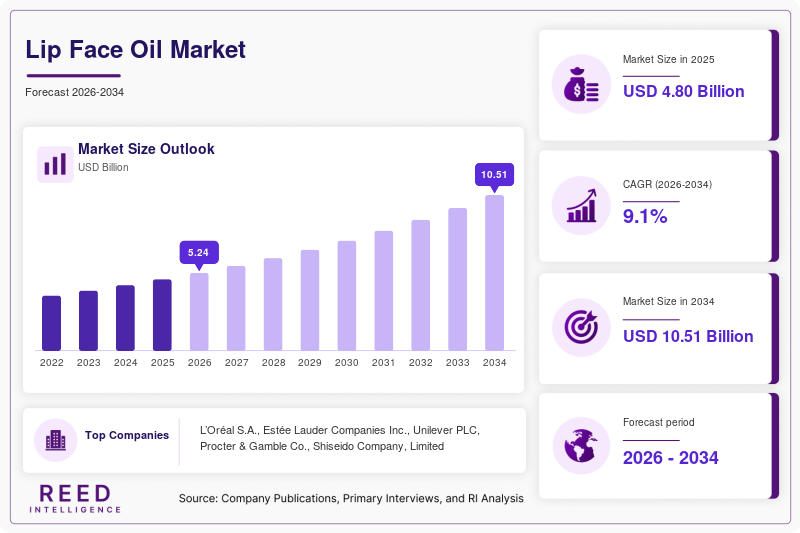
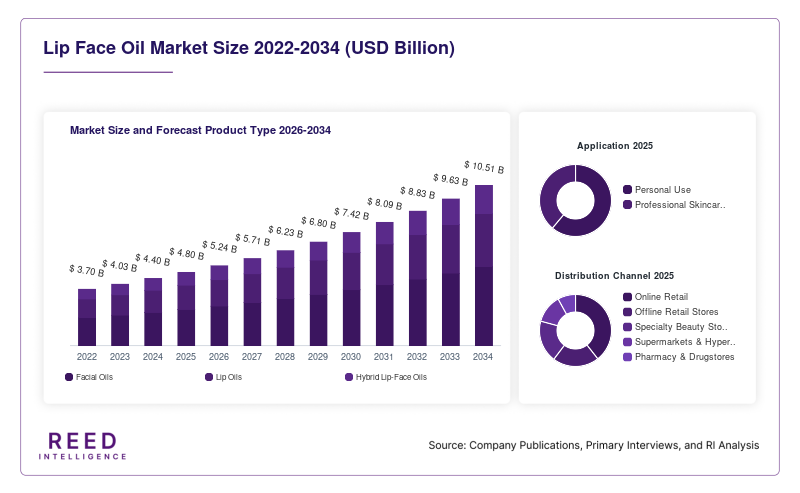
The global Lip Face Oil Market size was valued at approximately USD 4.8 billion in 2026 and is projected to reach USD 9.6 billion by 2034, expanding at a compound annual growth rate (CAGR) of 9.1% during the forecast period (2026–2034). The market has witnessed steady expansion driven by increasing consumer inclination toward natural and multifunctional skincare products. Lip and face oils, known for their hydrating, nourishing, and restorative properties, have gained traction across diverse consumer groups, particularly among millennials and Gen Z populations.
One of the primary global factors supporting market growth is the rising demand for clean beauty products. Consumers are increasingly aware of ingredient transparency, prompting brands to formulate products with botanical oils, antioxidants, and vitamin-rich extracts. This shift aligns with broader sustainability trends, encouraging manufacturers to innovate with organic and ethically sourced ingredients.
Key Highlights
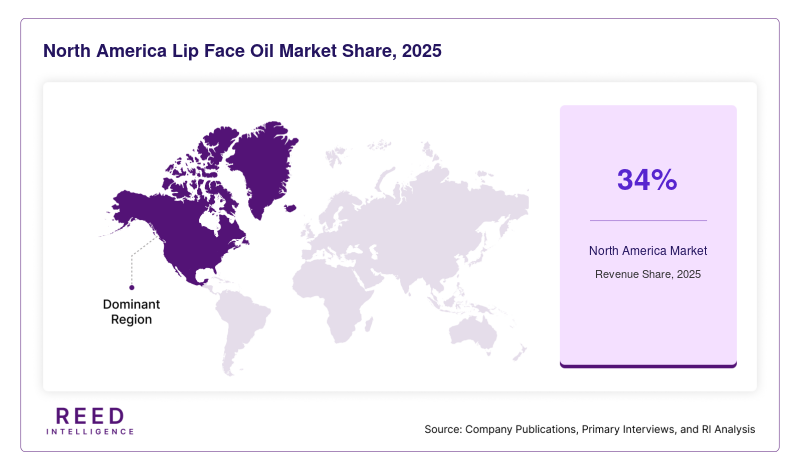
- North America dominated the market with a 34% share in 2025, while Asia Pacific is projected to register the fastest CAGR of 10.4%.
- In the type segment, facial oils led with a 62% share, whereas hybrid lip-face oils are expected to grow fastest at a CAGR of 11.2%.
- In application, personal use dominated, while professional skincare applications are growing at 10.8% CAGR.
- The U.S. market was valued at USD 1.2 billion in 2024 and reached USD 1.3 billion in 2025.
Market Trends
Increasing Popularity of Multifunctional Beauty Products
Consumers are increasingly favoring multifunctional products that simplify skincare routines without compromising effectiveness. Lip face oils are gaining popularity as they offer hydration, nourishment, and aesthetic enhancement in a single product. These oils often combine ingredients such as jojoba, argan, and rosehip oil to address multiple concerns like dryness, dullness, and fine lines. This trend is particularly strong among urban consumers who prefer minimalistic routines due to time constraints. Additionally, multifunctional products reduce the need for multiple purchases, making them cost-effective. Brands are responding by launching hybrid formulations that cater to both lip and facial care, further driving market demand. The trend is also supported by growing awareness of skin barrier health, encouraging consumers to adopt products that provide long-lasting hydration and protection.
Growth of Clean and Sustainable Beauty Movement
The clean beauty movement continues to influence product development in the lip face oil market. Consumers are actively seeking products free from synthetic chemicals, parabens, and artificial fragrances. As a result, manufacturers are focusing on natural and organic formulations with transparent labeling. Sustainability is another critical aspect, with brands adopting eco-friendly packaging and ethically sourced ingredients. This trend is particularly prominent in developed markets, where consumers are willing to pay a premium for environmentally responsible products. Certifications such as cruelty-free and vegan are becoming standard expectations. The emphasis on sustainability not only enhances brand reputation but also drives long-term consumer loyalty. This trend is expected to remain a key growth driver over the forecast period.
Market Drivers
Rising Demand for Natural and Organic Skincare Products
The growing consumer preference for natural and organic skincare products is a significant driver of the lip face oil market. Increasing awareness of the harmful effects of synthetic chemicals has led consumers to shift toward plant-based alternatives. Lip face oils formulated with natural ingredients such as coconut oil, almond oil, and vitamin E are perceived as safer and more effective. This trend is particularly strong among health-conscious consumers and those with sensitive skin. Additionally, regulatory bodies are imposing stricter guidelines on cosmetic formulations, encouraging manufacturers to adopt cleaner ingredients. The rise of organic certifications and labeling transparency further supports this trend, boosting consumer confidence and driving market growth.
Expansion of E-commerce and Digital Marketing Channels
The rapid growth of e-commerce platforms has significantly contributed to the expansion of the lip face oil market. Online retail channels provide consumers with easy access to a wide range of products, along with detailed descriptions and user reviews. Social media platforms play a crucial role in influencing purchasing decisions, with beauty influencers and dermatologists promoting lip face oils through tutorials and endorsements. This digital exposure has increased product awareness and adoption across various demographics. Furthermore, direct-to-consumer (DTC) models enable brands to engage with customers more effectively, offering personalized recommendations and subscription-based services. These factors collectively enhance market penetration and drive revenue growth.
Market Restraint
High Product Costs and Limited Accessibility in Emerging Markets
One of the key restraints affecting the lip face oil market is the relatively high cost of premium formulations. Products containing high-quality natural and organic ingredients often come at a higher price point, limiting their accessibility to price-sensitive consumers, particularly in emerging markets. While demand for clean beauty is growing globally, affordability remains a challenge in regions with lower disposable incomes. This pricing barrier restricts widespread adoption and slows market expansion in certain areas.
Additionally, supply chain complexities associated with sourcing natural ingredients can lead to price fluctuations, further impacting product affordability. Smaller brands may struggle to maintain consistent pricing, affecting their competitiveness. For example, fluctuations in the availability of argan oil due to environmental factors can increase production costs, which are then passed on to consumers.
The high cost also affects consumer perception, as some buyers may question the value proposition of lip face oils compared to traditional skincare products. To address this restraint, companies are exploring cost-effective formulations and expanding their distribution networks to reach underserved markets. However, overcoming pricing challenges remains a critical hurdle for sustained growth.
Market Opportunities
Emerging Demand in Asia Pacific Markets
Asia Pacific presents significant growth opportunities for the lip face oil market due to rising disposable incomes and increasing awareness of skincare routines. Countries such as China, India, and South Korea are witnessing a surge in demand for premium beauty products. The influence of K-beauty trends and traditional herbal skincare practices has created a favorable environment for lip face oils. Consumers in these markets are increasingly adopting multi-step skincare routines, incorporating oils for hydration and nourishment. Additionally, the growing middle-class population and urbanization are driving demand for high-quality skincare products. Local brands are also entering the market, offering affordable alternatives tailored to regional preferences, further boosting market growth.
Innovation in Product Formulations and Packaging
Continuous innovation in product formulations and packaging offers substantial opportunities for market expansion. Manufacturers are developing advanced formulations that combine lip and face care benefits with additional features such as SPF protection and anti-aging properties. These innovations cater to evolving consumer needs and enhance product differentiation.
Packaging innovations, including sustainable materials and user-friendly designs, are also gaining traction. Refillable containers and biodegradable packaging align with environmental concerns, attracting eco-conscious consumers. Additionally, personalized skincare solutions, enabled by AI and data analytics, allow brands to offer customized lip face oil products based on individual skin types and concerns. These advancements not only improve customer satisfaction but also create new revenue streams, driving overall market growth.
Segmental Analysis
By Type
Facial oils dominated the type segment, accounting for 62% of the market share in 2024. These products are widely used for hydration, anti-aging, and skin repair, making them a staple in skincare routines. Their versatility and compatibility with various skin types contribute to their dominance. Additionally, the availability of a wide range of formulations targeting specific concerns enhances their appeal among consumers.
Hybrid lip-face oils are the fastest-growing subsegment, projected to grow at a CAGR of 11.2%. The increasing demand for multifunctional products is a key growth factor. These oils offer convenience and cost-effectiveness, making them popular among younger consumers. Innovations in formulation and packaging further support their rapid growth.
By Application
Personal use dominated the application segment, holding a 71% share in 2024. The increasing adoption of skincare routines and the growing influence of social media trends contribute to this dominance. Consumers prefer using lip face oils as part of their daily regimen for hydration and nourishment.
Professional skincare applications are the fastest-growing subsegment, with a CAGR of 10.8%. The expansion of beauty salons and spas drives this growth. Professionals use high-quality oils for treatments, enhancing their effectiveness and boosting demand in this segment.
By Distribution Channel
Offline retail dominated the distribution channel segment, accounting for 58% of the market share in 2024. Physical stores allow consumers to test products before purchase, which is particularly important for skincare items. The presence of beauty consultants further enhances the shopping experience.
Online retail is the fastest-growing subsegment, with a CAGR of 12.5%. The convenience of online shopping and the availability of detailed product information drive this growth. Digital marketing strategies and influencer endorsements further boost online sales.
Regional Analysis
North America
North America accounted for approximately 34% of the global lip face oil market share in 2025 and is expected to grow at a CAGR of 8.7% during the forecast period. The region’s growth is driven by high consumer awareness and strong demand for premium skincare products. The presence of established brands and advanced retail infrastructure further supports market expansion.
The United States dominates the North American market due to its large consumer base and high spending on personal care products. A unique growth factor in this region is the strong influence of celebrity-endorsed beauty brands, which significantly impact consumer purchasing behavior and drive product adoption.
Europe
Europe held a 27% market share in 2025 and is projected to grow at a CAGR of 8.9%. The region is characterized by a strong preference for natural and organic skincare products, supported by stringent regulations on cosmetic ingredients. This has encouraged manufacturers to focus on clean formulations.
Germany leads the European market, driven by its well-established cosmetics industry and environmentally conscious consumers. A unique growth factor is the widespread adoption of sustainable packaging, which aligns with regional environmental policies and consumer expectations.
Asia Pacific
Asia Pacific captured 23% of the market share in 2025 and is expected to grow at the fastest CAGR of 10.4%. Rapid urbanization, rising disposable incomes, and increasing awareness of skincare routines are key growth drivers in this region.
China dominates the Asia Pacific market due to its large population and growing beauty industry. A unique growth factor is the integration of traditional herbal ingredients into modern formulations, appealing to consumers seeking both efficacy and cultural relevance.
Middle East & Africa
The Middle East & Africa region accounted for 9% of the market share in 2025 and is projected to grow at a CAGR of 7.8%. The market is driven by increasing demand for luxury beauty products and rising awareness of skincare.
The United Arab Emirates leads the region, supported by a high concentration of premium retail outlets. A unique growth factor is the preference for high-end imported products, which boosts demand for international lip face oil brands.
Latin America
Latin America held a 7% market share in 2025 and is expected to grow at a CAGR of 8.2%. The region’s growth is driven by increasing consumer interest in personal grooming and skincare products.
Brazil dominates the Latin American market due to its large beauty industry. A unique growth factor is the strong presence of direct-selling companies, which enhance product accessibility and consumer engagement in remote areas.
Competitive Landscape
The lip face oil market is moderately fragmented, with several global and regional players competing for market share. Leading companies focus on product innovation, sustainable sourcing, and strategic partnerships to strengthen their market position. The competitive environment is characterized by frequent product launches and marketing campaigns aimed at enhancing brand visibility.
One of the leading players in the market is L’Oréal S.A., known for its extensive product portfolio and strong global presence. The company recently introduced a new range of plant-based lip face oils, emphasizing sustainability and ingredient transparency. Other major players are also investing in research and development to create innovative formulations that cater to evolving consumer preferences.
Collaborations with influencers and expansion into emerging markets are common strategies among key players. Additionally, companies are adopting digital transformation initiatives to improve customer engagement and streamline distribution channels.
Key Players
- L’Oréal S.A.
- Estée Lauder Companies Inc.
- Unilever PLC
- Procter & Gamble Co.
- Shiseido Company, Limited
- Coty Inc.
- Beiersdorf AG
- Amorepacific Corporation
- Johnson & Johnson
- Natura & Co.
- Avon Products Inc.
- Revlon Inc.
- Clarins Group
- The Body Shop International Limited
- Kiehl’s LLC
Recent Developments
- In 2025, L’Oréal launched a new eco-friendly lip face oil line featuring biodegradable packaging.
- In 2024, Estée Lauder expanded its skincare portfolio with vitamin-enriched facial oils targeting anti-aging benefits.
- In 2025, Shiseido introduced AI-powered personalized skincare solutions, including customized lip face oil formulations.
Lip Face Oil Market Segments
Product Type
- Facial Oils
- Lip Oils
- Hybrid Lip-Face Oils
Application
- Personal Use
- Professional Skincare Use
Distribution Channel
- Online Retail
- Offline Retail Stores
- Specialty Beauty Stores
- Supermarkets & Hypermarkets
- Pharmacy & Drugstores
By Region
- North America
- Europe
- APAC
- Middle East and Africa
- LATAM