Liposarcoma Treatment Market Size, Share & Demand Report By Treatment Type (Surgery, Chemotherapy, Radiation Therapy, Targeted Therapy, Immunotherapy), By Disease Subtype (Well-Differentiated Liposarcoma, Myxoid Liposarcoma), By End User (Hospitals, Specialized Cancer Centers, Ambulatory Surgical Centers, Research Institutes), By Therapy Modality (Monotherapy, Combination Therapy), By Region & Segment Forecasts, 2026–2034
USD 3950
Market Overview
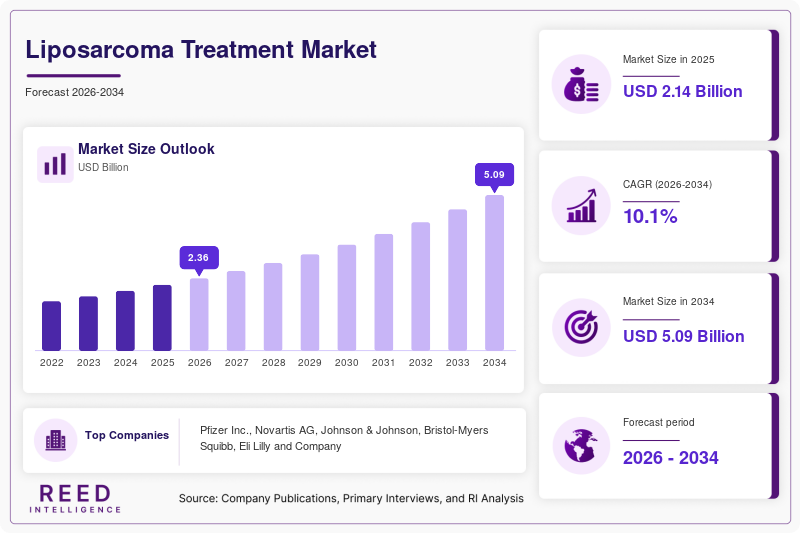
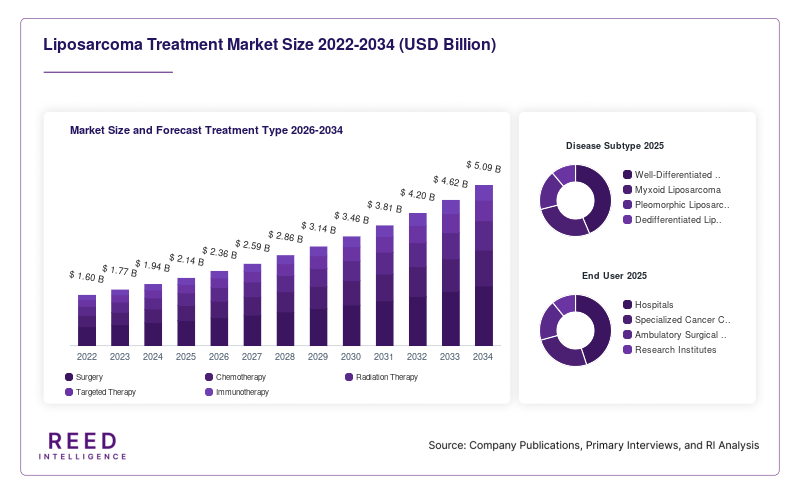
The global Liposarcoma Treatment Market size was valued at USD 2.14 billion in 2026 and is projected to reach USD 4.61 billion by 2034, expanding at a CAGR of 10.1% during the forecast period (2026–2034). The market growth has been supported by the increasing global incidence of soft tissue sarcomas and the growing focus on targeted oncology therapies. Rising awareness regarding rare cancers, improvements in diagnostic imaging technologies, and expanding access to specialized cancer treatment centers have contributed to the steady development of the Liposarcoma Treatment Market across developed and emerging healthcare economies.
Liposarcoma is a rare malignant tumor originating in fat cells and commonly affecting the extremities, retroperitoneal region, and soft tissues. Treatment approaches generally include surgery, radiation therapy, chemotherapy, immunotherapy, and targeted drug therapy depending on tumor subtype and disease stage. Increasing advancements in molecular diagnostics and precision oncology are improving treatment planning and patient outcomes, thereby supporting market expansion.
Key Highlights
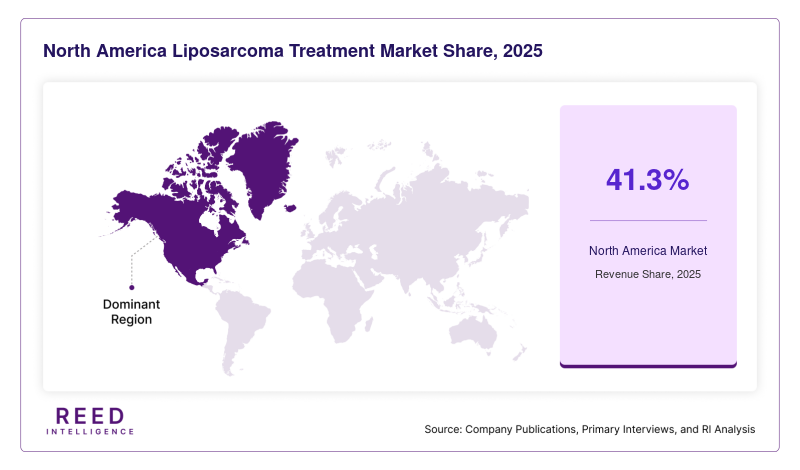
- North America accounted for 41.3% of the global Liposarcoma Treatment Market share in 2025, while Asia Pacific is projected to register the fastest CAGR of 11.6% during the forecast period.
- By treatment type, surgery held the dominant share of 39.8% in 2025, whereas targeted therapy is anticipated to witness the fastest CAGR of 13.4% through 2034.
- By disease subtype, well-differentiated liposarcoma dominated with a 36.7% share in 2025, while dedifferentiated liposarcoma is projected to expand at a CAGR of 12.2%.
- By end user, hospitals represented 58.4% of the market share in 2025, while specialty cancer centers are expected to grow at a CAGR of 11.8%.
- The United States remained the dominant country market and was valued at USD 618 million in 2024 and USD 676 million in 2025.
Market Trends
Increasing Adoption of Precision Oncology Approaches
One of the notable trends shaping the Liposarcoma Treatment Market is the increasing adoption of precision oncology approaches. Healthcare providers are increasingly utilizing molecular profiling and genomic testing to identify specific tumor characteristics and personalize treatment strategies.
Targeted therapies directed toward genetic mutations and molecular pathways are gaining attention for their potential to improve treatment response while minimizing systemic toxicity. Oncology specialists are increasingly incorporating biomarker-driven treatment planning into clinical practice, particularly for advanced and recurrent liposarcoma cases.
The growing emphasis on personalized cancer treatment is expected to encourage further research into subtype-specific therapies and targeted drug development across the Liposarcoma Treatment Market.
Expansion of Combination Therapy Strategies
Combination therapy approaches are becoming increasingly common in liposarcoma management. Researchers and healthcare providers are evaluating the effectiveness of combining surgery, chemotherapy, radiation therapy, immunotherapy, and targeted drugs to improve disease control and reduce recurrence rates.
Combination regimens are showing potential in improving treatment outcomes for aggressive liposarcoma subtypes. Pharmaceutical companies are also conducting clinical studies focused on synergistic treatment combinations capable of enhancing therapeutic efficacy. This trend is expected to support innovation in integrated oncology treatment protocols over the forecast period.
Market Drivers
Rising Incidence of Soft Tissue Sarcomas
The increasing incidence of soft tissue sarcomas has become a major driver for the Liposarcoma Treatment Market. Growing awareness regarding rare cancers and improved diagnostic capabilities have contributed to earlier disease detection and increased treatment rates.
Healthcare systems are expanding specialized oncology programs focused on sarcoma management, enabling patients to access advanced treatment options more efficiently. The increasing burden of age-related cancer incidence has further contributed to market demand for effective liposarcoma therapies.
Advancements in Cancer Diagnostic Technologies
Technological advancements in cancer diagnostics have significantly supported the growth of the Liposarcoma Treatment Market. Improved imaging modalities such as MRI, CT scans, PET scans, and molecular diagnostic techniques are enabling more accurate tumor characterization and treatment planning.
Early diagnosis and improved tumor staging capabilities allow clinicians to implement more effective therapeutic interventions. The increasing integration of artificial intelligence and digital pathology solutions in oncology diagnostics is also improving clinical decision-making and patient management.
Market Restraint
High Treatment Costs and Limited Patient Population
One of the major restraints affecting the Liposarcoma Treatment Market is the high cost associated with advanced oncology treatments and the relatively limited patient population affected by the disease. Rare cancer therapies often involve expensive targeted drugs, complex surgical procedures, and prolonged treatment regimens.
Limited commercial incentives for rare disease drug development and reimbursement challenges in certain healthcare systems may restrict broader treatment accessibility. The financial burden associated with specialized cancer care continues to remain a challenge for market expansion.
Market Opportunities
Expansion of Orphan Drug Development Programs
The growing focus on orphan drug development presents substantial opportunities for the Liposarcoma Treatment Market. Regulatory agencies across multiple countries are offering incentives such as market exclusivity, tax benefits, and accelerated approval pathways for rare cancer therapeutics.
Pharmaceutical companies are increasingly investing in orphan oncology drug pipelines aimed at addressing unmet clinical needs in sarcoma treatment. The expansion of rare disease research funding is expected to support long-term product innovation.
Growth of Immunotherapy Research
Immunotherapy research is creating promising opportunities within the Liposarcoma Treatment Market. Researchers are exploring immune checkpoint inhibitors, cellular therapies, and tumor-targeting immunotherapies for advanced sarcoma treatment.
The potential to improve survival outcomes and reduce disease progression in treatment-resistant cases is encouraging further clinical development activities. Increasing collaboration between biotechnology firms and cancer research institutes is expected to accelerate innovation in immuno-oncology applications for liposarcoma management.
Segmental Analysis
By Treatment Type
Surgery Dominated the Market
Surgery accounted for 39.8% of the global Liposarcoma Treatment Market share in 2025. Surgical resection remained the primary treatment approach for localized liposarcoma cases because of its ability to remove tumor tissue effectively and reduce recurrence risk.
Targeted Therapy Will Witness the Fastest Growth
Targeted therapy is projected to register a CAGR of 13.4% during the forecast period. The segment growth will be driven by increasing research into molecularly targeted treatments designed to inhibit tumor-specific pathways.
By Disease Subtype
Well-Differentiated Liposarcoma Held the Largest Share
Well-differentiated liposarcoma held 36.7% of the Liposarcoma Treatment Market share in 2025. The subtype remained widely diagnosed because of its relatively slower progression and higher detection rates during imaging assessments.
Dedifferentiated Liposarcoma Will Grow Rapidly
Dedifferentiated liposarcoma is expected to grow at a CAGR of 12.2% through 2034. The segment growth will be supported by increasing research efforts focused on aggressive sarcoma subtypes requiring advanced therapeutic interventions.
By End User
Hospitals Accounted for the Largest Share
Hospitals represented 58.4% of the global Liposarcoma Treatment Market share in 2025. The dominance of this segment was supported by the availability of multidisciplinary oncology services, advanced diagnostic technologies, and inpatient surgical capabilities.
Specialty Cancer Centers Will Expand Significantly
Specialty cancer centers are anticipated to witness a CAGR of 11.8% during the forecast period. The segment growth will be fueled by increasing demand for specialized sarcoma expertise and personalized oncology treatment programs.
By Route of Administration
Injectable Therapies Led the Market
Injectable therapies accounted for 64.9% of the Liposarcoma Treatment Market share in 2025. The segment benefited from widespread utilization of intravenous chemotherapy, biologics, and targeted oncology drugs in clinical settings.
Oral Therapies Will Witness Rapid Growth
Oral therapies are projected to register a CAGR of 10.9% during the forecast period. The growth will be supported by increasing development of oral targeted oncology drugs and patient preference for convenient treatment administration.
Regional Analysis
North America
North America accounted for 41.3% of the global Liposarcoma Treatment Market share in 2025 and is projected to grow at a CAGR of 9.4% during the forecast period. The region benefited from strong oncology research infrastructure, advanced healthcare systems, and high adoption of targeted cancer therapies.
The United States dominated the regional market due to increasing investments in rare cancer clinical trials and widespread availability of specialized sarcoma treatment centers. The country also experienced strong utilization of molecular diagnostic technologies and personalized oncology approaches.
Europe
Europe held 28.6% of the global Liposarcoma Treatment Market share in 2025 and is anticipated to expand at a CAGR of 8.9% through 2034. The region experienced rising adoption of advanced cancer therapies and growing awareness regarding rare soft tissue malignancies.
Germany represented the dominant country market in Europe due to strong oncology research activities and increasing integration of precision medicine into cancer treatment protocols. The expansion of specialized cancer care facilities further supported regional market development.
Asia Pacific
Asia Pacific captured 19.7% of the global Liposarcoma Treatment Market share in 2025 and is forecast to register the fastest CAGR of 11.6% during the study period. Increasing healthcare expenditure, expanding oncology infrastructure, and rising awareness regarding cancer screening contributed to regional growth.
China emerged as the dominant country market owing to the rapid expansion of cancer treatment centers and increasing government support for oncology research initiatives. The growing accessibility of targeted therapies and advanced diagnostic technologies further strengthened regional market demand.
Middle East & Africa
The Middle East & Africa accounted for 5.7% of the global Liposarcoma Treatment Market share in 2025 and is expected to grow at a CAGR of 7.8% over the forecast period. Increasing investments in oncology healthcare infrastructure and specialized cancer treatment programs supported regional market expansion.
Saudi Arabia remained the dominant country market due to ongoing healthcare modernization initiatives and increasing access to advanced oncology services. The development of specialized cancer hospitals also contributed to market growth.
Latin America
Latin America represented 4.7% of the global Liposarcoma Treatment Market share in 2025 and is projected to expand at a CAGR of 7.5% through 2034. Growing awareness regarding rare cancer diagnosis and improving access to oncology treatments contributed to regional market development.
Brazil dominated the regional market due to increasing investments in public and private oncology care facilities. The expansion of cancer awareness programs and improved access to diagnostic services further supported regional growth.
Competitive Landscape
The Liposarcoma Treatment Market remains moderately consolidated with the presence of multinational pharmaceutical manufacturers, oncology biotechnology firms, and specialized cancer therapy developers. Companies are focusing on strategic collaborations, orphan drug approvals, and clinical trial expansion to strengthen their competitive positioning.
Pfizer Inc. remained one of the leading participants in the market due to its broad oncology portfolio and investment in targeted cancer therapy research. The company recently expanded clinical development initiatives related to sarcoma-focused precision therapeutics.
Novartis AG continued to strengthen its oncology pipeline through advanced molecular therapy development programs.
Eli Lilly and Company focused on expanding rare cancer treatment collaborations and precision medicine research.
Johnson & Johnson invested in oncology biologics and immunotherapy-based cancer treatment programs.
Bristol-Myers Squibb advanced multiple immuno-oncology studies targeting rare and metastatic cancers.
Key Players List
- Pfizer Inc.
- Novartis AG
- Johnson & Johnson
- Bristol-Myers Squibb
- Eli Lilly and Company
- Merck & Co., Inc.
- F. Hoffmann-La Roche Ltd
- Amgen Inc.
- Bayer AG
- Takeda Pharmaceutical Company Limited
- AstraZeneca plc
- GlaxoSmithKline plc
- Ipsen Pharma
- Exelixis, Inc.
- Eisai Co., Ltd.
Recent Developments
- In 2025, several oncology drug developers expanded clinical trials targeting MDM2 amplification pathways in advanced liposarcoma treatment.
- During 2024, multiple cancer centers adopted AI-supported pathology systems to improve rare sarcoma diagnostic accuracy.
- In 2025, pharmaceutical manufacturers increased investment in combination immunotherapy research programs focused on metastatic soft tissue sarcoma treatment.
- In 2024, hospital networks across Asia Pacific expanded access to specialized radiation oncology services for rare cancer patients.
- During 2025, biotechnology companies strengthened partnerships with academic institutions to accelerate personalized liposarcoma therapy development.
Liposarcoma Treatment Market Segments
Treatment Type
- Surgery
- Chemotherapy
- Radiation Therapy
- Targeted Therapy
- Immunotherapy
Disease Subtype
- Well-Differentiated Liposarcoma
- Myxoid Liposarcoma
- Pleomorphic Liposarcoma
- Dedifferentiated Liposarcoma
End User
- Hospitals
- Specialized Cancer Centers
- Ambulatory Surgical Centers
- Research Institutes
Therapy Modality
- Monotherapy
- Combination Therapy
By Region
- North America
- Europe
- APAC
- Middle East and Africa
- LATAM