Live Music Market Size, Share & Demand Report By Event Type (Music Festivals, Arena Concerts, Stadium Concerts, Club and Theater Performances, Hybrid Live Events), By Genre (Pop, Rock, Hip-Hop and Rap, Electronic Dance Music, Country Music, K-Pop and Fusion Genres, Others), By Revenue Source (Sponsorship and Advertising, Merchandise Sales, Food and Beverage Sales), By Region & Segment Forecasts, 2026–2034
USD 3950
Market Overview
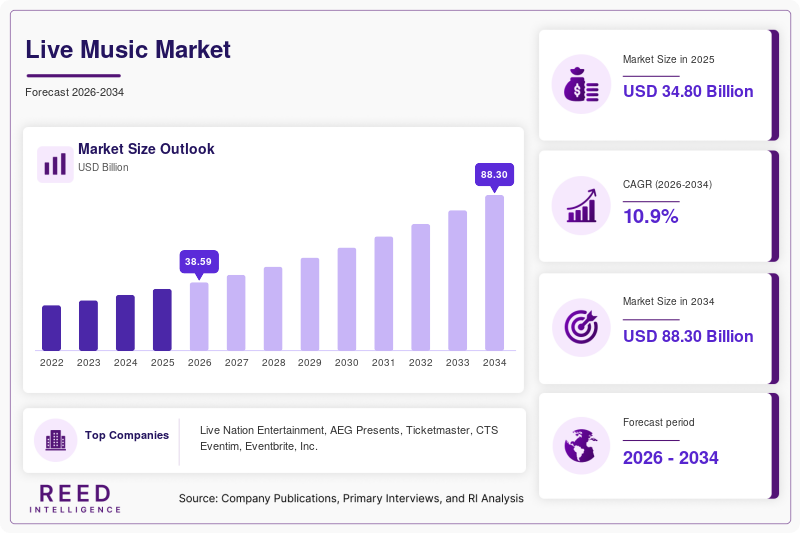
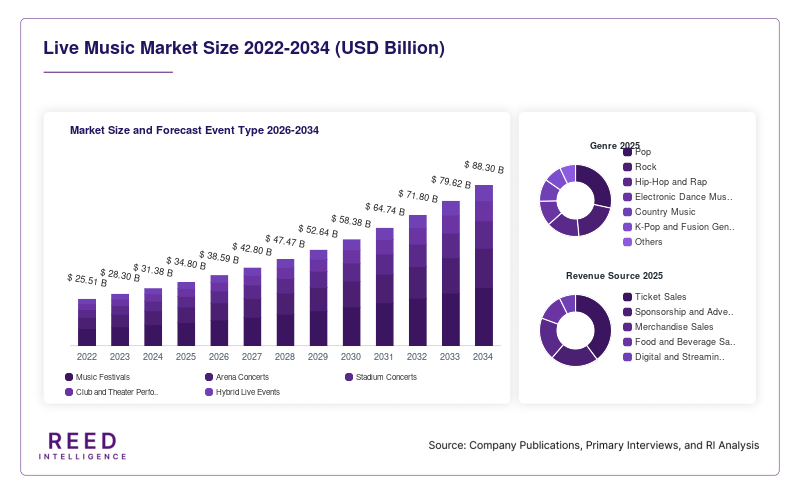
The global Live Music Market size was valued at USD 34.8 billion in 2026 and is projected to reach USD 79.6 billion by 2034, expanding at a CAGR of 10.9% during 2026–2034. The market continues to benefit from the increasing consumer preference for experiential entertainment, rising disposable income, and growing investments in large-scale music festivals and concert infrastructure. Demand for live performances has accelerated as audiences increasingly seek immersive social experiences that cannot be replicated through digital streaming platforms.
The expansion of international touring activities and the growing popularity of multi-genre music festivals have contributed significantly to market growth. Event organizers are leveraging advanced ticketing technologies, mobile applications, and data-driven audience engagement strategies to improve attendance and increase revenue generation. The integration of cashless payment systems, digital ticket verification, and personalized marketing campaigns has further strengthened operational efficiency across the live music ecosystem.
Key Highlights
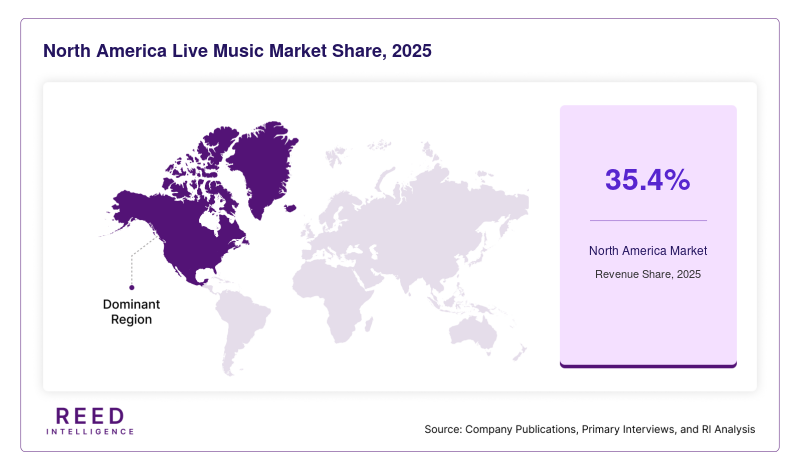
- North America dominated the market with a 35.4% share in 2025.
- while Asia Pacific is expected to grow at the fastest CAGR of 12.8% during 2026–2034.
- By event type, music festivals accounted for the largest share of 39.8%.
- while hybrid live events are projected to grow at a CAGR of 13.9%.
- By genre, pop music events led with a 36.7% share.
- whereas K-pop and international fusion genres are expected to expand at a CAGR of 14.4%.
- By revenue source, ticket sales held the largest share of 48.6%.
- while digital and streaming-integrated revenues are projected to grow at a CAGR of 15.1%.
- The United States remained the dominant country, with market values of USD 8.2 billion in 2024 and USD 8.9 billion in 2025.
Market Trends
Growth of Hybrid Concert Experiences
The live music industry is increasingly adopting hybrid concert formats that combine physical attendance with digital participation. Event organizers are offering live-streamed access, virtual backstage experiences, and interactive audience features to expand reach beyond venue capacity limitations. This approach allows artists to connect with international audiences while creating additional revenue streams through premium digital content. Hybrid events have become particularly attractive for major festivals and arena concerts because they provide greater flexibility for consumers. Organizers are also integrating augmented reality experiences, exclusive online merchandise, and real-time audience interaction tools. These developments are helping improve fan engagement while creating scalable business models that support long-term market growth.
Expansion of Premium and VIP Experiences
Consumer spending patterns indicate growing demand for premium entertainment experiences. Concert organizers are introducing exclusive seating sections, artist meet-and-greet packages, private lounges, and personalized hospitality services. Premium ticket offerings generate higher margins and contribute significantly to overall event profitability. Younger consumers increasingly value memorable experiences over traditional goods, encouraging operators to expand premium service portfolios. Enhanced security, dedicated entrances, luxury amenities, and exclusive content access are becoming standard components of high-value ticket packages. As competition intensifies among major events, differentiated premium experiences are emerging as an important strategy for attracting high-spending attendees and strengthening customer loyalty.
Market Drivers
Rising Consumer Demand for Experiential Entertainment
Consumers are increasingly prioritizing experiences that offer social interaction, emotional connection, and memorable moments. Live music events provide unique entertainment value that digital platforms cannot fully replicate. Concerts, festivals, and artist tours create immersive environments where audiences can engage directly with performers and fellow fans. This shift in spending behavior has encouraged promoters and venue operators to expand event portfolios and invest in enhanced audience experiences. The growing influence of social media has also amplified demand, as attendees frequently share concert experiences online, creating additional visibility and encouraging participation among broader audiences. These factors continue to support robust market growth worldwide.
Growth in Sponsorship and Brand Partnerships
Corporate sponsorship has become a significant growth driver within the live music market. Brands increasingly view concerts and festivals as effective platforms for consumer engagement and experiential marketing. Sponsorship agreements provide event organizers with additional financial resources that can be used to improve production quality, expand marketing campaigns, and attract high-profile performers. Technology companies, beverage brands, automotive manufacturers, and financial institutions are actively investing in music-related partnerships. These collaborations often include exclusive promotional activities, interactive fan zones, and branded experiences that enhance attendee engagement. The increasing value of sponsorship investments is expected to support industry expansion throughout the forecast period.
Market Restraints
Rising Operational and Event Production Costs
The live music market faces challenges associated with increasing operational expenses and event production costs. Organizers must manage rising expenditures related to venue rentals, artist fees, security services, logistics, insurance, transportation, and technical infrastructure. Large-scale festivals require substantial investments in staging, lighting, sound systems, crowd management, and emergency preparedness measures. Inflationary pressures in multiple regions have further increased the cost of labor and event supplies. Smaller promoters and independent organizers often experience difficulty maintaining profitability while keeping ticket prices accessible to consumers. In some cases, elevated operating costs can lead to event cancellations, reduced production quality, or limited artist participation. These financial pressures may restrict market growth in price-sensitive regions and create barriers for new entrants seeking to establish a presence within the industry.
Market Opportunities
Expansion of Emerging Music Markets
Rapid urbanization, growing middle-class populations, and increasing internet penetration are creating opportunities across emerging economies. Countries throughout Asia, Latin America, and parts of Africa are witnessing rising demand for live entertainment experiences. International artists are expanding tour schedules into previously underserved markets, while local performers continue to attract growing audiences. Governments and private investors are also supporting venue development and cultural infrastructure projects that facilitate large-scale events. As disposable incomes increase, consumers are allocating greater portions of their budgets toward entertainment activities. These developments provide substantial opportunities for promoters, venue operators, ticketing platforms, and sponsors seeking long-term growth.
Integration of Advanced Event Technologies
Technological innovation presents significant opportunities for market participants. Artificial intelligence, predictive analytics, facial recognition, and smart ticketing solutions are improving event management efficiency and customer experience. Organizers can leverage data analytics to understand audience preferences, optimize pricing strategies, and personalize marketing campaigns. Mobile applications enable seamless ticket purchasing, navigation, merchandise sales, and fan engagement throughout events. Emerging technologies also support enhanced security, reduced fraud, and streamlined venue operations. As adoption rates increase, technology-driven solutions are expected to create new revenue opportunities while improving profitability and operational effectiveness across the live music industry.
Segmental Analysis
By Event Type
Music festivals represented the dominant subsegment, accounting for approximately 39.8% of market revenue in 2024. Festivals attract large audiences by offering multiple performers, diverse entertainment options, and immersive experiences over several days. Organizers benefit from diversified revenue streams that include ticket sales, sponsorships, food and beverage services, and merchandise. The popularity of destination festivals has also contributed to growth, as attendees increasingly combine travel and entertainment experiences. Large-scale festivals often generate significant economic impact for host cities through tourism, hospitality, and transportation spending, further supporting market expansion.
Hybrid live events are projected to be the fastest-growing subsegment, registering a CAGR of 13.9% through 2034. These events combine physical attendance with digital participation, enabling organizers to reach audiences beyond venue limitations. Growth is supported by advancements in streaming technologies, interactive platforms, and virtual engagement tools. Artists and promoters increasingly view hybrid formats as opportunities to expand global reach while generating additional revenue from digital ticket sales. Enhanced audience accessibility and growing acceptance of online participation are expected to drive continued adoption.
By Genre
Pop music events held the largest share of approximately 36.7% in 2024. The widespread appeal of pop artists across multiple demographic groups supports strong attendance levels and substantial ticket sales. Pop concerts often benefit from extensive media coverage, social media engagement, and sponsorship interest. International touring activities and global fan communities further contribute to market leadership. Major pop performances typically attract large audiences and generate significant merchandise sales, helping organizers maximize event profitability while maintaining broad consumer appeal.
K-pop and international fusion genres are expected to achieve the fastest CAGR of 14.4% during the forecast period. Growing global popularity, strong fan engagement, and digital community development are supporting rapid expansion. Artists within these genres often leverage social media platforms to build international audiences and promote concert tours. Increased cross-cultural collaborations and expanding interest among younger consumers are creating new opportunities for promoters and venue operators. The ability to attract highly engaged fan bases contributes significantly to growth potential.
By Revenue Source
Ticket sales remained the dominant revenue source, accounting for approximately 48.6% of total market revenue in 2024. Despite increasing diversification of income streams, ticket purchases continue to represent the primary source of earnings for organizers and performers. Dynamic pricing strategies, premium seating options, and VIP packages have enhanced revenue generation capabilities. Strong consumer demand for live experiences supports stable ticket sales across concerts, festivals, and touring events. The continued expansion of online ticketing platforms has also improved accessibility and purchasing convenience.
Digital and streaming-integrated revenues are expected to register the fastest CAGR of 15.1% through 2034. The growth of hybrid events, exclusive online content, and virtual participation options is creating new monetization opportunities. Organizers are increasingly offering premium digital access packages, behind-the-scenes content, and interactive experiences to remote audiences. Advances in streaming quality and audience engagement technologies are improving the value proposition of digital participation. These developments are expected to drive sustained growth in non-traditional revenue streams.
Regional Analysis
North America
North America accounted for approximately 35.4% of the global Live Music Market in 2025 and maintained its position as the leading regional market. The region benefits from a mature entertainment ecosystem, extensive venue infrastructure, and strong consumer spending on live experiences. Major music festivals, arena tours, and stadium concerts continue to attract substantial attendance levels. The regional market is projected to expand at a CAGR of 9.7% through 2034, supported by continued investment in premium experiences and advanced event technologies.
The United States remains the dominant country within North America. A key growth factor is the strong presence of global promoters, ticketing companies, and entertainment organizations that continuously innovate event formats and audience engagement strategies. The country's extensive network of venues and established touring infrastructure supports year-round concert activity across multiple genres.
Europe
Europe represented approximately 27.8% of global market revenue in 2025. The region benefits from a rich musical heritage, strong festival culture, and high consumer participation in cultural events. Countries across Western and Northern Europe host internationally recognized festivals that attract attendees from around the world. The market is expected to grow at a CAGR of 9.3% during the forecast period, driven by increasing tourism-linked entertainment spending and continued investments in event infrastructure.
The United Kingdom remains the leading national market in Europe. A unique growth factor is the country's concentration of globally influential music artists and event organizers. The combination of strong domestic demand and international tourism continues to support ticket sales, festival attendance, and sponsorship activity throughout the region.
Asia Pacific
Asia Pacific held approximately 22.1% of the Live Music Market in 2025 and is expected to record the fastest CAGR of 12.8% through 2034. Rapid urbanization, expanding middle-class populations, and growing youth demographics are contributing to strong demand for concerts and festivals. Increased smartphone penetration and social media engagement have accelerated artist visibility and audience participation. Regional governments are also investing in cultural and entertainment infrastructure to support tourism and economic development.
China represents the dominant country within Asia Pacific. A major growth factor is the rapid expansion of large-scale entertainment venues and music festivals across major metropolitan areas. Rising disposable income and growing interest in international artists continue to create favorable conditions for market expansion throughout the country.
Middle East & Africa
The Middle East & Africa region accounted for approximately 7.1% of global revenue in 2025 and is anticipated to grow at a CAGR of 10.6% through 2034. Increasing investments in entertainment infrastructure and tourism diversification initiatives are supporting industry growth. Governments across several countries are promoting cultural events and international performances as part of broader economic development strategies. Enhanced venue development and growing consumer interest in live entertainment are expected to strengthen regional demand.
The United Arab Emirates remains the dominant market within the region. A unique growth factor is the country's strategic focus on becoming a global entertainment and tourism destination. Large-scale events, international artist performances, and luxury entertainment offerings continue to attract both residents and international visitors.
Latin America
Latin America captured approximately 7.6% of the global market in 2025 and is projected to expand at a CAGR of 10.2% during the forecast period. The region benefits from a strong music culture, growing festival attendance, and increasing investments from international event promoters. Rising digital connectivity is improving marketing effectiveness and expanding audience reach. Consumers across major urban centers continue to demonstrate strong interest in both local and international music performances.
Brazil is the leading country within Latin America. One important growth factor is the country's vibrant festival ecosystem, which attracts substantial domestic and international attendance. The popularity of diverse musical genres and strong cultural engagement continue to support market development and revenue generation.
Competitive Landscape
The Live Music Market is characterized by the presence of global event promoters, ticketing providers, venue operators, and entertainment companies competing across multiple regions. Market participants focus on artist partnerships, venue acquisitions, technology integration, and audience engagement initiatives to strengthen their positions. Strategic collaborations between promoters and sponsors remain common as companies seek to enhance event profitability and expand market reach.
Live Nation Entertainment continues to lead the industry due to its extensive global event portfolio, strong artist relationships, and integrated ticketing ecosystem. The company recently expanded its premium concert experience offerings and invested in advanced fan engagement technologies to improve customer retention and event performance.
Other major companies are emphasizing festival expansion, digital ticketing innovation, and venue modernization programs. Competitive differentiation increasingly depends on technology capabilities, sponsorship networks, and the ability to deliver immersive audience experiences across both physical and hybrid event formats.
Key Players
- Live Nation Entertainment
- AEG Presents
- CTS Eventim
- Eventbrite
- Ticketmaster
- Madison Square Garden Entertainment
- Anschutz Entertainment Group
- C3 Presents
- SM Entertainment
- HYBE Corporation
- Front Gate Tickets
- See Tickets
- StubHub
- SJM Concerts
- Goldenvoice
Recent Developments
- Live Nation Entertainment expanded several premium concert hospitality programs across major North American venues to increase high-value customer engagement.
- AEG Presents launched new hybrid event capabilities that integrate live streaming and interactive digital experiences for international audiences.
- CTS Eventim invested in advanced mobile ticketing and fraud prevention technologies to improve customer security and event access efficiency.
- HYBE Corporation expanded global touring operations for multiple artists, increasing concert presence across North America, Europe, and Asia Pacific.
- Oak View Group announced new venue development initiatives focused on enhancing sustainability, digital infrastructure, and audience experience.
Live Music Market Segments
Event Type
- Music Festivals
- Arena Concerts
- Stadium Concerts
- Club and Theater Performances
- Hybrid Live Events
Genre
- Pop
- Rock
- Hip-Hop and Rap
- Electronic Dance Music (EDM)
- Country Music
- K-Pop and Fusion Genres
- Others
Revenue Source
- Ticket Sales
- Sponsorship and Advertising
- Merchandise Sales
- Food and Beverage Sales
- Digital and Streaming Revenues
By Region
- North America
- Europe
- APAC
- Middle East and Africa
- LATAM