LNG Filling Station Market Size, Share & Demand Report By Station Type (Fixed LNG Stations, Mobile LNG Stations), By Application (Heavy-Duty Vehicles, Marine Transport), By End-Use (Transportation & Logistics, Industrial), By Region & Segment Forecasts, 2026–2034
USD 3950
Market Overview
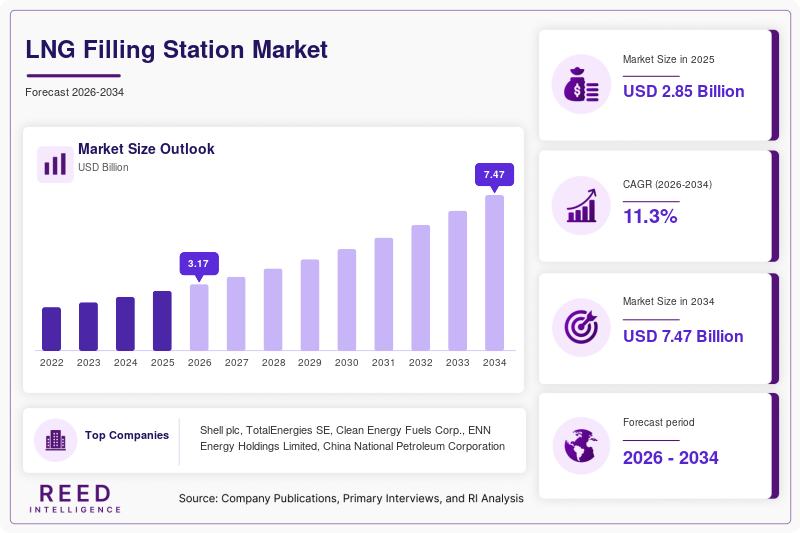
The global LNG Filling Station Market size was valued at approximately USD 2.85 billion in 2026 and is projected to reach USD 6.72 billion by 2034, expanding at a CAGR of 11.3% during the forecast period (2026–2034). The market is experiencing steady expansion due to the increasing transition toward cleaner fuel alternatives in the transportation and logistics sectors. Liquefied natural gas (LNG) is gaining adoption as a lower-emission substitute for diesel in heavy-duty vehicles, particularly in long-haul trucking and maritime applications.
One of the primary global factors supporting market growth is the increasing implementation of emission control regulations across major economies. Governments are focusing on reducing carbon emissions and improving air quality, which has accelerated the development of LNG infrastructure, including refueling stations. Public-private partnerships and investments in natural gas infrastructure have further contributed to the deployment of LNG filling networks, especially in regions with high freight activity.
Key Highlights
- North America dominated the market with a 36.4% share in 2025.
- Asia Pacific is expected to grow at the fastest CAGR of 12.1% during 2026–2034.
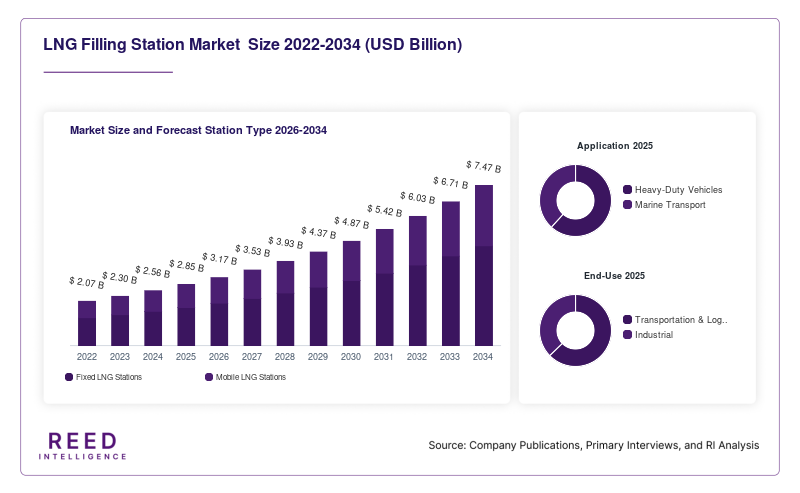
- By station type, fixed LNG stations accounted for the largest share of 57.2%, while mobile LNG stations are projected to grow at a CAGR of 13.4%.
- By application, heavy-duty vehicles led with a 48.9% share, whereas marine transport is expected to expand at a CAGR of 12.7%.
- The United States remained the dominant country, with market values of USD 720 million in 2024 and USD 790 million in 2025.
Market Trends
Expansion of LNG Infrastructure Along Freight Corridors
The expansion of LNG filling infrastructure along key freight corridors is emerging as a major trend in the LNG Filling Station Market. Governments and private stakeholders are increasingly investing in strategically located stations along highways to support long-haul trucking operations. This trend is particularly visible in North America and Europe, where logistics efficiency is critical to economic performance. LNG stations are being integrated into existing fuel networks to ensure operational continuity for fleet operators. Additionally, infrastructure deployment is supported by policy incentives, tax benefits, and funding programs aimed at accelerating low-emission transport systems. The rise in cross-border logistics has further encouraged the standardization of LNG fueling infrastructure, making it easier for fleet operators to adopt LNG-powered vehicles without range concerns.
Integration of Digital Monitoring and Automation Systems
The integration of digital technologies into LNG filling stations is transforming operational efficiency and safety standards. Modern LNG stations are incorporating remote monitoring systems, IoT-based sensors, and automated dispensing technologies to optimize fuel management and reduce downtime. These systems enable real-time tracking of fuel levels, temperature control, and pressure management, which are critical for LNG storage and handling. Automation also reduces human error and enhances safety compliance, especially in high-capacity stations. Furthermore, predictive maintenance solutions are being adopted to minimize operational disruptions and extend equipment lifespan. This trend is expected to improve overall station reliability and attract investments from fleet operators seeking efficient and technologically advanced fueling solutions.
Market Drivers
Increasing Adoption of LNG in Heavy-Duty Transportation
The rising adoption of LNG as an alternative fuel in heavy-duty transportation is a significant driver of the LNG Filling Station Market. LNG-powered trucks offer lower emissions, reduced fuel costs, and improved engine performance compared to conventional diesel vehicles. Fleet operators are increasingly transitioning to LNG to comply with stringent environmental regulations and reduce operational expenses. The growing demand for long-haul logistics and freight transport has further fueled the need for reliable LNG refueling infrastructure. Governments are also supporting this transition through subsidies and incentives for LNG vehicle adoption, which indirectly drives the expansion of LNG filling stations. As more fleet operators shift toward LNG, the demand for accessible and efficient fueling stations continues to rise.
Government Policies Supporting Clean Energy Infrastructure
Supportive government policies and regulatory frameworks are playing a key role in driving the LNG Filling Station Market. Many countries have introduced initiatives aimed at reducing greenhouse gas emissions and promoting cleaner fuels. These initiatives include funding for LNG infrastructure development, tax benefits for LNG station operators, and incentives for adopting LNG-powered vehicles. Additionally, international agreements focused on climate change mitigation have encouraged countries to invest in alternative fuel solutions. The establishment of LNG corridors and the inclusion of LNG in national energy strategies further support market growth. These policy-driven efforts are creating a favorable environment for investments and accelerating the deployment of LNG filling stations globally.
Market Restraint
High Initial Investment and Infrastructure Costs
The high initial investment required for setting up LNG filling stations acts as a major restraint in the LNG Filling Station Market. Establishing an LNG station involves significant capital expenditure, including costs associated with cryogenic storage tanks, dispensing equipment, safety systems, and land acquisition. Additionally, the need for specialized infrastructure to store and transport LNG adds to the overall cost burden. These financial barriers can limit market entry, particularly for small and medium-sized enterprises.
The impact of this restraint is evident in regions with limited financial support or lack of government incentives. For example, in developing economies, the absence of strong policy backing and funding mechanisms can slow down the adoption of LNG infrastructure. Moreover, uncertainties related to return on investment and fluctuating natural gas prices can further discourage investors. The high cost of maintenance and operational complexities also contribute to the challenge. As a result, despite growing demand for LNG as a cleaner fuel, the expansion of LNG filling stations may face constraints unless cost-effective solutions and financial support mechanisms are implemented.
Market Opportunities
Growth in Marine LNG Bunkering Infrastructure
The increasing adoption of LNG as a marine fuel presents a significant opportunity for the LNG Filling Station Market. Maritime transport is under pressure to reduce emissions, leading to the adoption of LNG as a cleaner alternative to conventional bunker fuels. Ports around the world are investing in LNG bunkering infrastructure to support LNG-powered vessels. This creates opportunities for LNG filling station operators to expand into marine fueling services. The development of integrated fueling hubs that serve both land and marine applications is expected to drive market growth. Additionally, international regulations aimed at reducing sulfur emissions in shipping are accelerating the demand for LNG infrastructure in ports.
Expansion in Emerging Economies
Emerging economies offer substantial growth opportunities for the LNG Filling Station Market due to increasing energy demand and rapid industrialization. Countries in Asia Pacific, Latin America, and parts of Africa are investing in natural gas infrastructure to diversify their energy mix and reduce dependence on traditional fuels. The growing logistics and transportation sectors in these regions further drive the demand for LNG fueling stations. Governments are also focusing on developing sustainable transportation systems, which supports LNG adoption. The availability of untapped markets and increasing foreign investments create a favorable environment for market expansion. Companies entering these regions can benefit from first-mover advantages and long-term growth potential.
Segmental Analysis
By Station Type
Fixed LNG stations dominated the LNG Filling Station Market with a 57.2% share in 2024. These stations are widely used due to their high capacity and ability to serve large volumes of vehicles. Fixed stations are typically located along major highways and industrial areas, providing consistent fueling solutions for heavy-duty vehicles. Their infrastructure supports long-term operations and ensures reliability for fleet operators. The demand for fixed stations is driven by their efficiency and ability to handle high traffic volumes, making them essential for large-scale logistics operations.
Mobile LNG stations are expected to be the fastest-growing subsegment, with a CAGR of 13.4% during the forecast period. These stations offer flexibility and can be deployed in remote or underserved areas where fixed infrastructure is not feasible. The growth of mobile stations is driven by the need for temporary fueling solutions and the expansion of LNG infrastructure in emerging markets. Their lower initial investment compared to fixed stations also makes them an attractive option for new market entrants.
By Application
Heavy-duty vehicles accounted for the largest share of 48.9% in 2024, driven by the increasing adoption of LNG in trucking and logistics. LNG-powered trucks offer cost savings and reduced emissions, making them a preferred choice for fleet operators. The growing demand for efficient transportation solutions further supports this segment's dominance. The availability of LNG filling stations along major routes enhances the feasibility of LNG adoption in this segment.
Marine transport is expected to grow at the fastest CAGR of 12.7% during the forecast period. The adoption of LNG as a marine fuel is driven by environmental regulations and the need to reduce emissions in shipping. The development of LNG bunkering infrastructure in ports supports this growth. Additionally, the increasing number of LNG-powered vessels contributes to the demand for LNG filling stations in marine applications.
By End-Use
Transportation and logistics dominated the market with a 52.3% share in 2024, driven by the high demand for fuel-efficient and low-emission solutions. LNG is increasingly used in freight transport, public transportation, and industrial logistics. The expansion of logistics networks and e-commerce activities further supports this segment's growth. The availability of LNG infrastructure plays a crucial role in enabling this adoption.
Industrial use is expected to be the fastest-growing subsegment, with a CAGR of 11.9%. Industries are adopting LNG as a cleaner energy source for operations, which drives the demand for LNG filling stations. The growth of industrial applications is supported by the need for sustainable energy solutions and cost efficiency. The expansion of manufacturing activities in emerging economies further contributes to this segment's growth.
Regional Analysis
North America
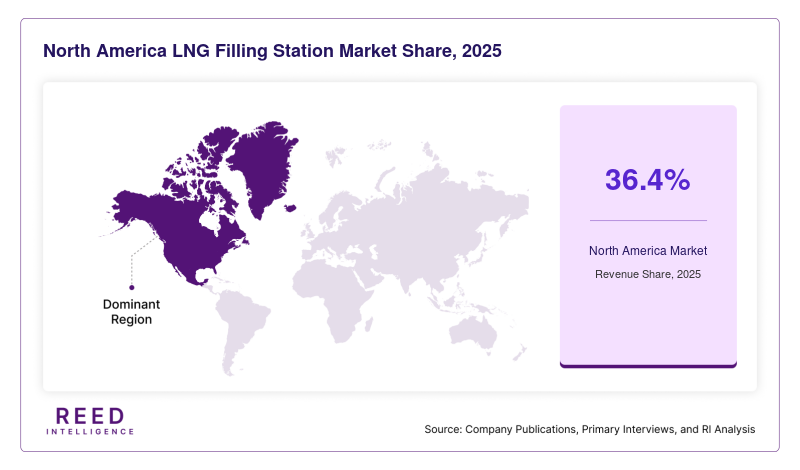
North America held a dominant share of 36.4% in the LNG Filling Station Market in 2025 and is expected to maintain steady growth with a CAGR of 10.5% during the forecast period. The region benefits from well-established natural gas infrastructure and strong demand from the transportation sector. The presence of major logistics companies and extensive highway networks supports the deployment of LNG filling stations. Additionally, increasing investments in clean energy solutions contribute to market growth.
The United States remains the dominant country in this region due to its advanced infrastructure and supportive policies. A unique growth factor is the expansion of LNG corridors for long-haul trucking, which ensures consistent fueling availability across major routes. This initiative enhances operational efficiency and encourages fleet operators to adopt LNG-powered vehicles.
Europe
Europe accounted for 27.8% of the LNG Filling Station Market in 2025 and is projected to grow at a CAGR of 11.0%. The region is driven by strict environmental regulations and a strong focus on reducing carbon emissions. The development of LNG infrastructure is supported by regional policies and funding programs aimed at promoting alternative fuels.
Germany is the dominant country in Europe, supported by its strong industrial base and commitment to sustainability. A unique growth factor is the integration of LNG stations with renewable energy systems, which enhances overall energy efficiency and reduces environmental impact.
Asia Pacific
Asia Pacific is expected to grow at the fastest CAGR of 12.1% during the forecast period, with a market share of 22.5% in 2025. Rapid industrialization and increasing demand for energy-efficient transportation solutions drive market growth in this region. Governments are investing heavily in LNG infrastructure to support economic development.
China dominates the Asia Pacific market due to its large transportation sector and government initiatives promoting clean energy. A unique growth factor is the large-scale deployment of LNG-powered trucks, which significantly increases the demand for LNG filling stations.
Middle East & Africa
The Middle East & Africa region held a market share of 7.1% in 2025 and is projected to grow at a CAGR of 9.8%. The region's growth is driven by increasing investments in energy infrastructure and efforts to diversify energy sources. LNG is gaining attention as a viable alternative fuel.
Saudi Arabia leads the market in this region, supported by its strong energy sector. A unique growth factor is the development of LNG infrastructure to support industrial and transportation applications, which enhances energy efficiency and reduces emissions.
Latin America
Latin America accounted for 6.2% of the LNG Filling Station Market in 2025 and is expected to grow at a CAGR of 10.2%. The region is witnessing increased adoption of LNG due to rising fuel costs and environmental concerns. Investments in natural gas infrastructure are supporting market growth.
Brazil is the dominant country in Latin America, driven by its expanding transportation sector. A unique growth factor is the adoption of LNG in public transportation systems, which contributes to reduced emissions and improved fuel efficiency.
Competitive Landscape
The LNG Filling Station Market is moderately fragmented, with several global and regional players competing based on infrastructure development, technological innovation, and strategic partnerships. The top five companies include Shell plc, TotalEnergies SE, Clean Energy Fuels Corp., ENN Energy Holdings Limited, and China National Petroleum Corporation.
Shell plc is considered a leading player due to its extensive LNG infrastructure and global presence. The company focuses on expanding its LNG fueling network and investing in advanced technologies to enhance operational efficiency. A recent development includes the expansion of its LNG station network in Europe to support cross-border transportation.
Other companies are focusing on partnerships and collaborations to strengthen their market position. Investments in research and development, along with the adoption of digital technologies, are key strategies adopted by market players to remain competitive.
Key Players
Recent Developments
- In 2025, Shell plc expanded its LNG fueling network across Europe to support long-haul trucking routes.
- In 2024, TotalEnergies SE partnered with logistics companies to develop LNG stations in key freight corridors.
- In 2025, Clean Energy Fuels Corp. launched new LNG stations in North America to meet rising demand from heavy-duty vehicles.
LNG Filling Station Market Segments
Station Type
- Fixed LNG Stations
- Mobile LNG Stations
Application
- Heavy-Duty Vehicles
- Marine Transport
End-Use
- Transportation & Logistics
- Industrial
By Region
- North America
- Europe
- APAC
- Middle East and Africa
- LATAM