Lollipop Market Size, Share & Demand Report By Product Type (Hard Candy Lollipops, Filled Lollipops, Sugar-Free Lollipops, Functional Lollipops), By Flavor Type (Fruit Flavors, Chocolate Flavors, Mint Flavors, Exotic & Fusion Flavors), By Distribution Channel (Supermarkets & Hypermarkets, Convenience Stores, Specialty Candy Stores, Online Retail, Others) By Region & Segment Forecasts, 2026–2034
USD 3950
Market Overview
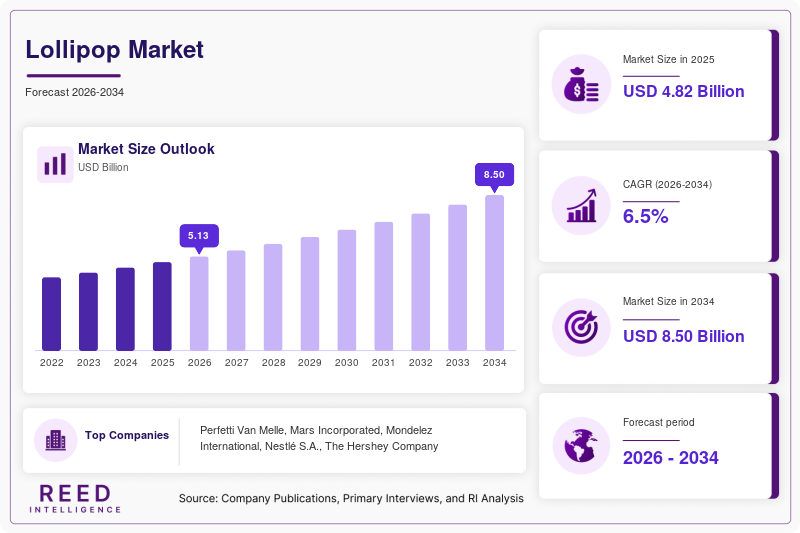
The global Lollipop Market size was valued at USD 4.82 billion in 2026 and is projected to reach USD 7.96 billion by 2034, expanding at a CAGR of 6.5% during the forecast period. The market continues to evolve as confectionery manufacturers introduce innovative flavors, low-sugar variants, functional candy ingredients, and premium packaging formats to attract consumers across different age groups. Lollipops remain one of the most recognizable confectionery products due to their affordability, portability, long shelf life, and wide availability across supermarkets, convenience stores, specialty candy stores, and online retail channels. Increased demand for impulse-based snacks and novelty confectionery products has supported consistent market expansion in both developed and emerging economies.
A major global factor supporting market growth is the rising popularity of premium and customized confectionery products among younger consumers. Manufacturers are investing in fruit-based ingredients, natural colorants, vitamin-infused candy formulations, and seasonal product launches to improve consumer engagement and brand differentiation. The growing penetration of organized retail and e-commerce platforms has also enabled international candy brands to expand their geographic presence. In addition, social media marketing campaigns and character-based licensing agreements continue to strengthen demand among children and teenagers.
Key Highlights
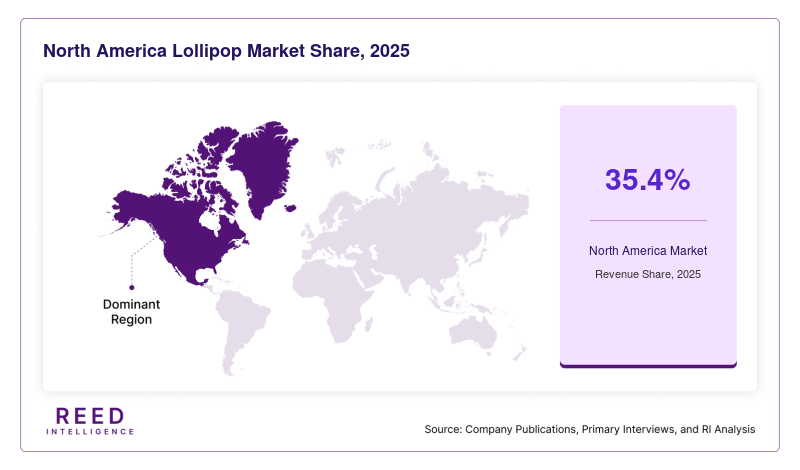
- North America dominated the market with a 35.4% share in 2025.
- Asia Pacific is expected to grow at the fastest CAGR of 8.2% during 2026–2034.
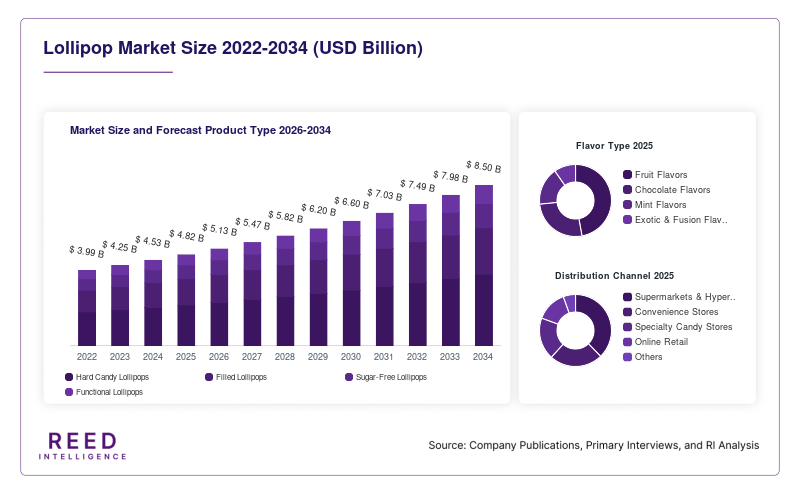
- By product type, hard candy lollipops accounted for the largest share of 41.8%, while sugar-free lollipops are projected to grow at a CAGR of 9.1%.
- By flavor type, fruit flavors led with a 46.3% share, whereas exotic and fusion flavors are expected to expand at a CAGR of 8.8%.
- By distribution channel, supermarkets and hypermarkets held a dominant share of 39.7%, while online retail is projected to grow at a CAGR of 10.4%.
- The United States remained the dominant country, with market values of USD 1.12 billion in 2024 and USD 1.20 billion in 2025.
Market Trends
Rising Demand for Functional and Health-Conscious Confectionery
Consumer preferences in the Lollipop Market are gradually shifting toward healthier confectionery alternatives with reduced sugar, organic ingredients, and functional nutritional benefits. Manufacturers are launching lollipops fortified with vitamins, herbal extracts, collagen, probiotics, and immunity-support ingredients to appeal to health-conscious consumers and parents seeking better snack choices for children. Sugar-free and low-calorie products are also gaining traction as awareness regarding obesity and diabetes increases globally. Brands are focusing on natural fruit flavors, plant-based sweeteners, and clean-label formulations to improve product transparency and consumer trust. The premium confectionery category has particularly benefited from this trend, especially in North America and Europe where consumers actively evaluate ingredient labels before purchasing.
Expansion of Innovative Packaging and Personalized Candy Products
The increasing use of creative packaging formats and personalized confectionery offerings is shaping product development strategies in the global market. Manufacturers are introducing glow-stick lollipops, character-themed candy, dual-flavor products, and color-changing variants to improve consumer engagement. Seasonal packaging associated with festivals, birthdays, and gifting occasions is also supporting sales growth across retail channels. Personalized candy products designed for weddings, corporate promotions, and event gifting have created new revenue opportunities for confectionery brands. In addition, digital printing technology and small-batch production capabilities have enabled manufacturers to deliver customized packaging with lower operational complexity. This trend is particularly strong among online retailers and premium candy brands targeting younger consumers and social media-driven purchasing behavior.
Market Drivers
Growing Impulse Purchasing Across Retail Channels
The expansion of convenience stores, supermarkets, entertainment venues, and vending machine networks has significantly increased impulse purchases within the Lollipop Market. Lollipops are low-cost confectionery products that are commonly positioned near checkout counters and high-traffic retail spaces to encourage spontaneous consumer purchases. This retail strategy continues to support strong product visibility and recurring demand. Rapid urbanization and increasing disposable income levels in emerging economies are also contributing to higher confectionery consumption. Manufacturers are strengthening retail partnerships and introducing smaller pack sizes to improve accessibility among price-sensitive consumers. The strong presence of lollipops in cinemas, amusement parks, airports, and school-adjacent retail locations continues to create stable demand across both developed and developing regions.
Increasing Product Innovation and Flavor Diversification
Product innovation remains a major growth driver within the global market as confectionery brands compete through differentiated flavors, textures, and sensory experiences. Manufacturers are introducing tropical fruit blends, spicy flavors, layered candy formats, and fizzy centers to maintain consumer interest and encourage repeat purchases. Seasonal and limited-edition products have become important marketing tools for boosting brand engagement and retail traffic. Companies are also incorporating interactive elements such as gum-filled centers, sour coatings, and color transformation effects to improve appeal among children and teenagers. Flavor diversification has enabled manufacturers to target regional taste preferences more effectively, particularly in Asia Pacific and Latin America. Continuous product development investments are expected to sustain long-term market expansion and strengthen brand loyalty.
Market Restraint
Rising Health Concerns Related to Sugar Consumption
Growing awareness regarding excessive sugar consumption and its association with obesity, diabetes, and dental problems continues to restrain the growth of the Lollipop Market. Public health campaigns and stricter food labeling regulations in several countries are encouraging consumers to reduce their intake of sugary confectionery products. Parents are becoming increasingly selective about children’s snack choices, particularly in urban markets where nutritional awareness is high. Regulatory authorities in some countries have introduced sugar taxes and advertising restrictions targeting confectionery products marketed toward children. These developments have created operational challenges for traditional candy manufacturers that rely heavily on sugar-based formulations. Although companies are investing in sugar-free and natural ingredient alternatives, reformulation costs and taste adaptation challenges remain significant concerns. Smaller manufacturers with limited research capabilities often struggle to compete with established brands that can rapidly innovate healthier product variants and comply with evolving food safety standards.
Market Opportunities
Growing Demand for Premium and Artisanal Candy Products
The premium confectionery segment presents a major growth opportunity for companies operating in the Lollipop Market. Consumers are increasingly willing to spend more on handcrafted, gourmet, and artisanal candy products featuring organic ingredients, unique flavors, and premium packaging. Luxury confectionery brands are introducing products with exotic fruits, honey infusions, edible flowers, and chocolate coatings to differentiate themselves in competitive retail environments. Demand for gift-oriented candy collections has also increased during festive seasons and corporate events. Premium products often deliver higher profit margins for manufacturers while supporting stronger brand positioning. The expansion of specialty candy stores and online gifting platforms is expected to create additional growth opportunities for premium lollipop manufacturers over the forecast period.
Expansion of E-Commerce and Digital Marketing Strategies
The rapid growth of e-commerce platforms and digital retail ecosystems is creating favorable opportunities for market participants. Online channels allow confectionery manufacturers to reach consumers in geographically diverse markets without extensive physical retail investments. Social media campaigns, influencer partnerships, and interactive product promotions are increasingly driving consumer engagement and online purchases. Subscription-based candy boxes and personalized confectionery gifting services are also gaining popularity among younger consumers. Small and medium-sized candy producers are leveraging digital platforms to launch limited-edition products and directly connect with niche customer groups. The increasing use of mobile commerce applications and digital payment systems in emerging economies is expected to strengthen online sales growth within the Lollipop Market throughout the forecast period.
Segmental Analysis
By Product Type
Hard candy lollipops represented the dominant product type segment and accounted for 41.8% of the global market share in 2024. The segment continues to maintain strong demand due to its affordability, long shelf life, and broad consumer appeal across different age groups. Traditional hard candy variants are widely distributed through supermarkets, convenience stores, vending machines, and entertainment venues, making them highly accessible to consumers. Manufacturers frequently introduce new fruit flavors, layered color combinations, and novelty packaging to sustain product visibility and encourage repeat purchases. The category also benefits from lower manufacturing complexity compared to filled or functional confectionery products. Strong demand from impulse buyers and the popularity of individually wrapped candy products continue to support segment growth in both developed and emerging markets.
Sugar-free lollipops are projected to register the fastest CAGR of 9.1% during the forecast period due to increasing consumer awareness regarding health and wellness. The segment is benefiting from growing concerns associated with obesity, diabetes, and excessive sugar intake. Manufacturers are incorporating natural sweeteners such as stevia, xylitol, and monk fruit extracts to improve product appeal while maintaining flavor quality. Parents seeking healthier snack alternatives for children are contributing significantly to demand growth. Retailers are also allocating greater shelf space to functional confectionery products with reduced calorie content and clean-label ingredients. In addition, healthcare-oriented marketing campaigns and dentist-recommended candy alternatives are supporting consumer confidence in sugar-free confectionery products. Continuous advancements in sweetener technologies are expected to strengthen the segment’s long-term market potential.
By Flavor Type
Fruit-flavored lollipops held the largest share of the market in 2024, accounting for 46.3% of global revenue. Consumers consistently prefer fruit flavors because of their familiarity, broad availability, and compatibility with various confectionery formulations. Strawberry, orange, watermelon, mango, and mixed berry flavors remain particularly popular among children and teenagers. Manufacturers frequently use fruit-based themes in promotional campaigns to create a perception of freshness and natural taste appeal. The segment also benefits from seasonal product launches and tropical flavor assortments targeted toward regional consumer preferences. Fruit-flavored products are widely accepted across both premium and economy price categories, enabling manufacturers to maintain high sales volumes across different retail environments. Strong consumer demand for colorful and visually appealing confectionery products continues to support the expansion of this segment.
Exotic and fusion flavors are expected to witness the fastest CAGR of 8.8% during the forecast period as consumers increasingly seek unique sensory experiences and experimental confectionery products. Manufacturers are launching combinations such as chili-mango, lychee-rose, cola-lemon, and yogurt-berry blends to differentiate themselves in competitive retail markets. Younger consumers are particularly attracted to products with unexpected flavor profiles and interactive taste experiences. Social media trends and digital product reviews have amplified interest in limited-edition and regionally inspired confectionery products. Premium candy brands are also leveraging international flavors and culinary influences to strengthen product positioning among urban consumers. The growing influence of global food culture and travel-inspired snacking preferences is expected to further support the adoption of exotic flavor combinations in the coming years.
By Distribution Channel
Supermarkets and hypermarkets accounted for the largest distribution channel share of 39.7% in 2024 due to their strong retail presence and high product visibility. These retail formats provide consumers with access to a wide variety of confectionery brands, packaging sizes, and promotional discounts in a single shopping location. Manufacturers prioritize supermarket distribution because of the opportunity to attract impulse purchases through strategic shelf placement near checkout counters. Large retail chains also support bulk purchasing and seasonal promotional campaigns, particularly during festivals and holiday periods. Consumers often prefer supermarkets for confectionery purchases because they can compare multiple brands and product variants before making purchasing decisions. The availability of premium and imported candy products within organized retail environments has further strengthened the dominance of this segment.
Online retail is projected to expand at the fastest CAGR of 10.4% throughout the forecast period owing to increasing digital commerce adoption and changing consumer purchasing behavior. E-commerce platforms provide manufacturers with direct access to consumers while enabling efficient product customization and targeted promotional strategies. Subscription candy boxes, personalized gifting products, and limited-edition launches have become increasingly popular through digital retail channels. Social media advertising and influencer marketing campaigns are also contributing to higher online engagement and improved brand visibility. Consumers appreciate the convenience of doorstep delivery and the availability of specialty confectionery products that may not be accessible through traditional retail outlets. The rapid expansion of mobile payment systems and digital retail infrastructure in emerging economies is expected to further accelerate segment growth.
Regional Analysis
North America
North America accounted for 35.4% of the global Lollipop Market share in 2025 and is expected to maintain steady growth during the forecast period at a CAGR of 5.8%. The region benefits from strong consumer spending on confectionery products, extensive retail distribution networks, and high product visibility across supermarkets and convenience stores. Demand for premium and sugar-free lollipops has increased considerably due to changing dietary preferences and growing awareness regarding healthier snack alternatives. Seasonal candy purchases during Halloween, Christmas, and Easter also contribute significantly to overall regional revenue generation.
The United States remains the dominant country within North America due to the strong presence of leading confectionery manufacturers and established retail infrastructure. One unique growth factor supporting the market is the increasing popularity of novelty and licensed candy products linked to entertainment franchises and gaming brands. Companies are actively collaborating with movie studios and digital content creators to launch themed candy collections that appeal to younger consumers. The country also benefits from advanced packaging innovation capabilities and strong e-commerce penetration.
Europe
Europe represented 26.1% of the global market in 2025 and is projected to expand at a CAGR of 5.6% through 2034. Consumer demand for clean-label confectionery products and premium candy assortments continues to shape the regional market landscape. European consumers often prefer products with natural fruit extracts, reduced artificial coloring, and sustainable packaging solutions. The region has also witnessed rising interest in vegan and allergen-free confectionery products. Established retail chains and specialty candy stores support strong product accessibility across both urban and rural areas.
Germany leads the European market due to its strong confectionery manufacturing base and export-oriented production capabilities. A unique factor driving regional growth is the increasing demand for sustainable and environmentally responsible packaging materials. Consumers in Germany and neighboring countries are increasingly evaluating packaging recyclability and ingredient sourcing before purchasing confectionery products. Manufacturers are responding by introducing biodegradable wrappers and paper-based packaging formats. The region also benefits from consistent innovation in gourmet candy products and premium gifting assortments.
Asia Pacific
Asia Pacific held 22.8% of the global market share in 2025 and is anticipated to register the fastest CAGR of 8.2% during the forecast period. Rapid urbanization, rising disposable incomes, and expanding youth populations are driving strong confectionery demand across major economies in the region. International candy brands are increasing their investments in localized flavors and affordable product formats to strengthen market penetration. Retail modernization and the rapid expansion of convenience store networks are also improving product accessibility in both metropolitan and semi-urban areas.
China dominates the Asia Pacific market due to its large consumer base and extensive food manufacturing industry. One unique growth factor supporting the regional market is the increasing influence of social commerce and live-stream retailing on confectionery purchases. Digital shopping festivals and influencer-led product promotions have significantly improved consumer awareness of premium and imported candy products. Domestic manufacturers are also introducing culturally inspired flavors and festival-oriented packaging to strengthen consumer engagement. The strong growth of e-commerce platforms continues to support regional expansion.
Middle East & Africa
The Middle East & Africa region accounted for 8.1% of the global market in 2025 and is projected to grow at a CAGR of 6.3% during the forecast period. Expanding retail infrastructure, increasing youth demographics, and rising tourism activities are supporting confectionery demand across the region. International candy manufacturers are strengthening their presence through regional distribution partnerships and product localization strategies. Demand for individually wrapped candy products remains strong due to consumer preference for convenient and hygienic snack formats. Urban retail expansion in Gulf countries has further improved the availability of imported confectionery brands.
Saudi Arabia represents the leading market within the region owing to high consumer spending and rapid expansion of organized retail channels. A unique growth factor driving regional demand is the increasing popularity of premium confectionery gifting during religious festivals and family gatherings. Consumers are increasingly purchasing decorative candy collections and customized gift packaging for celebratory occasions. The growth of modern shopping malls and entertainment centers has also improved impulse purchasing opportunities for confectionery brands. Rising investments in food distribution logistics continue to strengthen regional supply chains.
Latin America
Latin America captured 7.6% of the global Lollipop Market share in 2025 and is expected to grow at a CAGR of 6.0% through 2034. The market is supported by increasing demand for affordable confectionery products among younger consumers and middle-income households. Regional manufacturers are actively introducing tropical fruit flavors and culturally inspired candy formats to align with local taste preferences. Convenience stores and neighborhood retail outlets continue to play a critical role in product distribution, particularly in densely populated urban areas.
Brazil remains the dominant country in Latin America due to its large confectionery manufacturing industry and extensive domestic consumer base. One unique growth factor supporting the market is the rising popularity of locally sourced fruit ingredients in candy production. Manufacturers are leveraging regional agricultural resources to create differentiated flavors using guava, passion fruit, mango, and acai. This strategy supports product innovation while reducing raw material dependency on imports. Expanding youth-oriented marketing campaigns and promotional pricing strategies are also strengthening regional demand.
Competitive Landscape
The global Lollipop Market is moderately fragmented, with multinational confectionery companies competing alongside regional candy manufacturers and artisanal producers. Leading companies are focusing on flavor innovation, premium product launches, sustainable packaging solutions, and digital marketing campaigns to strengthen their competitive positioning. Strategic partnerships with retail chains and e-commerce platforms remain important for expanding geographic reach and improving product visibility. Companies are also investing in healthier confectionery alternatives, including sugar-free and functional candy products, to address changing consumer preferences.
Perfetti Van Melle remains one of the leading participants in the market due to its extensive global distribution network and diversified confectionery portfolio. The company recently expanded its fruit-flavored lollipop product line with natural ingredient formulations and recyclable packaging initiatives to support sustainability objectives. Other major companies are actively pursuing acquisitions, regional manufacturing expansion, and product customization strategies to enhance market share. Competitive intensity is expected to increase further as premium confectionery demand and online retail adoption continue to grow across emerging economies.
Key Players
- Perfetti Van Melle
- Mars Incorporated
- Mondelez International
- Nestle S.A.
- The Hershey Company
- Chupa Chups
- Tootsie Roll Industries
- Ferrero Group
- Colombina S.A.
- Arcor Group
- Meiji Holdings Co., Ltd.
- Lotte Confectionery
- August Storck KG
- Fazer Group
- Yildiz Holding
Recent Developments
- In March 2026, Perfetti Van Melle introduced a new range of vitamin-infused sugar-free lollipops targeting health-conscious consumers across Europe and North America.
- In September 2025, The Hershey Company expanded its confectionery manufacturing facility in Mexico to strengthen regional supply capabilities and improve product distribution efficiency across Latin America.
- In January 2026, Chupa Chups launched limited-edition fusion-flavor lollipops featuring tropical fruit and spicy flavor combinations aimed at younger consumers in Asia Pacific.
- In July 2025, Mondelez International partnered with online retail platforms to launch personalized candy gifting solutions with customizable packaging options for festive and corporate occasions.
- In November 2025, Nestle S.A. introduced recyclable paper-based wrappers for selected confectionery products as part of its broader sustainable packaging initiative.
Lollipop Market Segments
Product Type
- Hard Candy Lollipops
- Filled Lollipops
- Sugar-Free Lollipops
- Functional Lollipops
Flavor Type
- Fruit Flavors
- Chocolate Flavors
- Mint Flavors
- Exotic & Fusion Flavors
Distribution Channel
- Supermarkets & Hypermarkets
- Convenience Stores
- Specialty Candy Stores
- Online Retail
- Others
By Region
- North America
- Europe
- APAC
- Middle East and Africa
- LATAM