Mainline And Lateral Inspection Cameras Market Size, Share & Demand Report By Product Type (Crawler Camera Systems, Push Camera Systems, Pan and Tilt Cameras, Portable Inspection Cameras, Robotic Inspection Systems), By Application (Municipal Sewer Inspection, Industrial Pipeline Inspection, Stormwater Drain Inspection, Residential Drain Inspection, Oil and Gas Pipeline Inspection), By End Use (Municipal Utilities, Industrial Facilities, Commercial Infrastructure, Residential Service Providers,
USD 3950
Market Overview
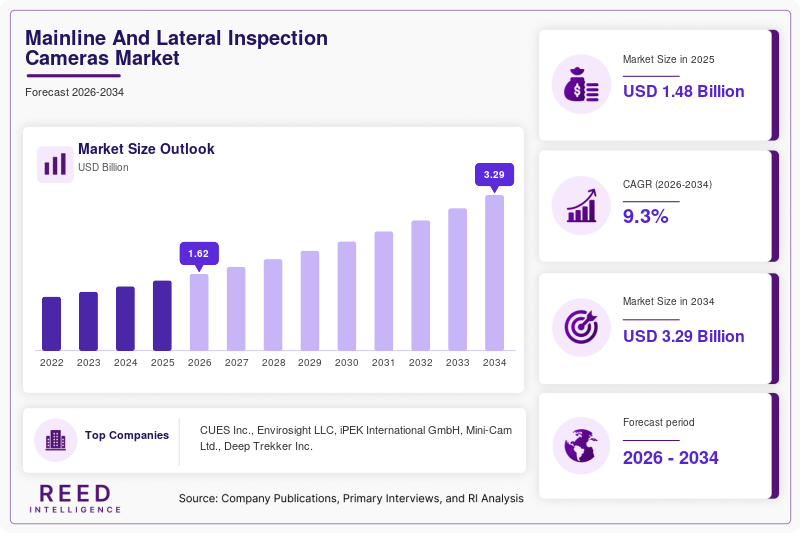
The global Mainline And Lateral Inspection Cameras Market size was valued at USD 1.48 billion in 2026 and is projected to reach USD 3.02 billion by 2034, expanding at a CAGR of 9.3% during the forecast period. The market is witnessing stable growth due to rising investments in underground utility inspection, aging wastewater infrastructure, and increasing adoption of smart sewer monitoring technologies across municipal and industrial applications. Inspection camera systems are increasingly deployed to identify blockages, cracks, corrosion, and pipeline defects in sewer and drainage systems. Municipal authorities and private utility contractors are adopting advanced robotic inspection technologies to reduce maintenance costs and improve operational efficiency.
A major global factor supporting market expansion is the increasing focus on urban infrastructure rehabilitation. Governments across developed and developing economies are investing in sewer modernization and underground utility management to minimize water leakage, environmental contamination, and pipeline failures. The integration of AI-enabled defect analysis, high-definition imaging, and remote-controlled crawler systems has also improved inspection accuracy and reduced manual intervention. Growing construction activities in urban areas and expansion of smart city projects are further increasing the demand for mainline and lateral inspection camera systems.
Key Highlights
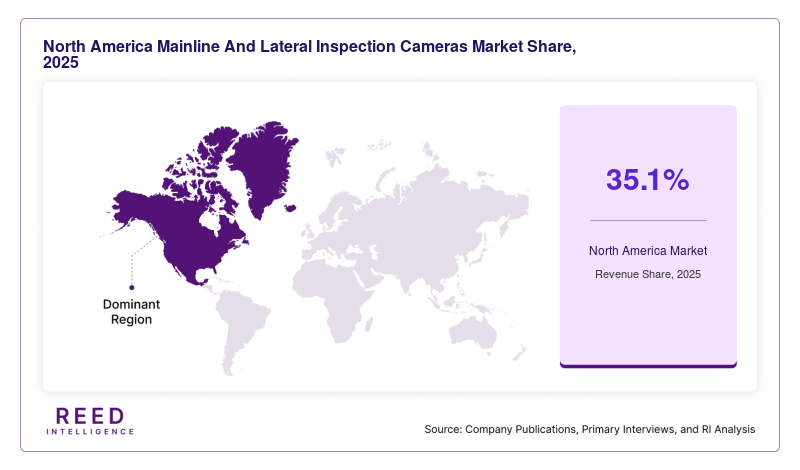
- North America dominated the market with a 35.1% share in 2025.
- Asia Pacific is expected to grow at the fastest CAGR of 10.8% during 2026–2034.
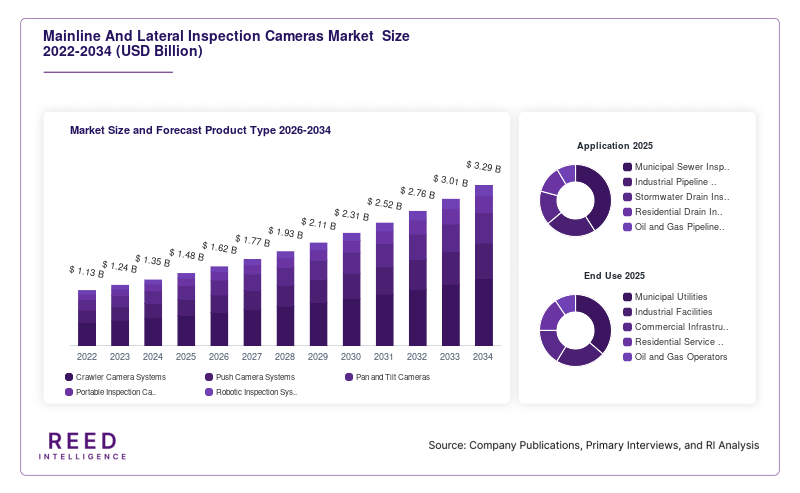
- By product type, crawler camera systems accounted for the largest share of 39.4%, while push camera systems are projected to grow at a CAGR of 11.3%.
- By application, municipal sewer inspection led with a 44.8% share, whereas industrial pipeline inspection is expected to expand at a CAGR of 10.9%.
- The United States remained the dominant country, with market values of USD 430 million in 2024 and USD 472 million in 2025.
Market Trends
Integration of AI-Based Inspection and Reporting Technologies
The adoption of artificial intelligence and machine learning technologies is becoming a significant trend in the Mainline And Lateral Inspection Cameras Market. Inspection camera manufacturers are increasingly integrating automated defect recognition systems into inspection platforms to improve operational efficiency and reduce analysis time. AI-powered software can identify cracks, joint displacements, corrosion, grease accumulation, and root intrusion with greater consistency compared to manual inspection methods. Municipal utility departments and private contractors are using these systems to generate standardized inspection reports and prioritize maintenance activities more effectively.
Cloud connectivity and digital reporting platforms are also improving collaboration between field technicians and utility managers. Real-time data transmission allows operators to review inspection footage remotely and make faster maintenance decisions. The use of advanced analytics is helping municipalities reduce unexpected pipeline failures and optimize asset management strategies. Demand for AI-enabled inspection systems is increasing in developed markets where infrastructure operators are focusing on predictive maintenance and long-term operational cost reduction.
Growing Adoption of Compact and Portable Inspection Systems
Compact and portable inspection systems are gaining traction across residential, commercial, and municipal applications due to their ease of use and lower operational requirements. Smaller inspection cameras equipped with high-definition imaging, flexible push rods, and wireless connectivity are increasingly preferred for lateral pipeline inspection and confined space applications. Service providers are adopting lightweight systems that can be transported easily and deployed quickly in urban maintenance operations.
Portable systems are also becoming popular among small and medium-sized inspection contractors due to lower acquisition costs and simplified maintenance requirements. Manufacturers are introducing battery-powered systems with enhanced mobility and longer operational runtime to support field inspections in remote locations. The increasing use of portable inspection systems in building drainage networks, residential sewer maintenance, and industrial facilities is contributing to market expansion. Demand is particularly rising in emerging economies where utility contractors require affordable and flexible inspection solutions.
Market Drivers
Expansion of Municipal Wastewater Infrastructure Projects
Increasing investments in municipal wastewater infrastructure projects are driving demand for mainline and lateral inspection camera systems worldwide. Aging sewer networks in urban regions require regular monitoring to prevent pipe failures, sewage overflows, and environmental contamination. Governments and municipal agencies are allocating higher budgets for pipeline rehabilitation and inspection activities to improve water management efficiency. Inspection camera systems help operators detect structural defects and maintenance requirements without extensive excavation, reducing operational disruptions and repair costs.
Urban population growth is also increasing pressure on wastewater management systems, especially in densely populated cities. Municipal authorities are deploying robotic inspection systems to improve sewer maintenance efficiency and comply with environmental regulations. In many developed economies, utility operators are transitioning from reactive maintenance approaches to preventive asset management strategies. This shift is increasing the adoption of advanced inspection technologies capable of delivering accurate pipeline condition assessments and digital documentation.
Rising Demand for Non-Destructive Inspection Technologies
The growing preference for non-destructive inspection methods is another major driver supporting the Mainline And Lateral Inspection Cameras Market. Traditional excavation-based inspection techniques often involve high labor costs, traffic disruption, and infrastructure damage. Inspection cameras provide a safer and more cost-effective alternative by enabling remote visual assessment of underground pipelines and drainage systems.
Industrial operators and municipal contractors are increasingly adopting robotic crawler systems and push cameras to inspect hard-to-reach pipeline networks. The demand for non-destructive technologies is rising across industries such as oil and gas, chemicals, food processing, and manufacturing, where uninterrupted pipeline operations are essential. Technological improvements in camera resolution, lighting systems, and navigation capabilities are enhancing inspection accuracy and expanding application areas. Growing awareness regarding workplace safety and environmental protection is further encouraging the adoption of remote inspection systems across multiple industries.
Market Restraint
High Initial Investment and Maintenance Costs
High equipment acquisition and maintenance costs remain a key restraint affecting the growth of the Mainline And Lateral Inspection Cameras Market. Advanced robotic crawler systems equipped with HD cameras, automated reporting software, and remote-control capabilities require significant capital investment. Small utility contractors and municipal departments with limited budgets often face challenges in adopting technologically advanced inspection systems. In developing economies, infrastructure maintenance spending remains uneven, which limits the widespread adoption of premium inspection technologies.
In addition to initial equipment costs, regular maintenance and calibration requirements increase long-term operational expenses. Inspection systems operating in harsh underground environments are exposed to water, chemicals, debris, and physical impact, which can affect equipment durability and increase repair frequency. Training requirements for operators also add to implementation costs, particularly for sophisticated robotic systems with advanced software integration. Smaller service providers may continue relying on conventional inspection methods due to cost limitations, slowing market penetration in price-sensitive regions.
Market Opportunities
Increasing Smart City and Underground Utility Monitoring Projects
The expansion of smart city initiatives is creating strong growth opportunities for the Mainline And Lateral Inspection Cameras Market. Governments across Asia Pacific, North America, and the Middle East are investing in intelligent urban infrastructure systems that require efficient monitoring of underground utilities. Sewer networks, stormwater systems, and water distribution pipelines are increasingly being integrated into digital infrastructure management programs.
Inspection camera manufacturers are developing connected systems capable of transmitting real-time inspection data to centralized monitoring platforms. Integration with GIS mapping and asset management software is improving maintenance planning and infrastructure visibility. Smart city projects require advanced inspection technologies to support preventive maintenance strategies and minimize service disruptions. The increasing adoption of digital utility management systems is expected to create long-term demand for AI-enabled inspection cameras and automated defect analysis solutions.
Expansion of Industrial Pipeline Inspection Applications
Industrial pipeline inspection applications are emerging as an important opportunity area for market participants. Industries such as oil and gas, petrochemicals, pharmaceuticals, power generation, and food processing rely heavily on pipeline infrastructure for operational continuity. Inspection camera systems are increasingly used to monitor internal pipeline conditions, identify corrosion, and prevent production disruptions.
Growing industrial safety regulations and environmental compliance requirements are encouraging companies to adopt advanced inspection technologies. Manufacturers are introducing specialized inspection systems designed for hazardous and high-temperature industrial environments. The increasing focus on preventive maintenance and operational efficiency is expanding the use of robotic inspection systems in industrial facilities. Emerging economies with expanding manufacturing and energy infrastructure are expected to create additional demand for industrial pipeline inspection solutions during the forecast period.
Segmental Analysis
By Product Type
Crawler camera systems accounted for the largest share of the Mainline And Lateral Inspection Cameras Market in 2024, representing approximately 39.4% of total revenue. These systems are widely used for inspecting large-diameter pipelines, municipal sewer systems, and industrial drainage networks due to their advanced mobility and imaging capabilities. Crawler systems equipped with high-definition cameras, pan-and-tilt functions, and robotic navigation technologies provide detailed pipeline assessments and improve inspection efficiency. Municipal utility operators and engineering contractors prefer crawler systems for long-distance inspections and complex underground environments. The growing need for accurate defect identification and digital reporting is further supporting demand for advanced robotic crawler inspection solutions.
Push camera systems are projected to witness the fastest growth during the forecast period, expanding at a CAGR of 11.3% from 2026 to 2034. Increasing demand for compact and portable inspection solutions is driving the adoption of push cameras across residential, commercial, and light industrial applications. These systems are cost-effective, easy to operate, and suitable for inspecting small-diameter pipelines and lateral sewer connections. Service providers and plumbing contractors are increasingly using portable push camera systems for routine maintenance and emergency inspections. Technological improvements in cable flexibility, wireless communication, and battery efficiency are also enhancing product performance and increasing adoption in emerging economies.
By Application
Municipal sewer inspection represented the dominant application segment in 2024, accounting for 44.8% of the global market share. Municipal authorities rely heavily on inspection camera systems to monitor sewer networks, detect structural damage, and identify blockages before they result in major operational failures. Increasing urban population growth and aging wastewater infrastructure are driving demand for advanced inspection technologies capable of supporting preventive maintenance programs. Municipal utility departments are investing in robotic crawler systems and AI-based reporting platforms to improve pipeline management efficiency and reduce repair costs. The integration of digital mapping and cloud-based reporting systems is also improving maintenance planning and asset tracking capabilities.
Industrial pipeline inspection is expected to register the fastest CAGR of 10.9% during the forecast period due to rising demand for non-destructive inspection technologies across manufacturing and energy industries. Industrial operators are increasingly using inspection camera systems to monitor internal pipeline conditions, detect corrosion, and prevent operational disruptions. Industries such as oil and gas, chemicals, pharmaceuticals, and food processing require reliable inspection solutions to maintain safety and comply with environmental regulations. Manufacturers are developing specialized inspection systems capable of operating in high-temperature and hazardous industrial environments. The increasing emphasis on preventive maintenance and operational reliability is expected to accelerate demand for industrial inspection technologies.
By End Use
Municipal utilities emerged as the largest end-use segment in 2024, contributing nearly 46.1% of total market revenue. The increasing need for wastewater infrastructure maintenance and sewer rehabilitation programs is supporting strong demand from municipal operators. Utility departments are adopting advanced inspection camera systems to improve underground asset management and reduce emergency repair expenses. Governments across developed economies are allocating higher budgets for water infrastructure modernization, which is increasing deployment of robotic inspection technologies. Municipal utilities also require digital documentation and condition assessment reports to support regulatory compliance and infrastructure planning initiatives. These factors continue to strengthen the dominance of the municipal utilities segment.
Industrial facilities are expected to witness the fastest growth during the forecast period, expanding at a CAGR of 10.5% between 2026 and 2034. Growing industrial automation and rising investments in operational safety are increasing the adoption of pipeline inspection technologies across manufacturing plants and processing facilities. Industrial operators are implementing preventive maintenance programs to minimize downtime and improve production efficiency. Inspection camera systems provide accurate internal pipeline assessments without interrupting operations, making them suitable for continuous production environments. Expanding energy infrastructure projects and stricter environmental compliance requirements are further encouraging industrial facilities to invest in advanced inspection solutions and automated reporting technologies.
Regional Analysis
North America
North America accounted for 35.1% of the global Mainline And Lateral Inspection Cameras Market in 2025 and is expected to maintain a stable growth trajectory during the forecast period. The region is projected to expand at a CAGR of 8.7% between 2026 and 2034 due to extensive investments in sewer rehabilitation and underground utility modernization. Municipalities across the United States and Canada are increasing spending on wastewater infrastructure replacement programs to address aging pipeline networks and reduce environmental risks. The growing adoption of robotic inspection systems and AI-based reporting tools is also strengthening market growth.
The United States remains the dominant country in North America due to strong municipal infrastructure funding and widespread adoption of advanced inspection technologies. One major growth factor is the implementation of federal infrastructure investment programs focused on water and wastewater system upgrades. Utility contractors and engineering firms are increasingly deploying crawler camera systems and remote inspection robots to improve maintenance efficiency. Canada is also witnessing steady demand growth due to rising investments in underground drainage and stormwater management infrastructure.
Europe
Europe held a considerable share of the Mainline And Lateral Inspection Cameras Market in 2025 and is expected to grow at a CAGR of 8.4% through 2034. The region benefits from strict environmental regulations related to wastewater management and pipeline maintenance. Countries across Western Europe are investing in advanced sewer inspection technologies to improve infrastructure reliability and reduce contamination risks. Demand for digital inspection platforms and automated reporting systems is increasing among municipal operators and utility service providers.
Germany remains the leading country in the European market due to its advanced municipal infrastructure and strong industrial base. A key growth factor is the region’s focus on sustainable water management and preventive infrastructure maintenance. Utility operators are increasingly integrating inspection camera systems with digital asset management platforms to improve long-term maintenance planning. The United Kingdom and France are also investing in sewer rehabilitation programs and smart utility monitoring systems, supporting regional market expansion.
Asia Pacific
Asia Pacific is expected to register the fastest CAGR of 10.8% during the forecast period due to rapid urbanization and increasing infrastructure development activities. The region is witnessing strong demand for sewer inspection technologies as governments invest heavily in urban drainage systems, wastewater treatment facilities, and smart city infrastructure. Expanding construction activities in densely populated urban centers are increasing the need for efficient underground utility monitoring solutions.
China dominates the Asia Pacific market owing to extensive investments in municipal infrastructure modernization and industrial expansion projects. One major growth factor is the government’s focus on improving urban wastewater management and reducing environmental pollution. Local authorities are increasingly adopting robotic inspection systems to monitor aging sewer networks and support infrastructure maintenance planning. India and Southeast Asian countries are also experiencing rising demand for affordable and portable inspection systems due to expanding urban utility projects.
Middle East & Africa
The Middle East & Africa region is witnessing gradual growth in the Mainline And Lateral Inspection Cameras Market and is projected to expand at a CAGR of 7.9% through 2034. Increasing investments in water infrastructure development and smart city projects are supporting regional demand for pipeline inspection systems. Countries in the Gulf region are adopting advanced sewer monitoring technologies to improve urban utility management and address water scarcity concerns.
Saudi Arabia remains the dominant country in the region due to large-scale infrastructure modernization initiatives and growing smart city investments. A significant growth factor is the expansion of urban utility networks associated with commercial and residential construction projects. Government authorities are increasingly investing in digital infrastructure management systems to improve maintenance efficiency and reduce operational disruptions. South Africa is also showing stable market growth driven by municipal wastewater infrastructure rehabilitation requirements.
Latin America
Latin America is expected to experience moderate growth in the Mainline And Lateral Inspection Cameras Market during the forecast period, supported by rising investments in wastewater infrastructure and urban development projects. The region is forecast to grow at a CAGR of 8.1% between 2026 and 2034. Municipal authorities are increasingly adopting inspection camera technologies to monitor aging sewer systems and reduce maintenance costs. Growing awareness regarding environmental protection and water management efficiency is also supporting market expansion.
Brazil dominates the Latin American market due to increasing urban infrastructure investments and expanding municipal utility projects. One important growth factor is the rising focus on reducing water leakage and improving sewer network reliability in major metropolitan areas. Utility contractors are adopting portable inspection systems and crawler cameras to support preventive maintenance activities. Mexico is also witnessing growing demand for pipeline inspection technologies due to industrial expansion and increasing wastewater management initiatives.
Competitive Landscape
The Mainline And Lateral Inspection Cameras Market is moderately consolidated, with leading companies focusing on technological innovation, product expansion, and strategic partnerships to strengthen their market presence. Manufacturers are investing in AI-enabled reporting software, robotic crawler technologies, and cloud-based inspection platforms to improve operational efficiency and customer value. The market is also witnessing increasing competition from regional players offering cost-effective inspection systems tailored for municipal and residential applications.
CUES Inc. remains one of the leading companies in the market due to its extensive product portfolio, established distribution network, and strong presence in municipal sewer inspection applications. The company recently introduced an upgraded robotic inspection platform with enhanced HD imaging and automated defect analysis capabilities to support large-scale infrastructure inspection projects. Other major players are focusing on portable inspection systems, wireless connectivity, and real-time reporting features to address evolving customer requirements.
Key Players
- CUES Inc.
- Envirosight LLC
- iPEK International GmbH
- Mini-Cam Ltd.
- Deep Trekker Inc.
- Rausch Electronics USA LLC
- Hathorn Corporation
- Spartan Tool LLC
- Pearpoint Inc.
- Aries Industries Inc.
- Rothenberger AG
- Camtronics BV
- Troglotech Ltd.
- Insight Vision Cameras
- MyTana LLC
Recent Developments
- In February 2026, CUES Inc. launched an upgraded robotic crawler inspection platform featuring AI-assisted defect detection and enhanced cloud-based reporting capabilities for municipal sewer applications.
- In September 2025, Envirosight LLC introduced a compact wireless lateral inspection camera system designed for residential and small-diameter pipeline inspections.
- In November 2025, iPEK International GmbH expanded its smart inspection software portfolio with automated data integration features for utility asset management platforms.
- In January 2026, Deep Trekker Inc. announced the development of a modular robotic inspection system capable of operating in hazardous industrial pipeline environments.
Mainline And Lateral Inspection Cameras Market Segments
Product Type
- Crawler Camera Systems
- Push Camera Systems
- Pan and Tilt Cameras
- Portable Inspection Cameras
- Robotic Inspection Systems
Application
- Municipal Sewer Inspection
- Industrial Pipeline Inspection
- Stormwater Drain Inspection
- Residential Drain Inspection
- Oil and Gas Pipeline Inspection
End Use
- Municipal Utilities
- Industrial Facilities
- Commercial Infrastructure
- Residential Service Providers
- Oil and Gas Operators
Distribution Channel
- Direct Sales
- Authorized Distributors
- Online Sales Channels
- Industrial Equipment Suppliers
By Region
- North America
- Europe
- APAC
- Middle East and Africa
- LATAM