Marine Bearing Market Size, Share & Demand Report By Bearing Type (Roller Bearings, Ball Bearings, Plain Bearings, Water-Lubricated Bearings, Composite Bearings), By Application (Propulsion Systems, Rudder Systems, Deck Equipment, Offshore Support Equipment, Auxiliary Machinery), By Vessel Type (Commercial Ships, Naval Vessels, Offshore Support Vessels, Recreational Boats, Fishing Vessels), By Region & Segment Forecasts, 2026–2034
USD 3950
Market Overview
The global Marine Bearing Market size was valued at approximately USD 1.84 billion in 2026 and is projected to reach nearly USD 3.62 billion by 2034, expanding at a CAGR of 8.8% during the forecast period from 2026 to 2034. Marine bearings are essential components used in propulsion systems, shafts, rudders, deck equipment, and auxiliary systems across commercial ships, naval vessels, offshore platforms, and recreational boats. These bearings help reduce friction, improve operational efficiency, and support long-term equipment reliability in harsh marine environments. Growing investments in global maritime trade, offshore exploration activities, and naval modernization programs are supporting steady demand for advanced marine bearing systems.
One of the primary global factors supporting market growth is the expansion of international seaborne trade and shipbuilding activities. Cargo transportation through marine routes continues to increase due to the rising movement of raw materials, industrial equipment, and consumer products. As shipping companies focus on fuel efficiency and lower maintenance costs, the adoption of durable polymer, composite, and water-lubricated bearings has accelerated. Environmental regulations related to oil leakage prevention are also encouraging vessel operators to replace conventional lubricated systems with eco-friendly bearing technologies. In addition, increased investments in offshore wind farms, deep-sea mining, and naval defense fleets are creating consistent opportunities for manufacturers operating in the marine bearing industry.
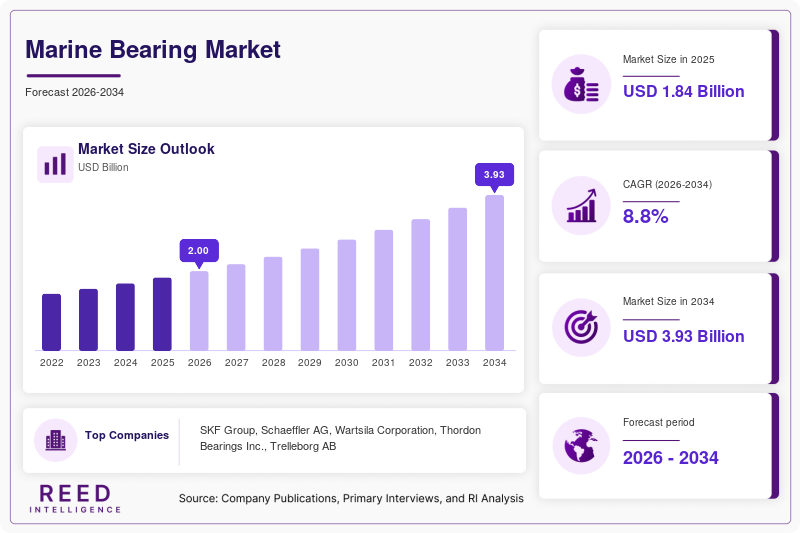
Key Highlights
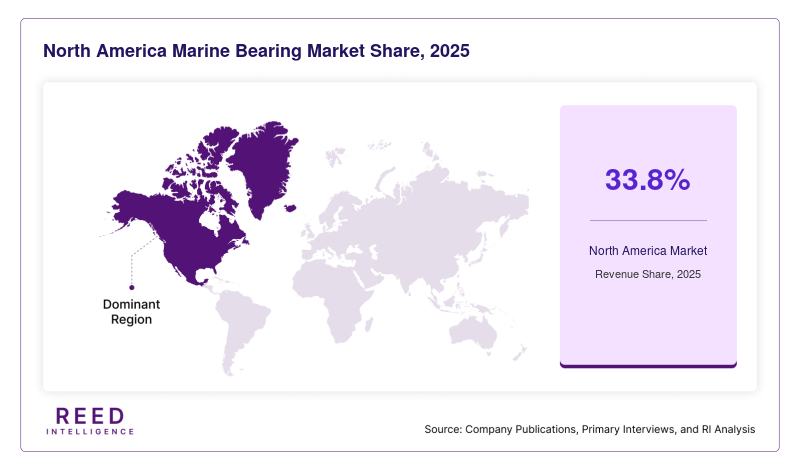
- North America dominated the market with a 33.8% share in 2025.
- Asia Pacific is expected to grow at the fastest CAGR of 10.9% during 2026–2034.
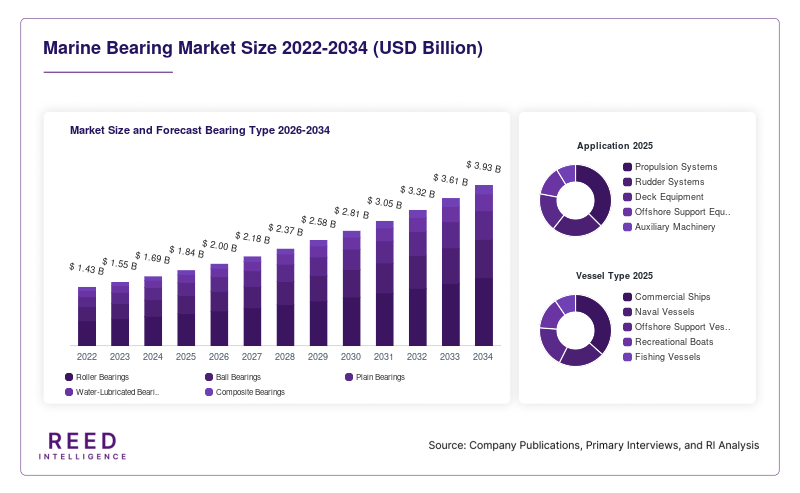
- By bearing type, roller bearings accounted for the largest share of 39.6%.
- while water-lubricated bearings are projected to grow at a CAGR of 11.4%.
- By application, propulsion systems led with a 42.1% share.
- whereas offshore support equipment is expected to expand at a CAGR of 10.8%.
- By vessel type, commercial ships accounted for the highest market share of 48.7%, while naval vessels are anticipated to grow at a CAGR of 9.9% during the forecast period.
- The United States remained the dominant country, with market values of USD 420 million in 2024 and USD 455 million in 2025.
Market Trends
Increasing Adoption of Water-Lubricated Bearing Systems
The marine industry is witnessing a growing transition toward water-lubricated bearing systems as ship operators focus on sustainability, regulatory compliance, and reduced operational costs. Conventional oil-lubricated bearings have long been associated with leakage risks and high maintenance requirements. In response, shipbuilders and fleet operators are adopting water-lubricated alternatives that eliminate the need for oil-based lubrication while improving environmental performance. These systems are increasingly used in propulsion shafts, stern tubes, and auxiliary equipment because they reduce contamination risks and simplify maintenance procedures. Growing international regulations related to marine pollution are further encouraging the adoption of eco-friendly bearing technologies.
Manufacturers are also introducing composite and polymer-based water-lubricated bearings that offer high wear resistance, corrosion protection, and extended service life. Advanced materials are helping operators improve fuel efficiency by lowering friction losses and improving shaft alignment. Demand for these systems is particularly strong in commercial shipping fleets and offshore vessels operating under strict environmental guidelines. The integration of smart monitoring technologies into water-lubricated systems is another important development, as operators seek real-time performance tracking and predictive maintenance capabilities.
Rising Integration of Smart Monitoring and Predictive Maintenance
Digitalization across the maritime industry is creating strong demand for smart bearing monitoring solutions capable of improving vessel reliability and reducing unexpected failures. Marine operators are increasingly integrating sensors, monitoring platforms, and predictive maintenance software into bearing systems to track temperature, vibration, alignment, and wear conditions. These technologies help identify early signs of failure, allowing operators to reduce downtime and improve maintenance scheduling. As shipping companies prioritize operational efficiency and lower repair expenses, the adoption of connected marine bearing solutions is accelerating across both commercial and naval fleets.
The expansion of smart shipping initiatives and autonomous vessel development is further supporting this trend. Bearing manufacturers are collaborating with marine equipment providers to develop integrated systems capable of transmitting operational data to centralized monitoring platforms. These systems support remote diagnostics and help improve fleet management efficiency. In offshore operations, predictive monitoring technologies are gaining popularity because equipment failures in remote marine environments can result in high operational losses. Increasing investments in digital ship infrastructure and intelligent marine systems are expected to sustain long-term demand for smart bearing technologies.
Market Drivers
Expansion of Global Shipbuilding and Maritime Trade Activities
The steady expansion of global maritime trade and commercial shipbuilding activities is a major factor driving the Marine Bearing Market. International shipping remains one of the most cost-effective transportation methods for bulk commodities, industrial materials, and consumer goods. Rising cargo volumes have encouraged shipping companies to expand their fleets and modernize aging vessels. This trend is increasing demand for advanced propulsion systems, shaft assemblies, and deck machinery, all of which require high-performance marine bearings for smooth and efficient operation.
Shipbuilding hubs across Asia Pacific, Europe, and North America are also investing in technologically advanced vessels with improved operational efficiency and lower environmental impact. Demand for container ships, LNG carriers, tankers, and offshore support vessels is creating substantial opportunities for bearing manufacturers. In addition, increasing repair and maintenance activities in the global shipping industry are generating replacement demand for durable marine bearing products. As fleet operators continue to prioritize fuel efficiency, operational reliability, and reduced maintenance costs, the demand for advanced bearing systems is expected to remain strong during the forecast period.
Growth in Offshore Energy and Naval Modernization Projects
Increasing investments in offshore energy exploration and naval modernization programs are significantly contributing to market growth. Offshore oil and gas production facilities depend on reliable marine equipment capable of operating in demanding environments with high pressure, saltwater exposure, and continuous motion. Bearings used in drilling equipment, offshore cranes, propulsion systems, and subsea applications must provide strong durability and corrosion resistance. The expansion of offshore wind farms is also creating additional demand for specialized marine bearing systems used in installation vessels and maintenance platforms.
At the same time, governments across several countries are increasing defense budgets to strengthen naval capabilities and maritime security. Naval fleets require high-performance bearings that support advanced propulsion systems, weapon platforms, and auxiliary equipment. Modern naval vessels emphasize operational efficiency, reduced vibration, and extended maintenance intervals, encouraging the use of technologically advanced bearing materials and monitoring systems. Long-term procurement contracts for submarines, frigates, and patrol vessels are expected to provide consistent business opportunities for marine bearing manufacturers worldwide.
Market Restraint
High Maintenance Costs and Complex Operating Conditions
High maintenance expenses and challenging marine operating environments remain major restraints for the Marine Bearing Market. Bearings installed in marine vessels are continuously exposed to saltwater, heavy mechanical loads, extreme temperatures, and vibration, which can accelerate wear and corrosion. Failure of critical bearing systems may result in operational disruptions, expensive repairs, and extended vessel downtime. As a result, operators often face high maintenance and replacement costs associated with regular inspection and servicing activities.
The complexity of marine systems also creates difficulties in ensuring proper alignment, lubrication, and performance monitoring. Smaller shipping companies and regional operators may hesitate to invest in advanced bearing technologies due to their relatively high initial costs and installation requirements. In offshore environments, maintenance operations become more complicated because repair activities often require specialized labor, dry dock facilities, or temporary shutdowns. For example, propulsion shaft bearing failures in commercial cargo ships can lead to significant financial losses caused by delayed deliveries and repair expenditures. These operational and financial challenges may limit adoption rates among cost-sensitive vessel operators, particularly in emerging economies with limited maintenance infrastructure.
Market Opportunities
Rising Demand for Eco-Friendly Marine Components
The growing emphasis on environmental sustainability is creating significant opportunities for manufacturers developing eco-friendly marine bearing solutions. Regulatory authorities and international maritime organizations are encouraging the use of technologies that reduce marine pollution, minimize oil leakage, and improve vessel efficiency. As a result, demand for water-lubricated bearings, composite materials, and biodegradable lubrication systems is increasing across the shipping industry. Vessel operators are actively seeking solutions that align with sustainability goals while lowering long-term maintenance expenses.
This shift is encouraging innovation in advanced polymer and non-metallic bearing materials capable of delivering strong wear resistance and corrosion protection without relying on traditional oil lubrication. Manufacturers that focus on lightweight and energy-efficient products are expected to gain a competitive advantage in the market. Demand for environmentally compliant bearing systems is particularly strong in regions implementing strict marine emission and pollution standards. Growing investments in green shipping initiatives and sustainable shipbuilding projects are expected to create long-term growth opportunities for marine bearing suppliers.
Expansion of Autonomous and Smart Vessel Technologies
The rapid development of autonomous and digitally connected vessels is opening new growth avenues for the Marine Bearing Market. Smart ships require highly reliable and technologically advanced mechanical systems capable of supporting continuous monitoring and automated operations. Bearings equipped with sensors and diagnostic systems are becoming increasingly important because they help reduce operational risks and improve equipment performance. Shipping companies are investing in intelligent monitoring platforms that provide real-time data related to vibration, temperature, lubrication, and wear conditions.
Autonomous vessel projects initiated by commercial shipping operators and naval organizations are expected to accelerate demand for predictive maintenance solutions integrated into bearing systems. Advanced monitoring technologies help reduce human intervention and improve fleet management efficiency. In addition, the use of data analytics and artificial intelligence in marine operations is encouraging manufacturers to develop connected bearing systems with remote diagnostic capabilities. Companies that invest in digital integration and smart marine technologies are likely to benefit from growing adoption across next-generation shipping and offshore platforms.
Segmental Analysis
By Bearing Type
Roller bearings accounted for the largest share of approximately 39.6% in 2024 due to their strong load-carrying capacity, durability, and wide usage across marine propulsion systems and deck machinery. These bearings are commonly used in commercial cargo ships, offshore platforms, and naval vessels because they can handle both radial and axial loads effectively. The growing demand for heavy-duty marine equipment and high-performance propulsion systems has increased the adoption of roller bearings in various marine applications. Manufacturers are also focusing on improving corrosion resistance and reducing maintenance requirements through advanced coatings and material technologies.
By Application
Propulsion systems held the dominant market share of around 42.1% in 2024 because marine bearings are critical components in shafts, gearboxes, and propulsion assemblies. Commercial ships, naval vessels, and offshore support fleets rely heavily on propulsion systems for operational efficiency and fuel optimization. Bearings used in these systems must withstand heavy loads, vibration, and continuous operation in corrosive marine conditions. Increasing investments in advanced propulsion technologies and fuel-efficient vessels are supporting strong demand for high-performance bearing solutions. In addition, fleet modernization programs are creating replacement demand for durable and low-maintenance propulsion bearings.
By Vessel Type
Commercial ships accounted for the highest market share of approximately 48.7% in 2024 due to the large global fleet size and rising maritime trade activities. Cargo ships, tankers, container vessels, and bulk carriers require multiple bearing systems across propulsion shafts, steering assemblies, and auxiliary machinery. Increasing international trade and growing demand for efficient transportation of industrial goods are encouraging shipping companies to expand and modernize their fleets. Marine bearing manufacturers are benefiting from both original equipment demand and replacement requirements associated with maintenance and repair operations. The focus on improving fuel efficiency and reducing operational disruptions is also supporting demand for technologically advanced bearing products.
Regional Analysis
North America
North America accounted for approximately 33.8% of the global Marine Bearing Market in 2025 and maintained a strong position due to the presence of advanced shipbuilding infrastructure, naval modernization programs, and offshore energy projects. The region is projected to expand at a CAGR of 7.9% during the forecast period as demand for high-performance marine equipment continues to rise. Commercial shipping companies across the United States and Canada are investing in fleet upgrades that improve fuel efficiency and operational reliability. Growing adoption of advanced composite and water-lubricated bearings is also supporting regional market growth.
Europe
Europe represented around 27.4% of the Marine Bearing Market in 2025 and is expected to grow steadily at a CAGR of 8.1% through 2034. The region benefits from a strong maritime manufacturing base, established shipbuilding companies, and strict environmental regulations that encourage the adoption of eco-friendly bearing technologies. European shipping operators are increasingly focusing on reducing carbon emissions and improving vessel efficiency, leading to higher demand for water-lubricated and low-friction bearing systems. Offshore renewable energy projects, especially offshore wind farms, are also contributing to market expansion.
Asia Pacific
Asia Pacific held nearly 24.9% of the global Marine Bearing Market in 2025 and is anticipated to register the fastest CAGR of 10.9% during the forecast period. Rapid industrialization, expanding maritime trade, and increasing shipbuilding activities are supporting strong regional demand for marine bearings. Countries such as China, South Korea, Japan, and India continue to dominate global ship production, creating substantial opportunities for bearing manufacturers. Rising investments in commercial shipping fleets, offshore infrastructure, and port development projects are further contributing to market expansion.
Middle East & Africa
The Middle East & Africa region accounted for approximately 7.2% of the Marine Bearing Market in 2025 and is projected to grow at a CAGR of 8.5% during the forecast period. The region’s market growth is largely supported by offshore oil and gas exploration activities, increasing maritime trade routes, and port infrastructure development. Marine bearings are widely used in offshore drilling platforms, support vessels, and cargo ships operating across the region. Governments are also investing in logistics and transportation infrastructure to strengthen international trade connectivity.
Latin America
Latin America captured nearly 6.7% of the global Marine Bearing Market in 2025 and is expected to grow at a CAGR of 7.6% through 2034. The region is benefiting from increasing offshore exploration activities, growing trade volumes, and expanding port infrastructure projects. Demand for marine bearings is rising across commercial cargo vessels, fishing fleets, and offshore support ships. Governments in several countries are investing in maritime logistics and transportation systems to support economic growth and improve export capabilities.
Competitive Landscape
The Marine Bearing Market is characterized by the presence of international manufacturers focusing on product durability, corrosion resistance, and technological innovation. Companies are increasingly investing in advanced composite materials, smart monitoring systems, and environmentally friendly bearing technologies to strengthen their competitive positions. Strategic partnerships with shipbuilders, offshore equipment providers, and naval contractors are also becoming common across the industry. Market participants are expanding manufacturing capabilities and service networks to support growing demand from commercial shipping and offshore energy sectors.
SKF Group remains one of the leading companies in the market due to its extensive product portfolio, strong global distribution network, and focus on advanced marine engineering solutions. The company continues to invest in predictive maintenance technologies and intelligent monitoring systems designed for marine propulsion applications. Other major companies are concentrating on product customization, improved wear resistance, and sustainable bearing technologies to address evolving customer requirements.
Key Players
- SKF Group
- Schaeffler AG
- Wartsila Corporation
- Thordon Bearings Inc.
- Trelleborg AB
- NSK Ltd.
- NTN Corporation
- Timken Company
- RBC Bearings Incorporated
- JTEKT Corporation
- Daido Metal Co., Ltd.
- Koyo Bearings
- GGB Bearing Technology
- TENMAT Ltd.
- Orkot Marine Bearings
Recent Developments
- SKF Group launched an advanced marine condition monitoring solution in 2025 designed to improve predictive maintenance efficiency for commercial vessel propulsion systems.
- Thordon Bearings Inc. introduced a new water-lubricated composite bearing technology focused on reducing environmental impact and improving operational durability in offshore applications.
- Schaeffler AG expanded its marine engineering partnership network in Asia Pacific to strengthen supply capabilities for commercial shipbuilders and offshore equipment manufacturers.
- Trelleborg AB invested in research programs aimed at developing low-friction bearing materials suitable for energy-efficient marine propulsion systems.
Marine Bearing Market Segments
Bearing Type
- Roller Bearings
- Ball Bearings
- Plain Bearings
- Water-Lubricated Bearings
- Composite Bearings
Application
- Propulsion Systems
- Rudder Systems
- Deck Equipment
- Offshore Support Equipment
- Auxiliary Machinery
Vessel Type
- Commercial Ships
- Naval Vessels
- Offshore Support Vessels
- Recreational Boats
- Fishing Vessels
By Region
- North America
- Europe
- APAC
- Middle East and Africa
- LATAM