Marine Collagen Market Size, Share & Demand Report By Type (Type I, Type II, Type III), By Source (Fish Skin, Fish Scales, Fish Bones), By Form (Powder, Liquid, Capsules), By Application (Nutraceuticals, Cosmetics, Pharmaceuticals, Food & Beverages), By Distribution Channel (Online Retail, Offline Retail) & Segment Forecasts, 2025–2034
USD 3950
Market Overview
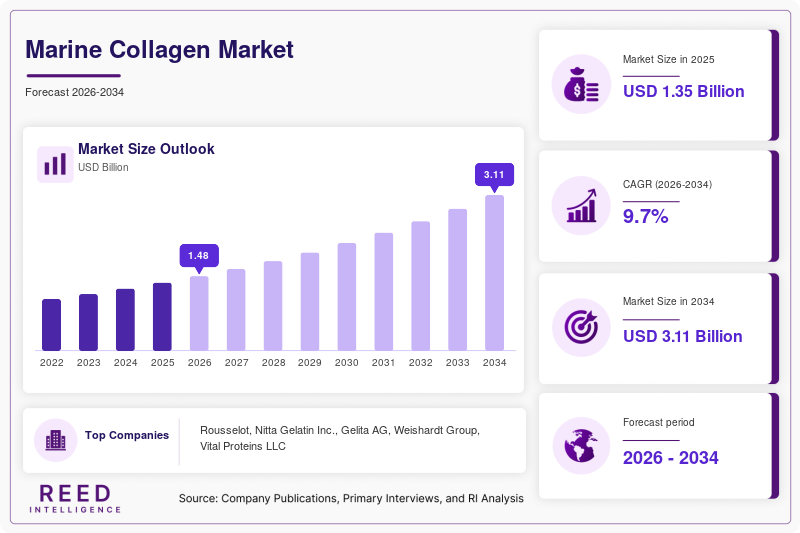
The Marine Collagen Market size was valued at approximately USD 1.35 billion in 2025 and is projected to reach USD 3.10 billion by 2034, expanding at a CAGR of 9.7% during the forecast period (2025–2034). The market growth is being supported by the rising global preference for bioavailable protein ingredients derived from natural marine sources, particularly in nutraceuticals and functional foods.
A major global factor driving the expansion of the Marine Collagen Market is the increasing demand for clean-label and sustainably sourced ingredients. Marine collagen, extracted primarily from fish skin, scales, and bones, is gaining traction due to its high absorption rate and minimal risk of disease transmission compared to bovine or porcine collagen. This has positioned marine-derived products as a preferred option across multiple end-use industries, including cosmetics, pharmaceuticals, and food & beverages.
Key Highlights
- North America dominated the market with 34.2% share in 2025, while Asia Pacific is projected to grow at the fastest CAGR of 11.4%.
- Type segment was led by Type I collagen (58.6%), while hydrolyzed collagen is expected to grow fastest at a CAGR of 10.8%.
- Japan remained the dominant country with a market size of USD 210 million in 2025, projected to reach USD 225 million in 2026.
Market Trends
Rising Demand for Beauty-from-Within Products
The Marine Collagen Market is witnessing strong traction from the growing popularity of ingestible beauty products. Consumers are increasingly adopting collagen-infused beverages, powders, and capsules that support skin elasticity and hydration. This trend is particularly prominent among urban populations seeking preventive skincare solutions, thereby boosting the demand for marine collagen in nutraceutical formulations.
Expansion of Functional Food Applications
Another key trend shaping the Marine Collagen Market is the integration of collagen into functional food products. Manufacturers are incorporating marine collagen into protein bars, dairy alternatives, and fortified snacks to enhance nutritional value. The versatility of marine collagen peptides, combined with their neutral taste and high digestibility, has enabled widespread adoption across innovative food formats. This trend is further supported by the growing demand for high-protein diets and lifestyle-based nutrition solutions.
Market Drivers
Increasing Health and Wellness Awareness
The rising global focus on preventive healthcare is a primary driver of the Marine Collagen Market. Consumers are becoming more aware of the benefits of collagen supplementation, including improved joint mobility, bone strength, and skin health. This shift toward proactive wellness management is encouraging higher consumption of marine collagen-based products across diverse age groups.
Growth in Cosmetics and Personal Care Industry
The expanding cosmetics and personal care sector is significantly contributing to the Marine Collagen Market growth. Marine collagen is widely used in anti-aging creams, serums, and masks due to its ability to promote skin regeneration and hydration. As demand for natural and sustainable cosmetic ingredients increases, manufacturers are increasingly incorporating marine collagen into premium skincare formulations.
Market Restraint
High Production Costs and Raw Material Limitations
One of the key challenges affecting the Marine Collagen Market is the relatively high cost of production compared to alternative collagen sources. The extraction and purification processes require advanced technologies and strict quality controls, which increase overall manufacturing expenses. Additionally, the availability of raw materials is dependent on the fishing industry, which is subject to seasonal fluctuations and regulatory constraints.
These factors can limit scalability and impact pricing competitiveness, particularly in price-sensitive markets. Furthermore, concerns related to overfishing and environmental sustainability may pose additional constraints, requiring companies to adopt responsible sourcing practices and invest in sustainable supply chains.
Market Opportunities
Emerging Demand in Pharmaceutical Applications
The Marine Collagen Market is expected to benefit from expanding applications in the pharmaceutical sector. Marine collagen is increasingly being used in wound healing, tissue engineering, and drug delivery systems due to its biocompatibility and low immunogenicity. As research in regenerative medicine advances, the demand for high-purity marine collagen is likely to increase significantly.
Growth Potential in Emerging Economies
Developing regions present substantial growth opportunities for the Marine Collagen Market. Rising disposable incomes, improving healthcare infrastructure, and increasing awareness of dietary supplements are driving demand in these markets. Local manufacturers are also entering the industry, contributing to product diversification and affordability, which is expected to accelerate market penetration.
Segmental Analysis
By Type
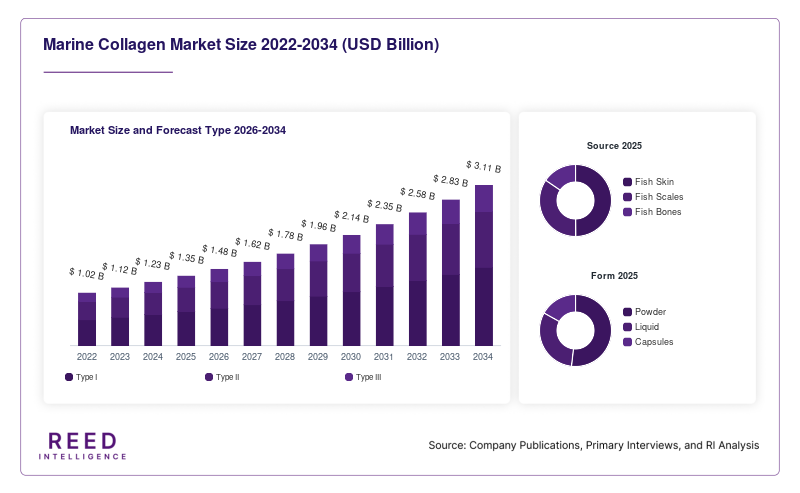
Type I collagen dominated the Marine Collagen Market with a share of 58.6% in 2025, owing to its widespread use in skin, bone, and tendon applications. Its superior structural properties and abundance in marine sources have made it the preferred choice for manufacturers.
Hydrolyzed collagen is expected to be the fastest-growing subsegment, registering a CAGR of 10.8% over the forecast period. Its enhanced bioavailability and ease of incorporation into various products will drive its growth.
By Source
Fish skin emerged as the dominant subsegment, accounting for 46.3% of the market share in 2025, due to its high collagen content and ease of extraction. It is widely used in both food and cosmetic applications.
Fish scales are anticipated to grow at the fastest CAGR of 10.5%, driven by increasing utilization of by-products and advancements in extraction technologies that improve yield and efficiency.
By Form
Powder form dominated the Marine Collagen Market with a share of 52.1% in 2025, attributed to its convenience and longer shelf life. It is widely used in dietary supplements and functional foods.
Liquid collagen is projected to grow at a CAGR of 11.2%, supported by increasing demand for ready-to-consume health products and improved absorption rates.
By Application
Nutraceuticals held the largest share of 39.4% in 2025, driven by rising demand for dietary supplements and functional foods. Marine collagen is widely used in capsules, tablets, and powders.
Cosmetics is expected to be the fastest-growing application segment, with a CAGR of 10.9%, due to increasing use in anti-aging and skincare products.
By Distribution Channel
Offline retail dominated the Marine Collagen Market with a share of 61.7% in 2025, supported by strong presence of pharmacies and specialty stores.
Online retail is projected to grow at the fastest CAGR of 12.3%, driven by the expansion of e-commerce platforms and increasing consumer preference for convenient shopping.
Regional Analysis
North America
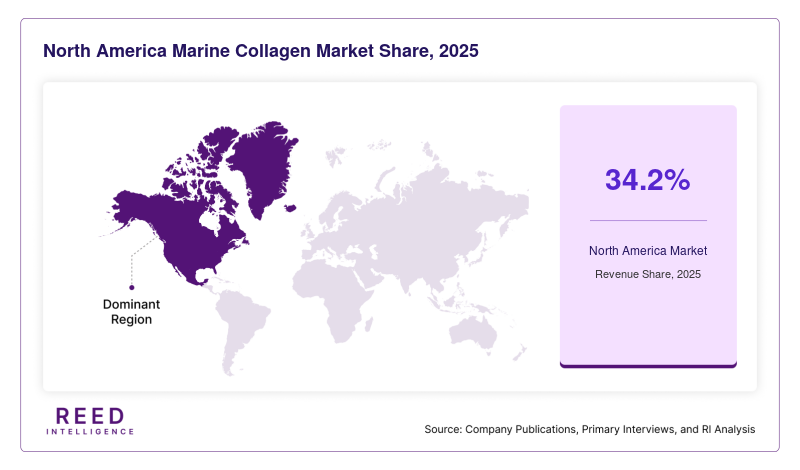
North America accounted for 34.2% of the Marine Collagen Market share in 2025 and is projected to grow at a CAGR of 8.9% during the forecast period. The region has demonstrated strong adoption of marine collagen across dietary supplements and personal care products, supported by well-established distribution networks and consumer awareness.
The United States dominated the regional market due to the growing popularity of nutraceuticals and functional foods. A key growth factor in the country is the increasing demand for protein-enriched products among fitness-conscious consumers. Additionally, the presence of major market players and ongoing product innovations are supporting market expansion.
Europe
Europe held a significant share of 27.5% in 2025 and is expected to expand at a CAGR of 9.1% through 2034. The region has witnessed consistent demand for marine collagen in cosmetics and healthcare applications, driven by regulatory support for sustainable ingredients.
Germany emerged as the leading country in Europe, supported by a strong pharmaceutical and cosmetics industry. The demand for high-quality collagen products in anti-aging formulations has been a major growth factor. Furthermore, increasing preference for ethically sourced ingredients is influencing purchasing decisions across the region.
Asia Pacific
Asia Pacific accounted for 24.3% of the Marine Collagen Market in 2025 and is projected to grow at the fastest CAGR of 11.4%. The region is characterized by rising consumption of beauty supplements and functional foods.
Japan led the regional market, driven by its well-established nutraceutical industry and strong consumer awareness regarding collagen benefits. The country’s aging population and focus on healthy aging have significantly contributed to the demand for marine collagen products.
Middle East & Africa
The Middle East & Africa region held a market share of 7.0% in 2025 and is expected to grow at a CAGR of 8.5% during the forecast period. The market is gradually expanding due to increasing awareness of dietary supplements and personal care products.
The United Arab Emirates dominated the region, supported by growing demand for premium skincare products. The expansion of retail and e-commerce channels has also played a role in improving product accessibility.
Latin America
Latin America accounted for 7.0% of the Marine Collagen Market share in 2025 and is projected to grow at a CAGR of 9.0%. The region is witnessing increasing adoption of collagen-based supplements, particularly among younger consumers.
Brazil led the regional market, driven by a strong beauty and personal care industry. The growing trend of fitness and wellness lifestyles has contributed to increased consumption of collagen supplements in the country.
Competitive Landscape
The Marine Collagen Market is moderately fragmented, with several global and regional players competing on product quality, innovation, and pricing strategies. Leading companies are focusing on expanding their product portfolios and strengthening their distribution networks.
A key market leader is Rousselot, known for its extensive range of collagen-based solutions. The company has recently introduced advanced marine collagen peptides aimed at improving bioavailability and functionality.
Other prominent players include Nitta Gelatin Inc., Gelita AG, Weishardt Group, and Vital Proteins LLC. These companies are investing in research and development to enhance product performance and explore new application areas. Strategic partnerships and acquisitions are also common strategies adopted to strengthen market position.
Key Players
- Rousselot
- Nitta Gelatin Inc.
- Gelita AG
- Weishardt Group
- Vital Proteins LLC
- Darling Ingredients Inc.
- Amicogen Inc.
- Seagarden AS
- Ashland Global Holdings Inc.
- Titan Biotech Ltd.
- Hangzhou Nutrition Biotechnology Co., Ltd.
- Certified Nutraceuticals Inc.
- BioCell Technology LLC
- Connoils LLC
- Norland Products Inc.
Recent Developments
- 2024: A leading manufacturer launched a new range of hydrolyzed marine collagen peptides targeting sports nutrition applications.
- 2023: Expansion of production facilities in Asia Pacific to meet growing regional demand.
- 2024: Strategic collaboration between key players to develop sustainable sourcing practices.
- 2025: Introduction of marine collagen-based functional beverages in North America.
- 2023: Increased investment in R&D for pharmaceutical-grade marine collagen applications.
Marine Collagen Market Segments
Type
- Type I
- Type II
- Type III
Source
- Fish Skin
- Fish Scales
- Fish Bones
Form
- Powder
- Liquid
- Capsules
Application
- Nutraceuticals
- Cosmetics
- Pharmaceuticals
- Food & Beverages
Distribution Channel
- Online Retail
- Offline Retail
By Region
- North America
- Europe
- APAC
- Middle East and Africa
- LATAM