Maritime Communication System Market Size, Share & Demand Report By Component (Hardware, Software, Services), By Communication Technology (Satellite Communication, Broadband Maritime Connectivity, Very High Frequency Communication, High Frequency Communication), By End User (Commercial Shipping, Naval Defense, Offshore Energy), By Region & Segment Forecasts, 2026–2034
USD 3950
Market Overview
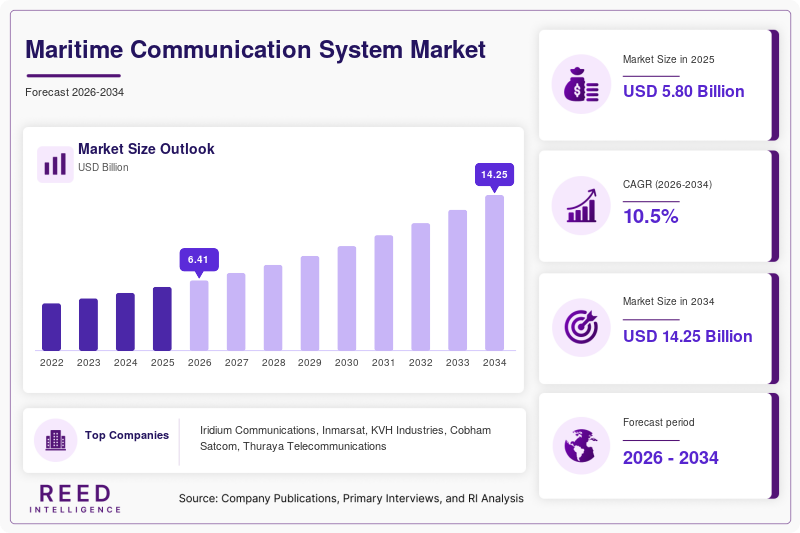
The global Maritime Communication System Market size was valued at USD 5.8 billion in 2026 and is projected to reach USD 12.9 billion by 2034, expanding at a CAGR of 10.5% during the forecast period from 2026 to 2034. The market continues to gain momentum due to rising investments in maritime digitalization, increasing international seaborne trade, and the growing importance of vessel safety and real-time communication. Maritime communication systems support navigation, emergency response, weather monitoring, fleet coordination, and onboard operational efficiency across commercial, defense, and offshore vessels.
One of the major global factors supporting market expansion is the rapid modernization of shipping infrastructure and smart port ecosystems. Governments and private operators are integrating satellite-based communication, cloud-enabled vessel monitoring, and advanced connectivity platforms to improve operational visibility and reduce maritime risks. Increased deployment of autonomous and semi-autonomous vessels has also accelerated the demand for secure and uninterrupted communication systems. In addition, stricter maritime safety regulations from international organizations are encouraging shipowners to adopt advanced communication technologies that support distress signaling, route optimization, and crew welfare.
Key Highlights
- North America dominated the market with a 35.1% share in 2025.
- Asia Pacific is expected to grow at the fastest CAGR of 11.8% during 2026–2034.
- By component, hardware systems accounted for the largest share of 44.6%.
- while software platforms are projected to grow at a CAGR of 12.7%.
- By communication technology, satellite communication led with a 47.9% share, whereas broadband maritime connectivity is expected to expand at a CAGR of 13.1%.
- The United States remained the dominant country, with market values of USD 1.12 billion in 2024 and USD 1.23 billion in 2025.
Market Trends
Rising Adoption of Satellite-Based Broadband Connectivity
The Maritime Communication System Market is witnessing strong adoption of satellite-based broadband communication technologies across commercial and defense vessels. Shipping companies are investing in high-speed satellite connectivity to improve navigation support, cargo tracking, and crew communication during long-distance operations. The transition from narrowband systems to broadband-enabled communication networks is supporting real-time data transfer and predictive analytics across fleets. Advanced satellite communication services are also helping operators reduce downtime and improve route optimization. As global shipping routes expand and offshore activities increase, vessel operators are seeking uninterrupted connectivity in remote ocean regions. This trend is encouraging technology providers to introduce compact and energy-efficient satellite terminals suitable for different vessel categories.
Expansion of Smart Shipping and Digital Fleet Management
The growing implementation of smart shipping practices is becoming a major trend across the maritime industry. Fleet operators are integrating communication systems with artificial intelligence, cloud computing, and Internet of Things platforms to improve operational efficiency and vessel performance. Maritime communication technologies now support remote monitoring, digital navigation systems, automated maintenance scheduling, and fuel consumption analysis. The increasing use of integrated bridge systems is enabling seamless communication between vessels, ports, and logistics operators. Shipping companies are also deploying centralized fleet management platforms to strengthen cybersecurity and reduce operational disruptions. This trend is particularly visible in container shipping and offshore energy sectors where real-time information exchange is essential for safety, scheduling, and cargo visibility.
Market Drivers
Increasing Global Maritime Trade and Cargo Transportation
The steady growth in international trade and cargo transportation activities is driving demand for advanced maritime communication systems. Commercial shipping companies rely on reliable communication infrastructure to coordinate vessel movement, monitor cargo conditions, and ensure efficient port operations. Rising container traffic and increasing deployment of large commercial vessels are creating greater demand for secure communication networks capable of supporting high-volume data exchange. Fleet operators are also investing in communication systems that improve fuel efficiency and reduce route-related delays. The need for continuous communication during extreme weather conditions and congested shipping routes is further strengthening market demand. Expanding offshore logistics and growing maritime tourism activities are also contributing to the adoption of advanced communication technologies.
Rising Naval Modernization and Maritime Security Investments
Governments across several countries are increasing investments in naval modernization and maritime surveillance programs, creating strong demand for secure communication systems. Naval fleets require encrypted communication networks to support intelligence sharing, surveillance coordination, and mission-critical operations. Increasing geopolitical tensions and territorial disputes in major sea routes are encouraging defense agencies to upgrade maritime communication infrastructure. Modern naval vessels are being equipped with advanced satellite communication systems, integrated command platforms, and real-time tracking technologies to improve operational effectiveness. In addition, coast guard authorities are deploying communication systems to strengthen search and rescue operations, anti-piracy missions, and border security activities. These factors are significantly supporting market expansion across defense applications.
Market Restraint
High Deployment and Maintenance Costs Across Maritime Fleets
The high initial investment associated with maritime communication systems remains a significant challenge for market growth. Advanced satellite communication infrastructure, onboard network integration, and cybersecurity solutions require substantial capital expenditure, particularly for small and medium-sized fleet operators. Installation costs can increase further due to vessel retrofitting requirements and the need for specialized technical expertise. In addition, maritime communication equipment requires regular maintenance and software upgrades to ensure uninterrupted performance in harsh marine environments.
Limited connectivity infrastructure in certain remote maritime regions can also reduce the efficiency of advanced communication systems. Smaller shipping companies operating aging fleets often delay modernization projects because of budget limitations and uncertain return on investment. Cybersecurity threats targeting maritime digital infrastructure are creating additional operational costs related to data protection and network monitoring. For example, cargo operators using outdated communication systems may experience delays in data transmission, resulting in operational inefficiencies and compliance risks. These challenges continue to affect the pace of technology adoption in cost-sensitive maritime sectors.
Market Opportunities
Growing Demand for Autonomous and Remote-Controlled Vessels
The increasing development of autonomous and remotely operated vessels is creating substantial opportunities for maritime communication system providers. Autonomous vessels require continuous communication with shore control centers, satellite networks, and nearby ships to ensure safe navigation and operational coordination. Advanced communication systems enable real-time transmission of navigation data, weather updates, and engine performance information. Shipping companies are exploring autonomous vessel technologies to reduce labor costs, improve fuel efficiency, and minimize operational errors.
Technology providers are introducing low-latency communication platforms designed specifically for autonomous maritime operations. The integration of artificial intelligence and cloud analytics with communication systems is expected to create new revenue streams for market participants. Offshore energy operators are also deploying remotely controlled vessels for inspection and maintenance activities in hazardous marine environments. As regulatory frameworks supporting autonomous shipping evolve, demand for highly reliable and secure maritime communication infrastructure is expected to increase steadily.
Expansion of Offshore Renewable Energy Projects
The rapid expansion of offshore renewable energy projects is generating new growth opportunities for the Maritime Communication System Market. Offshore wind farms and marine energy projects require continuous communication between support vessels, operational platforms, and onshore control centers. Communication systems help operators manage maintenance schedules, monitor weather conditions, and improve personnel safety during offshore activities. Increasing investments in offshore wind infrastructure across Europe and Asia Pacific are creating demand for advanced maritime connectivity solutions.
Support vessels operating around offshore energy sites require high-speed broadband communication for real-time coordination and emergency response management. Communication technology providers are developing specialized solutions that offer reliable connectivity in harsh offshore conditions. The growing use of digital monitoring systems across offshore projects is further increasing the need for integrated maritime communication platforms. As governments continue to promote renewable energy development, offshore maritime activities are expected to expand significantly during the forecast period.
Segmental Analysis
By Component
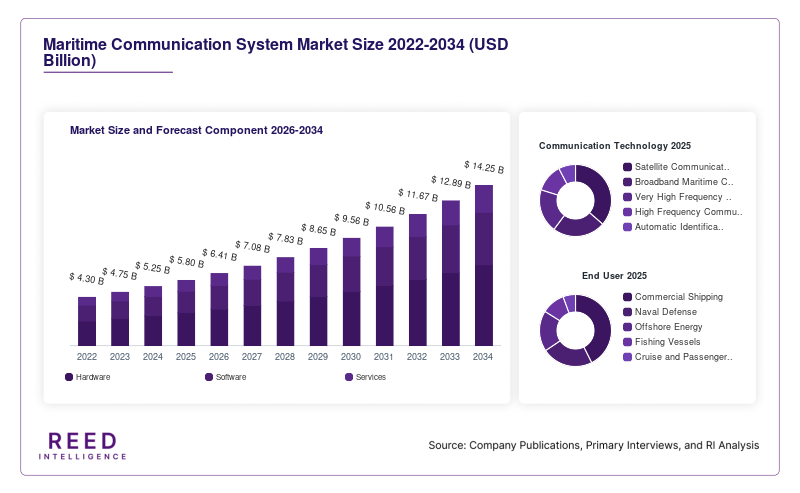
Hardware systems accounted for the largest share of the Maritime Communication System Market in 2024, contributing nearly 44.6% of global revenue. This segment includes satellite terminals, antennas, onboard communication devices, routers, and integrated bridge systems that support maritime connectivity. The dominance of hardware solutions is linked to the continuous need for physical communication infrastructure across commercial and defense fleets. Shipping operators are investing in advanced hardware capable of supporting broadband communication, real-time navigation updates, and weather monitoring functions. Growing deployment of connected vessels and increasing modernization of aging fleets are further supporting segment growth. Defense organizations are also integrating advanced communication hardware into naval vessels to improve surveillance capabilities and mission coordination across strategic maritime routes.
Software platforms are expected to register the fastest CAGR of 12.7% during the forecast period due to rising digitalization across maritime operations. Fleet management software, communication analytics platforms, and cybersecurity applications are gaining traction among shipping operators seeking operational efficiency and real-time monitoring capabilities. Cloud-based maritime communication software enables operators to centralize vessel information, monitor fuel consumption, and optimize route planning. Increasing integration of artificial intelligence and predictive maintenance tools is also supporting demand for software-driven communication systems. As cyber threats targeting maritime infrastructure continue to rise, demand for advanced software security platforms is expected to increase significantly. The growing use of remote diagnostics and automated reporting systems is further strengthening the software segment.
By Communication Technology
Satellite communication emerged as the dominant subsegment in 2024, accounting for approximately 47.9% of the overall market share. Satellite communication systems are widely used in commercial shipping, naval operations, and offshore energy activities due to their ability to provide uninterrupted connectivity across remote maritime regions. Vessel operators depend on satellite networks for navigation support, weather forecasting, emergency response coordination, and real-time cargo monitoring. The expansion of global trade routes and increasing offshore activities have accelerated the adoption of satellite-based communication infrastructure. In addition, satellite communication systems help improve crew welfare by enabling internet connectivity and onboard communication services during long-distance voyages. Technological advancements in low-earth-orbit satellite networks are further improving connectivity speed and reliability.
Broadband maritime connectivity is projected to witness the fastest CAGR of 13.1% during the forecast period. The growing demand for high-speed internet access across vessels is encouraging fleet operators to upgrade traditional communication systems with broadband-enabled technologies. Broadband communication supports advanced applications such as video conferencing, cloud-based fleet monitoring, and real-time operational analytics. Shipping companies are increasingly adopting broadband solutions to enhance cargo visibility and improve decision-making efficiency. Offshore renewable energy projects and cruise tourism activities are also contributing to segment growth by increasing the need for uninterrupted high-bandwidth communication services. Technology providers are focusing on developing hybrid connectivity systems that combine satellite and terrestrial networks to improve communication performance and reduce operational disruptions.
By End User
Commercial shipping accounted for the largest share of the Maritime Communication System Market in 2024, representing nearly 52.3% of total market revenue. The segment includes container ships, bulk carriers, tankers, and cargo vessels that rely heavily on communication systems for navigation, cargo management, and fleet coordination. Increasing global seaborne trade and rising demand for efficient logistics operations are supporting the adoption of advanced communication technologies across commercial fleets. Shipping companies are implementing integrated communication platforms to improve fuel management, monitor vessel performance, and ensure compliance with international maritime regulations. Real-time communication also helps operators reduce delays and enhance route planning efficiency. The growing focus on crew safety and onboard internet access is further driving investment in commercial maritime communication systems.
The offshore energy sector is expected to grow at the fastest CAGR of 12.2% during the forecast period due to increasing offshore exploration and renewable energy projects. Offshore support vessels and drilling platforms require reliable communication systems to maintain operational safety and improve coordination with onshore facilities. Communication technologies are widely used for weather monitoring, equipment diagnostics, and emergency response management in offshore environments. The expansion of offshore wind farms across Europe and Asia Pacific is creating additional demand for advanced maritime connectivity solutions. Rising investments in deep-water oil and gas exploration are also supporting the adoption of satellite communication systems capable of operating in challenging marine conditions. Increasing deployment of remotely operated vessels in offshore operations is expected to strengthen segment growth further.
Regional Analysis
North America
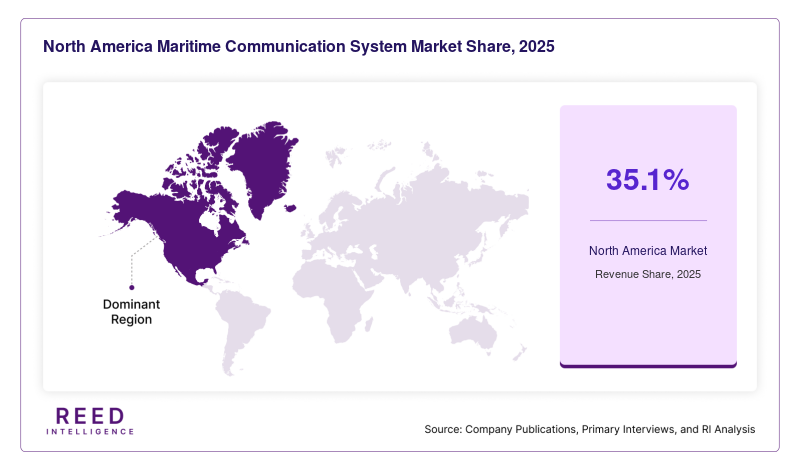
North America accounted for 35.1% of the global Maritime Communication System Market in 2025 and is expected to maintain a stable growth trajectory with a CAGR of 9.8% during the forecast period. The region benefits from advanced maritime infrastructure, strong naval capabilities, and high adoption of digital communication technologies. Commercial shipping operators across the United States and Canada are investing in satellite communication systems, fleet monitoring platforms, and maritime cybersecurity solutions to improve operational efficiency and safety standards.
The United States remains the dominant country in the regional market due to extensive naval modernization programs and strong commercial shipping activities. One major growth factor supporting market expansion is the increasing investment in smart port infrastructure across coastal regions. Port operators are integrating digital vessel communication systems with cargo management platforms to improve operational visibility and reduce turnaround time. Growing offshore energy exploration projects in the Gulf of Mexico are also supporting demand for reliable maritime communication systems.
Europe
Europe represented 27.4% of the global Maritime Communication System Market in 2025 and is projected to grow at a CAGR of 10.1% through 2034. The region has a strong maritime trade network supported by advanced shipping routes and modern port infrastructure. European shipping companies are actively deploying broadband communication systems and integrated navigation platforms to comply with regional maritime safety standards. Increasing adoption of green shipping technologies is also encouraging digital transformation across maritime operations.
Germany remains the leading country within the European market due to its advanced shipping industry and strong maritime technology ecosystem. A unique growth factor driving the market in Germany is the rapid expansion of offshore wind projects in the North Sea region. Offshore support vessels require secure and uninterrupted communication systems for operational coordination and maintenance activities. In addition, increasing collaboration between shipbuilders and communication technology providers is supporting innovation in maritime connectivity solutions.
Asia Pacific
Asia Pacific held 22.6% of the global Maritime Communication System Market in 2025 and is expected to register the fastest CAGR of 11.8% from 2026 to 2034. The region is witnessing rapid growth due to expanding international trade activities, rising shipbuilding operations, and increasing investments in port modernization. Countries across the region are deploying advanced communication systems to improve vessel tracking, navigation safety, and cargo management. Increasing coastal tourism and offshore energy exploration are further strengthening market demand.
China dominates the regional market due to its large commercial shipping industry and extensive shipbuilding capacity. One major factor driving growth in China is the government’s focus on digital maritime infrastructure development under smart shipping initiatives. Chinese ports are increasingly integrating satellite communication systems and cloud-based vessel management platforms to improve operational efficiency. Rising investments in naval expansion and maritime surveillance technologies are also contributing to market growth across the country.
Middle East & Africa
The Middle East & Africa region accounted for 8.1% of the global Maritime Communication System Market in 2025 and is anticipated to grow at a CAGR of 9.4% during the forecast period. Maritime communication demand in the region is primarily supported by offshore oil and gas activities, strategic shipping routes, and port development projects. Countries across the Gulf region are deploying advanced maritime communication infrastructure to strengthen cargo handling efficiency and improve maritime safety.
Saudi Arabia remains the dominant country in the regional market due to increasing investments in maritime logistics and offshore energy infrastructure. A major growth factor supporting the market is the ongoing expansion of smart port projects under national economic diversification initiatives. Communication systems are being integrated into digital logistics platforms to improve real-time vessel coordination and cargo visibility. Rising naval procurement activities and increasing maritime surveillance investments are also contributing to regional market growth.
Latin America
Latin America captured 6.8% of the global Maritime Communication System Market in 2025 and is expected to expand at a CAGR of 8.9% during the forecast period. The region is gradually modernizing maritime infrastructure to support growing export activities and improve operational efficiency across ports. Shipping companies operating in the region are adopting communication technologies that enhance fleet visibility and reduce navigation-related risks. Increasing offshore exploration activities are also supporting the adoption of satellite communication systems.
Brazil continues to lead the Latin American market due to its strong offshore oil and gas industry and extensive coastal trade network. One unique growth factor driving the market in Brazil is the modernization of offshore support fleets used in deep-water energy operations. These vessels require reliable communication systems for remote monitoring and emergency response coordination. Government initiatives focused on improving port connectivity and maritime logistics are further supporting long-term market development.
Competitive Landscape
The Maritime Communication System Market is moderately consolidated, with leading companies focusing on satellite communication innovation, digital fleet management solutions, and strategic partnerships with shipbuilders and naval agencies. Market participants are investing heavily in cloud-enabled communication platforms, cybersecurity integration, and broadband connectivity technologies to strengthen their competitive positioning. Companies are also expanding their regional presence through acquisitions and long-term service agreements with shipping operators.
Iridium Communications remains one of the leading companies in the market due to its extensive satellite communication network and strong maritime service portfolio. The company continues to expand its broadband capabilities to support high-speed maritime connectivity across commercial and defense applications. Inmarsat, KVH Industries, Thuraya Telecommunications, and Cobham Satcom are also key players actively introducing advanced maritime communication platforms.
Key Players
- Iridium Communications
- Inmarsat
- KVH Industries
- Cobham Satcom
- Thuraya Telecommunications
- L3Harris Technologies
- Saab AB
- Furuno Electric Co. Ltd.
- Japan Radio Co. Ltd.
- ORBCOMM Inc.
- Rohde & Schwarz
- Raymarine
- Viasat Inc.
- Honeywell International Inc.
Recent Developments
- In 2025, Iridium Communications introduced an upgraded maritime broadband solution designed to support autonomous vessel communication and low-latency data transmission.
- In 2025, Inmarsat partnered with multiple smart port operators to integrate satellite communication systems with cloud-based logistics monitoring platforms.
- In 2024, KVH Industries launched a compact maritime antenna system aimed at improving high-speed connectivity for small commercial fleets and offshore support vessels.
- In 2024, Cobham Satcom expanded its maritime cybersecurity service portfolio to address rising digital security concerns among commercial shipping operators.
Maritime Communication System Market Segments
Component
- Hardware
- Software
- Services
Communication Technology
- Satellite Communication
- Broadband Maritime Connectivity
- Very High Frequency Communication
- High Frequency Communication
- Automatic Identification Systems
End User
- Commercial Shipping
- Naval Defense
- Offshore Energy
- Fishing Vessels
- Cruise and Passenger Ships
By Region
- North America
- Europe
- APAC
- Middle East and Africa
- LATAM