Mast Cell Tumor Treatment Market Size, Share Demand Report By Treatment Type (Surgery, Chemotherapy, Radiation Therapy, Targeted Therapy), By Animal Type (Canine, Feline), By End-Use (Veterinary Hospitals, Veterinary Clinics, Research Institutions) By Region & Segment Forecasts, 2025–2034
USD 3950
Market Overview
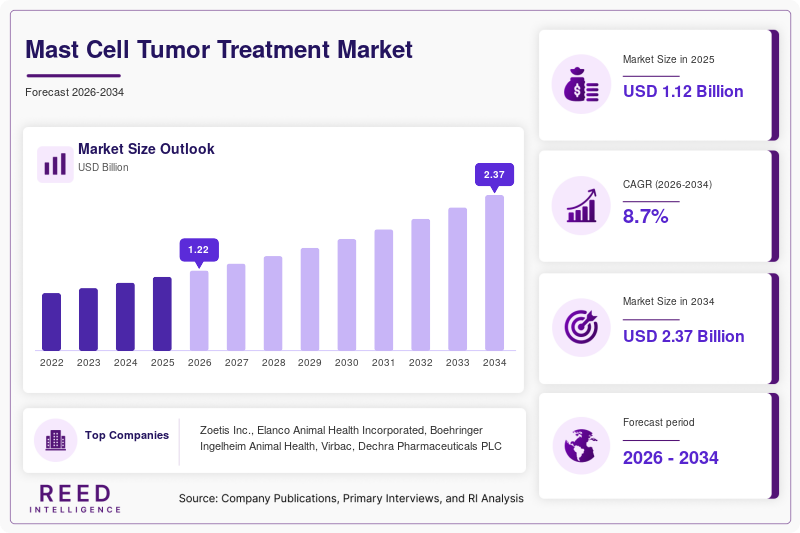
The global Mast Cell Tumor Treatment Market size was estimated at USD 1.12 billion in 2025 and is projected to reach USD 1.20 billion in 2026. With a consistent rise in demand for targeted therapies and immunotherapy-based solutions, the market is forecast to expand to USD 2.35 billion by 2034, registering a compound annual growth rate (CAGR) of 8.7% during 2025–2034.
Mast cell tumors are among the most common skin tumors in dogs, with increasing incidence rates reported globally. This has significantly influenced the demand for effective treatment options such as surgery, chemotherapy, radiation therapy, and targeted drug therapies. The growing trend of pet humanization has encouraged pet owners to seek advanced medical care, contributing to increased expenditure on veterinary oncology services.
Key Highlights
- The market size reached USD 1.12 billion in 2025 and is estimated to grow to USD 1.20 billion in 2026, reflecting steady year-on-year expansion. This growth highlights the increasing demand for veterinary oncology treatments across global markets.
- The market is projected to reach USD 2.35 billion by 2034, registering a CAGR of 8.7% during the forecast period. This indicates sustained long-term growth driven by innovation and expanding treatment adoption.
- Rising pet ownership worldwide, along with an increasing incidence of mast cell tumors in companion animals, is significantly driving demand. Pet owners are increasingly seeking advanced and timely treatment solutions.
- Growth is further supported by the adoption of targeted therapies and improvements in diagnostic technologies. These advancements enable early detection and more effective, personalized treatment approaches.
Market Trends
Increasing Adoption of Targeted Therapies
A notable trend in the Mast Cell Tumor Treatment Market is the growing adoption of targeted therapies, particularly tyrosine kinase inhibitors. These therapies specifically target cancer cells while minimizing damage to healthy tissues, improving treatment outcomes. Veterinary oncologists are increasingly prescribing these drugs due to their ability to manage high-grade tumors effectively. Furthermore, targeted therapies often result in fewer side effects compared to traditional chemotherapy, enhancing compliance among pet owners. The availability of oral formulations also simplifies administration, making treatment more accessible in home settings and driving widespread adoption.
Integration of Precision Medicine in Veterinary Oncology
Precision medicine is gaining traction in the treatment of mast cell tumors, enabling personalized treatment strategies based on genetic and molecular profiling. This trend is transforming the Mast Cell Tumor Treatment Market by allowing veterinarians to identify specific mutations and tailor therapies accordingly. Advances in diagnostic technologies, such as genomic sequencing, are supporting this shift. As a result, treatment success rates are improving, and recurrence risks are decreasing. The integration of data-driven approaches also enhances clinical decision-making, making precision medicine a key factor influencing future market growth.
Market Drivers
Rising Incidence of Mast Cell Tumors in Companion Animals
The increasing prevalence of mast cell tumors, particularly in dogs, is a major driver of the Mast Cell Tumor Treatment Market. Certain breeds are more susceptible to these tumors, leading to a growing demand for effective diagnostic and treatment solutions. Early detection rates have improved due to better awareness among pet owners and veterinarians, resulting in higher treatment adoption. As more cases are diagnosed annually, veterinary clinics are expanding their oncology services. This rising disease burden is expected to sustain demand for advanced therapies, including surgery and targeted drugs, over the forecast period.
Growth in Pet Healthcare Expenditure and Insurance Coverage
Another significant driver is the increasing expenditure on pet healthcare, supported by the expansion of pet insurance coverage. Pet owners are now more willing to invest in advanced treatments, including cancer therapies, due to improved financial support. Insurance policies often cover oncology treatments, reducing out-of-pocket expenses and encouraging the adoption of premium services. This trend is particularly prominent in developed markets, where awareness and accessibility are higher. As insurance penetration continues to grow globally, it is expected to positively impact the Mast Cell Tumor Treatment Market.
Market Restraint
High Cost of Advanced Treatment Options
One of the primary restraints affecting the Mast Cell Tumor Treatment Market is the high cost associated with advanced treatment options. Therapies such as targeted drugs, radiation therapy, and precision diagnostics require significant investment, making them less accessible in cost-sensitive regions. Many pet owners, especially in developing economies, are unable to afford these treatments, leading to lower adoption rates.
This cost barrier also affects veterinary clinics, as the initial investment required to establish oncology facilities is substantial. For instance, radiation therapy equipment and specialized diagnostic tools involve high capital expenditure, limiting their availability to large urban centers. As a result, rural and semi-urban areas often lack access to comprehensive cancer care for animals.
The high cost can also influence treatment decisions, with some pet owners opting for less effective alternatives or foregoing treatment altogether. This creates a gap in the market, slowing overall growth. Addressing this challenge requires cost optimization strategies, increased insurance coverage, and the development of affordable treatment solutions.
Market Opportunities
Expansion in Emerging Markets
Emerging economies present significant growth opportunities for the Mast Cell Tumor Treatment Market. Countries in Asia Pacific and Latin America are witnessing an increase in pet ownership, along with rising awareness of animal health. Governments and private organizations are investing in veterinary infrastructure, improving access to diagnostic and treatment services. As disposable incomes grow, pet owners in these regions are more likely to seek advanced treatments. Additionally, the entry of global pharmaceutical companies into these markets is enhancing product availability and driving competition, which can lead to cost reductions and increased adoption.
Development of Combination Therapies
The development of combination therapies offers another promising opportunity in the Mast Cell Tumor Treatment Market. Combining different treatment modalities, such as surgery with targeted drugs or chemotherapy, can improve treatment efficacy and reduce recurrence rates. Ongoing research is focused on identifying optimal combinations that maximize therapeutic benefits while minimizing side effects. Pharmaceutical companies are investing in clinical trials to validate these approaches, which can lead to the introduction of innovative treatment protocols. As evidence supporting combination therapies grows, their adoption is expected to increase, creating new revenue streams in the market.
Segmental Analysis
By Treatment Type
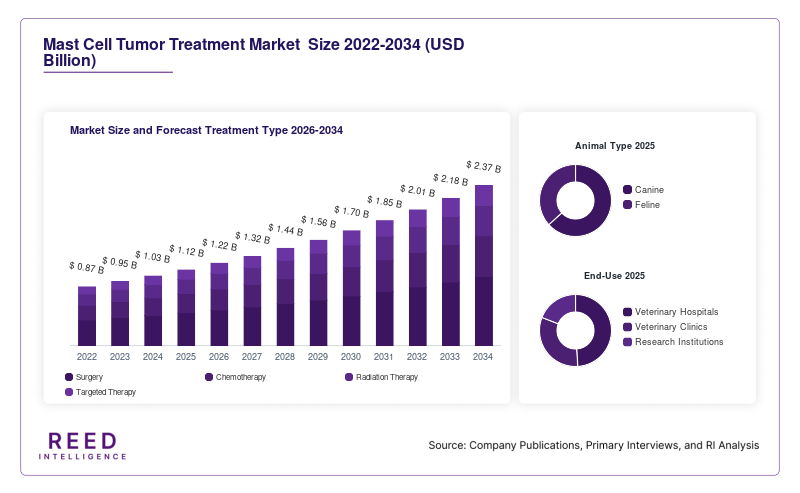
The surgery segment dominated the Mast Cell Tumor Treatment Market in 2024, accounting for approximately 42% of the total share. Surgical removal is often the first-line treatment for localized mast cell tumors, especially when detected early. It offers high success rates and can be curative in many cases, making it the preferred choice among veterinarians. The widespread availability of surgical facilities and the relatively lower cost compared to other treatments further contribute to its dominance. Additionally, advancements in surgical techniques have improved outcomes, reducing complications and recurrence rates.
The targeted therapy segment is expected to be the fastest-growing, with a CAGR of 10.5% during the forecast period. This growth is driven by the increasing adoption of tyrosine kinase inhibitors, which provide effective treatment for high-grade tumors. These therapies offer improved precision and fewer side effects compared to traditional chemotherapy. Continuous research and development efforts are leading to the introduction of new targeted drugs, enhancing treatment efficacy. As awareness about these advanced therapies increases, their adoption is expected to rise significantly.
By Animal Type
The canine segment held the largest share of the Mast Cell Tumor Treatment Market in 2024, accounting for approximately 68% of the total market. Mast cell tumors are more prevalent in dogs, particularly in certain breeds, making this segment dominant. The high incidence rate has led to increased demand for diagnostic and treatment services. Veterinary clinics and hospitals are well-equipped to handle canine oncology cases, further supporting segment growth. Additionally, pet owners are more willing to invest in treatments for dogs, contributing to higher revenue generation.
The feline segment is projected to grow at a CAGR of 9.3% during the forecast period. Although mast cell tumors are less common in cats, increasing awareness and improved diagnostic capabilities are driving growth in this segment. Veterinary professionals are focusing on early detection and treatment, which is improving outcomes for feline patients. The development of specialized therapies for cats is also contributing to segment expansion, creating new opportunities in the market.
By End-Use
Veterinary hospitals dominated the Mast Cell Tumor Treatment Market in 2024, holding a share of approximately 55%. These facilities offer comprehensive oncology services, including diagnosis, surgery, and advanced treatments. The availability of specialized equipment and skilled professionals makes veterinary hospitals the preferred choice for complex cases. Additionally, hospitals often collaborate with research institutions, enabling access to the latest treatment protocols and technologies. This integration of services contributes to their dominant position in the market.
Veterinary clinics are expected to be the fastest-growing segment, with a CAGR of 9.0% during the forecast period. The increasing number of clinics and their accessibility in urban and semi-urban areas are key factors driving growth. Clinics are expanding their service offerings to include oncology treatments, supported by advancements in diagnostic tools. The convenience and affordability of clinics make them an attractive option for pet owners, contributing to their rapid growth in the Mast Cell Tumor Treatment Market.
Regional Analysis
North America
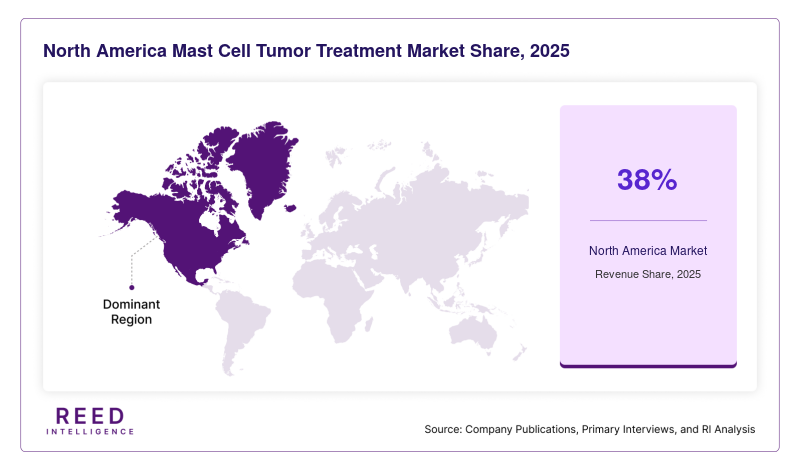
North America held the largest share of the Mast Cell Tumor Treatment Market in 2025, accounting for approximately 38% of global revenue. The region is expected to maintain its dominance, growing at a CAGR of 8.2% during the forecast period. High pet ownership rates, advanced veterinary healthcare systems, and strong awareness levels contribute to market growth. The presence of established pharmaceutical companies and continuous innovation in cancer treatments further support the region’s leadership position.
The United States dominates the North American market due to its well-developed veterinary infrastructure and high healthcare spending on pets. A unique growth factor in the country is the widespread availability of pet insurance, which significantly reduces treatment costs for pet owners. This encourages the adoption of advanced therapies, including targeted treatments and precision medicine approaches, driving market expansion.
Europe
Europe accounted for around 27% of the global Mast Cell Tumor Treatment Market share in 2025 and is projected to grow at a CAGR of 7.9% through 2034. The region benefits from strong regulatory frameworks, increasing awareness about animal health, and rising adoption of advanced diagnostic techniques. Veterinary clinics across Europe are increasingly incorporating oncology services, supporting steady market growth.
Germany is a key contributor to the European market, driven by its advanced veterinary care infrastructure and high pet ownership rates. A unique growth factor is the increasing focus on animal welfare regulations, which promote early diagnosis and treatment of diseases. This regulatory support encourages veterinarians and pet owners to adopt advanced treatment options, boosting market demand.
Asia Pacific
Asia Pacific is the fastest-growing region in the Mast Cell Tumor Treatment Market, with a projected CAGR of 9.8% during the forecast period. The region accounted for approximately 20% of the market share in 2025. Rapid urbanization, rising disposable incomes, and increasing pet adoption are key factors driving growth. Improvements in veterinary healthcare infrastructure are also contributing to market expansion.
China leads the Asia Pacific market due to its large pet population and growing awareness of animal health. A unique growth factor in the country is the rapid expansion of veterinary clinics and hospitals in urban areas. This increased accessibility to healthcare services is encouraging early diagnosis and treatment, driving demand for mast cell tumor therapies.
Middle East & Africa
The Middle East & Africa region held a smaller share of around 8% in 2025 but is expected to grow at a CAGR of 7.2% during the forecast period. The market is gradually developing, supported by increasing awareness and investments in veterinary healthcare infrastructure. Urbanization and rising disposable incomes are contributing to the adoption of pet healthcare services.
The United Arab Emirates is a dominant market within the region, driven by a growing expatriate population and high pet ownership rates. A unique growth factor is the increasing presence of specialized veterinary clinics offering oncology services. These facilities are improving access to advanced treatments, supporting market growth in the region.
Latin America
Latin America accounted for approximately 7% of the global Mast Cell Tumor Treatment Market share in 2025 and is expected to grow at a CAGR of 8.0%. The region is experiencing steady growth due to rising pet ownership and increasing awareness of animal health. Government initiatives and private investments are improving veterinary healthcare infrastructure.
Brazil is the leading market in Latin America, supported by its large pet population and growing demand for veterinary services. A unique growth factor is the increasing adoption of pet insurance, which is encouraging pet owners to opt for advanced treatments. This trend is expected to drive market growth over the forecast period.
Competitive Landscape
The Mast Cell Tumor Treatment Market is moderately competitive, with several global and regional players focusing on product innovation and strategic collaborations. Companies are investing in research and development to introduce advanced therapies, including targeted drugs and combination treatments. Partnerships with veterinary clinics and hospitals are also common, enabling companies to expand their market presence.
One of the leading players in the market is Zoetis Inc., known for its strong portfolio of veterinary pharmaceuticals. The company continues to invest in oncology research and has recently introduced new targeted therapies aimed at improving treatment outcomes. Other key players are focusing on expanding their product pipelines and entering emerging markets to capture growth opportunities.
Key Players
- Zoetis Inc.
- Elanco Animal Health Incorporated
- Boehringer Ingelheim Animal Health
- Virbac
- Dechra Pharmaceuticals PLC
- Vetoquinol S.A.
- Ceva Santé Animale
- Aratana Therapeutics
- AB Science
- Kindred Biosciences
- Torigen Pharmaceuticals
- PetCure Oncology
- VetDC Inc.
- Karyopharm Therapeutics
- Morphogenesis Inc.
Recent Developments
- In 2024, a leading veterinary pharmaceutical company launched a new tyrosine kinase inhibitor designed specifically for mast cell tumor treatment in dogs, improving survival rates.
- In 2023, a collaboration between a biotech firm and veterinary hospitals led to the development of a novel combination therapy for advanced-stage tumors.
- In 2025, a global animal health company expanded its oncology portfolio by acquiring a smaller firm specializing in targeted cancer therapies for pets.
Mast Cell Tumor Treatment Market Segments
Treatment Type
- Surgery
- Chemotherapy
- Radiation Therapy
- Targeted Therapy
Animal Type
- Canine
- Feline
End-Use
- Veterinary Hospitals
- Veterinary Clinics
- Research Institutions
By Region
- North America
- Europe
- APAC
- Middle East and Africa
- LATAM