Mecoprop Market Size, Share, Demand Report By Type (Mecoprop Amine, Mecoprop Ester), By Application (Agriculture, Turf & Ornamentals), By End-Use (Commercial Farming, Residential & Municipal), And Regional Forecasts, 2025–2034
USD 3950
Market Overview
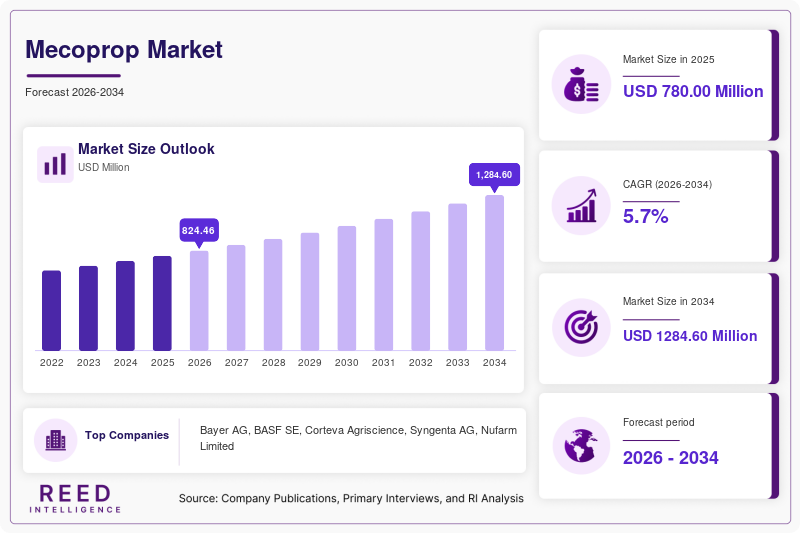
The Mecoprop Market size was estimated at USD 780 million in 2025 and is projected to reach USD 820 million in 2026. By 2034, the market is forecasted to expand to approximately USD 1280 million, registering a compound annual growth rate (CAGR) of 5.7% during the forecast period from 2025 to 2034.
The growth of the Mecoprop Market is supported by the rising need for improved agricultural productivity to meet global food demand. Farmers are increasingly adopting herbicides to ensure higher crop yields and reduce manual labor costs. Additionally, the expansion of urban landscaping and golf course maintenance is contributing to the consistent use of Mecoprop-based formulations. The growing awareness regarding weed management practices and advancements in agrochemical formulations further support market expansion.
Key Highlights
- Market size reached USD 780 million in 2025 and is projected to grow steadily through 2034.
This growth reflects consistent demand across agricultural and non-crop applications supported by stable market adoption. - CAGR of 5.7% driven by rising agricultural demand and turf management applications.
The expansion is further supported by increasing need for efficient weed control in both large-scale farming and landscaped environments. - Increasing adoption of selective herbicides across crop and non-crop sectors.
End-users prefer selective solutions like Mecoprop to minimize crop damage while effectively targeting broadleaf weeds. - Expansion of landscaping and urban green spaces supporting market growth.
Rising investments in residential complexes, public parks, and commercial landscaping projects are boosting demand for herbicide solutions. - Technological improvements enhancing herbicide performance and safety.
Advancements in formulation techniques are improving efficacy, reducing environmental impact, and increasing user convenience.
Market Trends
Shift Toward Environmentally Safer Herbicide Formulations
The Mecoprop Market is experiencing a gradual shift toward environmentally safer and low-toxicity formulations. Manufacturers are investing in research to develop products with reduced environmental impact while maintaining efficacy. This trend is driven by growing regulatory pressure and consumer awareness regarding sustainable agricultural practices. Many countries are implementing stricter guidelines on chemical usage, prompting producers to innovate and adapt. As a result, bio-enhanced and low-residue Mecoprop variants are gaining traction. These formulations not only comply with environmental standards but also improve soil health and reduce contamination risks. This trend is expected to shape product development strategies over the forecast period.
Increasing Adoption in Urban Landscaping and Turf Management
Another notable trend in the Mecoprop Market is the rising use of herbicides in urban landscaping, sports fields, and recreational spaces. With the expansion of residential complexes, parks, and golf courses, the demand for efficient weed control solutions is increasing. Mecoprop is widely used in turf management due to its effectiveness against broadleaf weeds without damaging grass. Municipal authorities and private landscaping companies are investing in maintenance solutions to improve aesthetic appeal and functionality. This trend is particularly prominent in developed economies, where urban green infrastructure is expanding rapidly. The consistent demand from this segment is expected to support long-term market growth.
Market Drivers
Rising Demand for Increased Agricultural Productivity
The growing global population has intensified the need for higher agricultural output, which is a major driver for the Mecoprop Market. Farmers are under pressure to maximize crop yields while minimizing resource usage. Weed infestation is a significant challenge that can reduce productivity if not managed effectively. Mecoprop provides a reliable solution by selectively targeting broadleaf weeds, thereby improving crop quality and yield. The adoption of modern farming practices and mechanized agriculture has further increased reliance on herbicides. Additionally, government initiatives promoting efficient farming techniques are encouraging the use of advanced agrochemicals, including Mecoprop-based products.
Expansion of Turf and Non-Crop Applications
The increasing use of Mecoprop in non-agricultural applications is another key growth driver. Turf management, including lawns, golf courses, and sports fields, requires consistent weed control to maintain quality and usability. Mecoprop offers a cost-effective and efficient solution for these applications. The growth of the real estate sector and urban development projects has led to a rise in landscaped areas, further boosting demand. Moreover, industrial and roadside vegetation management is contributing to the expansion of non-crop usage. These diverse applications provide a stable demand base for Mecoprop, supporting market growth across multiple sectors.
Market Restraint
Stringent Regulatory Framework and Environmental Concerns
One of the major restraints affecting the Mecoprop Market is the increasing regulatory scrutiny on herbicide usage. Governments and environmental agencies are imposing strict guidelines to control the use of chemical herbicides due to concerns about soil degradation, water contamination, and biodiversity loss. These regulations can limit product availability and increase compliance costs for manufacturers. In some regions, partial bans or restrictions on phenoxy herbicides have been implemented, affecting market growth. For example, regulatory bodies in parts of Europe have tightened approval processes, leading to delays in product launches. This creates challenges for companies in maintaining market presence and expanding their product portfolios. Additionally, growing consumer preference for organic farming practices is reducing reliance on chemical herbicides, further impacting demand.
Market Opportunities
Growth in Emerging Agricultural Economies
Emerging economies present significant opportunities for the Mecoprop Market due to increasing agricultural activities and modernization efforts. Countries in Asia Pacific, Latin America, and Africa are investing in improving farming efficiency and productivity. The adoption of herbicides is growing as farmers shift from traditional methods to advanced crop management techniques. Government subsidies and awareness programs are supporting the use of agrochemicals, including Mecoprop. Additionally, the expansion of commercial farming and export-oriented agriculture is driving demand. These regions offer untapped potential for manufacturers to expand their distribution networks and introduce cost-effective products tailored to local needs.
Development of Integrated Weed Management Solutions
The integration of Mecoprop into broader weed management strategies offers another growth opportunity. Farmers and agricultural professionals are increasingly adopting integrated weed management practices that combine chemical, mechanical, and biological methods. Mecoprop can be used as part of these strategies to enhance effectiveness and reduce resistance development. The development of combination products and multi-active formulations is gaining popularity, providing improved weed control and convenience. This approach also aligns with sustainability goals by optimizing herbicide usage. Companies that focus on innovation and collaboration with agricultural experts are likely to benefit from this emerging opportunity.
Segmental Analysis
By Type
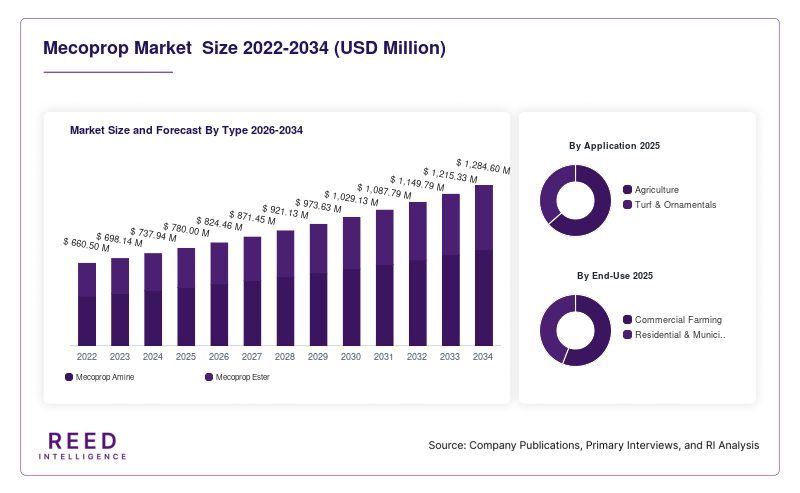
The Mecoprop amine segment dominated the market in 2024, accounting for approximately 58% of the total share. This dominance is attributed to its high solubility and ease of application, making it suitable for a wide range of agricultural and turf applications. Farmers prefer amine formulations due to their lower volatility and reduced risk of drift, which ensures targeted weed control. Additionally, the cost-effectiveness of Mecoprop amine products makes them accessible to small and medium-scale farmers. The segment’s strong performance is supported by consistent demand from both crop and non-crop sectors, contributing significantly to overall market revenue.
The Mecoprop ester segment is expected to be the fastest-growing, with a projected CAGR of 6.3% during the forecast period. This growth is driven by its enhanced penetration and effectiveness in controlling stubborn weeds. Ester formulations are particularly useful in specific climatic conditions where rapid absorption is required. The increasing adoption of advanced herbicide formulations and the need for improved efficiency are supporting this segment’s growth. Manufacturers are focusing on developing safer and more stable ester variants to meet regulatory standards, further boosting demand.
By Application
The agriculture segment held the largest share in 2024, accounting for nearly 65% of the Mecoprop Market. The extensive use of herbicides in crop production is the primary factor driving this dominance. Mecoprop is widely used in cereals, grains, and other crops to control broadleaf weeds. The growing need for higher crop yields and efficient weed management practices is increasing demand in this segment. Additionally, the adoption of mechanized farming and modern agricultural techniques is supporting the widespread use of herbicides, including Mecoprop, in agricultural applications.
The turf and ornamental segment is projected to grow at the fastest CAGR of 6.1% over the forecast period. This growth is driven by increasing investments in landscaping, sports facilities, and urban green spaces. Mecoprop is widely used in lawns, golf courses, and parks due to its selective weed control properties. The expansion of residential and commercial landscaping projects is further boosting demand. Additionally, the growing focus on maintaining aesthetic appeal and functionality in urban environments is supporting the growth of this segment.
By End-Use
The commercial farming segment dominated the market in 2024, accounting for around 62% of the total share. Large-scale farming operations require efficient weed control solutions to maintain productivity and profitability. Mecoprop is widely used in these operations due to its effectiveness and cost efficiency. The increasing adoption of precision agriculture techniques is further enhancing the use of herbicides in commercial farming. This segment’s growth is supported by the rising demand for food and the need to optimize agricultural output.
The residential and municipal segment is expected to grow at the fastest CAGR of 6.0% during the forecast period. This growth is driven by increasing urbanization and the expansion of landscaped areas. Municipal authorities and homeowners are investing in maintaining lawns, parks, and recreational spaces, creating demand for effective weed control solutions. Mecoprop’s suitability for turf applications makes it a preferred choice in this segment. The growing awareness of landscaping and outdoor aesthetics is further supporting market growth.
Regional Analysis
North America
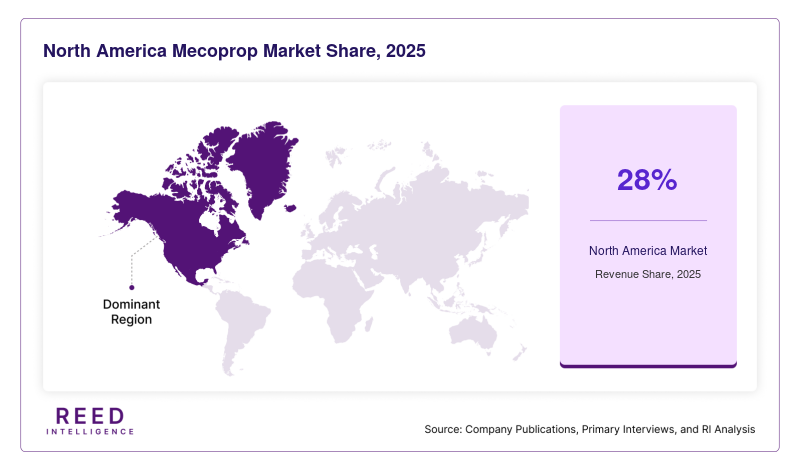
North America accounted for approximately 28% of the Mecoprop Market share in 2025 and is expected to grow at a CAGR of 5.2% during the forecast period. The region benefits from advanced agricultural practices and high adoption of herbicides. The presence of large-scale commercial farming operations and strong distribution networks supports market growth. Additionally, the demand for turf management solutions in residential and commercial sectors contributes significantly to regional revenue.
The United States dominates the North American market due to its extensive agricultural land and well-established agrochemical industry. A key growth factor is the increasing adoption of precision agriculture technologies, which enhance herbicide efficiency. Farmers are integrating advanced tools to optimize chemical usage, reducing waste and improving yield outcomes. This trend is expected to sustain demand for Mecoprop in the region.
Europe
Europe held around 24% market share in 2025 and is projected to grow at a CAGR of 4.8%. The region is characterized by strict regulatory frameworks and a strong focus on sustainable farming practices. Despite these challenges, Mecoprop continues to be used in controlled applications, particularly in turf and non-crop areas. The demand for selective herbicides remains stable due to their effectiveness and targeted action.
Germany leads the European market, supported by its advanced agricultural sector and emphasis on efficiency. A unique growth factor is the increasing adoption of eco-friendly herbicide formulations. Companies are investing in developing products that comply with stringent environmental regulations while maintaining performance. This focus on sustainability is shaping the market landscape in Europe.
Asia Pacific
Asia Pacific accounted for approximately 22% of the Mecoprop Market in 2025 and is expected to grow at the fastest CAGR of 6.5%. The region's growth is driven by expanding agricultural activities and rising food demand. Countries are increasingly adopting modern farming techniques, including the use of herbicides, to improve productivity. The availability of cost-effective products further supports market expansion.
China dominates the Asia Pacific market due to its large agricultural base and increasing mechanization. A key growth factor is government support for agricultural modernization and productivity enhancement. Subsidies and training programs are encouraging farmers to adopt advanced agrochemicals, including Mecoprop. This is expected to drive significant growth in the region.
Middle East & Africa
The Middle East & Africa region held about 14% market share in 2025 and is projected to grow at a CAGR of 5.4%. The market is driven by increasing investments in agriculture and landscaping projects. Water scarcity and harsh climatic conditions necessitate efficient weed control solutions, supporting the use of herbicides like Mecoprop.
South Africa is a leading market in the region, supported by its developed agricultural sector. A unique growth factor is the expansion of commercial farming and export-oriented agriculture. Farmers are adopting modern crop protection solutions to meet international quality standards. This trend is expected to boost demand for Mecoprop in the region.
Latin America
Latin America accounted for around 12% of the Mecoprop Market share in 2025 and is expected to grow at a CAGR of 5.9%. The region benefits from favorable climatic conditions for agriculture and increasing export demand for crops. The adoption of herbicides is growing as farmers seek to improve yield and efficiency.
Brazil dominates the Latin American market due to its large-scale agricultural operations. A key growth factor is the expansion of soybean and cereal cultivation, which requires effective weed management. The increasing use of advanced agrochemicals and government support for agricultural development are driving market growth in the region.
Competitive Landscape
The Mecoprop Market is moderately fragmented, with several global and regional players competing based on product quality, pricing, and distribution networks. Companies are focusing on product innovation and regulatory compliance to maintain their market position. Strategic partnerships and mergers are also common, enabling firms to expand their geographic presence and product portfolios.
One of the leading players in the market is Bayer AG, which has a strong presence in the agrochemical industry. The company continues to invest in research and development to enhance herbicide formulations and improve environmental compatibility. A recent development includes the introduction of advanced herbicide blends that combine Mecoprop with other active ingredients to improve weed control efficiency. Other companies are also adopting similar strategies, focusing on innovation and sustainability to gain a competitive edge.
Key Players List
- Bayer AG
- BASF SE
- Corteva Agriscience
- Syngenta AG
- Nufarm Limited
- UPL Limited
- FMC Corporation
- ADAMA Agricultural Solutions
- Sumitomo Chemical Co., Ltd.
- Nissan Chemical Corporation
- Arysta LifeScience
- Albaugh LLC
- Sipcam Agro
- Rotam CropSciences
- Helm AG
Recent Developments
- A leading agrochemical company launched a new Mecoprop-based combination herbicide to improve weed control efficiency and reduce resistance.
- Several manufacturers expanded their production capacities in Asia Pacific to meet rising regional demand.
- Companies introduced eco-friendly formulations with reduced environmental impact to comply with evolving regulatory standards.
Mecoprop Market Segments
By Type
- Mecoprop Amine
- Mecoprop Ester
By Application
- Agriculture
- Turf & Ornamentals
By End-Use
- Commercial Farming
- Residential & Municipal
By Region
- North America
- Europe
- APAC
- Middle East and Africa
- LATAM