Medical Cyclotron Market Size, Share & Demand Report By Product Type (High-Energy Cyclotrons, Medium-Energy Cyclotrons, Compact Cyclotrons), By Application (PET Imaging, SPECT Imaging, Theranostics, Research Applications), By End-Use (Hospitals, Diagnostic Centers, Research Institutes, Radiopharmaceutical Production Facilities), By Region & Segment Forecasts, 2026–2034
USD 3950
Market Overview
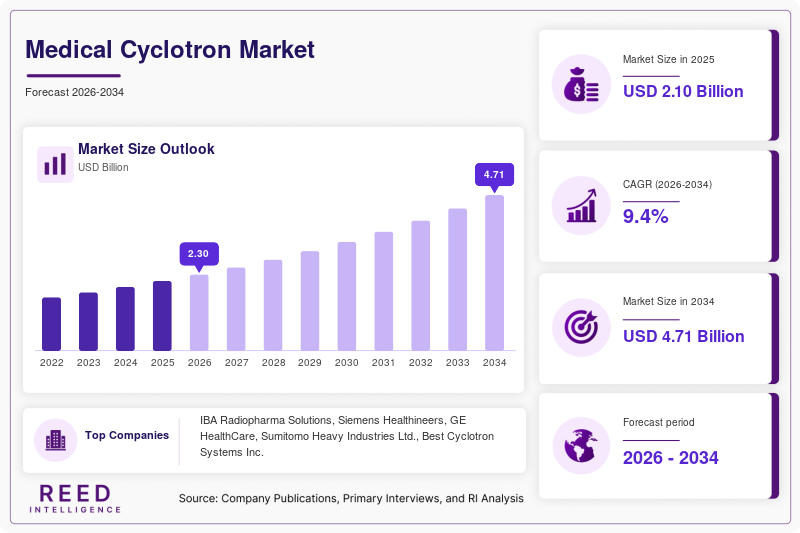
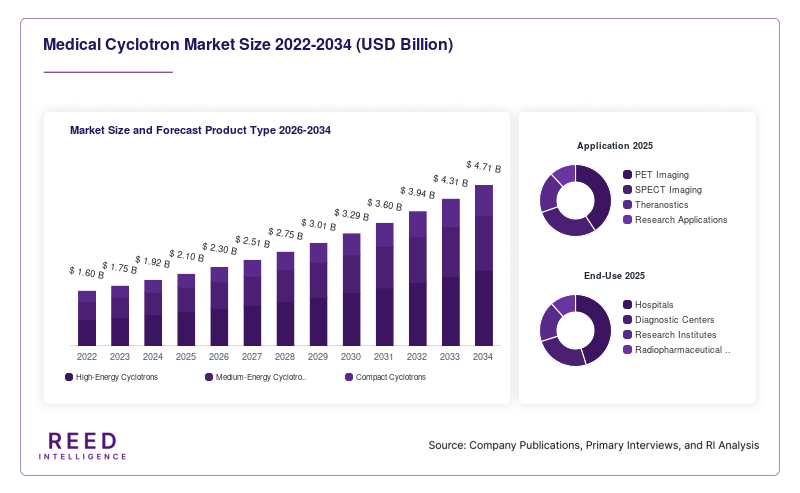
The Medical Cyclotron Market size was valued at approximately USD 2.1 billion in 2026 and is projected to reach around USD 4.3 billion by 2034, expanding at a CAGR of 9.4% during the forecast period (2026–2034). Medical cyclotrons play a critical role in the production of radioisotopes used in diagnostic imaging and cancer treatment, particularly in positron emission tomography (PET) and single-photon emission computed tomography (SPECT). The growing prevalence of chronic diseases, especially cancer and cardiovascular conditions, has significantly increased the demand for advanced imaging technologies, thereby driving market expansion.
A key global factor supporting market growth is the rapid adoption of nuclear medicine procedures in both developed and emerging economies. Governments and healthcare organizations are investing in advanced diagnostic infrastructure to improve early disease detection and patient outcomes. This has led to increased installation of cyclotron systems in hospitals, research institutions, and radiopharmaceutical production facilities. Furthermore, technological advancements in compact and cost-efficient cyclotron systems have made them more accessible to mid-sized healthcare facilities, broadening the market base.
Key Highlights
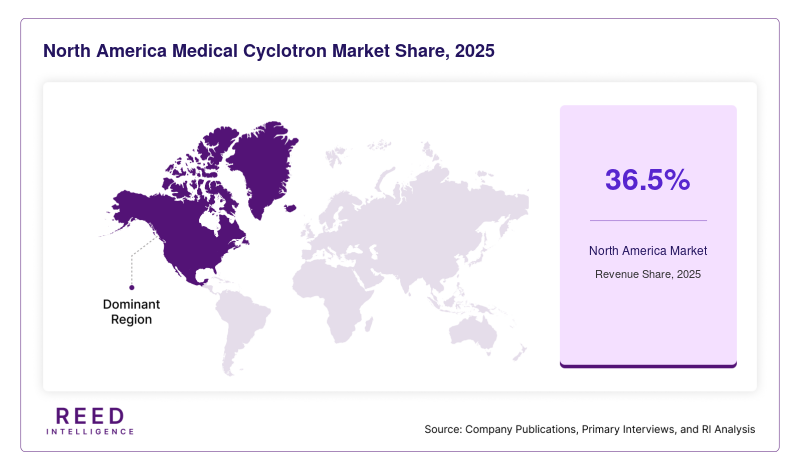
- North America dominated the market with a 36.5% share in 2025.
- Asia Pacific is expected to grow at the fastest CAGR of 10.8% during 2026–2034.
- By product type, high-energy cyclotrons accounted for the largest share of 42.3%.
- while compact cyclotrons are projected to grow at a CAGR of 11.5%.
- By application, PET imaging led with a 48.6% share, whereas theranostics applications are expected to expand at a CAGR of 10.9%.
- The United States remained the dominant country, with market values of USD 620 million in 2024 and USD 680 million in 2025.
Market Trends
Increasing adoption of compact cyclotron systems
The medical cyclotron market is witnessing a shift toward compact and low-energy cyclotron systems, particularly in hospital-based settings. These systems are designed to occupy less space and require lower operational costs compared to traditional high-energy cyclotrons. As healthcare providers aim to decentralize radiopharmaceutical production, compact cyclotrons are becoming a practical solution for on-site isotope generation. This reduces reliance on external suppliers and ensures timely availability of short-lived isotopes such as fluorine-18. The trend is particularly strong in emerging markets, where infrastructure constraints and budget limitations favor smaller systems. Additionally, advancements in automation and user-friendly interfaces have simplified cyclotron operations, enabling broader adoption among healthcare facilities with limited technical expertise.
Integration of theranostics in nuclear medicine
Theranostics, which combines diagnostic imaging and targeted therapy, is gaining traction as a transformative trend in the medical cyclotron market. Cyclotrons are essential for producing isotopes used in theranostic applications, enabling personalized treatment strategies for cancer patients. This approach allows clinicians to identify disease characteristics through imaging and simultaneously deliver targeted radiotherapy. The increasing focus on precision medicine and individualized treatment plans has driven demand for isotopes such as gallium-68 and copper-64. Pharmaceutical companies and research institutions are investing heavily in theranostic development, further supporting cyclotron demand. As regulatory approvals for theranostic agents expand globally, the integration of these applications into routine clinical practice is expected to significantly influence market growth.
Market Drivers
Rising prevalence of cancer and chronic diseases
The growing burden of cancer and other chronic diseases is a major driver of the medical cyclotron market. With increasing global incidence rates, healthcare systems are prioritizing early diagnosis and effective treatment planning. PET and SPECT imaging, which rely on cyclotron-produced isotopes, have become essential tools for detecting tumors, monitoring disease progression, and evaluating treatment response. The demand for accurate and timely diagnostics has led to increased installation of cyclotron systems in hospitals and diagnostic centers. Furthermore, aging populations in many regions contribute to higher disease prevalence, reinforcing the need for advanced imaging technologies. Governments and healthcare organizations are also expanding cancer screening programs, further boosting demand for cyclotron-based diagnostic solutions.
Expansion of nuclear medicine infrastructure
The expansion of nuclear medicine infrastructure across both developed and developing regions is significantly driving market growth. Governments are investing in healthcare modernization initiatives to improve diagnostic capabilities and patient outcomes. This includes funding for cyclotron installations, radiopharmaceutical production facilities, and specialized imaging centers. In emerging economies, rising healthcare expenditure and increasing awareness of nuclear medicine benefits are encouraging the adoption of cyclotron technology. Public-private partnerships are also playing a role in establishing new facilities and enhancing existing ones. Additionally, regulatory support for nuclear medicine practices and the development of standardized guidelines have facilitated market expansion. These factors collectively contribute to the growing demand for medical cyclotrons worldwide.
Market Restraint
High installation and operational costs
One of the primary challenges limiting the growth of the medical cyclotron market is the high cost associated with installation and operation. Cyclotron systems require significant capital investment, including infrastructure development, radiation shielding, and specialized equipment. In addition to the initial setup cost, ongoing expenses such as maintenance, energy consumption, and skilled personnel add to the financial burden. These costs can be prohibitive for smaller healthcare facilities, particularly in developing regions where budget constraints are more pronounced. The need for regulatory compliance and safety measures further increases operational complexity and expense.
The financial barrier impacts market penetration, as many healthcare providers rely on centralized radiopharmaceutical suppliers instead of investing in in-house cyclotron systems. For example, smaller hospitals may prefer outsourcing isotope production due to the high cost of ownership and limited patient volume. This limits the adoption of cyclotrons in certain regions and slows overall market growth. While technological advancements are gradually reducing system costs, affordability remains a key concern for widespread implementation.
Market Opportunities
Growth in emerging healthcare markets
Emerging economies present significant growth opportunities for the medical cyclotron market due to increasing healthcare investments and improving infrastructure. Countries in Asia Pacific, Latin America, and the Middle East are expanding their diagnostic capabilities to address rising disease burdens. Governments are allocating funds to establish nuclear medicine facilities and enhance access to advanced imaging technologies. The growing middle-class population and increasing health awareness are also driving demand for early disease detection and personalized treatment. As these regions continue to develop their healthcare systems, the adoption of cyclotron technology is expected to rise, creating new market opportunities for manufacturers and service providers.
Advancements in radiopharmaceutical development
The development of new radiopharmaceuticals is creating opportunities for the medical cyclotron market. Researchers are exploring novel isotopes with improved imaging and therapeutic properties, expanding the range of applications for cyclotron-produced materials. This includes isotopes used in oncology, cardiology, and neurology, as well as emerging theranostic agents. Pharmaceutical companies are investing in clinical trials and product development to bring innovative solutions to market. As new radiopharmaceuticals gain regulatory approval, the demand for cyclotron systems capable of producing these isotopes is expected to increase. This trend supports market growth by enhancing the value and utility of cyclotron technology in modern healthcare.
Segmental Analysis
By Product Type
High-energy cyclotrons dominated the market in 2024, accounting for approximately 42.3% of the total share. These systems are widely used in large-scale radiopharmaceutical production facilities due to their ability to produce a wide range of isotopes in high volumes. Their efficiency and versatility make them suitable for meeting the demands of large hospitals and commercial suppliers. High-energy cyclotrons are particularly important for producing isotopes used in both diagnostic and therapeutic applications, contributing to their dominant market position.
Compact cyclotrons are the fastest-growing subsegment, with a projected CAGR of 11.5% during the forecast period. Their growth is driven by increasing demand for decentralized isotope production and the need for cost-effective solutions in smaller healthcare facilities. These systems are easier to install and operate, making them accessible to a broader range of users. The shift toward on-site production of radiopharmaceuticals further supports the adoption of compact cyclotrons.
By Application
PET imaging held the largest share of the market in 2024, accounting for approximately 48.6%. This application is widely used for cancer diagnosis, neurological disorders, and cardiovascular diseases. The high sensitivity and accuracy of PET imaging make it a preferred choice for early disease detection and treatment planning. The increasing prevalence of chronic diseases and the growing demand for advanced diagnostic tools contribute to the dominance of this segment.
Theranostics is the fastest-growing application segment, with a CAGR of 10.9%. The integration of diagnostic imaging and targeted therapy provides a comprehensive approach to patient care. This segment is driven by advancements in personalized medicine and the development of novel radiopharmaceuticals. As healthcare providers adopt more individualized treatment strategies, the demand for cyclotron-produced isotopes for theranostics is expected to increase significantly.
By End-Use
Hospitals accounted for the largest market share in 2024, representing approximately 45.2%. Hospitals are primary users of cyclotron systems due to their need for continuous access to radiopharmaceuticals for diagnostic and therapeutic procedures. The availability of advanced imaging equipment and skilled professionals further supports the dominance of this segment. Hospitals are increasingly investing in in-house cyclotron systems to ensure timely and reliable isotope supply.
Research institutes are the fastest-growing end-use segment, with a CAGR of 10.7%. The growth is driven by increasing research activities in nuclear medicine and radiopharmaceutical development. Academic institutions and research organizations are investing in cyclotron technology to support innovation and clinical trials. This trend is expected to enhance the overall market by driving advancements in medical applications and expanding the scope of cyclotron use.
Regional Analysis
North America
North America accounted for approximately 36.5% of the medical cyclotron market share in 2025 and is expected to maintain steady growth with a CAGR of around 8.9% during the forecast period. The region benefits from advanced healthcare infrastructure, high adoption of nuclear medicine, and strong investment in research and development. The presence of well-established diagnostic centers and favorable reimbursement policies further supports market growth.
The United States dominates the North American market, driven by extensive use of PET imaging and strong demand for radiopharmaceuticals. A key growth factor is the continuous advancement in cancer diagnostics and treatment technologies. The country’s focus on precision medicine and innovation in theranostics contributes significantly to cyclotron adoption.
Europe
Europe held a market share of approximately 27.8% in 2025 and is projected to grow at a CAGR of 8.5% during the forecast period. The region’s growth is supported by increasing investments in healthcare infrastructure and strong regulatory frameworks for nuclear medicine practices. Countries are focusing on expanding access to advanced diagnostic tools.
Germany is the dominant country in the European market, benefiting from a well-developed healthcare system and strong research capabilities. A unique growth factor is the increasing collaboration between academic institutions and pharmaceutical companies for radiopharmaceutical development, which drives demand for cyclotron systems.
Asia Pacific
Asia Pacific accounted for around 21.4% of the market share in 2025 and is expected to grow at the fastest CAGR of 10.8% during the forecast period. Rapid urbanization, rising healthcare expenditure, and increasing awareness of early disease detection are key factors driving growth in this region.
China leads the Asia Pacific market due to its expanding healthcare infrastructure and growing demand for advanced imaging technologies. A significant growth factor is government initiatives to improve cancer diagnosis and treatment, which include investments in nuclear medicine facilities and cyclotron installations.
Middle East & Africa
The Middle East & Africa region held a market share of approximately 7.2% in 2025 and is projected to grow at a CAGR of 9.1%. Growth is driven by increasing healthcare investments and efforts to modernize medical infrastructure in several countries.
Saudi Arabia is a leading market in this region, supported by government initiatives to enhance healthcare services. A unique growth factor is the establishment of specialized cancer treatment centers equipped with advanced diagnostic technologies, which increases demand for cyclotron systems.
Latin America
Latin America accounted for about 7.1% of the market share in 2025 and is expected to grow at a CAGR of 9.3%. The region is witnessing gradual improvements in healthcare infrastructure and increased adoption of nuclear medicine.
Brazil dominates the Latin American market, driven by expanding diagnostic capabilities and rising awareness of advanced imaging techniques. A key growth factor is the growing number of public and private healthcare investments aimed at improving access to cancer diagnosis and treatment.
Competitive Landscape
The medical cyclotron market is characterized by the presence of several established players focusing on technological innovation and strategic collaborations. Leading companies are investing in research and development to enhance system efficiency, reduce operational costs, and expand application capabilities. The market is moderately consolidated, with key players maintaining strong global presence through distribution networks and partnerships.
A leading company in the market is IBA Radiopharma Solutions, known for its advanced cyclotron systems and strong customer base. The company has recently introduced a new compact cyclotron model designed for hospital-based applications, reflecting the growing demand for decentralized production. Other companies are also focusing on expanding their product portfolios and entering emerging markets to strengthen their positions.
Key Players List
- IBA Radiopharma Solutions
- Siemens Healthineers
- GE HealthCare
- Sumitomo Heavy Industries Ltd.
- Best Cyclotron Systems Inc.
- Advanced Cyclotron Systems Inc.
- ACSI
- Shinva Medical Instrument Co. Ltd.
- TeamBest Global Companies
- Cyclotron Corp
- Toshiba Energy Systems
- Eckert & Ziegler
- Nordion Inc.
- Curium Pharma
- Jubilant Radiopharma
Recent Developments
- A major manufacturer launched a new compact cyclotron system in 2025 aimed at improving accessibility for mid-sized hospitals.
- A collaboration between a pharmaceutical company and a research institute led to the development of a novel theranostic radiopharmaceutical in 2024.
- A healthcare provider expanded its nuclear medicine facility in 2025, including the installation of advanced cyclotron equipment to support increased diagnostic demand.
Medical Cyclotron Market Segments
Product Type
- High-Energy Cyclotrons
- Medium-Energy Cyclotrons
- Compact Cyclotrons
Application
- PET Imaging
- SPECT Imaging
- Theranostics
- Research Applications
End-Use
- Hospitals
- Diagnostic Centers
- Research Institutes
- Radiopharmaceutical Production Facilities
By Region
- North America
- Europe
- APAC
- Middle East and Africa
- LATAM