Medical Isolation Eye Mask Market Size, Share, Demand Report By Product Type (Reusable Medical Isolation Eye Masks, Antimicrobial-Coated Medical Isolation Eye Masks), By Application (Hospital Infection Control, Surgical Procedures, Emergency Outbreak Management), By End-Use (Specialty Clinics, Diagnostic Laboratories, Emergency Care Facilities), By Region & Segment Forecasts, 2026–2034
USD 3950
Market Overview
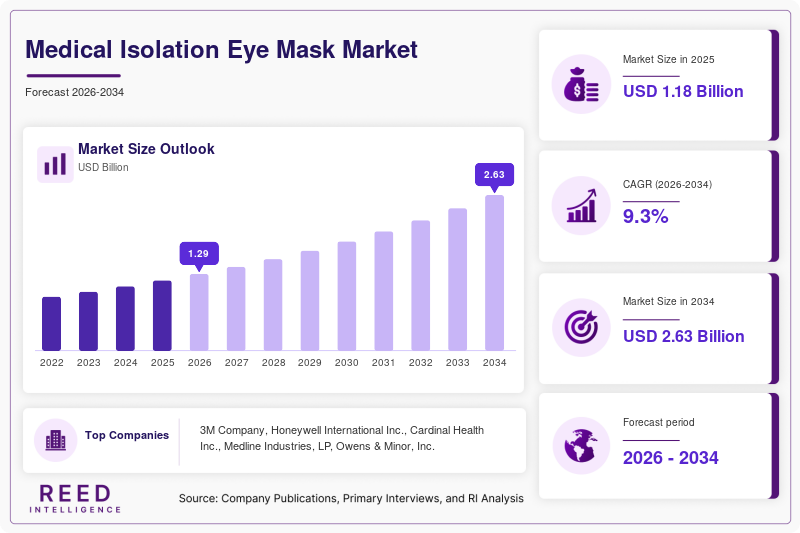
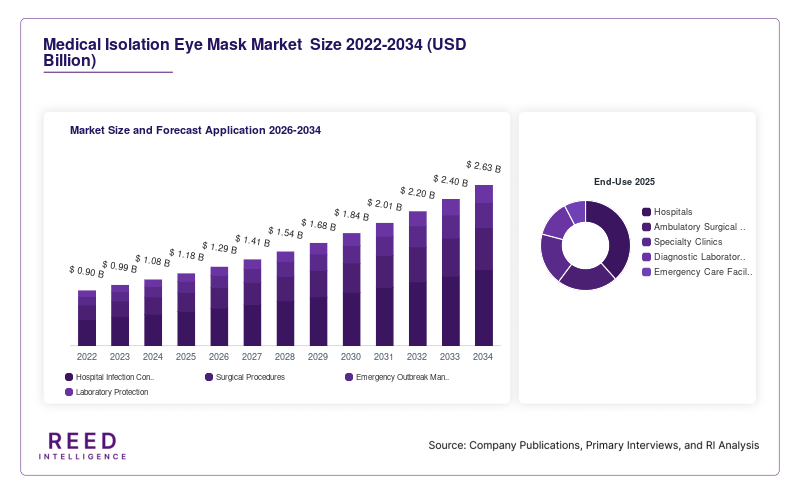
The global Medical Isolation Eye Mask Market size was valued at USD 1.18 billion in 2026 and is projected to reach USD 2.41 billion by 2034, expanding at a CAGR of 9.3% during 2026–2034. The market continues to gain momentum due to increasing emphasis on infection prevention, patient safety, and healthcare worker protection across hospitals, ambulatory care centers, specialty clinics, and emergency response facilities. Medical isolation eye masks are designed to minimize exposure to airborne particles, droplets, fluids, and infectious contaminants while ensuring patient comfort and clinical visibility.
A major global factor supporting market expansion is the growing focus on healthcare-associated infection prevention programs. Healthcare providers across developed and emerging economies are strengthening protective equipment procurement strategies to reduce transmission risks in clinical environments. Increased investments in hospital infrastructure, rising surgical volumes, and enhanced preparedness for infectious disease outbreaks have further accelerated demand. Additionally, innovations in anti-fog coatings, lightweight materials, ergonomic designs, and disposable protective solutions are improving product acceptance among healthcare professionals and patients.
Key Highlights
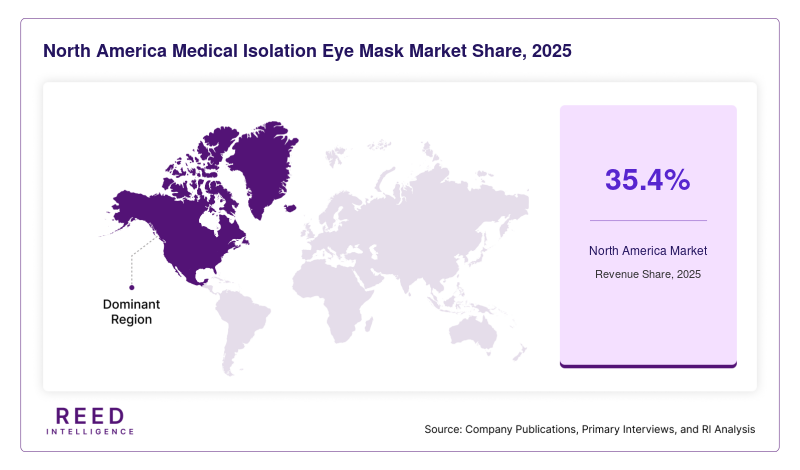
- North America dominated the market with a 35.4% share in 2025.
- Asia Pacific is expected to grow at the fastest CAGR of 10.8% during 2026–2034.
- By product type, disposable medical isolation eye masks accounted for the largest share of 61.8%.
- while antimicrobial-coated eye masks are projected to grow at a CAGR of 11.4%.
- By application, hospital infection control led with a 47.2% share.
- whereas emergency outbreak management is expected to expand at a CAGR of 11.1%.
- By end-use, hospitals accounted for the largest share of 56.9%.
- while ambulatory surgical centers are projected to grow at a CAGR of 10.9%.
- The United States remained the dominant country, with market values of USD 312 million in 2024 and USD 346 million in 2025.
Market Trends
Growing Adoption of Antimicrobial and Advanced Protective Materials
Healthcare facilities are increasingly adopting medical isolation eye masks manufactured using antimicrobial materials that provide additional protection against microbial contamination. Manufacturers are investing in advanced coatings capable of reducing pathogen survival on product surfaces, thereby supporting infection control protocols. Hospitals are seeking protective equipment that combines safety, comfort, and durability, leading to greater demand for next-generation eye masks. Anti-fog technology, moisture-resistant materials, and skin-friendly polymers are becoming common product features. These innovations help improve user compliance during extended wear periods. The trend is particularly evident in large healthcare systems where procurement decisions increasingly focus on long-term protective performance and occupational safety standards.
Expansion of Strategic Stockpiling and Emergency Preparedness Programs
Governments, healthcare agencies, and private healthcare organizations are strengthening emergency preparedness initiatives, creating sustained demand for medical isolation eye masks. Lessons learned from infectious disease outbreaks have encouraged institutions to maintain larger inventories of protective equipment. Healthcare networks are establishing long-term supplier agreements to ensure uninterrupted access during periods of elevated demand. Strategic stockpiling programs are becoming more common across both developed and emerging markets. As public health authorities emphasize readiness for future epidemics and pandemics, procurement budgets allocated to protective medical products continue to increase. This trend is supporting stable market demand while encouraging manufacturers to expand production capacities and regional distribution networks.
Market Drivers
Rising Focus on Infection Prevention in Healthcare Facilities
The increasing prevalence of healthcare-associated infections is driving demand for medical isolation eye masks worldwide. Hospitals and clinics are implementing stricter infection control measures to protect both patients and healthcare professionals. Eye protection has become an important component of comprehensive personal protective equipment strategies, particularly in intensive care units, emergency departments, and surgical environments. Growing awareness regarding pathogen transmission through mucous membranes has further strengthened adoption. Healthcare administrators are investing in protective products that meet evolving safety standards while improving operational efficiency. As patient volumes continue to rise globally, healthcare facilities are expected to increase procurement of medical isolation eye masks to maintain safe clinical environments and minimize infection-related risks.
Growth in Surgical Procedures and Specialized Healthcare Services
The global increase in surgical procedures is creating substantial demand for medical isolation eye masks. Healthcare professionals involved in surgical interventions require reliable protective equipment to reduce exposure to bodily fluids and airborne contaminants. Expanding access to healthcare services, growing aging populations, and rising incidences of chronic diseases are contributing to higher procedural volumes. Specialty clinics and ambulatory surgical centers are also increasing adoption rates as they seek cost-effective infection prevention solutions. Furthermore, healthcare accreditation requirements often mandate the use of appropriate protective equipment during clinical procedures. These factors are collectively strengthening market growth and encouraging manufacturers to develop products tailored to specialized medical environments.
Market Restraint
Pricing Pressure and Product Standardization Challenges
Despite favorable growth prospects, the medical isolation eye mask market faces challenges associated with pricing pressure and product standardization. Healthcare providers, particularly in cost-sensitive regions, often prioritize low-cost procurement strategies when purchasing protective equipment. This can limit adoption of premium products featuring advanced coatings, enhanced comfort characteristics, or specialized protective technologies. Intense competition among manufacturers further contributes to pricing pressures and reduced profit margins. In addition, varying regulatory requirements across countries create complexities related to certification, quality assurance, and product approvals. Smaller manufacturers may face difficulties complying with multiple standards while maintaining competitive pricing. For example, a company seeking expansion across North America, Europe, and Asia Pacific may need to adapt product specifications and testing procedures to satisfy different regulatory frameworks. These challenges can increase operational costs and slow market penetration, particularly in emerging economies where healthcare budgets remain constrained and procurement decisions are heavily influenced by price considerations.
Market Opportunities
Increasing Healthcare Infrastructure Development in Emerging Economies
Emerging economies are investing heavily in healthcare infrastructure modernization, creating significant opportunities for medical isolation eye mask manufacturers. Governments are expanding hospital networks, establishing new specialty treatment centers, and increasing healthcare spending to improve service accessibility. These developments are generating additional demand for infection prevention products and protective equipment. Rapid urbanization and growing healthcare awareness are also encouraging healthcare providers to adopt higher safety standards. Manufacturers that establish local production facilities and distribution partnerships can benefit from expanding procurement requirements. As healthcare systems continue to mature across Asia, Latin America, and parts of Africa, demand for reliable and affordable medical isolation eye masks is expected to increase steadily throughout the forecast period.
Product Innovation Focused on Comfort and Long-Term Wearability
Continuous innovation aimed at improving comfort, fit, and usability presents another major growth opportunity. Healthcare professionals frequently wear protective equipment for extended durations, creating demand for products that minimize irritation and fatigue. Manufacturers are developing lightweight designs, adjustable straps, breathable materials, and hypoallergenic components to improve user experience. Advanced ergonomic designs can enhance compliance rates while reducing discomfort during prolonged use. Product differentiation through comfort-focused innovation is becoming increasingly important as healthcare organizations evaluate equipment based on both protection and user satisfaction. Companies capable of delivering improved wearability without compromising safety performance are likely to gain competitive advantages and strengthen market positioning across global healthcare settings.
Segmental Analysis
By Product Type
Disposable medical isolation eye masks represented the dominant product category and accounted for approximately 61.8% of market share in 2024. Their widespread adoption is driven by convenience, affordability, and reduced contamination risks. Healthcare facilities prefer disposable products because they eliminate the need for sterilization procedures and support compliance with infection prevention guidelines. Hospitals, emergency departments, and isolation wards rely heavily on disposable eye masks to maintain hygiene standards. The growing volume of patient admissions and increasing use of personal protective equipment continue to support demand. Manufacturers are also introducing enhanced disposable variants featuring anti-fog coatings and improved comfort characteristics, further strengthening segment leadership.
Antimicrobial-coated medical isolation eye masks are expected to emerge as the fastest-growing subsegment, registering a CAGR of 11.4% through 2034. Growth is driven by increasing demand for advanced protective solutions capable of reducing microbial contamination. Healthcare providers are adopting products that offer additional safety benefits beyond conventional barrier protection. Advances in material science have enabled the development of coatings that improve durability and effectiveness without compromising comfort. Rising awareness regarding pathogen transmission risks and growing emphasis on healthcare worker safety are encouraging adoption. Furthermore, healthcare institutions increasingly view antimicrobial technologies as valuable tools for enhancing infection prevention strategies and improving overall clinical safety outcomes.
By Application
Hospital infection control remained the largest application segment, accounting for approximately 47.2% of market share in 2024. Hospitals utilize medical isolation eye masks extensively across emergency rooms, intensive care units, operating theaters, and infectious disease departments. Increasing concerns regarding healthcare-associated infections have strengthened demand for comprehensive protective equipment programs. Regulatory requirements and accreditation standards often mandate the use of appropriate eye protection during clinical procedures. Hospitals also maintain strategic inventories to ensure preparedness during disease outbreaks and periods of increased patient volume. These factors continue to reinforce the segment's dominant position within the global market.
Emergency outbreak management is projected to be the fastest-growing application segment, expanding at a CAGR of 11.1% during the forecast period. The increasing frequency of infectious disease events has highlighted the importance of maintaining adequate protective equipment supplies. Public health agencies and healthcare organizations are investing in preparedness strategies that include stockpiling eye protection products. Rapid response capabilities have become a priority for healthcare systems worldwide. Growing collaboration between governments and healthcare providers to strengthen emergency readiness is creating significant opportunities for manufacturers. As outbreak preparedness programs continue to evolve, demand for specialized medical isolation eye masks is expected to increase substantially.
By End-Use
Hospitals constituted the dominant end-use segment, holding approximately 56.9% of market share in 2024. Large patient volumes, diverse clinical services, and strict infection control requirements contribute to substantial product consumption within hospital settings. Healthcare workers routinely utilize isolation eye masks during patient examinations, surgical procedures, and infection control activities. Hospitals also represent major procurement centers, often purchasing protective equipment through long-term contracts and centralized purchasing systems. Continuous investments in healthcare quality improvement and workplace safety initiatives further support strong demand from this segment. The expansion of hospital infrastructure globally is expected to sustain market leadership throughout the forecast period.
Ambulatory surgical centers are anticipated to record the fastest growth, advancing at a CAGR of 10.9% through 2034. The growing preference for outpatient procedures is increasing patient traffic within these facilities. Ambulatory centers require reliable protective equipment to maintain safety standards and comply with healthcare regulations. Their focus on operational efficiency encourages adoption of cost-effective yet high-quality infection prevention solutions. Expanding healthcare access, technological advancements in minimally invasive procedures, and rising demand for outpatient care are contributing to segment growth. Manufacturers are increasingly targeting ambulatory surgical centers with specialized products designed to balance comfort, protection, and affordability.
Regional Analysis
North America
North America accounted for approximately 35.4% of the global market share in 2025 and is expected to register a CAGR of 8.7% through 2034. The region benefits from advanced healthcare infrastructure, strong regulatory oversight, and extensive adoption of infection prevention protocols. Hospitals and healthcare systems consistently invest in personal protective equipment to comply with workplace safety standards. Demand remains supported by large procurement budgets, frequent replacement cycles, and continued emphasis on occupational health protection across clinical environments.
The United States represents the dominant country within the region. A key growth factor is the extensive integration of infection control programs across healthcare facilities. Large hospital networks routinely update protective equipment inventories and maintain emergency preparedness reserves. Continuous investment in healthcare modernization and strong awareness regarding healthcare-associated infection risks continue to support long-term market expansion throughout the country.
Europe
Europe held approximately 28.1% of global market revenue in 2025 and is projected to expand at a CAGR of 8.4% during the forecast period. The market is supported by stringent healthcare safety regulations and widespread adoption of standardized protective equipment. Public healthcare systems across major European countries prioritize infection prevention measures, creating stable demand for medical isolation eye masks. Additionally, increased healthcare spending and modernization initiatives are contributing to market growth across both Western and Eastern Europe.
Germany remains the leading country in the European market. A unique growth factor is the country's strong medical manufacturing ecosystem, which supports product innovation and supply chain efficiency. Healthcare institutions increasingly adopt advanced protective solutions that improve safety and user comfort. Growing investments in hospital modernization and occupational safety programs further contribute to sustained demand for medical isolation eye masks.
Asia Pacific
Asia Pacific represented approximately 22.6% of market share in 2025 and is expected to record the fastest CAGR of 10.8% through 2034. Rapid healthcare infrastructure expansion, population growth, and rising awareness regarding infection prevention are supporting regional market development. Governments are increasing healthcare investments while encouraging modernization of public hospitals and community healthcare facilities. The growing availability of healthcare services is creating favorable conditions for protective equipment adoption across diverse clinical settings.
China dominates the regional market due to its extensive healthcare network and manufacturing capabilities. A distinctive growth factor is the rapid expansion of domestic medical device production. Local manufacturers are increasing output to satisfy both domestic and international demand. Furthermore, healthcare reforms aimed at improving patient safety and healthcare quality continue to strengthen demand for medical isolation eye masks across urban and rural healthcare facilities.
Middle East & Africa
The Middle East & Africa accounted for around 7.4% of global market revenue in 2025 and is forecast to grow at a CAGR of 9.1% through 2034. Market growth is supported by healthcare infrastructure investments and increasing awareness regarding infection prevention practices. Governments across the region are allocating resources toward hospital expansion projects and healthcare modernization programs. Rising demand for quality healthcare services is encouraging greater adoption of protective equipment in both public and private healthcare institutions.
Saudi Arabia leads the regional market. A significant growth factor is the country's healthcare transformation initiatives, which emphasize patient safety and clinical quality improvement. Ongoing investments in new hospitals, specialized treatment centers, and healthcare workforce development are increasing demand for medical isolation eye masks. These initiatives are expected to support market growth over the coming years.
Latin America
Latin America captured approximately 6.5% of the global market in 2025 and is anticipated to register a CAGR of 8.9% through 2034. The region is experiencing gradual improvements in healthcare accessibility and infection control awareness. Governments and healthcare providers are increasing investments in protective equipment procurement to strengthen patient and worker safety. Growing demand for quality healthcare services and expanding private healthcare networks are contributing to market development.
Brazil remains the dominant country in Latin America. A unique growth factor is the expansion of public health programs aimed at strengthening healthcare service delivery across underserved regions. Healthcare institutions are increasingly adopting standardized infection prevention protocols and improving procurement processes. These developments are expected to create sustained opportunities for medical isolation eye mask manufacturers operating in the region.
Competitive Landscape
The medical isolation eye mask market remains moderately fragmented, with international and regional manufacturers competing through product innovation, pricing strategies, and distribution network expansion. Companies are focusing on advanced materials, ergonomic designs, and antimicrobial technologies to strengthen market positioning. Strategic partnerships with healthcare providers and government procurement agencies continue to play an important role in market expansion.
Among leading participants, 3M Company maintains a strong position due to its broad protective equipment portfolio, established distribution channels, and continuous product development efforts. Recent developments across the industry include investments in antimicrobial coating technologies, expansion of manufacturing capacities, and the introduction of lightweight protective eye masks designed for extended wear. Other major companies are emphasizing regional expansion and product customization to address evolving healthcare requirements. Competitive intensity is expected to increase as healthcare institutions seek protective solutions that combine performance, comfort, and regulatory compliance.
Key Players
- 3M Company
- Honeywell International Inc.
- Cardinal Health Inc.
- Medline Industries LP
- Owens & Minor Inc.
- Mölnlycke Health Care AB
- Ansell Limited
- Kimberly-Clark Corporation
- Halyard Health
- Alpha Pro Tech Ltd.
- Dynarex Corporation
- Prestige Ameritech
- DuPont Personal Protection
- Winner Medical Co., Ltd.
Recent Developments
- 3M Company introduced an upgraded medical isolation eye mask portfolio featuring enhanced anti-fog performance and improved compatibility with protective face coverings.
- Honeywell International expanded production capacity for healthcare protective equipment to support growing institutional demand and emergency preparedness programs.
- Cardinal Health launched new lightweight isolation eye masks designed to improve wearer comfort during prolonged clinical use.
- Medline Industries strengthened its infection prevention product portfolio through the introduction of advanced protective materials and ergonomic design enhancements.
- Ansell Limited expanded regional distribution partnerships across Asia Pacific to improve access to healthcare protective equipment in emerging markets.
Medical Isolation Eye Mask Market Segments
Product Type
A PHP Error was encountered
Severity: Notice
Message: Undefined offset: 0
Filename: reportpages/rd.php
Line Number: 400
Backtrace:
File: /var/www/html/application/views/frontend/reportpages/rd.php
Line: 400
Function: _error_handler
File: /var/www/html/application/controllers/FrontendReportController.php
Line: 420
Function: view
File: /var/www/html/index.php
Line: 315
Function: require_once
- Disposable Medical Isolation Eye Masks
- Reusable Medical Isolation Eye Masks
- Antimicrobial-Coated Medical Isolation Eye Masks
Application
- Hospital Infection Control
- Surgical Procedures
- Emergency Outbreak Management
- Laboratory Protection
End-Use
- Hospitals
- Ambulatory Surgical Centers
- Specialty Clinics
- Diagnostic Laboratories
- Emergency Care Facilities
By Region
- North America
- Europe
- APAC
- Middle East and Africa
- LATAM