Medical Radiation Protection Apron Market Size, Share & Demand Report By Material Type (Lead-Based Aprons, Lead-Free Aprons), By Product Type (Front Protection Aprons, Wrap-Around Aprons), By End-Use (Hospitals, Diagnostic Imaging Centers, Specialty Clinics) & Segment Forecasts, 2026–2034
USD 3950
Market Overview
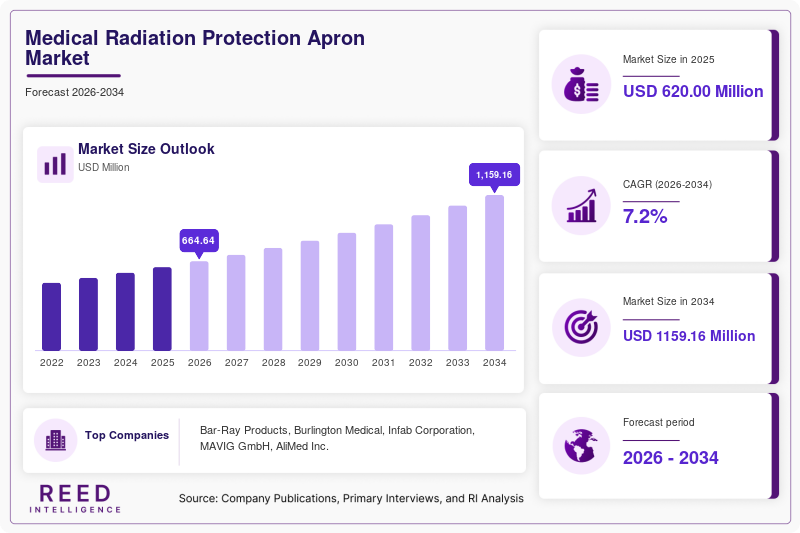
The Medical Radiation Protection Apron Market was valued at approximately USD 620 million in 2026 and is projected to reach USD 1.08 billion by 2034, expanding at a CAGR of 7.2% during 2026–2034. The market growth is supported by the rising number of diagnostic imaging procedures such as X-rays, CT scans, and fluoroscopy, which require stringent radiation safety measures for healthcare professionals. Increasing awareness regarding occupational radiation exposure and regulatory compliance has driven consistent adoption of protective apparel across hospitals and diagnostic centers.
A key global factor contributing to market expansion is the rapid increase in chronic diseases, including cardiovascular conditions and cancer, which necessitate frequent imaging procedures. This trend has led to higher utilization of radiation-emitting devices, thereby increasing demand for protective aprons. Additionally, advancements in lightweight composite materials have improved user comfort, encouraging broader adoption among healthcare workers.
Key Highlights
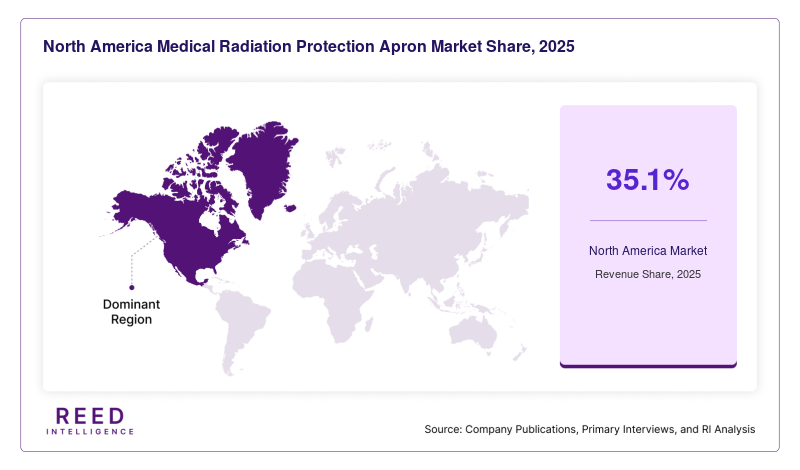
- North America dominated the market with a 35.1% share in 2025.
- Asia Pacific is expected to grow at the fastest CAGR of 9.1% during 2026–2034.
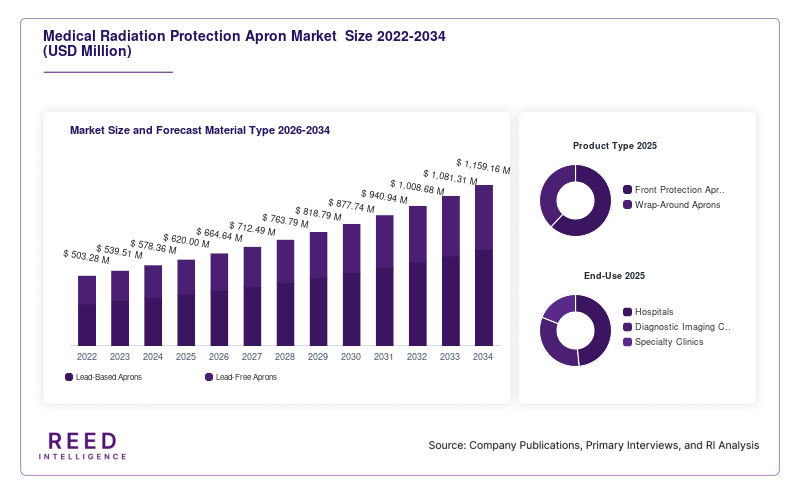
- By material type, lead-based aprons accounted for the largest share of 52.4%, while lead-free aprons are projected to grow at a CAGR of 8.7%.
- By end-use, hospitals led with a 48.9% share, whereas diagnostic imaging centers are expected to expand at a CAGR of 8.3%.
- The United States remained the dominant country, with market values of USD 210 million in 2024 and USD 230 million in 2025.
Market Trends
Increasing Adoption of Lightweight and Lead-Free Aprons
The market is witnessing a shift toward lightweight and lead-free radiation protection aprons, driven by the need to improve ergonomics and reduce long-term health risks for healthcare professionals. Traditional lead-based aprons, while effective, are associated with musculoskeletal strain due to their weight. As a result, manufacturers are developing composite materials using tungsten, bismuth, and antimony, which offer comparable radiation shielding with reduced weight. This transition is particularly evident in high-volume imaging environments such as interventional radiology and cardiology suites. Hospitals are prioritizing staff safety and comfort, leading to higher procurement of advanced aprons. Additionally, environmental concerns related to lead disposal have encouraged healthcare facilities to adopt eco-friendly alternatives, further supporting the trend.
Integration of Custom-Fit and Smart Apron Solutions
Another notable trend is the emergence of customized and technologically enhanced radiation protection aprons. Healthcare providers are increasingly demanding aprons tailored to individual body measurements to ensure optimal protection and comfort. This has led to the introduction of custom-fit solutions, especially in large hospital networks. Furthermore, smart aprons equipped with tracking systems and wear sensors are gaining attention. These innovations help monitor usage patterns, ensure compliance, and optimize inventory management. The integration of digital tracking systems also supports regulatory audits and safety protocols. As healthcare systems move toward digital transformation, the adoption of smart protective equipment is expected to expand steadily.
Market Drivers
Rising Volume of Diagnostic Imaging Procedures
The growing prevalence of chronic diseases such as cancer, cardiovascular disorders, and orthopedic conditions has led to a significant increase in diagnostic imaging procedures worldwide. Imaging modalities like X-rays, CT scans, and fluoroscopy are widely used for early diagnosis and treatment monitoring. This surge in imaging procedures directly increases the exposure risk for healthcare professionals, thereby driving the demand for radiation protection aprons. Hospitals and diagnostic centers are investing in protective equipment to comply with occupational safety regulations. Additionally, the expansion of imaging infrastructure in emerging economies is contributing to higher adoption rates. The continuous rise in patient volumes further amplifies the need for reliable protective solutions.
Stringent Regulatory Standards for Radiation Safety
Government and international health organizations have implemented strict regulations to ensure radiation safety in healthcare environments. These regulations mandate the use of protective equipment, including radiation protection aprons, for medical staff exposed to ionizing radiation. Compliance with these standards is essential for healthcare facilities to maintain accreditation and avoid legal penalties. Regulatory bodies also conduct periodic inspections, encouraging institutions to upgrade their protective gear. This has led to increased procurement of high-quality aprons with certified shielding capabilities. Moreover, growing awareness among healthcare workers about radiation hazards has reinforced adherence to safety protocols, further boosting market growth.
Market Restraint
High Cost of Advanced Radiation Protection Aprons
One of the primary challenges in the Medical Radiation Protection Apron Market is the high cost associated with advanced protective solutions. Lead-free and lightweight aprons, while offering improved comfort and safety, are significantly more expensive than traditional lead-based alternatives. This cost difference can be a barrier for small and medium-sized healthcare facilities, particularly in developing regions where budget constraints are prominent. Additionally, the need for regular inspection, maintenance, and replacement of aprons adds to the overall operational expenses. Hospitals must ensure that aprons maintain their protective integrity, which often requires periodic testing and quality checks.
The high initial investment and ongoing maintenance costs can limit adoption rates, especially in cost-sensitive markets. For example, smaller diagnostic centers may opt for lower-cost options or delay equipment upgrades, potentially compromising safety standards. Furthermore, fluctuations in raw material prices for composite materials can impact product pricing, creating uncertainty for buyers. Addressing this restraint requires manufacturers to focus on cost optimization strategies and develop affordable solutions without compromising quality. Government subsidies and institutional funding programs could also play a role in mitigating cost-related challenges.
Market Opportunities
Expansion of Healthcare Infrastructure in Emerging Markets
Emerging economies across Asia Pacific, Latin America, and parts of Africa are experiencing rapid growth in healthcare infrastructure. Governments and private investors are increasing spending on hospitals, diagnostic centers, and imaging facilities. This expansion presents a significant opportunity for the radiation protection apron market, as new facilities require comprehensive safety equipment. The rising middle-class population and improving access to healthcare services are also driving demand for diagnostic imaging, thereby increasing the need for protective gear. Manufacturers can capitalize on this opportunity by establishing local production units and distribution networks to reduce costs and improve accessibility. Strategic partnerships with healthcare providers in these regions can further enhance market penetration.
Technological Innovation in Materials and Design
Advancements in material science and product design offer substantial growth opportunities for market players. The development of lightweight, flexible, and durable materials has the potential to transform radiation protection aprons. Innovations such as nanocomposite materials and multi-layer shielding technologies can provide enhanced protection while maintaining comfort. Additionally, ergonomic designs that reduce strain and improve mobility are gaining traction among healthcare professionals. Companies investing in research and development can differentiate their products and capture a larger market share. The growing emphasis on sustainability also opens avenues for eco-friendly apron solutions, aligning with global environmental goals.
Segmental Analysis
By Material Type
Lead-based aprons dominated the market in 2024, accounting for a share of approximately 52.4%. These aprons have been widely used due to their proven effectiveness in blocking radiation and their relatively lower cost compared to advanced alternatives. Healthcare facilities, particularly in developing regions, continue to rely on lead-based aprons due to budget constraints and established safety standards. The availability of various thickness levels and designs also supports their widespread adoption. Additionally, many regulatory guidelines are based on lead-equivalent protection, further reinforcing the dominance of this segment.
Lead-free aprons are the fastest-growing subsegment, expected to expand at a CAGR of 8.7% during the forecast period. The growth is driven by increasing concerns regarding the weight and environmental impact of lead-based aprons. Lead-free alternatives offer improved comfort and flexibility, making them suitable for long-duration procedures. Healthcare providers are increasingly adopting these aprons to enhance staff safety and comply with environmental regulations. Technological advancements in composite materials have improved their radiation shielding capabilities, further supporting their growth.
By Product Type
Front protection aprons held the largest share of around 46.8% in 2024. These aprons are commonly used in standard diagnostic procedures where radiation exposure is primarily from the front. Their simple design, ease of use, and cost-effectiveness make them a preferred choice in many healthcare settings. Front protection aprons are widely used in dental clinics, outpatient centers, and basic imaging facilities. The availability of various sizes and styles also contributes to their popularity.
Wrap-around aprons are expected to be the fastest-growing subsegment, with a CAGR of 8.5%. These aprons provide 360-degree protection, making them ideal for high-exposure environments such as interventional radiology and cardiology procedures. The increasing adoption of minimally invasive procedures, which require extended radiation exposure, is driving demand for wrap-around designs. Additionally, improved ergonomic features and weight distribution enhance user comfort, supporting their growing adoption.
By End-Use
Hospitals dominated the market in 2024, accounting for a share of approximately 48.9%. Hospitals perform a high volume of diagnostic and interventional procedures, requiring extensive use of radiation protection equipment. The presence of multiple departments, including radiology, cardiology, and oncology, contributes to consistent demand. Hospitals also have higher budgets for safety equipment, enabling them to invest in advanced aprons. Furthermore, strict regulatory compliance requirements ensure regular procurement and replacement of protective gear.
Diagnostic imaging centers are the fastest-growing subsegment, projected to grow at a CAGR of 8.3%. The increasing number of standalone imaging centers, particularly in urban areas, is driving demand for radiation protection aprons. These centers focus on high patient throughput, necessitating reliable protective equipment for staff. The growing preference for outpatient diagnostic services and advancements in imaging technologies further support the expansion of this segment. Additionally, private investments in diagnostic infrastructure are expected to boost growth.
Regional Analysis
North America
North America held a significant share of approximately 35.1% in 2025 and is expected to grow at a CAGR of 6.8% during the forecast period. The region’s dominance is attributed to advanced healthcare infrastructure, high adoption of diagnostic imaging technologies, and stringent regulatory standards. The presence of well-established healthcare systems and strong reimbursement frameworks further supports market growth. Continuous technological advancements and high awareness regarding occupational safety contribute to sustained demand for radiation protection aprons.
The United States is the dominant country in this region, driven by a high volume of imaging procedures and strict compliance requirements. A unique growth factor is the widespread adoption of interventional radiology procedures, which require prolonged radiation exposure protection. This has led to increased demand for high-quality, durable aprons. Additionally, ongoing investments in healthcare modernization continue to support market expansion.
Europe
Europe accounted for around 27.4% of the market share in 2025 and is projected to grow at a CAGR of 6.5%. The region benefits from strong regulatory frameworks and high healthcare spending. Countries in Western Europe have well-developed healthcare systems, ensuring consistent demand for radiation protection equipment. The growing focus on worker safety and compliance with European radiation safety directives further drives the market.
Germany leads the European market, supported by its advanced medical technology sector and high adoption of diagnostic imaging procedures. A unique growth factor is the emphasis on eco-friendly and lead-free materials, driven by strict environmental regulations. This has encouraged healthcare providers to transition toward sustainable apron solutions, boosting demand for innovative products.
Asia Pacific
Asia Pacific is expected to be the fastest-growing region, with a CAGR of 9.1% during 2026–2034, and held a 21.6% share in 2025. Rapid urbanization, increasing healthcare investments, and expanding diagnostic infrastructure are key growth drivers. The region’s large population base and rising prevalence of chronic diseases contribute to higher demand for imaging procedures and protective equipment.
China dominates the regional market, supported by extensive healthcare infrastructure development and government initiatives. A unique growth factor is the rapid expansion of private diagnostic centers, which are investing in modern equipment and safety solutions. This trend is expected to significantly boost the demand for radiation protection aprons across the region.
Middle East & Africa
The Middle East & Africa region held a market share of approximately 8.3% in 2025 and is projected to grow at a CAGR of 7.0%. Growth is driven by increasing investments in healthcare infrastructure and rising awareness of radiation safety. Governments in the region are focusing on improving healthcare services, leading to higher adoption of diagnostic imaging technologies.
Saudi Arabia is the leading country in this region, supported by government initiatives to modernize healthcare facilities. A unique growth factor is the growing number of specialty hospitals and diagnostic centers, which require advanced radiation protection equipment. This trend is expected to drive steady market growth.
Latin America
Latin America accounted for around 7.6% of the market share in 2025 and is expected to grow at a CAGR of 6.9%. The region is witnessing gradual improvements in healthcare infrastructure and increased adoption of diagnostic imaging technologies. Economic development and government healthcare initiatives are contributing to market expansion.
Brazil is the dominant country in this region, driven by a large patient population and growing healthcare investments. A unique growth factor is the increasing presence of private healthcare providers, which are investing in advanced medical equipment and safety solutions. This is expected to boost demand for radiation protection aprons.
Competitive Landscape
The Medical Radiation Protection Apron Market is moderately fragmented, with several global and regional players competing based on product quality, innovation, and pricing. Leading companies are focusing on developing lightweight, durable, and eco-friendly aprons to meet evolving customer requirements. Strategic initiatives such as mergers, acquisitions, and partnerships are common as companies aim to expand their market presence.
One of the leading players, Bar-Ray Products, has maintained a strong position through continuous product innovation and a wide distribution network. The company recently introduced a new range of lightweight composite aprons designed for improved comfort and durability. Other key players are investing in research and development to enhance material performance and introduce advanced features such as ergonomic designs and customizable solutions. The competitive landscape is expected to remain dynamic, with increasing emphasis on technological advancements and cost optimization.
Key Players
- Bar-Ray Products
- Burlington Medical
- Infab Corporation
- MAVIG GmbH
- AliMed Inc.
- Lite Tech Inc.
- Kiran X-Ray
- Shielding International
- Cablas Srl
- Protech Medical
- Rothband Ltd.
- Wolf X-Ray Corporation
- AmRay Group
- Rego X-Ray GmbH
- AADCO Medical
Recent Developments
- In 2025, Burlington Medical launched a new line of ultra-lightweight lead-free aprons aimed at reducing musculoskeletal strain among healthcare professionals.
- In 2024, MAVIG GmbH expanded its production capacity in Europe to meet increasing demand for radiation protection products.
- In 2025, Infab Corporation introduced customizable apron solutions with enhanced ergonomic features for interventional procedures.
Medical Radiation Protection Apron Market Segments
Material Type
- Lead-Based Aprons
- Lead-Free Aprons
Product Type
- Front Protection Aprons
- Wrap-Around Aprons
End-Use
- Hospitals
- Diagnostic Imaging Centers
- Specialty Clinics
By Region
- North America
- Europe
- APAC
- Middle East and Africa
- LATAM