Melatonin API Market Size, Share & Demand Report By Type (Synthetic Melatonin, Plant-Based Melatonin), By Application (Dietary Supplements, Pharmaceuticals, Functional Food & Beverages), By End-Use (Nutraceutical Companies, Pharmaceutical Companies, Research Institutions) By Region & Segment Forecasts, 2026–2034
USD 3950
Market Overview
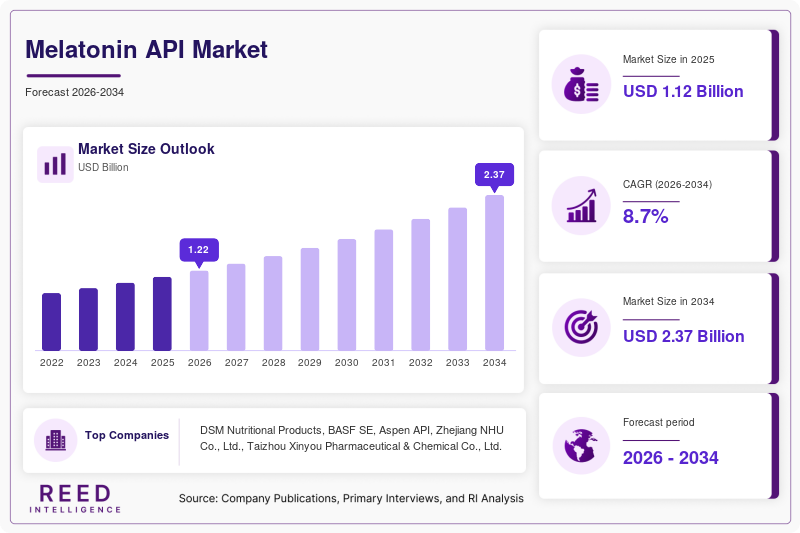
The global Melatonin API Market size was valued at USD 1.12 billion in 2026 and is projected to reach USD 2.18 billion by 2034, expanding at a CAGR of 8.7% during the forecast period (2026–2034). The market growth is primarily driven by increasing awareness regarding sleep disorders and rising demand for nutraceuticals and pharmaceutical formulations containing melatonin. The expanding aging population, which is more prone to insomnia and circadian rhythm disruptions, has significantly contributed to the rising consumption of melatonin-based products, thereby fueling demand for high-purity active pharmaceutical ingredients (APIs).
A key global factor supporting market expansion is the growing prevalence of sleep-related health conditions such as insomnia, delayed sleep phase disorder, and jet lag, particularly in urban populations. This has led to increased product innovation among pharmaceutical and dietary supplement manufacturers, who are actively incorporating melatonin APIs into tablets, capsules, gummies, and liquid formulations. Moreover, favorable regulatory shifts in several countries allowing melatonin as an over-the-counter supplement have broadened its consumer base, further accelerating production demand.
Key Highlights
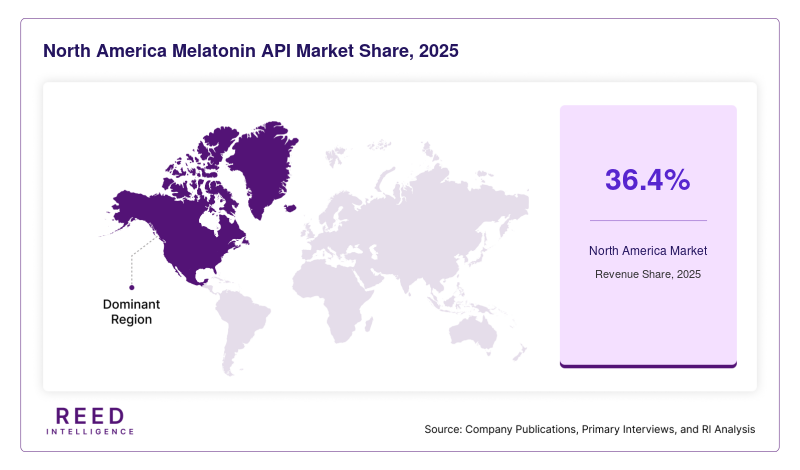
- North America dominated the market with a 36.4% share in 2025.
- Asia Pacific is expected to grow at the fastest CAGR of 10.9% during 2026–2034.
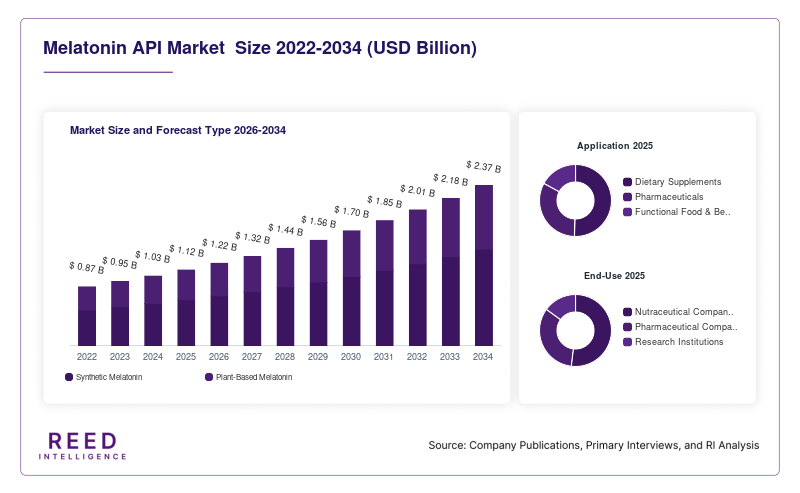
- By type, synthetic melatonin accounted for the largest share of 72.8%.
- while plant-based melatonin is projected to grow at a CAGR of 11.6%.
- By application, dietary supplements led with a 48.9% share, whereas pharmaceuticals are expected to expand at a CAGR of 9.8%.
- The United States remained the dominant country, with market values of USD 420 million in 2024 and USD 465 million in 2025.
Market Trends
Rising Demand for Natural and Plant-Based Melatonin APIs
A notable trend shaping the Melatonin API Market is the increasing preference for plant-derived and naturally sourced melatonin. Consumers are becoming more conscious of ingredient sourcing and are actively seeking products labeled as natural or organic. This shift has encouraged manufacturers to invest in botanical extraction technologies and sustainable sourcing practices. Plant-based melatonin, although currently a smaller segment compared to synthetic variants, is witnessing steady traction due to its perceived safety and compatibility with clean-label products. Additionally, regulatory authorities in several regions are showing increased acceptance of naturally derived APIs, further supporting this trend. The shift toward natural formulations is also influencing product branding and marketing strategies, as companies aim to differentiate their offerings in a competitive market environment.
Expansion of Functional Food and Beverage Applications
Another significant trend is the growing incorporation of melatonin APIs into functional foods and beverages. Manufacturers are introducing innovative delivery formats such as sleep-enhancing drinks, chocolates, and gummies infused with melatonin. This trend is driven by consumer demand for convenient and enjoyable consumption methods beyond traditional tablets and capsules. The functional food segment is particularly gaining traction among younger demographics who prefer lifestyle-oriented health solutions. Moreover, advancements in microencapsulation technologies have improved the stability and taste masking of melatonin, making it suitable for diverse food applications. As a result, the Melatonin API Market is expanding beyond pharmaceuticals into broader consumer health segments, creating new revenue streams for manufacturers.
Market Drivers
Increasing Prevalence of Sleep Disorders
The rising incidence of sleep disorders globally is a major driver for the Melatonin API Market. Urban lifestyles, increased screen time, work-related stress, and irregular sleep patterns have contributed to a surge in insomnia and circadian rhythm disorders. This has led to a growing reliance on melatonin-based products as a non-habit-forming alternative to traditional sleep medications. Healthcare professionals are increasingly recommending melatonin supplements due to their relatively favorable safety profile. Furthermore, the growing awareness campaigns and digital health platforms have educated consumers about the importance of sleep health, further boosting demand for melatonin APIs. The expanding patient pool continues to drive consistent growth in both pharmaceutical and nutraceutical segments.
Growth in Nutraceutical and Dietary Supplement Industry
The rapid expansion of the global nutraceutical industry is another key factor driving the Melatonin API Market. Consumers are increasingly adopting preventive healthcare approaches, leading to higher demand for dietary supplements that promote overall well-being, including sleep support. Melatonin has become a widely used ingredient in sleep aid supplements due to its natural role in regulating circadian rhythms. Additionally, the rise of e-commerce platforms has made these products more accessible to a broader consumer base. Manufacturers are also focusing on product innovation, such as combining melatonin with vitamins, herbal extracts, and minerals, to enhance efficacy. This growing integration of melatonin into nutraceutical formulations is significantly boosting API demand.
Market Restraint
Regulatory Variability and Dosage Restrictions
One of the primary challenges in the Melatonin API Market is the variability in regulatory frameworks across different countries. While some regions classify melatonin as a dietary supplement available over the counter, others treat it as a prescription drug with strict dosage limits. This inconsistency creates complexities for manufacturers in terms of product formulation, labeling, and distribution. For example, in certain European countries, melatonin dosage is tightly regulated, limiting the scope for high-strength formulations. Such restrictions can hinder market expansion and increase compliance costs. Additionally, concerns regarding long-term safety and potential side effects may lead to stricter regulations in the future, further impacting market growth. These regulatory challenges require companies to adopt region-specific strategies, which can increase operational complexities.
Market Opportunities
Emerging Markets and Increasing Healthcare Awareness
Emerging economies present significant growth opportunities for the Melatonin API Market. Countries in Asia Pacific, Latin America, and parts of Africa are witnessing rising healthcare awareness and increasing disposable incomes. As consumers become more informed about sleep health, the demand for melatonin-based products is expected to grow rapidly. Governments and healthcare organizations in these regions are also promoting preventive healthcare practices, further supporting market expansion. Additionally, the growing penetration of online retail channels is making these products more accessible in remote areas. Manufacturers can leverage these opportunities by establishing local production facilities and expanding distribution networks to tap into the growing demand in emerging markets.
Technological Advancements in API Manufacturing
Advancements in API manufacturing technologies are creating new opportunities for the Melatonin API Market. Innovations in synthesis processes and purification techniques are improving the quality, yield, and cost efficiency of melatonin production. High-purity APIs are increasingly in demand, particularly in pharmaceutical applications where stringent quality standards are required. Additionally, the development of controlled-release formulations and novel delivery systems is enhancing the effectiveness of melatonin products. These technological improvements not only reduce production costs but also enable manufacturers to meet diverse application requirements. As a result, companies investing in advanced manufacturing capabilities are likely to gain a competitive advantage in the market.
Segmental Analysis
By Type
Synthetic melatonin emerged as the dominant subsegment in 2024, accounting for 72.8% of the Melatonin API Market share. Its dominance can be attributed to cost efficiency, scalability, and consistent quality. Synthetic production methods allow manufacturers to achieve high purity levels required for pharmaceutical applications. Additionally, established production processes and availability of raw materials contribute to the widespread adoption of synthetic melatonin APIs. Pharmaceutical companies prefer synthetic variants due to their reliability and compliance with regulatory standards. The segment also benefits from economies of scale, which help maintain competitive pricing. As a result, synthetic melatonin continues to be the preferred choice for large-scale manufacturing.
Plant-based melatonin is the fastest-growing subsegment, projected to expand at a CAGR of 11.6% during the forecast period. The growth is driven by increasing consumer preference for natural and clean-label products. Manufacturers are investing in research to improve extraction efficiency and reduce production costs associated with plant-based melatonin. Additionally, the rising popularity of organic and vegan supplements is further boosting demand. Regulatory support for natural ingredients in certain regions also contributes to market growth. As consumer awareness continues to rise, plant-based melatonin is expected to gain a larger share in the coming years.
By Application
Dietary supplements held the largest share of the Melatonin API Market in 2024, accounting for 48.9%. The segment's dominance is driven by the widespread use of melatonin in sleep aid supplements. Consumers prefer over-the-counter products that are easily accessible and do not require a prescription. The increasing popularity of preventive healthcare and wellness trends has further boosted demand for dietary supplements. Manufacturers are also introducing innovative product formats such as gummies and dissolvable tablets to attract a broader consumer base. The convenience and affordability of these products contribute to their widespread adoption, supporting segment growth.
Pharmaceutical applications are expected to grow at the fastest CAGR of 9.8% during the forecast period. The growth is driven by increasing clinical research supporting the efficacy of melatonin in treating various sleep disorders. Additionally, the development of controlled-release formulations is enhancing therapeutic outcomes. Pharmaceutical companies are also focusing on expanding indications for melatonin, including its potential use in neurological disorders. The rising demand for prescription-based melatonin products in certain regions further supports segment growth.
By End-Use
Nutraceutical companies dominated the end-use segment in 2024, accounting for a significant share of the Melatonin API Market. The dominance is attributed to the high demand for dietary supplements and functional foods containing melatonin. These companies benefit from strong distribution networks and effective marketing strategies that target health-conscious consumers. The increasing focus on preventive healthcare and wellness trends further supports the growth of this segment. Additionally, collaborations between API manufacturers and nutraceutical companies ensure a steady supply of high-quality melatonin, contributing to market stability.
Pharmaceutical companies represent the fastest-growing end-use segment, with a projected CAGR of 9.5%. The growth is driven by increasing investments in research and development of melatonin-based drugs. Pharmaceutical firms are focusing on developing advanced formulations with improved efficacy and safety profiles. Regulatory approvals for new indications are also expected to boost demand for melatonin APIs. As clinical evidence supporting melatonin's therapeutic benefits continues to grow, pharmaceutical companies are likely to play a more significant role in the market.
Regional Analysis
North America
North America held the largest share of the Melatonin API Market in 2025, accounting for 36.4% of the global market. The region is expected to grow at a CAGR of 8.2% during the forecast period. High consumer awareness regarding sleep health, coupled with the widespread availability of melatonin supplements, has significantly contributed to market dominance. The presence of well-established nutraceutical and pharmaceutical industries further supports consistent demand for melatonin APIs.
The United States dominates the North American market, driven by strong consumer adoption of dietary supplements. A unique growth factor in the country is the increasing use of melatonin in pediatric sleep solutions, which has expanded the consumer base. Additionally, the growing trend of personalized nutrition is encouraging the development of customized melatonin formulations.
Europe
Europe accounted for a significant share of the Melatonin API Market in 2025 and is projected to grow at a CAGR of 7.5%. The region's growth is influenced by increasing awareness of sleep disorders and the rising aging population. However, regulatory restrictions in certain countries may limit market expansion to some extent.
Germany is a leading market in Europe, supported by a strong pharmaceutical manufacturing base. A unique growth factor in the country is the increasing demand for prescription-based melatonin products, which ensures high-quality API usage. The emphasis on clinical research and product efficacy further supports market growth.
Asia Pacific
Asia Pacific is expected to witness the fastest growth in the Melatonin API Market, with a CAGR of 10.9% during the forecast period. The region accounted for a growing share in 2025, driven by increasing urbanization and rising stress levels among working populations. Expanding healthcare infrastructure also supports market development.
China dominates the Asia Pacific market, primarily due to its strong API manufacturing capabilities. A unique growth factor is the country's role as a major exporter of melatonin APIs, supplying to global pharmaceutical and nutraceutical companies. This export-driven growth significantly contributes to regional expansion.
Middle East & Africa
The Middle East & Africa region is experiencing moderate growth in the Melatonin API Market, with increasing adoption of dietary supplements. The region accounted for a smaller share in 2025 but is expected to grow steadily at a CAGR of 7.1%. Improving healthcare awareness is a key factor supporting growth.
Saudi Arabia leads the market in this region, driven by rising health consciousness among consumers. A unique growth factor is the increasing demand for sleep aids due to changing lifestyle patterns and work schedules. This has led to a gradual increase in melatonin product consumption.
Latin America
Latin America is witnessing steady growth in the Melatonin API Market, supported by improving economic conditions and rising healthcare awareness. The region accounted for a moderate share in 2025 and is projected to grow at a CAGR of 7.8% during the forecast period.
Brazil dominates the Latin American market, driven by a growing nutraceutical industry. A unique growth factor is the increasing availability of melatonin supplements through online platforms, which has enhanced product accessibility. This trend is expected to continue supporting market expansion.
Competitive Landscape
The Melatonin API Market is moderately fragmented, with several global and regional players competing based on product quality, pricing, and innovation. Leading companies focus on expanding their production capacities and enhancing product purity to meet stringent regulatory standards. Strategic partnerships with pharmaceutical and nutraceutical companies are also common to strengthen market presence.
A leading player in the market is DSM Nutritional Products, known for its high-quality melatonin APIs and strong global distribution network. The company has recently invested in advanced manufacturing technologies to improve production efficiency and meet growing demand. Other major players are focusing on expanding their product portfolios and entering emerging markets to gain a competitive edge. Continuous research and development activities are expected to play a crucial role in maintaining competitiveness in the market.
Key Players List
- DSM Nutritional Products
- BASF SE
- Aspen API
- Zhejiang NHU Co., Ltd.
- Taizhou Xinyou Pharmaceutical & Chemical Co., Ltd.
- Hubei Biocause Pharmaceutical Co., Ltd.
- Neimenggu Fufeng Biotechnology Co., Ltd.
- Shanghai Freemen LLC
- Aarti Drugs Ltd.
- Dishman Carbogen Amcis Ltd.
- Cadila Pharmaceuticals Ltd.
- Hubei Gedian Humanwell Pharmaceutical Co., Ltd.
- Suzhou Fushilai Pharmaceutical Co., Ltd.
- Jilin Shulan Synthetic Pharmaceutical Co., Ltd.
- Hangzhou Think Chemical Co., Ltd.
Recent Developments
- A leading API manufacturer expanded its production facility in Asia to increase melatonin output capacity and meet rising global demand.
- A pharmaceutical company launched a new controlled-release melatonin formulation targeting chronic insomnia patients.
- A nutraceutical brand introduced a plant-based melatonin supplement line, focusing on clean-label and organic products.
Melatonin API Market Segments
Type
- Synthetic Melatonin
- Plant-Based Melatonin
Application
- Dietary Supplements
- Pharmaceuticals
- Functional Food & Beverages
End-Use
- Nutraceutical Companies
- Pharmaceutical Companies
- Research Institutions
By Region
- North America
- Europe
- APAC
- Middle East and Africa
- LATAM