Meningitis Imaging Market Size, Share & Demand Report By Imaging Modality (MRI Systems, CT Imaging Systems, Molecular Imaging Systems), By Application (Bacterial Meningitis Diagnostics, Viral Meningitis Diagnostics, Fungal Meningitis Diagnostics), By End Use (Hospitals, Diagnostic Imaging Centers), By Region & Segment Forecasts, 2026–2034
USD 3950
Market Overview
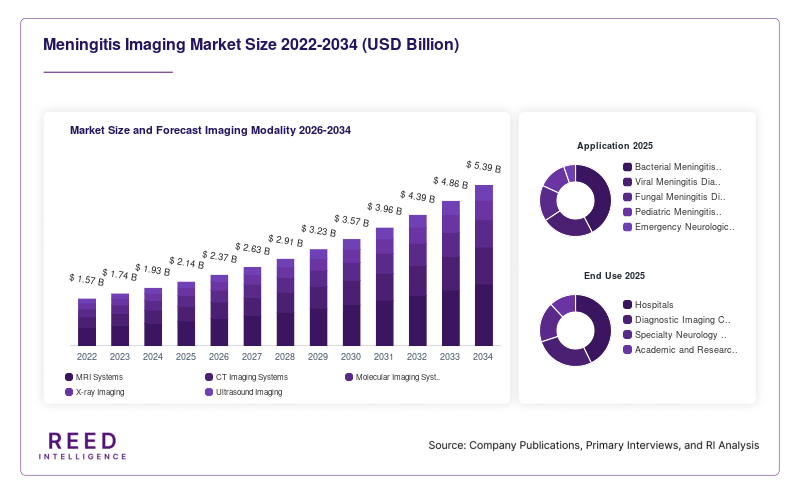
The global Meningitis Imaging Market size was valued at USD 2.14 billion in 2026 and is projected to reach USD 4.87 billion by 2034, expanding at a CAGR of 10.8% during 2026–2034. The market is experiencing steady expansion due to the growing burden of neurological infections, rising awareness regarding early diagnosis, and wider adoption of advanced imaging technologies in emergency and critical care settings. Imaging techniques such as magnetic resonance imaging (MRI), computed tomography (CT), and molecular imaging are increasingly used to identify inflammation in the meninges, detect complications, and support rapid clinical decision-making.
The growing prevalence of bacterial and viral meningitis across both developed and developing economies has encouraged healthcare systems to improve diagnostic capabilities. Governments and healthcare organizations are investing in advanced neuroimaging infrastructure to reduce mortality and long-term neurological complications associated with delayed diagnosis. In addition, technological progress in artificial intelligence-assisted imaging analysis and portable imaging systems has improved accessibility in regional hospitals and diagnostic centers. The integration of cloud-based imaging platforms and tele-radiology services is also supporting market growth by enabling faster interpretation of scans in remote areas.
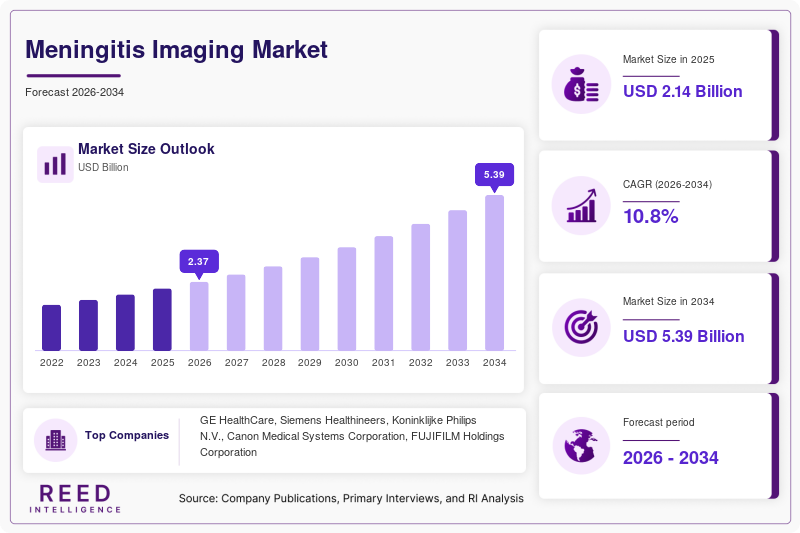
Key Highlights
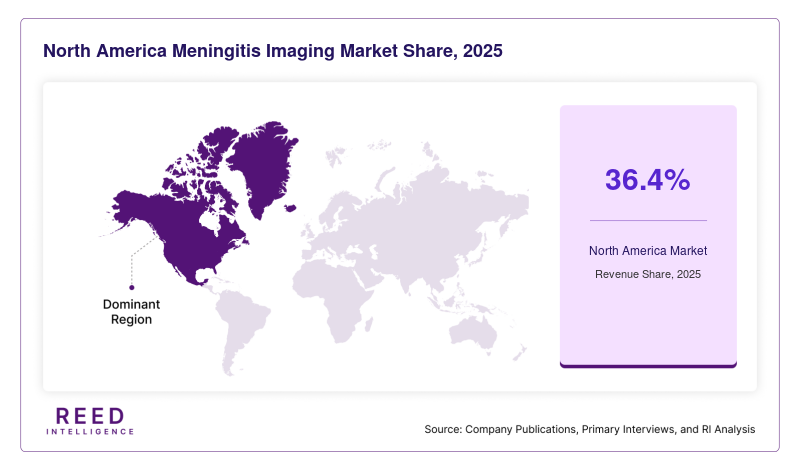
- North America dominated the market with a 36.4% share in 2025.
- Asia Pacific is expected to grow at the fastest CAGR of 12.3% during 2026–2034.
- By imaging modality, MRI systems accounted for the largest share of 44.8%.
- while molecular imaging systems are projected to grow at a CAGR of 13.1%.
- By application, bacterial meningitis diagnostics led with a 39.7% share.
- whereas pediatric meningitis imaging is expected to expand at a CAGR of 12.8%.
- The United States remained the dominant country, with market values of USD 620 million in 2024 and USD 688 million in 2025.
Market Trends
Growing Integration of Artificial Intelligence in Neuroimaging
Artificial intelligence integration in neurological imaging platforms has emerged as a significant trend in the Meningitis Imaging Market. Healthcare providers are increasingly using AI-enabled imaging software to improve the detection of subtle inflammatory abnormalities associated with meningitis. These systems help radiologists identify edema, hydrocephalus, abscesses, and meningeal enhancement more accurately and in less time. AI-assisted tools also reduce reporting delays in emergency departments where rapid diagnosis is critical for patient survival. Hospitals are adopting machine learning algorithms capable of comparing current brain scans with historical imaging datasets to support diagnostic confidence and treatment planning.
The trend is gaining momentum because healthcare systems are under pressure to improve patient outcomes while managing growing imaging volumes. AI-enabled imaging solutions also support rural and underserved healthcare facilities through remote interpretation and cloud connectivity. Several imaging manufacturers are incorporating automated lesion segmentation and predictive analytics into their MRI and CT platforms. As healthcare institutions prioritize workflow efficiency and precision diagnostics, the adoption of AI-supported meningitis imaging solutions is expected to continue rising during the forecast period.
Rising Adoption of Portable and Point-of-Care Imaging Systems
Portable imaging systems are becoming increasingly important in meningitis diagnosis, particularly in emergency care units, military healthcare facilities, and low-resource environments. Compact CT scanners and mobile MRI units are helping healthcare providers conduct neurological imaging closer to the patient, reducing delays associated with patient transfer. This trend is especially relevant for critically ill patients and pediatric populations where rapid assessment is necessary. Point-of-care imaging systems are also supporting healthcare delivery during infectious disease outbreaks and public health emergencies.
Healthcare providers are investing in portable imaging equipment because it improves accessibility and operational flexibility. Manufacturers are focusing on lightweight systems with improved image quality, lower power consumption, and faster scan times. The expansion of mobile healthcare infrastructure in emerging economies is further supporting demand for portable neuroimaging technologies. Telemedicine integration with portable imaging devices is another factor accelerating market growth. These advancements are expected to improve meningitis diagnosis rates in remote and underserved regions while expanding the overall addressable market for imaging vendors.
Market Drivers
Increasing Incidence of Neurological Infections and Hospital Admissions
The growing incidence of bacterial, viral, and fungal meningitis is one of the primary drivers supporting the expansion of the Meningitis Imaging Market. Urban population growth, increased international travel, and periodic infectious disease outbreaks have contributed to higher rates of neurological infections worldwide. Healthcare providers are prioritizing rapid diagnosis because delayed treatment can lead to hearing loss, cognitive impairment, seizures, and mortality. Imaging plays a critical role in confirming complications and evaluating disease severity before lumbar puncture procedures are performed.
Hospitals are expanding emergency diagnostic imaging capacity to manage increasing neurological case volumes. Pediatric and elderly populations remain highly vulnerable to meningitis complications, increasing the need for advanced imaging assessment. Public health campaigns promoting awareness regarding meningitis symptoms and early treatment have also encouraged more patients to seek immediate medical attention. In addition, the increasing availability of health insurance coverage in emerging economies has improved patient access to neuroimaging procedures. These factors continue to create stable demand for MRI, CT, and related neurological imaging systems.
Expansion of Advanced Healthcare Infrastructure Across Emerging Economies
Rapid healthcare infrastructure development across Asia Pacific, Latin America, and parts of the Middle East is significantly driving market growth. Governments are increasing healthcare spending to modernize hospitals, diagnostic centers, and neurological treatment facilities. Investments in digital imaging infrastructure and hospital automation are supporting the adoption of advanced MRI and CT technologies used in meningitis evaluation. Public-private partnerships are also encouraging the installation of imaging systems in secondary and tertiary care hospitals.
The expansion of medical tourism and private healthcare networks in developing countries is creating additional opportunities for imaging equipment providers. Healthcare organizations are increasingly adopting high-resolution imaging systems to improve diagnostic accuracy and compete with international medical standards. Training programs for radiologists and neurologists are further supporting the use of advanced neuroimaging technologies. Rising disposable income and greater healthcare awareness among middle-income populations are also contributing to increased imaging utilization rates. These developments are expected to maintain long-term market growth across emerging regions.
Market Restraint
High Cost of Advanced Imaging Systems and Limited Accessibility
The high cost associated with advanced imaging systems remains a major restraint for the Meningitis Imaging Market. MRI scanners, molecular imaging equipment, and high-end CT systems require substantial capital investment, making adoption difficult for small hospitals and diagnostic centers. In many low-income and rural regions, healthcare facilities lack the financial resources needed to purchase and maintain sophisticated neuroimaging technologies. Operating expenses related to imaging infrastructure, software upgrades, and skilled personnel training further increase the overall cost burden for healthcare providers.
Limited accessibility to imaging services can delay diagnosis and treatment in regions with inadequate healthcare infrastructure. Patients in remote areas often need to travel long distances to access advanced neurological imaging facilities, reducing the speed of clinical intervention. In addition, reimbursement limitations in certain countries restrict the affordability of imaging procedures for patients. Maintenance challenges and equipment downtime also impact healthcare efficiency, especially in developing markets where technical support availability may be limited. For example, several public hospitals in lower-income economies continue to rely on outdated imaging equipment with reduced diagnostic precision, affecting patient outcomes and limiting broader market penetration.
Market Opportunities
Development of AI-Based Predictive Imaging and Automated Diagnostics
The growing use of predictive analytics and automated diagnostic software presents a strong opportunity for companies operating in the Meningitis Imaging Market. AI-based platforms can analyze neurological imaging scans rapidly and identify early inflammatory changes that may not be immediately visible during routine interpretation. These technologies are helping clinicians prioritize critical cases and reduce diagnostic variability between radiologists. As healthcare systems increasingly focus on precision medicine, automated imaging analysis tools are expected to become essential components of neurological care pathways.
Technology companies and imaging manufacturers are investing heavily in cloud-based diagnostic ecosystems that combine imaging, patient records, and predictive analytics. Such systems can improve treatment planning and enable earlier intervention in severe meningitis cases. Demand for workflow automation is particularly high in hospitals experiencing radiologist shortages and increasing patient volumes. Emerging economies also represent a favorable environment for AI-enabled imaging because automated systems can support facilities with limited specialist availability. This opportunity is expected to accelerate partnerships between software developers, imaging companies, and healthcare institutions over the forecast period.
Increasing Demand for Pediatric Neuroimaging Solutions
The rising focus on pediatric healthcare creates another important opportunity for the Meningitis Imaging Market. Infants and children are among the most vulnerable populations for meningitis infections, and early diagnosis is essential to prevent neurological damage. Healthcare providers are investing in child-friendly imaging systems with faster scan times, reduced radiation exposure, and improved patient comfort. Pediatric MRI systems with motion correction technologies are gaining attention because they minimize the need for sedation during imaging procedures.
Governments and international healthcare organizations are also strengthening vaccination and child healthcare programs, increasing awareness regarding meningitis diagnosis and treatment. Pediatric specialty hospitals are expanding neurological imaging departments to manage rising patient volumes. Manufacturers are responding by developing compact imaging systems specifically designed for neonatal and pediatric care settings. The increasing adoption of advanced pediatric imaging protocols in emerging markets is expected to generate long-term revenue opportunities. As healthcare providers continue prioritizing early childhood disease management, demand for specialized meningitis imaging solutions is likely to rise steadily.
Segmental Analysis
By Imaging Modality
MRI systems accounted for the largest share of the Meningitis Imaging Market in 2024, contributing approximately 44.8% of global revenue. MRI remains the preferred imaging modality because it provides superior visualization of soft tissue structures and inflammatory abnormalities associated with meningitis. Healthcare providers rely on MRI for detecting meningeal enhancement, brain edema, abscess formation, and complications involving the spinal cord or cranial nerves. The increasing availability of high-field MRI systems and advanced contrast-enhanced imaging protocols has improved diagnostic precision. Hospitals and neurological centers continue prioritizing MRI installations because the technology supports comprehensive neurological evaluation without ionizing radiation exposure. The growing adoption of functional MRI and diffusion-weighted imaging techniques is also strengthening segment growth. In addition, academic hospitals and research institutions are increasingly using MRI-based neurological imaging to study infection progression and treatment response, further supporting the segment’s market dominance.
Molecular imaging systems are projected to register the fastest CAGR of 13.1% during the forecast period due to rising demand for advanced infection detection and precision diagnostics. Molecular imaging technologies enable clinicians to evaluate metabolic and cellular activity associated with meningitis-related inflammation, improving diagnostic sensitivity in complex cases. The increasing use of hybrid imaging systems such as PET/MRI and PET/CT is supporting the adoption of molecular imaging in neurological applications. Healthcare providers are also investing in specialized tracers and contrast agents designed to improve infection localization and disease monitoring. Research activities focused on neuroinflammatory disorders are encouraging innovation within the segment. In addition, pharmaceutical companies are collaborating with imaging providers to support clinical trials involving neurological infections. The growing availability of AI-enhanced molecular imaging interpretation systems is expected to accelerate adoption across advanced healthcare facilities worldwide.
By Application
Bacterial meningitis diagnostics represented the dominant application segment in 2024, accounting for nearly 39.7% of the global market share. Bacterial meningitis is associated with high mortality rates and severe neurological complications, making rapid diagnosis essential for effective treatment. Imaging plays a critical role in identifying brain swelling, abscesses, hydrocephalus, and contraindications for lumbar puncture procedures. Hospitals frequently use CT and MRI imaging during emergency evaluation because bacterial meningitis cases often require immediate intervention. The increasing prevalence of antibiotic-resistant bacterial infections has also encouraged healthcare providers to improve diagnostic imaging protocols. Government healthcare agencies and infectious disease organizations continue promoting early neurological assessment to reduce patient mortality and long-term disability. In pediatric populations, bacterial meningitis remains a major cause of neurological complications, further increasing the need for timely imaging-based diagnosis and monitoring.
Pediatric meningitis imaging is anticipated to witness the fastest CAGR of 12.8% during the forecast period due to increasing healthcare focus on neonatal and child neurological care. Pediatric patients require specialized imaging systems capable of delivering high-quality scans with minimal radiation exposure and shorter procedure durations. Healthcare providers are investing in child-friendly MRI and CT technologies that improve patient comfort while reducing the need for sedation. Rising awareness among parents regarding early meningitis symptoms has contributed to increased pediatric emergency visits and diagnostic imaging demand. Governments and healthcare organizations are also expanding vaccination and child healthcare initiatives aimed at reducing infectious disease complications. Technological advancements such as motion-correction software and low-dose imaging protocols are further supporting growth within this segment. Pediatric specialty hospitals are expected to remain major adopters of advanced meningitis imaging technologies over the coming years.
By End Use
Hospitals accounted for the largest share of the Meningitis Imaging Market in 2024, representing approximately 52.6% of global revenue. Hospitals remain the primary setting for meningitis diagnosis because patients frequently present through emergency departments with acute neurological symptoms. Large tertiary care hospitals and neurological institutes are equipped with advanced MRI, CT, and molecular imaging systems capable of supporting rapid diagnostic workflows. Integrated hospital infrastructure also enables collaboration between neurologists, infectious disease specialists, and radiologists for comprehensive patient evaluation. The increasing prevalence of neurological emergencies and critical care admissions has encouraged hospitals to expand imaging capacity and invest in AI-supported radiology systems. In addition, hospital-based imaging services benefit from reimbursement support and government healthcare funding in many developed markets. The growing establishment of stroke and neurocritical care centers is expected to further strengthen hospital dominance within the market.
Diagnostic imaging centers are projected to experience the fastest CAGR of 11.7% during the forecast period due to increasing demand for outpatient neurological imaging services. Imaging centers provide cost-effective diagnostic solutions and shorter appointment waiting times compared with large hospital systems. The expansion of independent radiology networks and private imaging facilities has improved accessibility to advanced neurological imaging procedures. Many diagnostic centers are adopting high-resolution MRI systems and digital imaging platforms to compete with hospital-based services. Tele-radiology integration is also supporting faster image interpretation and specialist consultation across regional healthcare markets. The rising trend toward decentralized healthcare delivery and outpatient diagnostic services is expected to accelerate segment growth. In emerging economies, private imaging centers are increasingly filling gaps in public healthcare infrastructure, creating additional opportunities for imaging equipment manufacturers and service providers.
Regional Analysis
North America
North America accounted for 36.4% of the global Meningitis Imaging Market share in 2025 and is expected to maintain a stable growth trajectory during the forecast period with a CAGR of 9.8%. The region benefits from advanced healthcare infrastructure, high healthcare expenditure, and widespread access to sophisticated neuroimaging technologies. Hospitals and neurological centers across the United States and Canada continue investing in high-resolution MRI and CT systems to improve emergency neurological diagnosis. The presence of strong reimbursement systems and advanced radiology networks further supports imaging procedure volumes.
The United States remains the dominant country in the region due to its large installed base of imaging equipment and strong adoption of AI-assisted diagnostic technologies. Increasing awareness regarding early neurological infection diagnosis has encouraged healthcare providers to enhance emergency imaging protocols. Another major growth factor is the strong presence of leading imaging equipment manufacturers and software developers. These companies continue investing in advanced neuroimaging innovations and cloud-based diagnostic platforms to improve clinical efficiency and patient outcomes.
Europe
Europe represented a significant portion of the global Meningitis Imaging Market in 2025 and is projected to expand at a CAGR of 9.4% through 2034. The region benefits from well-established public healthcare systems and growing investments in neurological care services. Countries across Western Europe are adopting advanced MRI and CT imaging technologies to improve the diagnosis of infectious neurological disorders. Increased healthcare digitization and the expansion of tele-radiology services are also supporting market development across regional healthcare networks.
Germany remains the leading country within Europe due to its advanced hospital infrastructure and strong radiology research ecosystem. The country has witnessed increased adoption of AI-integrated imaging systems in tertiary care hospitals and neurological centers. Another important growth factor is the rising collaboration between academic institutions and imaging technology companies for neurological disease research. Government initiatives aimed at improving infectious disease surveillance and emergency healthcare preparedness are also contributing to stable imaging demand across the region.
Asia Pacific
Asia Pacific is expected to register the fastest CAGR of 12.3% during the forecast period due to rapid healthcare modernization and rising awareness regarding neurological infections. Increasing healthcare expenditure in countries such as China, India, Japan, and South Korea is driving the installation of advanced imaging equipment in hospitals and diagnostic centers. The growing patient population and rising burden of infectious diseases are creating strong demand for timely meningitis diagnosis. Expanding private healthcare infrastructure is also supporting market penetration across urban and semi-urban regions.
China dominates the Asia Pacific market because of its large healthcare investment programs and rapidly expanding diagnostic imaging capacity. The country continues to modernize public hospitals and strengthen neurological care infrastructure in both metropolitan and regional areas. Another major growth factor is the increasing adoption of domestic imaging equipment manufacturing, which has improved affordability and accessibility. Growing government support for digital healthcare transformation and AI-enabled diagnostics is expected to further accelerate regional market growth during the forecast period.
Middle East & Africa
The Middle East & Africa region is witnessing moderate growth in the Meningitis Imaging Market and is projected to expand at a CAGR of 8.6% through 2034. Healthcare modernization initiatives and investments in tertiary care facilities are improving access to advanced diagnostic imaging technologies. Gulf countries are increasingly adopting sophisticated MRI and CT systems to strengthen neurological and emergency healthcare services. International healthcare partnerships and medical infrastructure expansion are also contributing to regional market development.
Saudi Arabia remains the dominant country within the region due to its large-scale healthcare investment initiatives and expanding hospital networks. The country is focusing on healthcare diversification strategies aimed at improving specialized medical services, including neurological diagnostics. Another significant growth factor is the increasing adoption of digital health technologies and telemedicine platforms. These initiatives are improving access to radiology expertise and supporting faster meningitis diagnosis in remote and underserved healthcare facilities.
Latin America
Latin America is experiencing steady growth in the Meningitis Imaging Market, supported by improving healthcare access and increasing investments in diagnostic infrastructure. The region is projected to grow at a CAGR of 8.9% during the forecast period. Public healthcare reforms and rising private healthcare participation are encouraging hospitals to adopt advanced imaging systems. Increased awareness regarding infectious neurological diseases is also contributing to higher diagnostic imaging utilization across major urban healthcare centers.
Brazil dominates the Latin American market because of its large healthcare sector and growing investments in hospital modernization. The country has expanded imaging capabilities across major metropolitan regions to improve neurological disease management. Another important growth factor is the increasing presence of international medical device companies establishing regional partnerships and distribution networks. Improvements in healthcare insurance coverage and expanding access to specialized neurological treatment services are expected to support future market expansion.
Competitive Landscape
The Meningitis Imaging Market is characterized by the presence of global imaging technology providers, diagnostic software developers, and specialized healthcare equipment manufacturers. Companies are focusing on product innovation, AI integration, and strategic partnerships to strengthen their market positions. Competition is driven by the demand for high-resolution imaging systems, faster diagnostic workflows, and improved patient outcomes. Manufacturers are also expanding service networks and investing in emerging economies to increase market penetration.
GE HealthCare remains a leading player in the market due to its broad portfolio of MRI and CT imaging systems used in neurological diagnostics. The company recently expanded its AI-enabled neuroimaging capabilities through software enhancements designed to improve emergency radiology workflows. Siemens Healthineers continues investing in advanced molecular imaging platforms and cloud-connected radiology systems to support precision neurological diagnosis.
Koninklijke Philips N.V. is strengthening its position through portable imaging innovations and integrated tele-radiology solutions. Canon Medical Systems Corporation is focusing on high-resolution MRI technologies optimized for neurological applications. FUJIFILM Holdings Corporation is expanding its digital imaging and diagnostic software capabilities to improve clinical efficiency and imaging accessibility.
Key Players
- GE HealthCare
- Siemens Healthineers
- Koninklijke Philips N.V.
- Canon Medical Systems Corporation
- FUJIFILM Holdings Corporation
- Hitachi Medical Systems
- Carestream Health
- Hologic Inc.
- Shimadzu Corporation
- Esaote S.p.A.
- Samsung Medison
- Medtronic plc
- Brainlab AG
- Agfa-Gevaert Group
- Mindray Medical International Limited
Recent Developments
- In February 2026, GE HealthCare introduced an AI-enhanced neuroimaging workflow platform designed to improve emergency meningitis diagnosis and reduce radiology reporting time.
- In September 2025, Siemens Healthineers expanded its molecular imaging portfolio with upgraded PET/MRI capabilities targeting neurological infection assessment applications.
- In June 2025, Philips launched a portable MRI solution optimized for pediatric neurological imaging in emergency and intensive care environments.
- In November 2025, Canon Medical Systems partnered with regional hospitals in Asia Pacific to expand access to advanced MRI systems for infectious disease diagnostics.
- In March 2026, FUJIFILM Holdings Corporation announced the development of cloud-based radiology analytics software aimed at improving neurological imaging collaboration between hospitals and diagnostic centers.
Meningitis Imaging Market Segments
Imaging Modality
- MRI Systems
- CT Imaging Systems
- Molecular Imaging Systems
- X-ray Imaging
- Ultrasound Imaging
Application
- Bacterial Meningitis Diagnostics
- Viral Meningitis Diagnostics
- Fungal Meningitis Diagnostics
- Pediatric Meningitis Imaging
- Emergency Neurological Assessment
End Use
- Hospitals
- Diagnostic Imaging Centers
- Specialty Neurology Clinics
- Academic and Research Institutes
By Region
- North America
- Europe
- APAC
- Middle East and Africa
- LATAM