Mesifurane Market Size, Share Demand Report By Type (Natural Mesifurane, Synthetic Mesifurane), By Application (Food & Beverage, Cosmetics & Personal Care, Pharmaceuticals), By End-Use (Industrial, Household) By Region & Segment Forecasts, 2025–2034
USD 3950
Market Overview
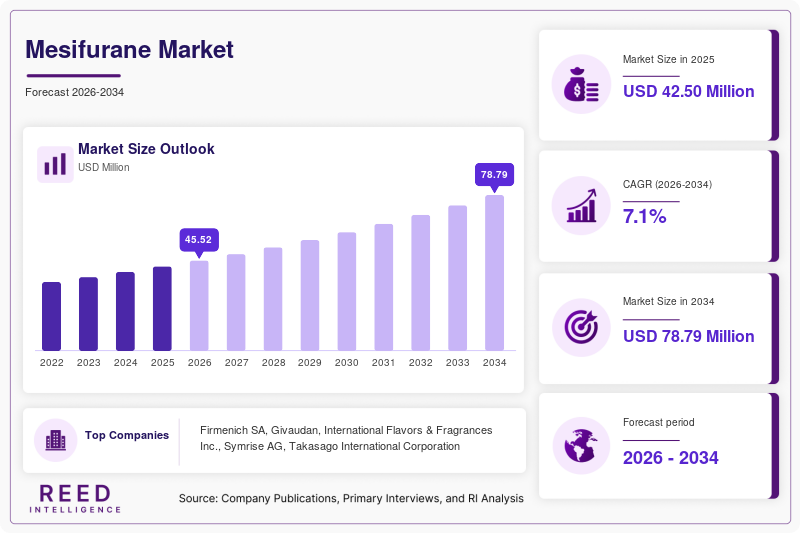
The Mesifurane Market size is witnessing steady growth driven by rising demand for natural flavor compounds in the food and beverage, cosmetics, and pharmaceutical industries. Mesifurane, a key aroma compound commonly associated with strawberry-like flavor notes, is widely used as a flavoring agent and fragrance ingredient. In 2025, the global mesifurane market size is estimated at USD 42.5 million, and it is expected to reach approximately USD 45.8 million in 2026. Over the forecast period from 2025 to 2034, the market is projected to grow at a compound annual growth rate (CAGR) of 7.1%, reaching an estimated value of USD 84.3 million by 2034.
One of the primary growth factors is the increasing consumer preference for natural and clean-label ingredients. Food manufacturers are shifting toward naturally derived flavor compounds such as mesifurane to meet regulatory standards and consumer expectations. Another major driver is the expanding application of mesifurane in premium cosmetics and personal care products, where it is used to enhance fragrance profiles. Additionally, the rapid growth of the processed food industry, especially in emerging economies, is contributing to increased consumption of flavoring agents.
Key Highlights
- Market size projected to reach USD 84.3 million by 2034
- CAGR of 7.1% during 2025–2034
- Increasing demand for natural flavoring compounds
- Expanding applications in cosmetics and personal care
- Advancements in bio-based production technologies
Market Trends
Rising Adoption of Bio-Based Flavor Compounds
The mesifurane market is experiencing a shift toward bio-based production methods, driven by sustainability goals and regulatory pressures. Manufacturers are increasingly investing in fermentation-based technologies to produce mesifurane using natural precursors such as sugars and plant extracts. This approach reduces dependency on synthetic chemical synthesis and aligns with environmental regulations. Food and beverage companies are actively reformulating products to include naturally derived flavors, which is boosting demand. Additionally, consumers are showing greater awareness of ingredient sourcing, which encourages brands to highlight bio-based components. This trend is expected to strengthen as companies adopt green chemistry principles and aim to reduce carbon footprints.
Expansion in Premium and Artisanal Product Segments
Another notable trend is the growing use of mesifurane in premium and artisanal food and beverage products. High-end confectionery, gourmet desserts, and specialty beverages are incorporating mesifurane to enhance flavor complexity and authenticity. The compound’s ability to deliver a rich, fruity aroma makes it suitable for niche applications. Craft beverage producers, including flavored dairy drinks and specialty teas, are also leveraging mesifurane to differentiate their offerings. This trend is supported by rising disposable incomes and consumer willingness to pay for premium products. As a result, mesifurane is becoming a preferred ingredient in value-added product categories.
Market Drivers
Increasing Demand for Natural and Clean-Label Ingredients
The growing emphasis on clean-label products is a major driver for the mesifurane market. Consumers are actively seeking food and cosmetic products with transparent ingredient lists and minimal synthetic additives. Mesifurane, particularly when derived from natural sources, fits well within this demand. Regulatory bodies are also encouraging the use of naturally derived compounds, which further accelerates adoption. Food manufacturers are reformulating products to replace artificial flavors with natural alternatives, thereby increasing the use of mesifurane. This shift is particularly strong in developed markets, where consumers prioritize health and sustainability, leading to consistent demand growth.
Growth of the Processed Food and Beverage Industry
The expansion of the global processed food and beverage sector is significantly contributing to market growth. As urbanization increases and lifestyles become more fast-paced, consumers are relying more on packaged and ready-to-eat products. These products require effective flavoring agents to maintain taste and quality. Mesifurane plays a key role in enhancing flavor profiles, particularly in fruit-based products. The rising consumption of flavored dairy, baked goods, and beverages is driving demand. Emerging economies are witnessing rapid growth in food processing industries, which further supports the widespread use of mesifurane.
Market Restraint
High Production Costs and Limited Raw Material Availability
One of the major challenges facing the mesifurane market is the high cost associated with its production, particularly for naturally derived variants. The extraction of mesifurane from natural sources such as strawberries is limited by seasonal availability and low yield, making the process expensive. Although synthetic production methods exist, they may not meet clean-label requirements, which restricts their use in certain applications. Additionally, the adoption of bio-based fermentation technologies requires significant investment in research and infrastructure. These factors can limit market entry for smaller manufacturers and restrict supply scalability. For example, premium food brands may face higher production costs when incorporating natural mesifurane, which can impact pricing strategies and profit margins.
Market Opportunities
Advancements in Fermentation and Biotechnology
Technological advancements in fermentation and biotechnology present significant growth opportunities for the mesifurane market. Researchers are developing efficient microbial strains capable of producing mesifurane at higher yields and lower costs. These innovations can help overcome supply constraints and reduce reliance on traditional extraction methods. Biotechnology also enables consistent quality and scalability, which is essential for industrial applications. Companies investing in research and development are likely to gain a competitive advantage. As production processes become more efficient, the adoption of mesifurane across various industries is expected to increase, supporting long-term market growth.
Expansion into Emerging Markets
Emerging markets offer substantial opportunities for mesifurane manufacturers due to rising disposable incomes and changing consumer preferences. Countries in Asia Pacific and Latin America are witnessing increased demand for processed and flavored food products. The growing middle-class population is driving consumption of premium and convenience foods, which require advanced flavoring agents. Additionally, the expansion of the cosmetics industry in these regions is creating new avenues for mesifurane application. Local manufacturers are also adopting international quality standards, which encourages the use of high-quality flavor compounds. This trend is expected to accelerate market penetration in developing economies.
Segmental Analysis
By Type
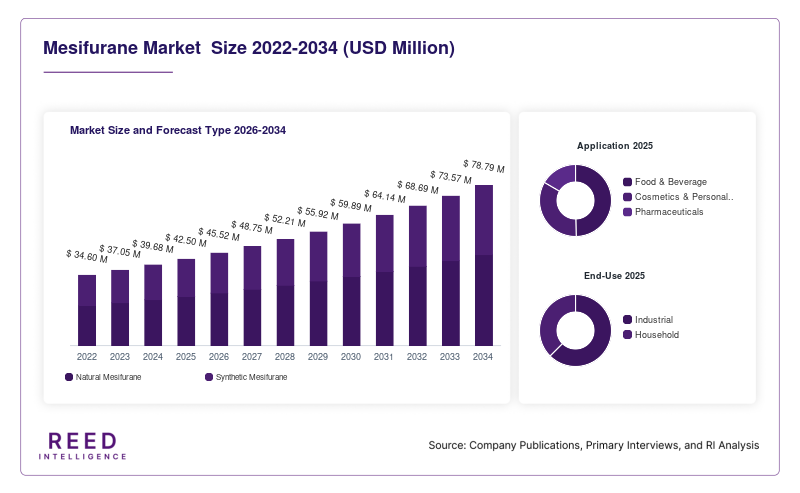
The natural mesifurane segment dominated the market in 2024, accounting for approximately 62% of the total market share. This dominance is attributed to the growing preference for clean-label and naturally derived ingredients. Food and beverage manufacturers are increasingly opting for natural mesifurane to meet regulatory standards and consumer expectations. The segment is widely used in premium products, including organic foods and high-end cosmetics. Additionally, the perception of natural ingredients as safer and healthier further supports their adoption. As a result, natural mesifurane continues to lead the market.
The synthetic mesifurane segment is expected to be the fastest-growing, with a CAGR of 7.5% during the forecast period. The growth is driven by its cost-effectiveness and consistent quality. Synthetic production methods allow for large-scale manufacturing, which is essential for meeting industrial demand. Despite challenges related to clean-label requirements, advancements in synthesis technologies are improving product quality. The segment is particularly popular in applications where cost efficiency is a priority, such as mass-produced food products.
By Application
The food and beverage segment held the largest share in 2024, accounting for 55% of the market. Mesifurane is widely used in flavored dairy products, baked goods, and beverages to enhance taste and aroma. The increasing demand for processed and convenience foods is a key factor driving this segment. Additionally, the rising popularity of fruit-flavored products is boosting the use of mesifurane. Manufacturers are focusing on improving product quality and flavor profiles, which further supports segment growth.
The cosmetics and personal care segment is projected to grow at the fastest CAGR of 7.8% during the forecast period. The growth is driven by increasing demand for premium fragrances and natural ingredients. Mesifurane is used in perfumes, lotions, and skincare products to provide a pleasant aroma. The rising trend of organic and natural cosmetics is also contributing to segment expansion. As consumers become more conscious of product ingredients, the demand for natural fragrance compounds is expected to increase.
By End-Use
The industrial segment dominated the market in 2024, accounting for 68% of the total share. Large-scale food processing and manufacturing industries are the primary consumers of mesifurane. The need for consistent flavor quality and large-volume production drives demand in this segment. Additionally, industrial users benefit from economies of scale, which supports widespread adoption. The segment is expected to maintain its dominance due to the continuous growth of the global food industry.
The household segment is expected to grow at a CAGR of 6.9% during the forecast period. The growth is driven by increasing consumer interest in home cooking and baking. Consumers are experimenting with new flavors and ingredients, which supports the use of mesifurane in household applications. The availability of mesifurane in small quantities for personal use is also contributing to segment growth. As consumer awareness increases, the adoption of flavoring agents in home settings is expected to rise.
Regional Analysis
North America
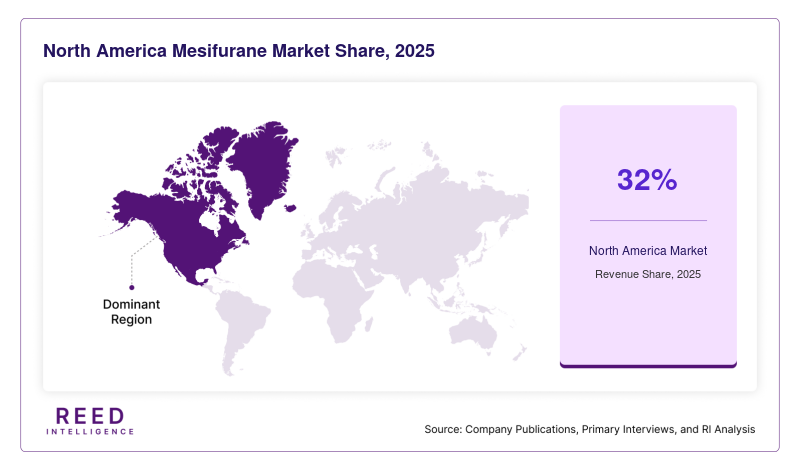
North America accounted for approximately 32% of the global mesifurane market share in 2025, making it a leading region. The market is projected to grow at a CAGR of 6.5% through 2034. The region’s strong demand for natural and organic food products is a key growth factor. Consumers are highly aware of ingredient quality, which drives the adoption of naturally derived flavor compounds. The presence of established food and beverage manufacturers further supports market growth.
The United States dominates the North American market due to its advanced food processing industry. A unique growth factor in the region is the increasing demand for plant-based food products, which require natural flavor enhancers. Mesifurane is widely used to improve the taste profile of plant-based dairy alternatives and beverages, supporting its demand.
Europe
Europe held a 28% market share in 2025 and is expected to grow at a CAGR of 6.8% during the forecast period. The region’s strict regulations on food additives are encouraging the use of natural flavor compounds. Consumers are highly focused on sustainability and clean-label products, which supports mesifurane adoption across industries.
Germany is the dominant country in the European market, driven by its strong food and beverage manufacturing sector. A unique growth factor is the region’s emphasis on organic and eco-friendly products. This has led to increased demand for bio-based mesifurane, particularly in premium food and cosmetic applications.
Asia Pacific
Asia Pacific accounted for 24% of the market share in 2025 and is projected to grow at the highest CAGR of 8.3% through 2034. Rapid urbanization and rising disposable incomes are key drivers in the region. The growing processed food industry is significantly increasing the demand for flavoring agents.
China leads the Asia Pacific market due to its large population and expanding food processing sector. A unique growth factor is the increasing popularity of flavored dairy products and beverages. Manufacturers are incorporating mesifurane to enhance taste and appeal, which supports market growth.
Middle East & Africa
The Middle East & Africa region held 9% of the market share in 2025 and is expected to grow at a CAGR of 6.2%. The market is driven by the expanding food and beverage sector and increasing urbanization. Demand for packaged food products is rising steadily, contributing to the use of flavoring agents.
The United Arab Emirates is a key market in the region. A unique growth factor is the growing hospitality and tourism industry, which increases demand for premium food products. This trend supports the use of high-quality flavor compounds such as mesifurane.
Latin America
Latin America accounted for 7% of the global market share in 2025 and is projected to grow at a CAGR of 6.9%. The region’s food processing industry is expanding, driven by increasing consumer demand for convenience foods. This supports the adoption of flavoring agents.
Brazil dominates the Latin American market due to its strong agricultural base. A unique growth factor is the availability of raw materials for natural flavor production. This supports local production of mesifurane and reduces dependency on imports.
Competitive Landscape
The mesifurane market is moderately fragmented, with several global and regional players competing on product quality, pricing, and innovation. Leading companies are focusing on research and development to improve production efficiency and develop natural variants. Strategic partnerships and collaborations are also common, as companies aim to expand their market presence.
One of the leading players in the market is Firmenich SA, known for its strong portfolio of flavor and fragrance products. The company has recently invested in biotechnology-based production methods to enhance its natural flavor offerings. Other key players are also adopting similar strategies to remain competitive. The market is characterized by continuous innovation and the introduction of new products to meet evolving consumer preferences.
Key Players List
- Firmenich SA
- Givaudan
- International Flavors & Fragrances Inc.
- Symrise AG
- Takasago International Corporation
- Mane SA
- Robertet Group
- Sensient Technologies Corporation
- BASF SE
- Solvay SA
- Treatt plc
- Vigon International
- Advanced Biotech
- Aromatech
- Bell Flavors & Fragrances
Recent Developments
- In 2024, a leading flavor manufacturer expanded its bio-based mesifurane production capacity to meet rising demand for natural ingredients.
- In 2025, a global fragrance company introduced a new mesifurane-based aroma formulation for premium cosmetic applications.
- In 2026, a biotechnology firm announced the development of a high-yield fermentation process for mesifurane production, reducing manufacturing costs significantly.
Mesifurane Market Segments
Type
- Natural Mesifurane
- Synthetic Mesifurane
Application
- Food & Beverage
- Cosmetics & Personal Care
- Pharmaceuticals
End-Use
- Industrial
- Household
By Region
- North America
- Europe
- APAC
- Middle East and Africa
- LATAM