Mesoporous Carbons Market Size, Share & Demand Report By Type (Ordered Mesoporous Carbon, Disordered Mesoporous Carbon), By Application (Energy Storage, Environmental Applications, Catalysis, Drug Delivery), By End-Use (Energy & Power, Chemical Industry, Healthcare, Electronics), By Region & Segment Forecasts, 2025–2034
USD 3950
Market Overview
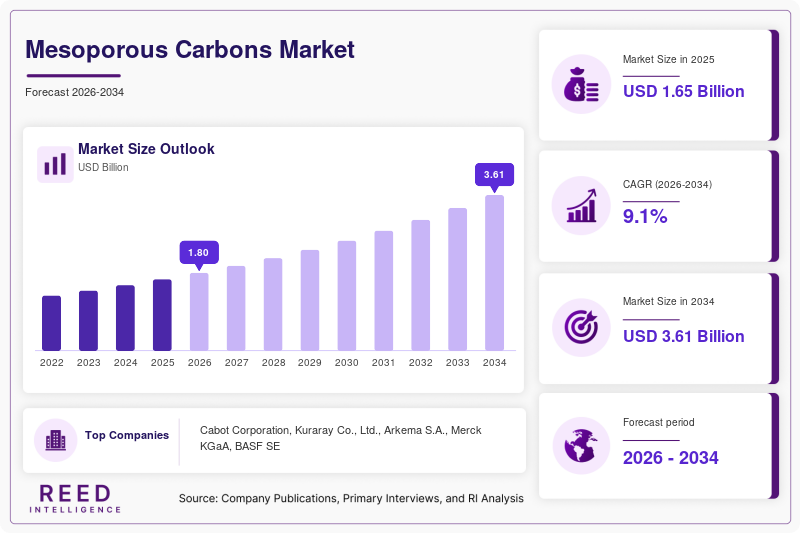
The Mesoporous Carbons Market size was estimated at approximately USD 1.65 billion in 2025 and is projected to reach USD 1.78 billion in 2026, reflecting growing adoption across industrial sectors. Over the forecast period, the market is expected to reach around USD 3.85 billion by 2034, expanding at a compound annual growth rate (CAGR) of approximately 9.1% from 2025 to 2034.
Mesoporous carbons, characterized by their uniform pore sizes (2–50 nm), high surface area, and tunable structures, are increasingly used in applications such as supercapacitors, batteries, drug delivery, and adsorption systems. Their structural advantages make them suitable for high-performance materials, particularly in industries emphasizing efficiency and sustainability.
Key Highlights
- Market size is projected to grow from USD 1.65 billion in 2025 to USD 3.85 billion by 2034.
This reflects steady expansion driven by increasing industrial adoption and technological advancements. - The market is expected to register a CAGR of approximately 9.1% during 2025–2034.
Consistent growth is supported by rising demand across multiple high-performance application areas. - There is strong demand from energy storage and environmental applications globally.
Mesoporous carbons are increasingly used in batteries, supercapacitors, and pollutant adsorption systems. - Investments in nanotechnology and advanced materials research are steadily increasing.
These investments are enabling improved synthesis methods and expanding application possibilities.
Market Trends
Increasing Integration in Energy Storage Technologies
A major trend shaping the Mesoporous Carbons Market is the rising integration of these materials into advanced energy storage systems. With the global shift toward renewable energy and electric mobility, there is a growing need for efficient storage solutions such as supercapacitors and lithium-ion batteries. Mesoporous carbons provide high surface area and excellent electrical conductivity, which improve energy density and charge-discharge cycles. Manufacturers are increasingly focusing on tailoring pore structures to enhance electrochemical performance. This trend is expected to continue as energy storage systems become more sophisticated and demand higher efficiency and durability.
Expansion in Environmental and Water Treatment Applications
Another significant trend is the expanding use of mesoporous carbons in environmental applications, particularly in water purification and air filtration. These materials are highly effective in adsorbing heavy metals, organic pollutants, and toxic gases due to their porous structure. Growing concerns over water scarcity and pollution are driving governments and industries to invest in advanced treatment technologies. Mesoporous carbons are being incorporated into filtration systems and industrial wastewater treatment processes. Continuous innovation in surface functionalization is further improving adsorption efficiency, making these materials increasingly attractive for environmental sustainability initiatives.
Market Drivers
Growing Demand for High-Performance Energy Storage Systems
The increasing adoption of renewable energy sources and electric vehicles is a key driver for the Mesoporous Carbons Market. Energy storage systems require materials that offer high conductivity, stability, and efficiency. Mesoporous carbons meet these requirements, making them suitable for use in supercapacitors and battery electrodes. As governments promote clean energy policies, investments in energy storage infrastructure are rising. This has led to increased demand for advanced materials that can enhance storage capacity and lifespan. Additionally, ongoing research into hybrid energy systems is further boosting the use of mesoporous carbons in next-generation technologies.
Rising Need for Advanced Adsorption Materials in Environmental Applications
Environmental concerns related to water and air pollution are significantly driving the demand for mesoporous carbons. These materials are widely used for adsorption due to their large surface area and customizable pore structures. Industries such as chemical manufacturing, oil and gas, and wastewater treatment rely on efficient filtration systems to meet regulatory standards. Mesoporous carbons are increasingly being used to remove contaminants, including heavy metals and volatile organic compounds. The growing emphasis on sustainability and environmental protection is encouraging industries to adopt advanced materials, thereby supporting market growth.
Market Restraint
High Production Costs and Complex Synthesis Processes
One of the primary restraints affecting the Mesoporous Carbons Market is the high cost associated with production and the complexity of synthesis processes. Manufacturing mesoporous carbon materials often involves templating methods, chemical treatments, and precise control of pore structures, which increases production expenses. These factors can limit large-scale adoption, particularly among small and medium-sized enterprises. Additionally, the need for specialized equipment and skilled labor further adds to operational costs. For example, industries seeking cost-effective alternatives for filtration or catalysis may opt for activated carbon instead of mesoporous variants. This cost barrier can slow market penetration, especially in price-sensitive regions, despite the superior performance offered by mesoporous carbons.
Market Opportunities
Emerging Applications in Hydrogen Storage and Carbon Capture
The growing focus on clean energy and decarbonization presents significant opportunities for mesoporous carbons in hydrogen storage and carbon capture applications. These materials can be engineered to store hydrogen efficiently due to their high surface area and tunable pore sizes. As hydrogen gains traction as a clean fuel, the demand for advanced storage materials is expected to rise. Similarly, mesoporous carbons are being explored for carbon capture technologies, helping industries reduce greenhouse gas emissions. Continued research and development in this area are likely to open new avenues for market growth, particularly in energy-intensive industries.
Advancements in Biomedical and Drug Delivery Applications
Another promising opportunity lies in the biomedical sector, where mesoporous carbons are being used for drug delivery and tissue engineering. Their ability to carry and release drugs in a controlled manner makes them suitable for targeted therapies. Researchers are developing functionalized mesoporous carbons with improved biocompatibility and efficiency. As healthcare systems increasingly adopt advanced materials for precision medicine, the demand for innovative drug delivery solutions is expected to grow. This creates a new revenue stream for market participants and expands the application scope beyond traditional industrial uses.
Segmental Analysis
By Type
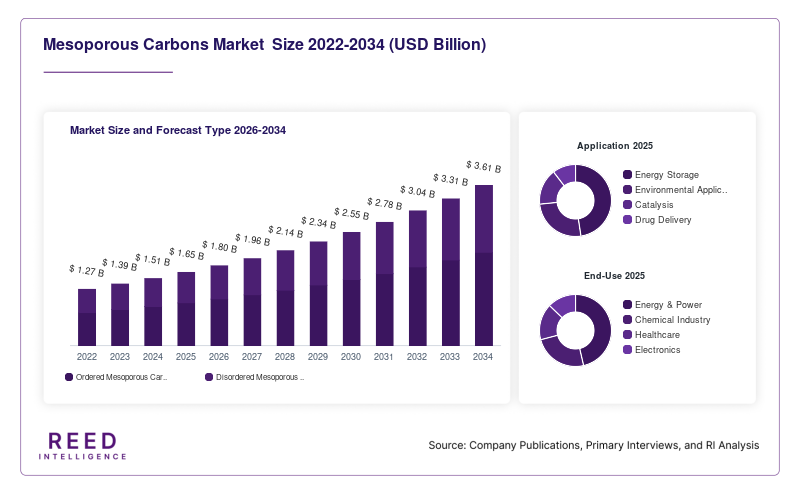
The ordered mesoporous carbon segment dominated the market in 2024, accounting for approximately 58% of total share. These materials are widely used due to their uniform pore structure and high surface area, which enhance performance in applications such as catalysis and energy storage. Industries prefer ordered mesoporous carbons for their consistency and efficiency in adsorption processes. The segment’s dominance is supported by increasing demand from sectors such as electronics and environmental management. Additionally, advancements in synthesis techniques have improved the scalability and cost-effectiveness of these materials, further strengthening their market position.
The disordered mesoporous carbon segment is expected to be the fastest-growing, with a CAGR of around 9.8% during the forecast period. This growth is driven by their lower production cost and versatility in various applications. Disordered structures offer flexibility in adsorption and catalytic processes, making them suitable for diverse industrial uses. Increasing research into cost-effective production methods is further supporting segment growth. As industries seek affordable alternatives without compromising performance, demand for disordered mesoporous carbons is expected to rise significantly.
By Application
Energy storage applications held the largest market share in 2024, contributing approximately 45% of total revenue. Mesoporous carbons are widely used in supercapacitors and batteries due to their high conductivity and stability. The increasing adoption of renewable energy systems and electric vehicles has driven demand for efficient energy storage materials. Manufacturers are focusing on improving electrode performance through advanced material design. This segment’s growth is supported by continuous innovation and rising investments in energy infrastructure.
The environmental applications segment is projected to be the fastest-growing, with a CAGR of 10.1%. This growth is driven by increasing concerns over pollution and the need for effective water and air treatment solutions. Mesoporous carbons are used for adsorption of contaminants, making them essential in filtration systems. Governments and industries are investing in advanced treatment technologies to meet environmental standards. This trend is expected to significantly boost demand for mesoporous carbons in environmental applications.
By End-Use
The energy and power sector dominated the market in 2024, accounting for approximately 40% of total share. This dominance is attributed to the extensive use of mesoporous carbons in energy storage systems. The sector relies on these materials for improving battery performance and efficiency. Increasing investments in renewable energy projects have further driven demand. Additionally, the shift toward sustainable energy solutions has accelerated the adoption of advanced materials, supporting segment growth.
The healthcare sector is expected to be the fastest-growing, with a CAGR of 10.5%. This growth is driven by increasing research into biomedical applications, including drug delivery and diagnostics. Mesoporous carbons are being developed for targeted therapies and controlled drug release. Advancements in nanotechnology and material science are enabling new applications in healthcare. As the demand for innovative medical solutions rises, the healthcare sector is expected to play a significant role in market expansion.
Regional Analysis
North America
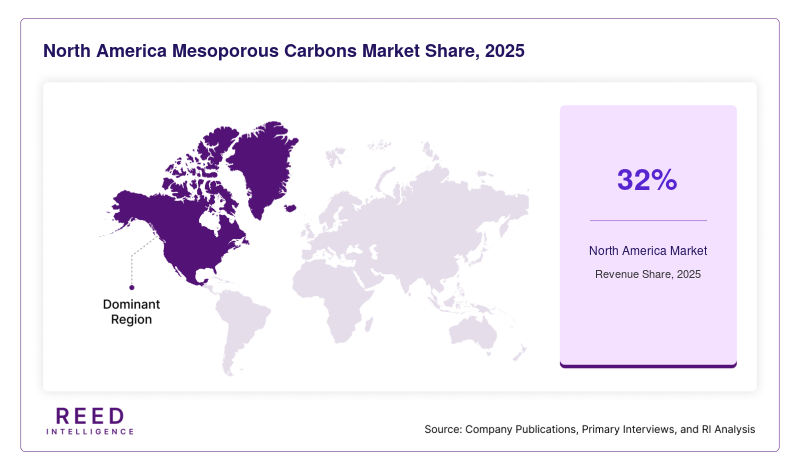
North America accounted for a significant share of the Mesoporous Carbons Market in 2025, contributing approximately 32% of global revenue. The region is expected to grow at a CAGR of around 8.7% during the forecast period, supported by strong demand from energy storage and environmental sectors. The presence of advanced research facilities and high investment in nanotechnology has contributed to market expansion. Additionally, the adoption of clean energy technologies has further boosted demand for mesoporous carbon materials across various industries.
The United States dominates the regional market, driven by extensive research and development activities. A unique growth factor is the increasing investment in carbon capture and storage projects, which utilize mesoporous materials for efficient adsorption. Government initiatives aimed at reducing carbon emissions are encouraging industries to adopt advanced materials. This focus on sustainability and innovation continues to strengthen the market position of North America.
Europe
Europe held a market share of approximately 27% in 2025, with a projected CAGR of 8.9% from 2025 to 2034. The region benefits from stringent environmental regulations and a strong focus on sustainability. Industries are adopting mesoporous carbons for water treatment and emission control applications. Additionally, the growing electric vehicle market is driving demand for advanced energy storage materials, supporting overall market growth.
Germany leads the European market due to its strong industrial base and emphasis on green technologies. A unique growth factor is the region’s focus on circular economy practices, which encourages the use of recyclable and efficient materials. Research institutions are actively developing innovative mesoporous carbon solutions for various applications. This combination of regulatory support and technological advancement is driving market expansion in Europe.
Asia Pacific
Asia Pacific emerged as the largest regional market in 2025, accounting for nearly 35% of global share, and is expected to grow at a CAGR of 10.2%. Rapid industrialization and increasing investments in energy infrastructure are key factors driving growth. Countries in this region are adopting mesoporous carbons for applications in batteries, supercapacitors, and environmental remediation, contributing to strong market demand.
China dominates the Asia Pacific market due to its large manufacturing base and focus on renewable energy development. A unique growth factor is the expansion of electric vehicle production, which requires advanced energy storage solutions. Government support for clean energy initiatives is further boosting demand. This strong industrial and policy support positions Asia Pacific as a leading market for mesoporous carbons.
Middle East & Africa
The Middle East & Africa region accounted for around 4% of the market in 2025, with a projected CAGR of 7.5%. The market is gradually expanding due to increasing awareness of environmental sustainability and water scarcity issues. Industries are adopting mesoporous carbons for water treatment and desalination processes, supporting regional growth.
Saudi Arabia leads the market in this region, driven by investments in water treatment infrastructure. A unique growth factor is the increasing adoption of advanced materials in oil and gas operations for filtration and catalysis. Government initiatives aimed at diversifying the economy are also promoting the use of innovative technologies. These factors are contributing to steady market growth in the region.
Latin America
Latin America held a market share of approximately 2% in 2025 and is expected to grow at a CAGR of 7.8%. The region is witnessing gradual adoption of mesoporous carbons in environmental and industrial applications. Growing awareness of water pollution and the need for efficient treatment solutions are driving demand for advanced materials.
Brazil dominates the Latin American market due to its expanding industrial sector. A unique growth factor is the increasing investment in wastewater treatment projects, which require efficient adsorption materials. Government regulations aimed at improving environmental standards are encouraging industries to adopt mesoporous carbons. This trend is expected to support steady market growth in the region.
Competitive Landscape
The Mesoporous Carbons Market is moderately fragmented, with several global and regional players competing based on product innovation, quality, and pricing strategies. Companies are focusing on expanding their product portfolios and investing in research and development to enhance material performance. Strategic collaborations and partnerships are also common, enabling companies to strengthen their market presence.
Cabot Corporation is considered a leading player in the market due to its extensive product offerings and strong distribution network. The company has recently focused on developing advanced carbon materials for energy storage applications, reflecting the growing demand in this segment. Other key players are also investing in technological advancements and expanding their production capacities to meet increasing demand across various industries.
Key Players List
- Cabot Corporation
- Kuraray Co., Ltd.
- Arkema S.A.
- Merck KGaA
- BASF SE
- Osaka Gas Chemicals Co., Ltd.
- Carbon Solutions, Inc.
- ACS Material LLC
- Nanostructured & Amorphous Materials, Inc.
- Strem Chemicals, Inc.
- Zeolyst International
- Materion Corporation
- Haycarb PLC
- Ingevity Corporation
- Calgon Carbon Corporation
Recent Developments
- In 2024, a major market player introduced a new mesoporous carbon material designed for high-performance supercapacitors, improving energy density and lifecycle performance.
- In 2023, a leading chemical company expanded its production capacity to meet growing demand from the energy storage sector.
- In 2024, a research collaboration between industry and academia resulted in the development of cost-effective synthesis methods for mesoporous carbons, enhancing scalability and commercial viability.
Mesoporous Carbons Market Segments
Type
- Ordered Mesoporous Carbon
- Disordered Mesoporous Carbon
Application
- Energy Storage
- Environmental Applications
- Catalysis
- Drug Delivery
End-Use
- Energy & Power
- Chemical Industry
- Healthcare
- Electronics
By Region
- North America
- Europe
- APAC
- Middle East and Africa
- LATAM