Meta Aramid Fiber Market Size, Share & Demand Report By Type (Staple Fiber, Filament Yarn), By Application (Protective Apparel, Electrical Insulation, Filtration, Automotive Components, Aerospace Applications), By End-Use Industry (Industrial, Automotive, Aerospace & Defense, Electrical & Electronics, Others) By Region & Segment Forecasts, 2025–2034
USD 3950
Market Overview
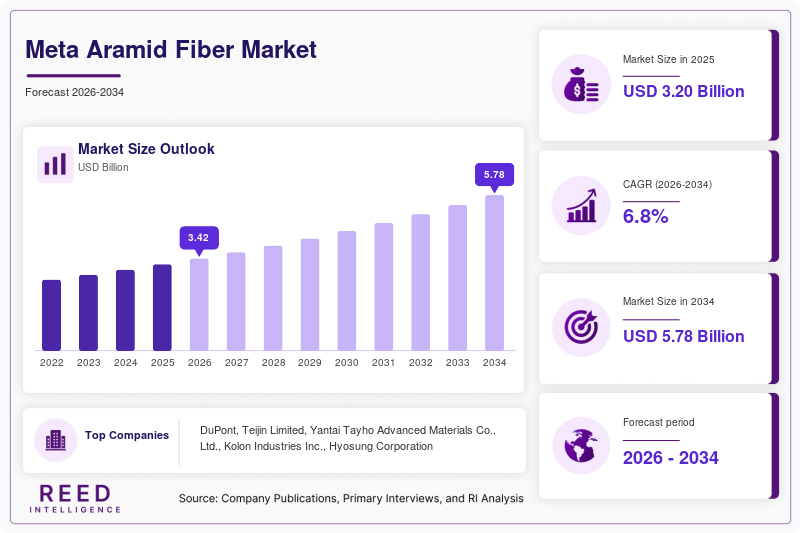
The Meta Aramid Fiber Market size is experiencing steady expansion driven by increasing demand for high-performance fibers across industrial and protective applications. In 2025, the global market size is estimated to reach approximately USD 3.2 billion, with further growth to USD 3.5 billion in 2026. Over the forecast period from 2025 to 2034, the market is projected to grow at a compound annual growth rate (CAGR) of 6.8%, reaching nearly USD 6.2 billion by 2034. This growth trajectory reflects the increasing adoption of meta aramid fibers in sectors such as automotive, aerospace, electrical insulation, and firefighting apparel.
Meta aramid fibers are valued for their excellent heat resistance, flame retardancy, and electrical insulation properties. These characteristics make them suitable for demanding environments where safety and durability are critical. The growing emphasis on workplace safety regulations is one of the primary factors driving market demand. Industries are investing in protective clothing and equipment that meet international safety standards, which directly boosts the consumption of meta aramid fibers.
Key Highlights
- Market size projected to reach USD 6.2 billion by 2034
- CAGR of 6.8% from 2025 to 2034
- Strong demand from protective apparel and electrical insulation sectors
- Increasing adoption in automotive and aerospace industries
- Technological advancements enhancing product performance
Market Trends
Increasing Adoption in Electric Vehicles and Energy Storage Systems
The rising adoption of electric vehicles (EVs) is influencing the Meta Aramid Fiber Market significantly. These fibers are used in battery insulation, thermal barriers, and wiring protection due to their high heat resistance and dielectric strength. As EV manufacturers prioritize safety and performance, the demand for advanced insulation materials continues to grow. Additionally, energy storage systems, including lithium-ion batteries, require materials that can withstand high temperatures and prevent electrical failures. Meta aramid fibers are increasingly integrated into these systems, supporting their long-term reliability and efficiency.
Growing Demand for Sustainable and Recyclable Materials
Sustainability is emerging as a major trend across the global fiber industry. Manufacturers are focusing on developing eco-friendly production processes and recyclable materials to reduce environmental impact. In the Meta Aramid Fiber Market, companies are investing in energy-efficient manufacturing techniques and exploring recycling methods for aramid fibers. End-use industries are also seeking materials that align with environmental regulations and corporate sustainability goals. This shift is encouraging innovation and creating new opportunities for market players to differentiate their products through sustainable solutions.
Market Drivers
Rising Demand for Fire-Resistant Protective Apparel
The increasing focus on occupational safety is a key driver of the Meta Aramid Fiber Market. Industries such as oil and gas, firefighting, and manufacturing require protective clothing that can withstand extreme heat and flames. Meta aramid fibers are widely used in these applications due to their inherent flame resistance and durability. Governments and regulatory bodies are enforcing strict safety standards, compelling companies to invest in high-quality protective gear. This trend is particularly strong in developed regions where workplace safety compliance is mandatory.
Expansion of Electrical and Electronics Infrastructure
The growth of electrical infrastructure and electronics manufacturing is another major driver. Meta aramid fibers are used in insulation materials for cables, transformers, and motors. As urbanization increases and renewable energy projects expand, the demand for reliable insulation solutions is rising. The integration of smart grids and advanced electrical systems further supports this demand. Manufacturers are leveraging the unique properties of meta aramid fibers to enhance the performance and safety of electrical components, driving market growth.
Market Restraint
High Production Costs and Limited Raw Material Availability
One of the primary challenges in the Meta Aramid Fiber Market is the high cost of production. The manufacturing process involves complex chemical reactions and requires specialized equipment, leading to higher operational expenses. Additionally, the availability of raw materials used in producing meta aramid fibers is limited, which can result in supply chain constraints. These factors contribute to higher product prices, making it difficult for smaller manufacturers to compete.
The impact of this restraint is evident in price-sensitive markets where alternative materials such as polyester or glass fibers are preferred due to lower costs. For example, in developing regions, industries may opt for less expensive materials despite the superior performance of meta aramid fibers. This limits market penetration and slows overall growth. Addressing these challenges requires advancements in production technology and the development of cost-effective manufacturing processes.
Market Opportunities
Growth in Aerospace and Defense Applications
The aerospace and defense sectors present significant opportunities for the Meta Aramid Fiber Market. These industries require materials that offer high strength, heat resistance, and lightweight properties. Meta aramid fibers are increasingly used in aircraft interiors, insulation systems, and protective gear for military personnel. As global defense budgets increase and commercial aviation expands, the demand for advanced materials is rising. Manufacturers are developing specialized fiber variants to meet the stringent requirements of these applications.
Increasing Use in Industrial Filtration Systems
Industrial filtration is another area with strong growth potential. Meta aramid fibers are used in high-temperature filtration systems due to their thermal stability and chemical resistance. Industries such as cement, power generation, and chemical processing require efficient filtration solutions to comply with environmental regulations. The demand for air pollution control systems is increasing, particularly in emerging economies. This creates opportunities for manufacturers to expand their product offerings and cater to a growing market segment.
Segmental Analysis
By Type
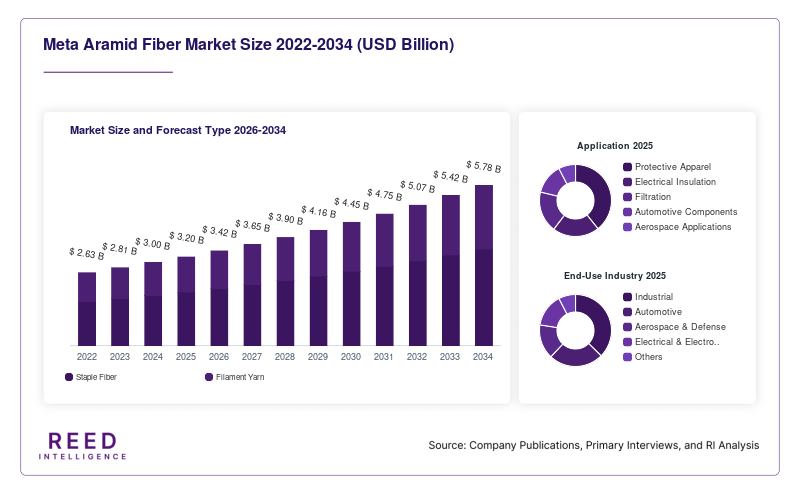
The meta aramid staple fiber segment dominated the market in 2024, accounting for approximately 58% of the total share. This dominance is attributed to its widespread use in protective clothing, filtration systems, and industrial applications. Staple fibers offer flexibility and ease of processing, making them suitable for various end-use industries. Manufacturers prefer staple fibers due to their cost-effectiveness and versatility. The increasing demand for flame-resistant apparel and industrial filtration systems is driving the growth of this segment.
The filament yarn segment is expected to be the fastest-growing, with a CAGR of 7.2% during the forecast period. This growth is driven by its superior strength and durability, making it suitable for high-performance applications such as aerospace and electrical insulation. The increasing adoption of advanced materials in these industries is supporting the growth of filament yarn. Additionally, technological advancements in fiber production are enhancing the performance of filament yarn, further boosting its demand.
By Application
Protective apparel was the dominant application segment in 2024, accounting for 42% of the market share. The demand for flame-resistant clothing in industries such as oil and gas, firefighting, and manufacturing is driving this segment. Meta aramid fibers are widely used in protective apparel due to their heat resistance and durability. The increasing focus on workplace safety and compliance with safety standards is supporting the growth of this segment.
Electrical insulation is the fastest-growing application segment, with a projected CAGR of 7.5%. The expansion of the electrical and electronics industry is driving demand for insulation materials. Meta aramid fibers are used in cables, transformers, and motors due to their excellent dielectric properties. The increasing adoption of renewable energy and smart grid technologies is further supporting the growth of this segment.
By End-Use Industry
The industrial sector dominated the market in 2024, accounting for 46% of the total share. This includes applications in manufacturing, oil and gas, and power generation. The demand for high-performance materials that can withstand extreme conditions is driving the use of meta aramid fibers in this sector. The increasing focus on safety and efficiency in industrial operations is supporting market growth.
The aerospace and defense sector is the fastest-growing end-use industry, with a CAGR of 7.8%. The demand for lightweight and high-strength materials is driving the adoption of meta aramid fibers in this sector. These fibers are used in aircraft interiors, insulation systems, and protective gear. The increasing investments in defense and the expansion of the aerospace industry are supporting the growth of this segment.
Regional Analysis
North America
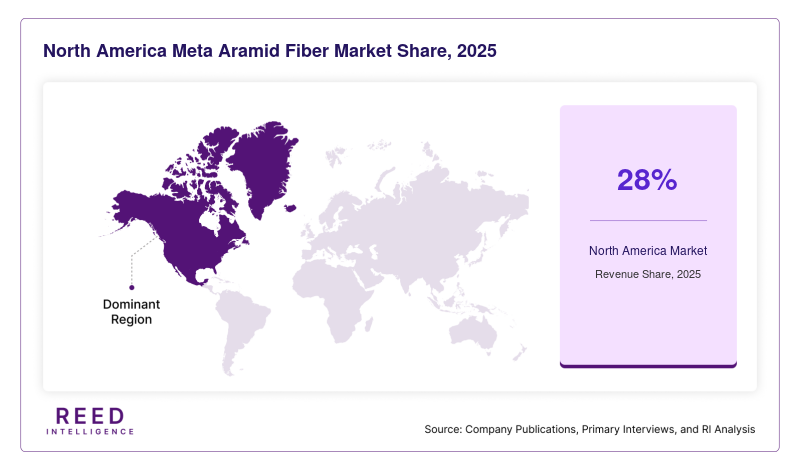
North America accounted for approximately 28% of the global Meta Aramid Fiber Market share in 2025, with a projected CAGR of 6.2% during the forecast period. The region benefits from a well-established industrial base and strong demand for protective apparel and electrical insulation materials. The presence of advanced manufacturing facilities and strict safety regulations further supports market growth. Investments in infrastructure and renewable energy projects are also contributing to increased demand for meta aramid fibers.
The United States dominates the North American market due to its extensive industrial and defense sectors. A unique growth factor in this region is the increasing adoption of advanced firefighting equipment and protective gear. Government initiatives to enhance workplace safety standards and improve emergency response capabilities are driving demand. Additionally, the expansion of the aerospace industry in the country is creating new opportunities for meta aramid fiber applications.
Europe
Europe held around 24% of the market share in 2025, with an expected CAGR of 6.0% through 2034. The region’s focus on sustainability and environmental regulations is influencing the adoption of high-performance fibers. Industries are investing in advanced materials to meet stringent safety and environmental standards. The automotive and aerospace sectors are key contributors to market growth in Europe.
Germany leads the European market due to its strong manufacturing and automotive industries. A unique growth factor is the region’s emphasis on sustainable production practices. Companies are adopting eco-friendly manufacturing processes and recycling initiatives to reduce environmental impact. This focus on sustainability is encouraging the use of meta aramid fibers in various applications, supporting market expansion.
Asia Pacific
Asia Pacific is the largest regional market, accounting for 34% of the global share in 2025, with a CAGR of 7.5%. Rapid industrialization, urbanization, and infrastructure development are driving demand in this region. The expansion of the electrical and electronics industry is a major growth factor. Increasing investments in renewable energy projects are also contributing to market growth.
China dominates the Asia Pacific market due to its large manufacturing base and growing industrial sector. A unique growth factor is the rising demand for protective clothing in industrial workplaces. Government regulations and increasing awareness of worker safety are driving the adoption of meta aramid fibers. Additionally, the growth of the automotive and electronics industries is supporting market expansion.
Middle East & Africa
The Middle East & Africa region accounted for 7% of the market share in 2025, with a CAGR of 5.8%. The region’s growth is driven by the oil and gas industry, which requires high-performance materials for protective applications. Infrastructure development and industrialization are also contributing to demand for meta aramid fibers.
Saudi Arabia is the dominant market in this region. A unique growth factor is the increasing investment in oil and gas exploration activities. The need for flame-resistant protective clothing in hazardous environments is driving demand. Additionally, the development of industrial sectors and infrastructure projects is supporting market growth.
Latin America
Latin America held around 7% of the global market share in 2025, with a projected CAGR of 5.9%. The region is witnessing gradual growth due to increasing industrial activities and infrastructure development. The demand for protective apparel and electrical insulation materials is rising, supporting market expansion.
Brazil is the leading market in Latin America. A unique growth factor is the expansion of the manufacturing sector, particularly in automotive and construction industries. The increasing focus on worker safety and compliance with international standards is driving the adoption of meta aramid fibers. Additionally, investments in energy projects are contributing to market growth.
Competitive Landscape
The Meta Aramid Fiber Market is moderately consolidated, with key players focusing on product innovation, capacity expansion, and strategic partnerships. Leading companies are investing in research and development to enhance fiber performance and expand their application areas. The market is characterized by the presence of established manufacturers with strong global distribution networks.
A leading player in the market is DuPont, known for its advanced aramid fiber technologies. The company has recently expanded its production capacity to meet growing demand from the automotive and aerospace sectors. Other major companies are also focusing on developing sustainable production processes and introducing new product variants to strengthen their market position. Competitive strategies include mergers, acquisitions, and collaborations to gain a competitive edge.
Key Players
- DuPont
- Teijin Limited
- Yantai Tayho Advanced Materials Co., Ltd.
- Kolon Industries Inc.
- Hyosung Corporation
- Huvis Corporation
- Toray Industries Inc.
- Kermel
- Sinopec Yizheng Chemical Fibre Company
- SRO Aramid
- China National Bluestar Group
- Toyobo Co., Ltd.
- Jiangsu Yizheng Chemical Fiber
- Shandong Helon Polytex Chemical Fibre
- Hebei Silicon Valley Chemical
Recent Developments
- In 2024, DuPont announced the expansion of its aramid fiber production facility to meet increasing global demand.
- Teijin Limited introduced a new high-performance meta aramid fiber designed for advanced electrical insulation applications.
- Yantai Tayho Advanced Materials launched an eco-friendly production process aimed at reducing energy consumption and emissions.
Meta Aramid Fiber Market Segments
Type
- Staple Fiber
- Filament Yarn
Application
- Protective Apparel
- Electrical Insulation
- Filtration
- Automotive Components
- Aerospace Applications
End-Use Industry
- Industrial
- Automotive
- Aerospace & Defense
- Electrical & Electronics
- Others
By Region
- North America
- Europe
- APAC
- Middle East and Africa
- LATAM