Methyl Glucose Market Size, Share & Demand Report By Product Type (Methyl Glucose Sesquistearate, Methyl Glucose Dioleate, Methyl Glucose Ether, Others), By Application (Personal Care and Cosmetics, Pharmaceutical Formulations, Industrial Formulations, Household Products), By End-Use Industry (Cosmetics and Beauty Industry, Pharmaceutical and Healthcare Industry, Chemical Industry, Consumer Goods Industry) By Region & Segment Forecasts, 2026–2034
USD 3950
Market Overview
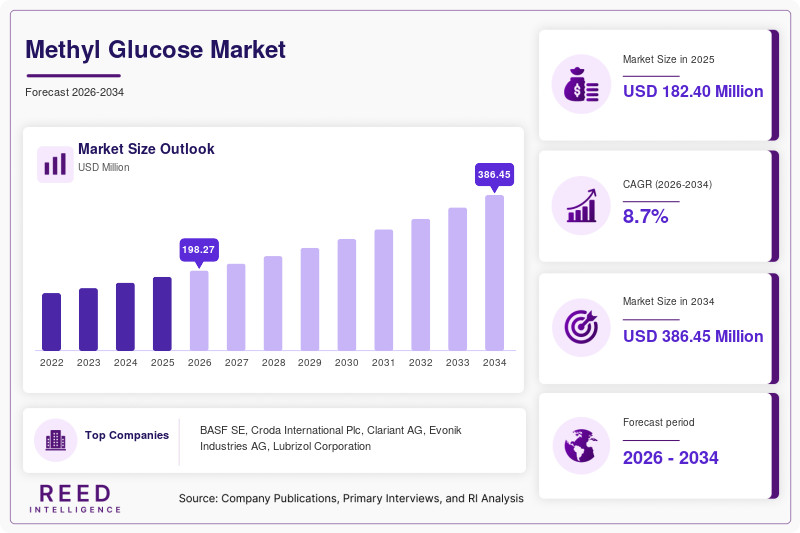
The global Chemical Engineering Methyl Glucose Market size was valued at approximately USD 182.4 million in 2026 and is projected to reach USD 356.8 million by 2034, expanding at a CAGR of 8.7% during the forecast period from 2026 to 2034. The market is gaining steady momentum due to the increasing use of bio-based ingredients in cosmetics, pharmaceuticals, and personal care formulations. Methyl glucose, derived from renewable carbohydrate sources, is widely utilized as an emollient, surfactant intermediate, and moisturizing agent in skincare and haircare products. The shift toward environmentally responsible and skin-compatible ingredients has strengthened product demand across developed and emerging economies.
One of the major global factors supporting market expansion is the rapid transition toward sustainable cosmetic chemistry. Manufacturers are increasingly replacing petroleum-derived additives with plant-based alternatives to comply with environmental regulations and evolving consumer preferences. Rising disposable income, growth in premium skincare consumption, and expanding demand for multifunctional cosmetic ingredients have also accelerated adoption across beauty and wellness industries. Furthermore, increasing investments in biotechnology-based ingredient production and improvements in green chemistry manufacturing processes are contributing to wider commercial availability of methyl glucose derivatives.
Key Highlights
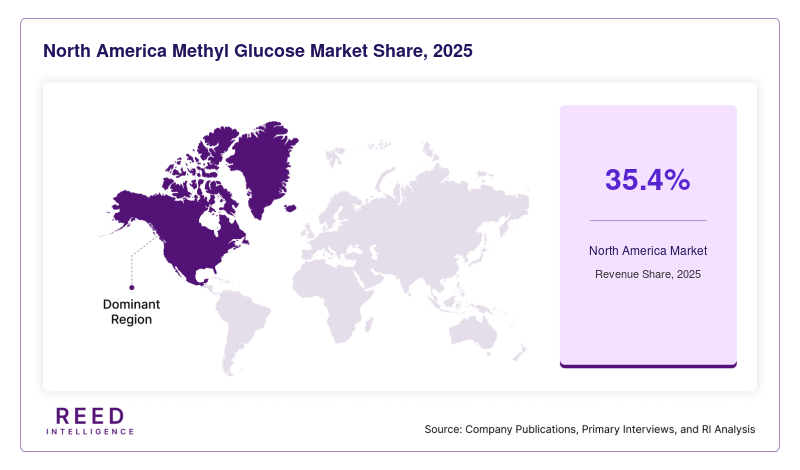
- North America dominated the market with a 35.4% share in 2025.
- Asia Pacific is expected to grow at the fastest CAGR of 10.8% during 2026–2034.
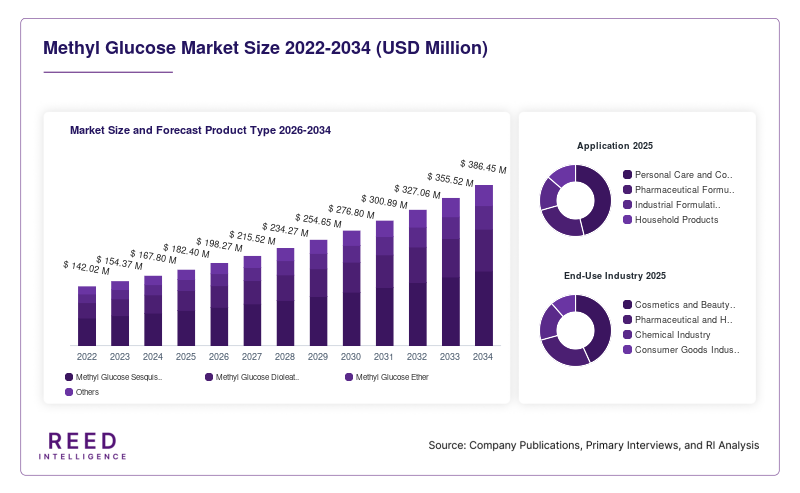
- By product type, methyl glucose sesquistearate accounted for the largest share of 39.1%.
- while methyl glucose dioleate is projected to grow at a CAGR of 11.4%.
- By application, personal care and cosmetics led with a 46.8% share, whereas pharmaceutical formulations are expected to expand at a CAGR of 10.9%.
- The United States remained the dominant country, with market values of USD 48.6 million in 2024 and USD 52.9 million in 2025.
Market Trends
Rising Preference for Naturally Derived Cosmetic Ingredients
The growing consumer preference for naturally sourced cosmetic ingredients has become a notable trend shaping the Methyl Glucose Market. Consumers are increasingly examining product labels and favoring skincare formulations containing biodegradable and plant-based compounds. This trend has encouraged cosmetic manufacturers to incorporate methyl glucose derivatives into creams, lotions, cleansers, and haircare products due to their moisturizing and emulsifying properties. Brands focused on clean beauty are expanding their portfolios with sulfate-free and paraben-free products, which has elevated the importance of multifunctional bio-based ingredients. Additionally, social media influence and rising awareness regarding skin sensitivity are driving demand for mild and hypoallergenic formulations, particularly among younger consumers. This trend is expected to remain influential as regulatory authorities continue promoting environmentally safer ingredients in cosmetic production.
Expansion of Green Chemistry Manufacturing Technologies
Another major trend influencing the market is the growing adoption of green chemistry manufacturing technologies across specialty chemical industries. Producers are investing in sustainable production processes to reduce waste generation, improve energy efficiency, and lower carbon emissions associated with ingredient manufacturing. Methyl glucose production using renewable feedstocks aligns closely with sustainability goals established by cosmetic and pharmaceutical manufacturers. Technological improvements in bio-refining and enzymatic processing are also enabling higher product purity and better cost efficiency. Several companies are introducing advanced methyl glucose derivatives designed for multifunctional applications in premium personal care products. In addition, collaborations between ingredient manufacturers and biotechnology firms are increasing innovation in carbohydrate-based surfactants and emulsifiers. The trend toward circular economy practices and renewable raw material sourcing is likely to support long-term market development across global industries.
Market Drivers
Growth in Personal Care and Skincare Product Consumption
The rapid increase in global skincare and personal care consumption is one of the primary drivers accelerating the Methyl Glucose Market. Consumers are increasingly purchasing moisturizing creams, anti-aging products, sunscreens, body lotions, and haircare solutions that contain naturally derived ingredients. Methyl glucose derivatives provide texture enhancement, hydration retention, and emulsification benefits, making them highly suitable for premium cosmetic formulations. Expanding urban populations, rising disposable incomes, and changing beauty standards have strengthened demand across Asia Pacific, North America, and Europe. The influence of dermatology-backed skincare products and medical-grade cosmetics has also contributed to ingredient adoption. Furthermore, manufacturers are increasingly developing multifunctional formulations that reduce ingredient complexity while improving performance. This has encouraged greater use of methyl glucose compounds in both mass-market and luxury beauty products, supporting strong market growth over the forecast period.
Increasing Regulatory Support for Sustainable Ingredients
Government regulations promoting environmentally safe and biodegradable ingredients are significantly supporting market expansion. Regulatory agencies in several countries are imposing stricter standards on synthetic chemicals used in cosmetics and pharmaceutical formulations. This has encouraged manufacturers to replace petroleum-derived compounds with renewable carbohydrate-based alternatives such as methyl glucose derivatives. The growing emphasis on sustainable supply chains and green labeling practices is influencing purchasing decisions among multinational cosmetic companies. In addition, certifications related to organic and eco-friendly ingredients are becoming important competitive factors in the personal care industry. Companies investing in sustainable ingredient innovation are gaining stronger market positioning and consumer trust. Rising environmental awareness among consumers and corporate sustainability commitments are also accelerating product adoption. These regulatory and environmental shifts are expected to maintain consistent demand for methyl glucose products in the coming years.
Market Restraint
High Production Costs and Raw Material Price Volatility
One of the major restraints affecting the Methyl Glucose Market is the relatively high production cost associated with bio-based ingredient manufacturing. Methyl glucose derivatives are produced from carbohydrate feedstocks through specialized processing methods that require advanced purification technologies and controlled manufacturing conditions. These production requirements increase operational expenses compared to conventional synthetic alternatives. Additionally, fluctuations in agricultural raw material prices can impact profit margins and pricing consistency for manufacturers. Supply chain disruptions related to climate conditions, transportation costs, and raw material shortages may also affect production stability. Smaller cosmetic and pharmaceutical companies often face challenges in adopting premium bio-based ingredients due to cost sensitivity and competitive pricing pressure. In developing regions, limited awareness regarding the functional advantages of methyl glucose compounds may further slow adoption rates. Although sustainability trends continue to support market growth, pricing concerns remain a significant challenge for broader commercial penetration across price-sensitive industries.
Market Opportunities
Expansion of Pharmaceutical and Dermatological Applications
The expanding use of methyl glucose derivatives in pharmaceutical and dermatological formulations presents a significant market opportunity. These compounds are increasingly utilized in topical medications, therapeutic creams, ointments, and transdermal delivery systems because of their stabilizing and moisturizing properties. Rising cases of skin disorders, allergies, and dermatological sensitivities have increased demand for mild and non-irritating formulation ingredients. Pharmaceutical manufacturers are focusing on enhancing patient comfort and product stability, which has encouraged the adoption of carbohydrate-derived emulsifiers and conditioners. In addition, the growth of cosmeceutical products that combine cosmetic and therapeutic benefits is creating additional demand for multifunctional ingredients. Research and development activities aimed at improving bioavailability and formulation efficiency are likely to support new product launches. As healthcare spending continues to rise globally, pharmaceutical applications are expected to contribute substantially to future market revenue growth.
Increasing Demand Across Emerging Economies
Emerging economies are creating favorable growth opportunities for the Methyl Glucose Market due to rapid industrialization and expanding beauty and wellness sectors. Countries across Asia Pacific, Latin America, and the Middle East are witnessing strong growth in middle-class populations and consumer spending on personal care products. International cosmetic brands are expanding their regional presence and introducing premium skincare products tailored to local consumer preferences. This expansion is increasing demand for advanced and sustainable cosmetic ingredients, including methyl glucose derivatives. Additionally, rising awareness regarding clean-label and environmentally responsible products is encouraging regional manufacturers to adopt bio-based formulations. Improvements in e-commerce distribution channels are also enabling wider product accessibility in developing markets. Government initiatives supporting domestic cosmetic manufacturing and biotechnology investments are expected to strengthen local ingredient production capacities, creating long-term opportunities for market participants.
Segmental Analysis
By Product Type
Methyl glucose sesquistearate emerged as the dominant subsegment within the product type category, accounting for approximately 39.1% of the market share in 2024. The product is widely utilized as a non-ionic emulsifier and thickening agent in skincare and personal care formulations. Its ability to provide smooth texture, enhanced moisturization, and improved product stability has contributed to strong adoption among cosmetic manufacturers. Increasing demand for sulfate-free and skin-compatible ingredients has further strengthened consumption across premium skincare applications. Manufacturers are also favoring methyl glucose sesquistearate because of its compatibility with natural oils and botanical extracts. The rising popularity of multifunctional cosmetic ingredients has encouraged widespread inclusion of the product in facial creams, sunscreens, and body lotions. In addition, expanding clean beauty trends and growing consumer preference for naturally derived ingredients are expected to sustain strong demand across global markets.
Methyl glucose dioleate is projected to witness the fastest CAGR of 11.4% during the forecast period due to increasing utilization in advanced haircare and skincare formulations. The ingredient is gaining attention for its conditioning and emollient properties, which help improve skin softness and hair manageability. Rising demand for silicone-free and environmentally friendly conditioning agents has accelerated product adoption among cosmetic manufacturers. Furthermore, growing investments in premium haircare products and scalp treatment formulations are supporting higher consumption levels. The increasing popularity of multifunctional beauty products designed for hydration and texture enhancement is also contributing to market expansion. Manufacturers are introducing innovative formulations using methyl glucose dioleate to address changing consumer preferences for lightweight and non-greasy products. Strong growth in clean-label beauty trends and sustainable cosmetic chemistry is expected to continue supporting this subsegment throughout the forecast period.
By Application
Personal care and cosmetics represented the largest application subsegment, contributing approximately 46.8% of the global market share in 2024. Methyl glucose derivatives are extensively used in creams, lotions, cleansers, shampoos, and conditioners due to their emulsifying and moisturizing characteristics. The rapid growth of skincare routines and increasing demand for premium cosmetic products have significantly strengthened ingredient adoption. Consumers are increasingly favoring formulations containing naturally sourced and biodegradable ingredients, encouraging cosmetic companies to expand the use of carbohydrate-derived compounds. Additionally, rising demand for anti-aging products, sunscreens, and sensitive skin formulations has supported broader commercial utilization. The expansion of e-commerce beauty retail and influencer-driven marketing campaigns has also accelerated product demand across emerging markets. As cosmetic companies continue focusing on sustainability and ingredient transparency, personal care applications are expected to remain the dominant revenue contributor within the global market.
Pharmaceutical formulations are anticipated to register the fastest CAGR of 10.9% during the forecast period due to increasing use of methyl glucose compounds in dermatological and topical therapeutic products. The ingredients provide formulation stability, improved spreadability, and enhanced skin hydration, making them suitable for medical creams and ointments. Rising prevalence of skin disorders, allergies, and chronic dermatological conditions is increasing demand for safe and non-irritating formulation ingredients. Pharmaceutical manufacturers are also emphasizing patient-friendly products with improved sensory characteristics, further supporting ingredient adoption. In addition, the growth of cosmeceuticals and medicated skincare products is creating favorable market conditions. Research activities focused on transdermal drug delivery systems and bio-compatible excipients are expected to accelerate innovation within this segment. Expanding healthcare expenditure and increasing consumer awareness regarding therapeutic skincare solutions will likely sustain long-term growth.
By End-Use Industry
The cosmetics and beauty industry held the dominant position within the end-use category, accounting for nearly 51.3% of the market share in 2024. Strong demand for moisturizing creams, anti-aging solutions, and hair conditioning products has significantly contributed to the segment’s leadership. Cosmetic manufacturers are increasingly incorporating methyl glucose derivatives into formulations to improve texture, stability, and hydration performance. Consumer preference for sustainable and skin-friendly ingredients has also encouraged brands to adopt renewable carbohydrate-based additives. Furthermore, premium beauty trends and the increasing influence of digital marketing campaigns have accelerated demand for high-performance cosmetic products. The expansion of private-label skincare brands and growing investment in product innovation continue to support segment growth. Rising awareness regarding ingredient safety and clean-label beauty standards is expected to maintain strong demand from the cosmetics and beauty industry during the forecast timeline.
The pharmaceutical and healthcare industry is projected to experience the fastest CAGR of 10.3% through 2034 due to expanding applications in therapeutic skincare and topical drug formulations. Pharmaceutical companies are increasingly utilizing methyl glucose compounds to enhance formulation consistency and patient comfort. Growing demand for dermatological products addressing eczema, dryness, and skin sensitivity is contributing to segment expansion. Additionally, increasing healthcare awareness and aging populations are supporting demand for advanced skincare therapies and medicated creams. Research institutions and pharmaceutical manufacturers are also investing in bio-compatible excipients and sustainable formulation technologies. The development of multifunctional therapeutic products combining cosmetic and medical benefits is further increasing ingredient utilization. As healthcare industries continue prioritizing safer and environmentally responsible ingredients, the pharmaceutical and healthcare segment is expected to become a major growth contributor in the global market.
Regional Analysis
North America
North America accounted for approximately 35.4% of the global Methyl Glucose Market share in 2025 and maintained its position as the leading regional market. The region is expected to register a CAGR of 7.9% during the forecast period due to stable demand from the personal care and pharmaceutical industries. Strong consumer awareness regarding sustainable cosmetic ingredients and increasing adoption of clean-label products continue to support market expansion. The presence of established cosmetic manufacturers and advanced research infrastructure also contributes to the region’s dominant position in the global market landscape.
Europe
Europe represented nearly 27.1% of the global Methyl Glucose Market in 2025 and is projected to expand at a CAGR of 8.1% through 2034. The regional market is driven by stringent environmental regulations and strong consumer preference for sustainable beauty products. European cosmetic manufacturers are actively replacing synthetic additives with biodegradable alternatives to comply with regulatory frameworks focused on chemical safety and environmental protection. The region’s emphasis on organic and vegan cosmetic formulations has also increased demand for carbohydrate-derived emulsifiers and moisturizers.
Asia Pacific
Asia Pacific held approximately 23.6% of the global Methyl Glucose Market share in 2025 and is expected to record the fastest CAGR of 10.8% during the forecast period. Rapid urbanization, rising disposable income, and expanding beauty consciousness among consumers are supporting regional market growth. Countries across the region are witnessing substantial growth in skincare, haircare, and wellness product consumption. International cosmetic brands are also increasing regional investments and production facilities to capture expanding consumer demand, further driving the adoption of sustainable cosmetic ingredients.
Middle East & Africa
The Middle East & Africa region accounted for around 7.2% of the global Methyl Glucose Market in 2025 and is anticipated to grow at a CAGR of 7.4% through 2034. Rising interest in premium beauty products and increasing investment in personal care manufacturing are supporting market expansion across the region. Consumers are becoming more aware of ingredient safety and sustainability, encouraging demand for naturally derived cosmetic components. The growth of luxury skincare brands and expanding retail infrastructure are also contributing to stronger regional demand patterns.
Latin America
Latin America captured nearly 6.7% of the global Methyl Glucose Market share in 2025 and is expected to register a CAGR of 7.6% during the forecast period. The regional market is influenced by increasing beauty product consumption and expanding domestic cosmetic manufacturing activities. Rising awareness regarding natural and skin-friendly ingredients has encouraged local brands to adopt bio-based additives in skincare and haircare products. Improvements in retail distribution networks and growing social media influence on beauty trends are also contributing to market expansion across major economies.
Competitive Landscape
The Methyl Glucose Market remains moderately consolidated, with several global and regional manufacturers competing through product innovation, sustainability initiatives, and strategic partnerships. Companies are increasingly investing in bio-based ingredient development to strengthen their positions in the expanding clean beauty and pharmaceutical sectors. Product differentiation through multifunctional performance and environmentally responsible sourcing has become a key competitive strategy across the industry.
BASF SE continues to hold a leading market position due to its broad specialty chemical portfolio and extensive distribution network across cosmetic and pharmaceutical industries. The company has strengthened its focus on sustainable ingredient solutions and renewable feedstock technologies. Recent investments in green chemistry production have enhanced its ability to meet rising global demand for eco-friendly cosmetic ingredients.
Key Players
- BASF SE
- Croda International Plc
- Clariant AG
- Evonik Industries AG
- Lubrizol Corporation
- SEPPIC
- Innospec Inc.
- Ashland Inc.
- Galaxy Surfactants Ltd.
- Solvay S.A.
- Gattefossé
- Stepan Company
- Lonza Group
- Kao Corporation
- Nikko Chemicals Co., Ltd.
Recent Developments
- In 2025, Croda International Plc expanded its sustainable cosmetic ingredient production capacity to support increasing demand for plant-derived emulsifiers and conditioning agents.
- In 2024, Evonik Industries AG introduced a new biodegradable methyl glucose derivative designed for premium skincare and sensitive skin formulations.
- In 2025, Galaxy Surfactants Ltd. announced a strategic collaboration with regional cosmetic manufacturers to develop clean-label beauty formulations using renewable carbohydrate-based ingredients.
- In 2024, BASF SE increased investment in green chemistry technologies focused on reducing carbon emissions associated with specialty ingredient manufacturing.
Methyl Glucose Market Segments
Product Type
- Methyl Glucose Sesquistearate
- Methyl Glucose Dioleate
- Methyl Glucose Ether
- Others
Application
- Personal Care and Cosmetics
- Pharmaceutical Formulations
- Industrial Formulations
- Household Products
End-Use Industry
- Cosmetics and Beauty Industry
- Pharmaceutical and Healthcare Industry
- Chemical Industry
- Consumer Goods Industry
By Region
- North America
- Europe
- APAC
- Middle East and Africa
- LATAM