Methyl Mercaptan Market Size, Share & Demand Report By Application (Methionine Production, Gas Odorants, Agrochemical Intermediates, Plastic Additives, Other Chemical Intermediates), By End-Use Industry (Animal Nutrition, Oil and Gas, Chemical Manufacturing, Agriculture, Others), By Production Method (Methanol-Based Synthesis, Dimethyl Disulfide Conversion, Hydrogen Sulfide Catalytic Reaction), By Region & Segment Forecasts, 2025–2034
USD 3950
Market Overview
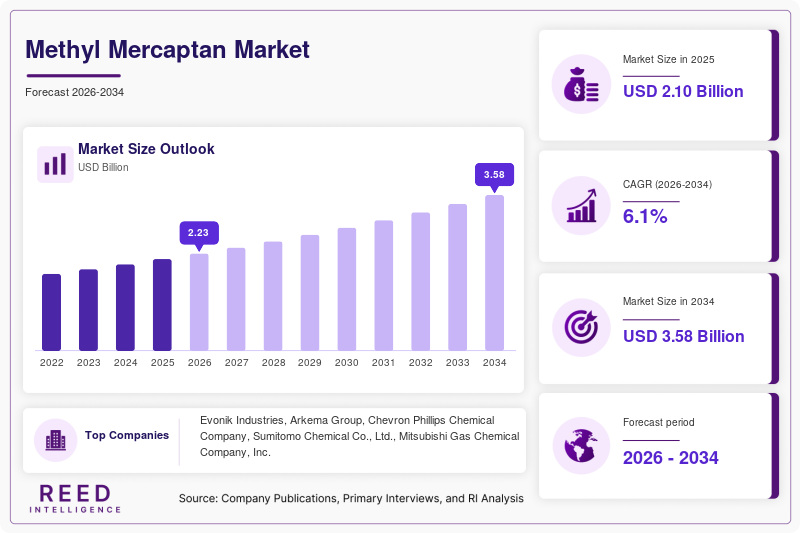
The global Methyl Mercaptan Market was valued at approximately USD 2.1 billion in 2025 and is projected to reach USD 3.6 billion by 2033, expanding at a compound annual growth rate (CAGR) of 6.1% between 2025 and 2034. Methyl mercaptan, also known as methanethiol, is an essential intermediate used in the production of methionine, agrochemicals, plastics additives, and odorants for natural gas distribution systems. Increasing demand for animal nutrition products and agricultural productivity solutions has contributed to the consistent expansion of the market size.
A key global factor supporting growth in the Methyl Mercaptan Market is the expansion of livestock and poultry industries worldwide. Methionine, an amino acid produced using methyl mercaptan as a critical feedstock, is widely used in animal feed formulations to improve protein efficiency and animal health. Rising meat consumption and the need for improved feed conversion ratios have encouraged feed manufacturers to scale up methionine production, which in turn stimulates demand for methyl mercaptan. Additionally, the expansion of chemical manufacturing capacity in emerging economies has strengthened supply chains for mercaptan-based intermediates.
Key Highlights
- Dominant region: Asia Pacific accounted for 42% market share in 2025, while Latin America is expected to grow at a CAGR of 7.4% through 2034.
- Leading subsegments: Methionine production represented the dominant application segment with 64% share, while odorant applications are projected to expand at a CAGR of 6.9%.
- Dominant country: China recorded USD 620 million market value in 2025, which increased to approximately USD 655 million in 2026.
Market Trends
Expansion of Methionine Production Capacity
The Methyl Mercaptan Market has been influenced by the expansion of methionine manufacturing capacity across Asia and North America. Methionine is an essential amino acid widely used in poultry and aquaculture feed formulations. Chemical producers have been investing in integrated facilities where methyl mercaptan is directly synthesized and consumed for methionine production. This integrated production structure improves cost efficiency and ensures stable feedstock supply. As global protein consumption continues to grow, feed manufacturers are adopting optimized nutritional formulations that rely on synthetic amino acids. This trend has increased the demand for methyl mercaptan as a precursor in amino acid production chains.
Increasing Use in Gas Odorization Applications
Another trend shaping the Methyl Mercaptan Market is the expanding use of mercaptans as odorants in natural gas and liquefied petroleum gas distribution systems. Gas suppliers use sulfur-based odorants such as methyl mercaptan to provide a detectable smell for safety purposes. Governments and regulatory agencies require odorization of natural gas to prevent leakage accidents. Expansion of pipeline infrastructure and gas distribution networks in developing regions has increased demand for reliable odorant compounds. As urban gas supply systems expand, chemical companies supplying odorants have observed growing demand for methyl mercaptan formulations used in gas safety applications.
Market Drivers
Growth in Animal Feed Additives Industry
The global expansion of the animal feed additives industry has supported the growth of the Methyl Mercaptan Market. Livestock producers increasingly rely on scientifically balanced feed formulations that include amino acids to improve animal productivity and feed conversion efficiency. Methionine is widely used in poultry and aquaculture nutrition to enhance growth performance and protein metabolism. Methyl mercaptan serves as a crucial intermediate in the chemical synthesis of methionine. As meat consumption rises and commercial farming becomes more organized, feed manufacturers continue to increase amino acid production capacity. This structural shift in animal nutrition practices has reinforced the long-term demand outlook for methyl mercaptan.
Expansion of Petrochemical and Chemical Manufacturing
Another factor supporting the Methyl Mercaptan Market is the expansion of petrochemical manufacturing infrastructure. Mercaptans are used in several sulfur-based chemical synthesis processes and specialty chemical formulations. Increasing investments in chemical complexes in Asia and the Middle East have created new demand for sulfur intermediates. Industrial producers use methyl mercaptan in the production of pesticides, plastic additives, and catalysts. As chemical production continues to diversify, demand for specialized intermediates such as methyl mercaptan has expanded across multiple downstream sectors.
Market Restraint
Environmental and Safety Concerns in Handling Sulfur Compounds
A major restraint affecting the Methyl Mercaptan Market is the environmental and safety challenges associated with handling sulfur-based chemicals. Methyl mercaptan is a volatile compound with a strong odor and potential toxicity at high exposure levels. Manufacturing, transportation, and storage of mercaptans require strict safety measures and specialized infrastructure. Regulatory authorities in several countries have implemented emission standards and workplace exposure limits for sulfur compounds.
Compliance with these regulations increases operational costs for chemical manufacturers. Companies must invest in containment systems, gas detection equipment, and environmental monitoring technologies to prevent accidental release. Additionally, odor complaints and environmental monitoring requirements may influence plant approvals in densely populated areas. These regulatory and safety factors can slow the expansion of production facilities in certain regions.
Another challenge involves the transportation of methyl mercaptan, which requires specialized containers and controlled logistics due to its hazardous nature. These operational complexities may limit market entry for smaller producers and can create supply chain constraints. As environmental regulations continue to evolve, chemical producers are focusing on improving production technologies and emission management systems to mitigate these challenges.
Market Opportunities
Growth in Agricultural Chemical Production
An emerging opportunity within the Methyl Mercaptan Market lies in the increasing production of agricultural chemicals. Farmers are adopting advanced crop protection strategies to improve agricultural productivity. Several agrochemical compounds rely on sulfur-containing intermediates during synthesis. Methyl mercaptan is used in the production of certain herbicides and pesticides, creating opportunities for chemical manufacturers supplying intermediates to the agricultural sector. As food demand continues to rise globally, agrochemical producers are expected to expand manufacturing capacity, which may generate additional demand for methyl mercaptan in chemical synthesis processes.
Expansion of Natural Gas Distribution Networks
Another opportunity is associated with the expansion of natural gas infrastructure. Governments across many regions are promoting natural gas as a transitional energy source because of its relatively lower carbon emissions compared with coal and oil. Gas distribution systems require odorants to ensure safety by enabling leak detection. Methyl mercaptan is used in odorant blends for pipeline networks and gas cylinders. As urban gas distribution networks expand in emerging economies, suppliers of odorant chemicals are likely to increase procurement of mercaptan compounds. This infrastructure expansion may create steady long-term demand for methyl mercaptan within gas safety applications.
Segmental Analysis
By Application
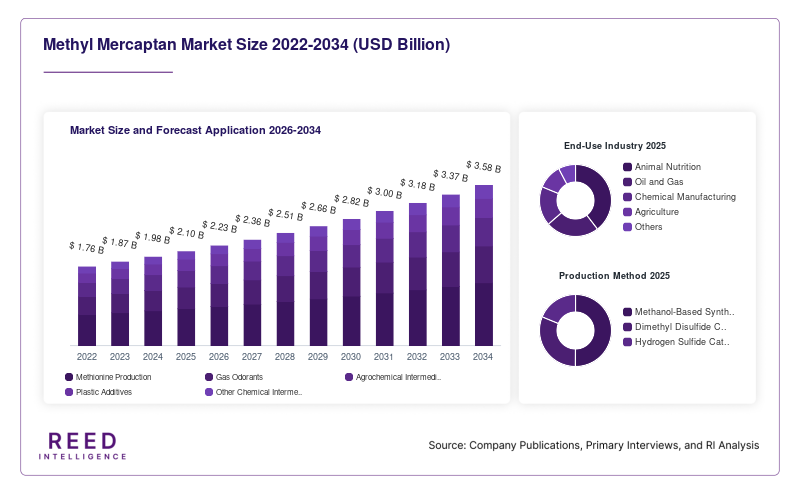
The methionine production segment accounted for the dominant share of the Methyl Mercaptan Market in 2025, representing approximately 64% of total demand. Methionine is widely used as a feed additive in poultry, livestock, and aquaculture nutrition. The large volume requirement for methionine synthesis has positioned this segment as the primary consumer of methyl mercaptan. Chemical manufacturers often integrate mercaptan production with amino acid manufacturing facilities to maintain consistent supply for methionine production.
The gas odorant segment is projected to grow at the fastest CAGR of around 6.9% through 2034. Gas distribution systems require odorants to provide a detectable smell that helps identify leaks. Expanding pipeline infrastructure and urban gas distribution networks will likely increase demand for mercaptan-based odorant formulations. Suppliers specializing in gas odorization chemicals are expected to expand production capacity to meet the requirements of energy distribution companies.
By End-Use Industry
The animal nutrition industry represented the dominant end-use segment in the Methyl Mercaptan Market in 2025, accounting for around 58% share. The sector consumed methyl mercaptan primarily through its role in methionine production used in feed formulations. Commercial poultry and aquaculture operations rely on balanced amino acid supplementation to enhance growth efficiency and reduce feed costs.
The oil and gas industry is expected to grow at a CAGR of 6.5% during the forecast period. Gas utilities require odorant compounds to ensure safety in natural gas distribution systems. As pipeline networks expand and gas supply systems reach new urban areas, the demand for odorant chemicals will likely increase. This trend may contribute to higher consumption of methyl mercaptan within energy infrastructure applications.
By Production Method
The methanol-based synthesis process held the dominant share of the Methyl Mercaptan Market in 2025, representing about 61% of total production. This method involves the reaction of methanol with hydrogen sulfide in the presence of catalysts. The process has been widely adopted due to its efficiency and compatibility with integrated chemical production facilities. Large chemical plants often rely on methanol-based synthesis because it allows continuous production and stable output volumes.
The dimethyl disulfide conversion process is anticipated to grow at a CAGR of 6.3% through 2034. This process offers flexibility for chemical producers seeking alternative production pathways in facilities where dimethyl disulfide is available as an intermediate. As chemical companies continue to diversify manufacturing technologies, adoption of alternative synthesis routes may increase to enhance operational flexibility and optimize feedstock utilization.
Regional Analysis
North America
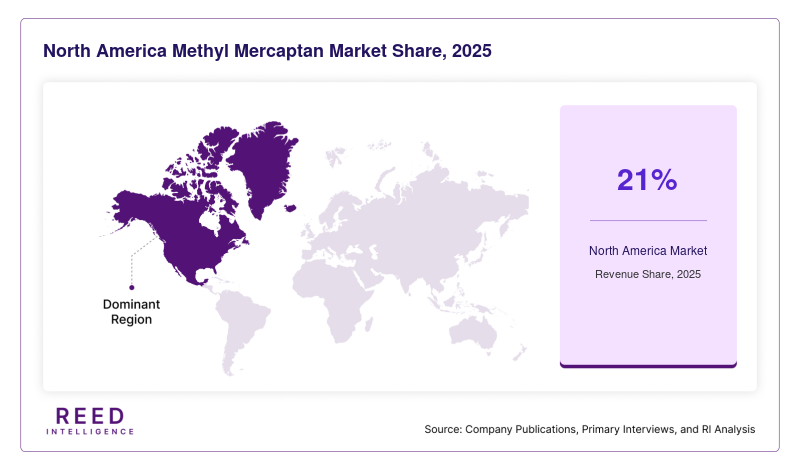
North America accounted for 21% of the global Methyl Mercaptan Market share in 2025. The regional market benefited from well-established chemical manufacturing infrastructure and integrated methionine production facilities. The region will likely expand at a CAGR of 5.3% between 2025 and 2034 as chemical producers continue to optimize supply chains for sulfur intermediates. The presence of large-scale feed additive manufacturers and advanced petrochemical complexes has supported stable consumption of methyl mercaptan in the region.
The United States represented the dominant country in the regional market. One factor contributing to its growth has been the expansion of amino acid manufacturing facilities supporting the livestock industry. Poultry and meat production remain major agricultural sectors in the country, encouraging feed producers to adopt optimized nutritional additives. Chemical companies in the United States have integrated methyl mercaptan production with downstream methionine synthesis to reduce logistical costs and maintain supply reliability.
Europe
Europe represented 19% of the global Methyl Mercaptan Market in 2025. Demand in the region was driven by the presence of advanced chemical manufacturing clusters and well-regulated natural gas distribution systems. The market in Europe will likely grow at a CAGR of 5.0% through 2034, supported by stable industrial demand and modernization of energy infrastructure. European chemical companies continue to focus on improving production efficiency and reducing emissions associated with sulfur chemistry.
Germany dominated the regional market due to its strong specialty chemical sector and established manufacturing base. The country hosts several facilities producing feed additives, agrochemicals, and industrial chemicals that rely on sulfur intermediates. Industrial producers in Germany have adopted advanced catalytic technologies to improve production yields and minimize waste generation. This technological emphasis has supported consistent demand for methyl mercaptan as an intermediate within chemical synthesis operations.
Asia Pacific
Asia Pacific held the largest share of the Methyl Mercaptan Market at 42% in 2025. Rapid industrialization, large agricultural sectors, and expanding chemical manufacturing capacity supported regional market growth. The market in Asia Pacific will likely expand at a CAGR of 6.7% between 2025 and 2034, reflecting rising demand for feed additives and chemical intermediates.
China accounted for the dominant share within the region. One distinct growth factor has been the expansion of domestic amino acid manufacturing plants serving the country’s large livestock and aquaculture industries. Poultry and fish production in China requires nutritionally balanced feed formulations containing synthetic amino acids. Chemical manufacturers have developed integrated production systems linking methanol, hydrogen sulfide, and downstream methionine production processes. This vertical integration has strengthened supply stability for methyl mercaptan and supported market expansion.
Middle East & Africa
The Middle East & Africa region accounted for approximately 9% of the global Methyl Mercaptan Market in 2025. The region will likely grow at a CAGR of 5.8% through 2034, driven by petrochemical industry development and the expansion of gas distribution infrastructure. Several countries in the region have invested in refining and chemical production facilities that require sulfur intermediates.
Saudi Arabia represented the dominant country in the regional market. The country’s growth has been linked to large petrochemical complexes integrated with natural gas processing operations. Chemical companies operating in Saudi Arabia have focused on producing specialty chemicals and intermediates for global export markets. The availability of hydrocarbon feedstocks and supportive industrial policies have encouraged investment in chemical production units that require sulfur-based compounds, including methyl mercaptan.
Latin America
Latin America accounted for 9% of the global Methyl Mercaptan Market in 2025. Although the regional share remained smaller compared with other regions, the market will likely register the fastest growth rate at a CAGR of 7.4% between 2025 and 2034. Growth prospects are associated with expanding agricultural sectors and increasing demand for crop protection chemicals.
Brazil emerged as the dominant country within the region. One factor supporting growth has been the country’s large agricultural industry, which requires agrochemical inputs to maintain crop productivity. Chemical producers serving agricultural markets have increased production of sulfur-containing intermediates used in pesticide formulations. As Brazil continues to expand agricultural exports, the demand for chemical intermediates such as methyl mercaptan is expected to increase steadily.
Competitive Landscape
The Methyl Mercaptan Market features a moderately consolidated competitive structure with several chemical manufacturers supplying mercaptan intermediates for downstream applications. Companies focus on improving production efficiency, integrating supply chains, and expanding capacity in regions with strong demand for feed additives and chemical intermediates.
One of the major participants in the market is Evonik Industries, which has developed integrated production facilities supporting methionine manufacturing. The company has invested in expanding amino acid production capacity to support global feed additive demand. These investments have indirectly strengthened its position in the methyl mercaptan supply chain.
Other companies active in the market include large chemical producers specializing in sulfur chemistry, petrochemical processing, and specialty chemical manufacturing. Industry participants continue to focus on operational efficiency, emission control technologies, and strategic partnerships with feed additive and agrochemical manufacturers.
Key Players List
- Evonik Industries
- Arkema Group
- Chevron Phillips Chemical Company
- Sumitomo Chemical
- Toray Fine Chemicals
- Mitsubishi Gas Chemical Company
- Arkema China Chemical Co.
- BASF SE
- DuPont de Nemours Inc.
- Lanxess AG
- Arkema Thiochemicals
- Phillips 66 Chemicals
- Eastman Chemical Company
- Arkema France SA
- Merck KGaA
- Arkema Functional Chemicals
Recent Developments
- In 2024, Evonik Industries expanded its methionine production capacity in Asia to support rising demand from poultry feed manufacturers.
- In 2023, Arkema Group increased investment in sulfur chemistry technologies aimed at improving efficiency in mercaptan production processes.
- In 2024, Sumitomo Chemical strengthened its chemical intermediates supply chain by upgrading production facilities in Japan.
- In 2023, Chevron Phillips Chemical Company implemented process optimization initiatives in its sulfur chemical production units.
- In 2024, Mitsubishi Gas Chemical Company expanded specialty chemical manufacturing capabilities for sulfur-based intermediates used in industrial applications.
Methyl Mercaptan Market Segments
Application
- Methionine Production
- Gas Odorants
- Agrochemical Intermediates
- Plastic Additives
- Other Chemical Intermediates
End-Use Industry
- Animal Nutrition
- Oil and Gas
- Chemical Manufacturing
- Agriculture
- Others
Production Method
- Methanol-Based Synthesis
- Dimethyl Disulfide Conversion
- Hydrogen Sulfide Catalytic Reaction
By Region
- North America
- Europe
- APAC
- Middle East and Africa
- LATAM