Microencapsulated Paraffin Phase Change Material Market Size, Share & Demand Report By Type (Organic PCM, Inorganic PCM, Bio-based PCM), By Application (Building & Construction, Textiles, Packaging, Electronics, Others), By End-Use (Construction Industry, Textile Industry, Electronics Industry, Healthcare, Others) & Segment Forecasts, 2026–2034
USD 3950
Market Overview
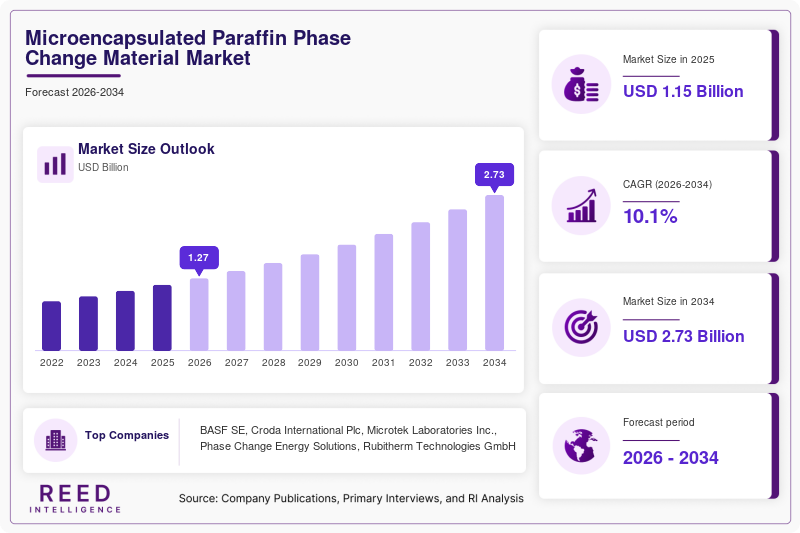
The Microencapsulated Paraffin Phase Change Material Market size was valued at approximately USD 1.15 billion in 2026 and is projected to reach USD 2.48 billion by 2034, expanding at a CAGR of 10.1% during the forecast period of 2026–2034. The market is witnessing steady expansion due to increasing demand for energy-efficient solutions across construction, textiles, and electronics industries. Microencapsulated paraffin phase change materials (PCMs) are widely used to regulate temperature by absorbing and releasing thermal energy during phase transitions, which enhances energy conservation and improves product performance.
A key global factor supporting market growth is the rising emphasis on sustainable building solutions and energy efficiency regulations. Governments and regulatory bodies are encouraging the adoption of advanced insulation and thermal management materials to reduce carbon emissions and energy consumption. Microencapsulated paraffin PCMs are gaining traction in green buildings, smart textiles, and cold chain logistics due to their compact design, enhanced stability, and ability to be integrated into various substrates such as coatings, foams, and fabrics.
Key Highlights
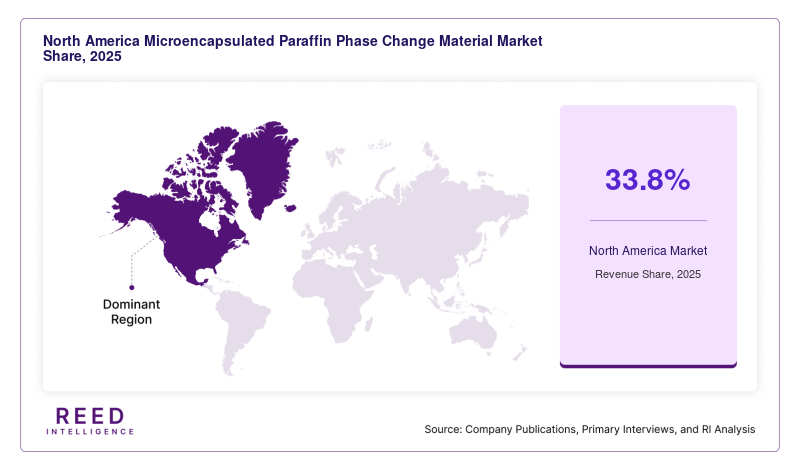
- North America dominated the market with a 33.8% share in 2025.
- Asia Pacific is expected to grow at the fastest CAGR of 11.6% during 2026–2034.
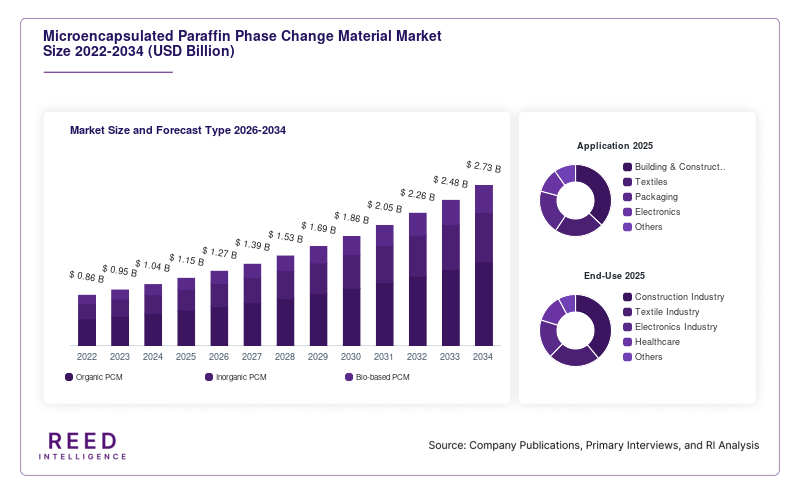
- By type, organic PCM accounted for the largest share of 42.7%, while bio-based PCM is projected to grow at a CAGR of 12.3%.
- By application, building & construction led with a 39.4% share, whereas textiles are expected to expand at a CAGR of 11.9%.
- The United States remained the dominant country, with market values of USD 310 million in 2024 and USD 345 million in 2025.
Market Trends
Rising Integration in Smart Building Materials
The growing adoption of smart building technologies is shaping the demand for microencapsulated paraffin phase change materials. These materials are increasingly embedded into walls, ceilings, and flooring systems to enhance thermal comfort and reduce dependency on heating and cooling systems. Builders and architects are focusing on materials that can store excess heat during the day and release it at night, thereby stabilizing indoor temperatures. This trend is supported by advancements in construction materials such as PCM-infused concrete and gypsum boards. As energy codes become more stringent, the integration of PCMs in residential and commercial buildings is expected to expand further, contributing to long-term energy savings and reduced operational costs.
Expansion in Functional and Smart Textiles
Another notable trend is the increasing use of microencapsulated paraffin PCMs in textiles and wearable products. These materials are incorporated into fibers and coatings to regulate body temperature, offering enhanced comfort in extreme climates. The demand is rising in sportswear, military apparel, and healthcare textiles, where temperature control is critical. Manufacturers are investing in advanced microencapsulation technologies to improve durability, washability, and thermal performance. The trend is also influenced by consumer preferences for multifunctional fabrics that combine comfort with performance. As innovation in textile engineering continues, PCM-based fabrics are expected to gain wider acceptance across both premium and mass-market segments.
Market Drivers
Growing Demand for Energy Efficiency Solutions
The increasing focus on reducing energy consumption is a major driver for the microencapsulated paraffin phase change material market. Buildings account for a significant share of global energy use, and there is a strong push to adopt materials that enhance thermal insulation. Microencapsulated PCMs help in reducing peak energy demand by storing excess heat and releasing it when needed. This results in lower reliance on HVAC systems and improved energy efficiency. Governments are introducing incentives and regulations to promote sustainable construction practices, further boosting demand. The ability of PCMs to be integrated into existing building materials without major structural changes makes them an attractive option for both new construction and retrofitting projects.
Increasing Use in Cold Chain and Packaging Applications
The expansion of cold chain logistics and temperature-sensitive product transportation is another key driver. Industries such as pharmaceuticals, food and beverages, and biotechnology require reliable temperature control during storage and transit. Microencapsulated paraffin PCMs provide consistent thermal regulation, ensuring product integrity and reducing spoilage. Their compact size and versatility allow them to be used in packaging solutions, refrigerated containers, and transport systems. With the growth of global trade and e-commerce, the demand for efficient cold chain solutions is increasing. This, in turn, is driving the adoption of advanced thermal management materials, including microencapsulated PCMs.
Market Restraint
High Production Costs and Technical Challenges
One of the primary challenges limiting market growth is the high cost associated with the production of microencapsulated paraffin phase change materials. The microencapsulation process requires specialized equipment, precise control, and advanced materials, which increases manufacturing costs. Additionally, maintaining consistency in capsule size, thermal performance, and long-term stability can be technically complex. These factors can make PCMs less competitive compared to traditional insulation materials, especially in cost-sensitive markets. The high initial investment required for integrating PCM-based solutions may also deter small and medium-sized enterprises. Despite their long-term benefits, the upfront cost barrier continues to impact widespread adoption, particularly in developing regions.
Market Opportunities
Development of Bio-Based and Sustainable PCMs
The shift toward environmentally friendly materials presents a significant opportunity for the market. Manufacturers are increasingly focusing on developing bio-based microencapsulated PCMs derived from renewable resources. These materials offer similar thermal performance while reducing environmental impact. The growing awareness of sustainability among consumers and industries is encouraging the adoption of green alternatives. Bio-based PCMs can be used in applications such as eco-friendly buildings, sustainable packaging, and green textiles. As research and development efforts continue, the availability of cost-effective and high-performance bio-based PCMs is expected to increase, creating new growth avenues for market players.
Emerging Applications in Electronics Thermal Management
Another promising opportunity lies in the use of microencapsulated paraffin PCMs for thermal management in electronics. With the miniaturization of electronic devices and increasing processing power, heat generation has become a critical concern. PCMs can be integrated into electronic components to absorb excess heat and maintain optimal operating temperatures. This helps in improving device performance, reliability, and lifespan. The demand for efficient cooling solutions is rising in sectors such as consumer electronics, electric vehicles, and data centers. As technological advancements continue, the adoption of PCM-based thermal management systems is expected to expand significantly.
Segmental Analysis
By Type
The organic PCM segment held the largest share of 42.7% in 2024, driven by its favorable properties such as high latent heat, chemical stability, and compatibility with various applications. Organic microencapsulated paraffin PCMs are widely used in construction materials, textiles, and packaging due to their reliability and performance. Their ability to undergo repeated phase transitions without significant degradation makes them suitable for long-term applications. The availability of different melting points also allows customization based on specific requirements, further supporting their dominance in the market.
The bio-based PCM segment is expected to grow at the fastest CAGR of 12.3% during the forecast period. This growth is driven by increasing demand for sustainable and environmentally friendly materials. Bio-based PCMs offer similar thermal performance while reducing environmental impact, making them attractive for green building and eco-friendly applications. Advances in material science and production technologies are improving the performance and cost-effectiveness of bio-based PCMs, further driving their adoption.
By Application
The building & construction segment accounted for the largest share of 39.4% in 2024, driven by the growing demand for energy-efficient building materials. Microencapsulated paraffin PCMs are widely used in walls, ceilings, and floors to regulate indoor temperatures and reduce energy consumption. The increasing adoption of green building standards and energy efficiency regulations is supporting the growth of this segment. The ability of PCMs to enhance thermal comfort and reduce HVAC usage makes them a preferred choice in modern construction projects.
The textiles segment is expected to grow at the fastest CAGR of 11.9% during the forecast period. The increasing demand for smart and functional fabrics is driving the adoption of PCMs in textiles. These materials provide temperature regulation, enhancing comfort and performance in various applications such as sportswear and protective clothing. Innovations in textile manufacturing and microencapsulation technologies are further supporting the growth of this segment.
By End-Use
The construction industry held the largest share in 2024, driven by the increasing adoption of energy-efficient materials. Microencapsulated paraffin PCMs are used in various construction applications to improve thermal insulation and reduce energy consumption. The growing focus on sustainable building practices and energy efficiency is supporting the dominance of this segment. The integration of PCMs into building materials such as concrete and insulation panels is further driving market growth.
The electronics segment is expected to grow at the fastest CAGR of 11.5% during the forecast period. The increasing demand for efficient thermal management solutions in electronic devices is driving the adoption of PCMs. These materials help in maintaining optimal operating temperatures, improving device performance and lifespan. The rapid growth of consumer electronics and advancements in technology are further supporting the expansion of this segment.
Regional Analysis
North America
North America held a significant share of 33.8% in 2025 and is expected to grow at a CAGR of 9.8% during the forecast period. The region’s strong focus on energy efficiency and sustainable construction practices is driving the demand for microencapsulated paraffin phase change materials. The presence of advanced infrastructure and high adoption of innovative building technologies further supports market growth. Increasing investments in research and development activities are also contributing to the expansion of the market across the region.
The United States dominates the North American market due to its well-established construction and manufacturing sectors. A key growth factor is the increasing adoption of green building standards and certifications, which encourage the use of advanced thermal management materials. The country’s emphasis on reducing energy consumption in residential and commercial buildings is driving the integration of PCMs into construction materials.
Europe
Europe accounted for a considerable share of the market in 2025 and is projected to grow at a CAGR of 9.5% through 2034. The region’s stringent environmental regulations and strong focus on sustainability are key drivers of market growth. Governments across Europe are promoting energy-efficient solutions to meet climate targets, which is increasing the demand for PCMs in building and construction applications. The presence of leading manufacturers also supports market expansion.
Germany is the dominant country in the European market, driven by its advanced engineering and construction industries. A unique growth factor is the country’s focus on energy-efficient retrofitting of existing buildings. This has led to increased adoption of PCM-based materials in renovation projects, contributing to overall market growth.
Asia Pacific
Asia Pacific is expected to witness the fastest growth, with a CAGR of 11.6% during the forecast period. The region’s rapid urbanization and industrialization are driving the demand for energy-efficient solutions. Increasing construction activities and growing awareness of sustainable materials are contributing to market expansion. The rising demand for smart textiles and electronics further supports the adoption of PCMs.
China leads the Asia Pacific market due to its large manufacturing base and expanding construction sector. A key growth factor is the government’s focus on energy conservation and environmental protection. Policies promoting green buildings and sustainable development are encouraging the use of advanced thermal management materials.
Middle East & Africa
The Middle East & Africa region is experiencing moderate growth, with a projected CAGR of 8.7% during the forecast period. The demand for microencapsulated paraffin PCMs is driven by the need for efficient cooling solutions in hot climates. Increasing investments in infrastructure development and construction projects are also supporting market growth.
The United Arab Emirates is a leading country in the region, driven by its focus on sustainable urban development. A unique growth factor is the adoption of advanced building materials to improve energy efficiency in extreme temperatures. This is increasing the use of PCMs in construction and infrastructure projects.
Latin America
Latin America is expected to grow at a CAGR of 8.9% during the forecast period, supported by increasing construction activities and industrial development. The region is gradually adopting energy-efficient technologies to reduce energy consumption and improve sustainability. The demand for PCMs is growing in applications such as building materials and cold chain logistics.
Brazil dominates the Latin American market due to its expanding construction sector and growing industrial base. A key growth factor is the increasing awareness of energy efficiency and environmental sustainability. This is encouraging the adoption of advanced materials, including microencapsulated PCMs, across various industries.
Competitive Landscape
The Microencapsulated Paraffin Phase Change Material Market is moderately competitive, with several global and regional players focusing on product innovation and strategic partnerships. Leading companies are investing in research and development to enhance the performance and efficiency of PCM products. The market is characterized by the presence of established players as well as emerging companies offering specialized solutions.
BASF SE is recognized as a leading player in the market, owing to its strong product portfolio and global presence. The company has been focusing on expanding its PCM solutions for construction and textile applications. A recent development includes the introduction of advanced PCM-based materials designed to improve energy efficiency in buildings. Other key players are also investing in technological advancements and expanding their production capacities to meet growing demand.
Key Players
- BASF SE
- Croda International Plc
- Microtek Laboratories Inc.
- Phase Change Energy Solutions
- Rubitherm Technologies GmbH
- Climator Sweden AB
- Entropy Solutions LLC
- Sasol Limited
- Outlast Technologies LLC
- DuPont de Nemours, Inc.
- Honeywell International Inc.
- Henkel AG & Co. KGaA
- Evonik Industries AG
- Mitsubishi Chemical Corporation
- Laird Thermal Systems
Recent Developments
- BASF SE launched a new range of microencapsulated PCM solutions aimed at improving thermal regulation in construction materials.
- Croda International Plc expanded its production capacity for bio-based PCMs to meet increasing demand for sustainable materials.
- DuPont de Nemours, Inc. introduced advanced PCM technologies for use in smart textiles and wearable applications.
Microencapsulated Paraffin Phase Change Material Market Segments
Type
- Organic PCM
- Inorganic PCM
- Bio-based PCM
Application
- Building & Construction
- Textiles
- Packaging
- Electronics
- Others
End-Use
- Construction Industry
- Textile Industry
- Electronics Industry
- Healthcare
- Others
By Region
- North America
- Europe
- APAC
- Middle East and Africa
- LATAM