Mid Lacrosse Cleats Market Size, Share & Trends Analysis Report By Product Type, Application and Region (North America, Europe, Asia Pacific, Latin America, Middle East & Africa) Forecasts, 2026–2034
USD 3950
Mid Lacrosse Cleats Market Size
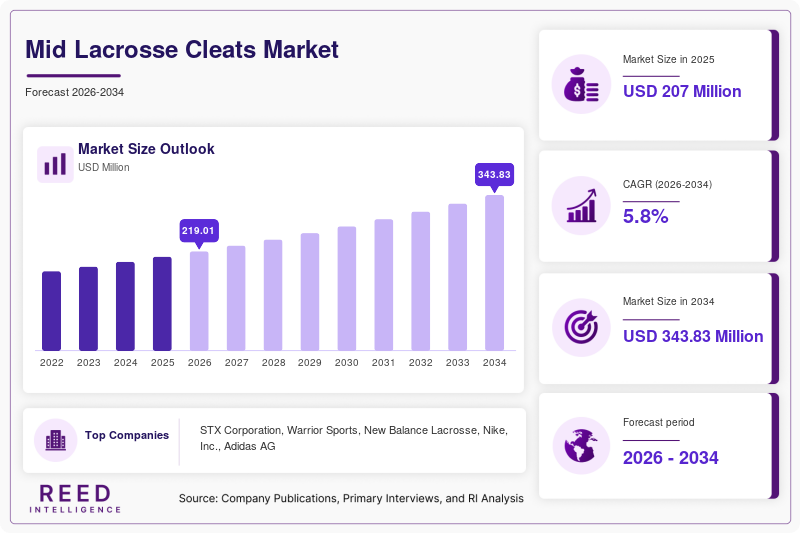
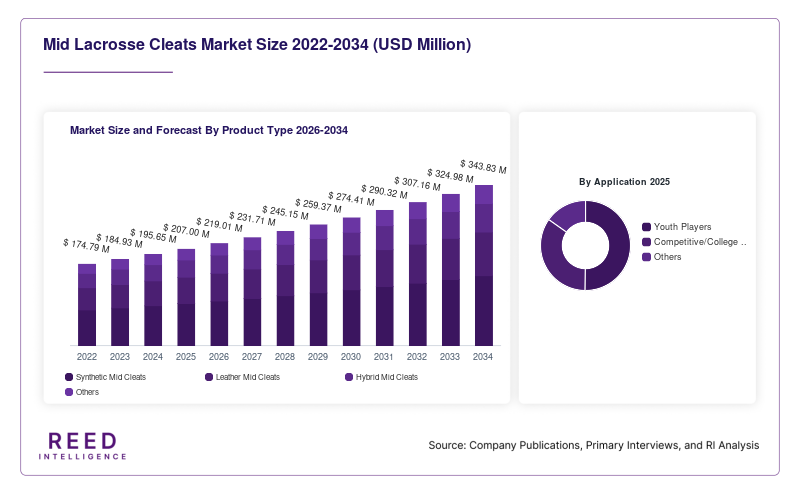
The global mid lacrosse cleats market was valued at USD 207 million in 2025 and is projected to grow from USD 219.01 million in 2026 to USD 343.83 million by 2034, registering a CAGR of 5.8% during the forecast period from 2026 to 2034. The market covers specialized mid-height lacrosse footwear designed to balance ankle support, traction, stability, flexibility, and mobility during rapid lateral movements and directional changes.
Mid lacrosse cleats are designed for players requiring a combination of ankle protection and freedom of movement. Mid-height construction provides greater support than low-profile footwear while retaining more mobility than traditional high-top designs. The category is particularly relevant to midfield players, who frequently transition between offensive and defensive play and perform repeated acceleration, deceleration, and lateral cuts.
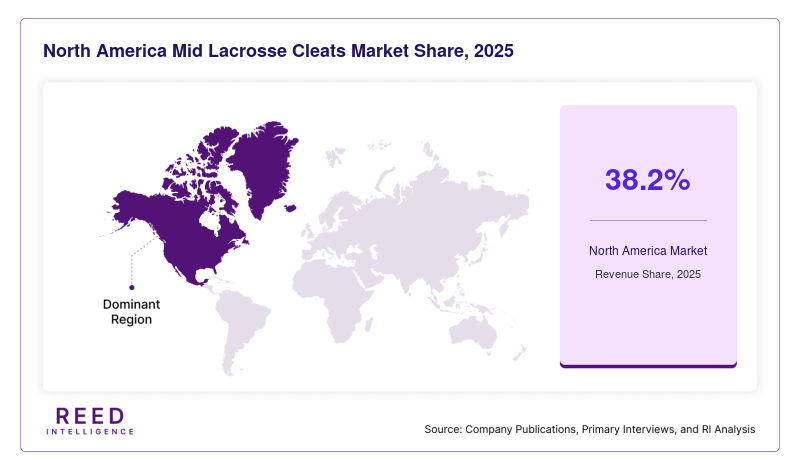
North America remains the principal market because of the sport's established participation base, youth programs, collegiate competitions, professional leagues, and specialized retail infrastructure. According to the available market source, North America accounted for 38.2% of global market revenue in 2025, making it the dominant regional market.
Mid Lacrosse Cleats Market Drivers
Growing Youth and Collegiate Participation: Expansion of school, club, youth, and collegiate lacrosse programs increases the addressable consumer base for specialized footwear.
Increasing Demand for Sport-Specific Footwear: Players increasingly seek cleats designed specifically for lacrosse movements rather than relying solely on multipurpose football or soccer footwear.
Material and Traction Innovation: Lightweight synthetic uppers, engineered mesh, TPU components, improved cleat plates, and traction technologies are increasing product differentiation.
Professional Lacrosse Expansion: Investment in professional lacrosse is increasing visibility and creating stronger pathways from youth and collegiate participation to elite competition. In June 2026, the Premier Lacrosse League announced a USD 100 million Series E financing round, with proceeds directed partly toward youth access and expansion of women's lacrosse.
Mid Lacrosse Cleats Market Restraints
Seasonal Demand: Outdoor lacrosse participation is concentrated around seasonal playing schedules, which can create fluctuations in footwear purchases.
High Product Replacement Costs: Premium lacrosse-specific footwear can be expensive for families managing equipment requirements for growing youth athletes.
Competition From Multi-Sport Cleats: Football and soccer cleats can provide substitutes for certain players, particularly where lacrosse-specific footwear is less available.
Limited International Market Penetration: Outside established lacrosse markets, lower participation and limited specialty distribution restrict adoption.
Mid Lacrosse Cleats Market Opportunities
Women's Lacrosse: Expanding women's participation creates opportunities for footwear specifically designed around women's sizing, fit, biomechanics, and performance requirements.
Emerging International Markets: Japan, Australia, Europe, and selected Asian markets offer opportunities as organized lacrosse programs expand.
Direct-to-Consumer Distribution: E-commerce enables specialized manufacturers to reach players in regions where physical lacrosse retailers are limited.
Advanced Performance Technologies: Opportunities exist for integrating improved traction, cushioning, stability, lightweight construction, and customizable fit systems.
Mid Lacrosse Cleats Market Segmental Analysis
By Product Type
Synthetic Mid Cleats are the dominant product segment, accounting for 42.5% market share in 2025. Their combination of durability, moisture management, lightweight construction, and consistent performance makes them particularly attractive to competitive players.
Hybrid Mid Cleats represent the fastest-growing product segment, with a reported 6.7% CAGR, as they combine synthetic construction with leather components to balance durability, comfort, and performance.
Leather Mid Cleats continue to serve consumers prioritizing traditional construction, comfort, breathability, and premium aesthetics, although their reported growth rate is lower than synthetic and hybrid alternatives.
By Application
Youth Players represent the dominant application segment, accounting for 58.3% of market value in 2025. The segment benefits from expanding youth programs, school participation, club competition, and recurring replacement requirements as players grow.
Competitive/College Athletes represent the premium application category, with demand supported by performance requirements and greater willingness to purchase specialized footwear.
Others include recreational adult players, casual participants, and other niche users. This segment remains comparatively smaller but provides opportunities for manufacturers seeking new consumer groups.
Mid Lacrosse Cleats Market Regional Analysis
North America Mid Lacrosse Cleats Market
North America is the dominant regional market, accounting for 38.2% of global market revenue in 2025 according to the available market-specific source. The region benefits from established youth, school, collegiate, club, and professional lacrosse infrastructure across the United States and Canada.
The region also benefits from extensive specialty sporting-goods distribution and strong consumer familiarity with lacrosse-specific footwear. Continued investment in youth participation and professional lacrosse is expected to support demand.
Europe Mid Lacrosse Cleats Market
Europe is the second-largest regional market, with the available source reporting a 24.6% global share in 2025. The United Kingdom, Germany, France, and Scandinavian markets are important contributors as organized lacrosse participation expands.
Online retail expansion and greater availability of specialist sports equipment are improving access to lacrosse footwear. European consumers' preference for performance-oriented sporting products also creates opportunities for premium cleat manufacturers.
Asia Pacific Mid Lacrosse Cleats Market
Asia Pacific represents an emerging market with growing opportunities in Japan, Australia, China, and India. Japan has developed organized university and club lacrosse activity, while Australia has an established but comparatively smaller lacrosse community.
Growth will depend on broader participation, development of organized leagues, sporting infrastructure, product availability, and manufacturer investment in regional distribution.
Latin America Mid Lacrosse Cleats Market
Latin America remains an emerging market for specialized lacrosse footwear. Participation is comparatively limited, but international schools, sports organizations, and growing exposure to international sporting competitions provide opportunities for gradual market development.
Expansion of e-commerce can reduce distribution barriers and enable players to access specialist footwear without relying exclusively on local sporting-goods stores.
Middle East & Africa Mid Lacrosse Cleats Market
The Middle East & Africa represents a relatively small market but provides long-term opportunities through international schools, expatriate sports communities, and new sports-development initiatives.
Market development will depend on establishing local distribution, increasing awareness of lacrosse, and developing organized participation programs. The available source groups the region with emerging markets and reports comparatively modest current penetration.
Mid Lacrosse Cleats Market Competitive Landscape
The competitive landscape includes specialized lacrosse manufacturers, diversified sporting-goods companies, athletic footwear brands, and emerging direct-to-consumer businesses. Competition is centered on traction, lightweight construction, ankle support, comfort, durability, price, athlete endorsements, and distribution reach.
Leading manufacturers are increasingly using proprietary outsole technologies, engineered mesh, synthetic materials, and player-specific designs to differentiate their footwear. New Balance currently offers multiple lacrosse-specific models, including FreezeLX v5, FreezeLX v5 Low, FreezeLX v5 Turf, BurnX5, and BurnX5 All America.
Key Market Players
- STX Corporation
- Warrior Sports
- New Balance Lacrosse
- Nike, Inc.
- Adidas AG
- Under Armour, Inc.
- ASICS Corporation
- Puma SE
- Mizuno Corporation
- Easton
- Brine
Mid Lacrosse Cleats Market Recent Developments
- June 30, 2026 Premier Lacrosse League: The PLL announced a USD 100 million Series E financing round, with investment priorities including youth access, women's lacrosse, commercial partnerships, and expansion ahead of lacrosse's Olympic return at LA28. This is relevant to long-term participation and equipment demand.
- April 17, 2026 Warrior Lacrosse: Warrior announced a multi-year partnership with the Women's Collegiate Lacrosse Organization (WCLO), including equipment sponsorship and expanded support for women's collegiate club lacrosse. The initiative is relevant to the expansion of the addressable player base.
Mid Lacrosse Cleats Market Segments
By Product Type
- Synthetic Mid Cleats
- Leather Mid Cleats
- Hybrid Mid Cleats
- Others
By Application
- Youth Players
- Competitive/College Athletes
- Others
By Region
- North America
- Europe
- APAC
- Middle East and Africa
- LATAM