Milk Protein Hydrolysate Market Size, Share & Demand Report By Product Type ( Casein Protein Hydrolysate, Milk Protein Concentrate Hydrolysate, Others), By Application (Infant Nutrition, Sports Nutrition, Clinical Nutrition, Functional Food & Beverages, Dietary Supplements), By Distribution Channel (Supermarkets & Hypermarkets, Specialty Stores, Pharmacies, Online Retail), By Region & Segment Forecasts, 2026–2034
USD 3950
Market Overview
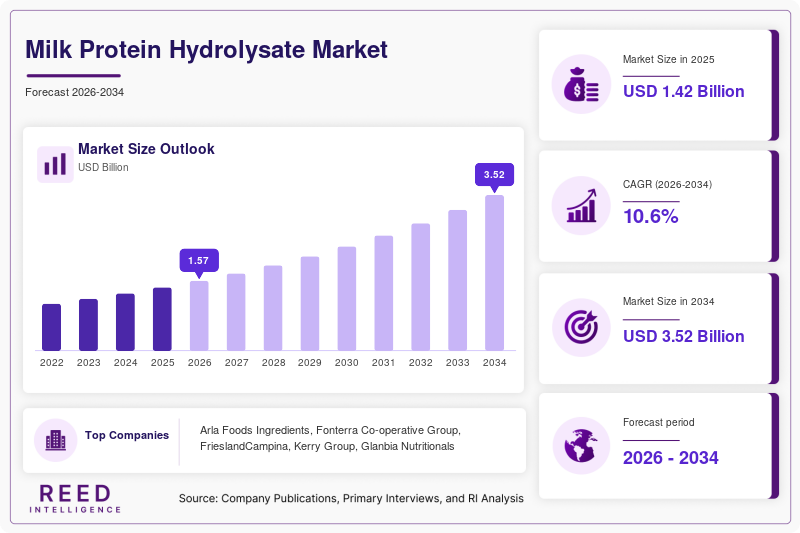
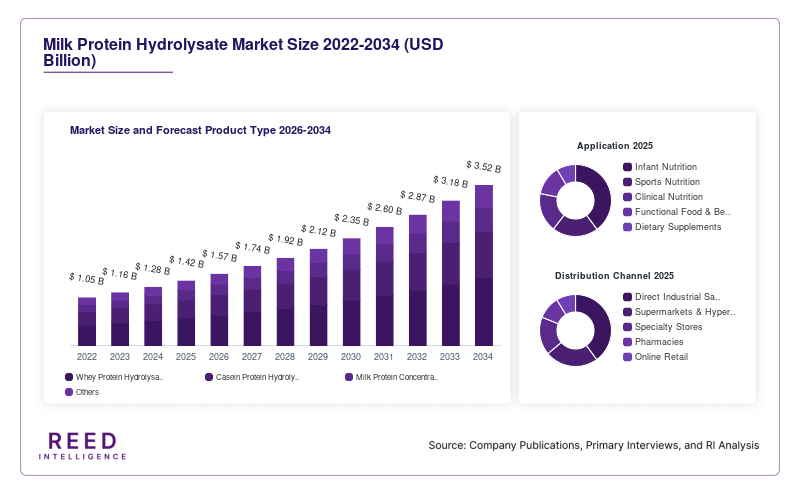
The global Milk Protein Hydrolysate Market size was valued at USD 1.42 billion in 2026 and is projected to reach USD 3.18 billion by 2034, expanding at a CAGR of 10.6% during the forecast period from 2026 to 2034. The market continues to witness stable expansion due to the increasing use of hydrolyzed dairy proteins in infant nutrition, sports supplements, clinical nutrition products, and functional food applications. Milk protein hydrolysates are produced through enzymatic hydrolysis processes that improve digestibility, reduce allergenicity, and enhance amino acid absorption. These characteristics have positioned milk protein hydrolysates as a preferred ingredient across health-oriented food and beverage categories.
One of the major global factors supporting market growth is the increasing consumer focus on preventive healthcare and personalized nutrition. Consumers across developed and developing economies are shifting toward protein-rich diets that support immunity, muscle recovery, metabolic health, and digestive wellness. This trend has accelerated demand for specialized protein ingredients with enhanced functionality. Food manufacturers are also increasing investments in clean-label and bioactive protein formulations to meet rising consumer expectations for high-quality nutritional products. In addition, advancements in dairy processing technologies and enzymatic hydrolysis methods have improved production efficiency, taste profiles, and ingredient stability, further supporting market expansion.
Key Highlights
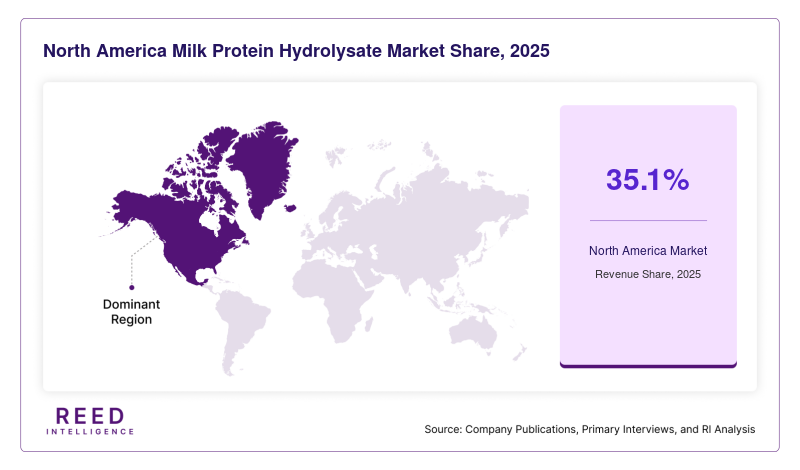
- North America dominated the market with a 35.1% share in 2025.
- Asia Pacific is expected to grow at the fastest CAGR of 11.8% during 2026–2034.
- By product type, whey protein hydrolysate accounted for the largest share of 44.3%.
- while casein protein hydrolysate is projected to grow at a CAGR of 12.1%.
- By application, infant nutrition led with a 39.6% share.
- whereas sports nutrition is expected to expand at a CAGR of 12.5%.
- By distribution channel, direct industrial sales held the largest share of 47.4%.
- while online retail channels are projected to grow at a CAGR of 13.2%.
- The United States remained the dominant country, with market values of USD 420 million in 2024 and USD 465 million in 2025.
Market Trends
Rising Demand for Functional and High-Protein Foods
The increasing popularity of functional foods and high-protein dietary products has emerged as a major trend influencing the Milk Protein Hydrolysate Market. Consumers are actively seeking nutritional products that support fitness, immunity, weight management, and healthy aging. This demand has encouraged food and beverage manufacturers to incorporate hydrolyzed milk proteins into protein beverages, meal replacements, fortified snacks, and nutritional bars. Milk protein hydrolysates provide rapid amino acid absorption and improved digestibility, making them highly suitable for active consumers and elderly populations. In addition, fitness-conscious consumers are paying closer attention to ingredient quality and protein bioavailability, encouraging manufacturers to promote hydrolyzed protein formulations as premium nutritional ingredients.
The trend is also supported by the growing influence of sports nutrition culture beyond professional athletes. Mainstream consumers increasingly consume protein products for general wellness and energy support. Food companies are therefore launching ready-to-drink beverages and protein supplements enriched with milk protein hydrolysates to capture broader consumer groups. Product innovation in flavored protein beverages and low-sugar nutritional products is further strengthening market penetration across supermarkets, pharmacies, and online platforms.
Expansion of Infant and Clinical Nutrition Applications
The growing use of milk protein hydrolysates in infant and medical nutrition products is another major trend shaping market development. Hydrolyzed proteins are widely used in infant formula products designed for babies with cow milk protein intolerance or digestive sensitivity. Healthcare professionals increasingly recommend partially or extensively hydrolyzed proteins due to their improved tolerance and lower allergenic potential. As awareness regarding infant digestive health expands, manufacturers are investing in specialized formulations that replicate the nutritional composition of human milk more effectively.
Clinical nutrition applications are also increasing steadily due to the rising prevalence of chronic diseases, aging populations, and post-surgical recovery needs. Hospitals and healthcare providers are incorporating hydrolyzed dairy proteins into nutritional supplements for patients requiring high protein absorption and digestive comfort. This trend is especially visible in Europe, North America, and parts of Asia Pacific, where healthcare spending and nutritional awareness continue to increase. Product innovation in medical nutrition beverages and therapeutic dietary formulations is expected to sustain long-term market growth.
Market Drivers
Growing Consumer Awareness Regarding Digestive Health
The increasing awareness regarding digestive wellness and food sensitivity management is a key driver supporting the Milk Protein Hydrolysate Market. Consumers are becoming more informed about protein digestion, nutrient absorption, and gastrointestinal health. Milk protein hydrolysates contain smaller peptide chains that are easier to digest compared to conventional dairy proteins. This characteristic has made hydrolyzed proteins highly attractive among consumers with sensitive digestive systems, elderly populations, and individuals recovering from illness.
Food manufacturers are responding to this demand by introducing digestive-friendly nutritional products that feature hydrolyzed proteins as a core ingredient. The rise of personalized nutrition programs and wellness-focused diets has further accelerated the use of milk protein hydrolysates across nutritional beverages and dietary supplements. Retailers are also expanding shelf space for digestive health products, increasing market visibility. In addition, healthcare practitioners increasingly recommend hydrolyzed proteins for individuals experiencing lactose sensitivity or mild digestive discomfort associated with standard protein consumption.
Expanding Sports Nutrition and Active Lifestyle Industry
The rapid expansion of the global sports nutrition industry continues to drive strong demand for milk protein hydrolysates. Consumers engaged in fitness activities, endurance sports, and muscle recovery programs increasingly prefer hydrolyzed proteins because of their fast absorption rates and efficient amino acid delivery. Athletes and active consumers seek nutritional products that support muscle recovery, hydration, and lean muscle development without causing digestive heaviness.
Sports supplement manufacturers are therefore increasing the inclusion of whey and casein hydrolysates in protein powders, energy drinks, and recovery formulations. The popularity of gym culture, online fitness communities, and health-focused lifestyles has also widened the customer base beyond professional athletes. Younger consumers in emerging economies are adopting protein supplementation as part of daily wellness routines. This trend has encouraged global and regional nutrition brands to expand product portfolios, launch premium formulations, and strengthen distribution through digital retail platforms.
Market Restraint
High Production Costs and Flavor Challenges
One of the major restraints affecting the Milk Protein Hydrolysate Market is the relatively high production cost associated with enzymatic hydrolysis processes and advanced protein purification technologies. Manufacturing milk protein hydrolysates requires specialized enzymes, controlled processing environments, and strict quality management systems to maintain nutritional integrity and product consistency. These factors significantly increase operational costs compared to conventional dairy protein production. Smaller manufacturers often face challenges in scaling production while maintaining cost competitiveness, limiting market participation in price-sensitive regions.
Another challenge involves the bitter taste commonly associated with protein hydrolysis. Although technological advancements have improved flavor masking capabilities, some hydrolyzed protein products still experience consumer resistance due to taste and texture concerns. This issue becomes particularly important in infant nutrition and ready-to-drink beverage applications where flavor acceptance strongly influences purchasing decisions. Manufacturers are investing in taste optimization technologies and ingredient blending strategies to improve consumer appeal. However, the additional research and development expenses further increase overall product pricing, creating affordability concerns in developing markets.
Market Opportunities
Increasing Penetration in Emerging Economies
Emerging economies across Asia Pacific, Latin America, and the Middle East are creating significant opportunities for the Milk Protein Hydrolysate Market. Rising disposable incomes, urbanization, and increasing health awareness are encouraging consumers to adopt protein-enriched diets and nutritional supplements. Countries such as China, India, Brazil, and Indonesia are experiencing rapid expansion in sports nutrition, infant formula, and functional food industries. This growth is encouraging dairy ingredient manufacturers to establish regional production facilities and strengthen local distribution partnerships.
Government initiatives promoting nutritional improvement and child health are also supporting demand for fortified infant and clinical nutrition products. In addition, the expansion of modern retail channels and e-commerce platforms is increasing accessibility to premium nutritional products in secondary cities and rural areas. Regional food manufacturers are increasingly collaborating with international dairy ingredient suppliers to develop localized product formulations that meet consumer taste preferences and nutritional requirements.
Technological Advancements in Protein Processing
Continuous innovation in dairy processing and enzymatic hydrolysis technologies presents strong growth opportunities for market participants. Manufacturers are investing in advanced filtration systems, precision hydrolysis techniques, and bioactive peptide extraction methods to improve product quality and manufacturing efficiency. These innovations are helping companies reduce bitterness, enhance solubility, and improve the nutritional performance of hydrolyzed proteins.
Technological improvements are also enabling the development of customized protein formulations for targeted nutrition applications such as senior nutrition, medical recovery, and performance sports supplements. The ability to create application-specific protein ingredients allows manufacturers to differentiate products and capture premium market segments. In addition, automation and process optimization technologies are expected to reduce long-term production costs and improve scalability. Companies focusing on research-driven product development and clean-label processing methods are likely to gain stronger competitive advantages during the forecast period.
Segmental Analysis
By Product Type
Whey protein hydrolysate dominated the Milk Protein Hydrolysate Market in 2024 by accounting for 44.3% of the overall market share. The segment benefits from high protein bioavailability, rapid absorption rates, and strong popularity within sports nutrition applications. Whey protein hydrolysates are widely used in protein powders, recovery drinks, infant nutrition products, and functional foods due to their favorable amino acid composition. Fitness-oriented consumers prefer whey hydrolysates because they support faster muscle recovery and improved exercise performance. Manufacturers also favor whey hydrolysates for their superior solubility and compatibility with beverage formulations. Growing demand for ready-to-drink protein beverages and high-protein snacks has further strengthened segment expansion across developed and emerging economies.
Casein protein hydrolysate is expected to register the fastest CAGR of 12.1% during the forecast period due to increasing demand for sustained-release protein nutrition and specialized medical applications. Casein hydrolysates provide slower amino acid release compared to whey-based ingredients, making them highly suitable for overnight muscle recovery, elderly nutrition, and therapeutic dietary formulations. Clinical nutrition manufacturers increasingly incorporate casein hydrolysates into products designed for patients requiring prolonged nutrient delivery and improved digestive tolerance. The segment is also gaining traction among consumers seeking balanced protein supplementation beyond athletic performance. Technological advancements in enzymatic hydrolysis processes are improving the taste and texture profile of casein-based products, further supporting consumer acceptance and market growth.
By Application
Infant nutrition emerged as the leading application segment in 2024 and accounted for 39.6% of the global market share. The segment benefits from rising demand for hypoallergenic and digestive-friendly infant formula products. Milk protein hydrolysates are commonly used in specialized formulas developed for infants experiencing cow milk protein sensitivity or digestive discomfort. Healthcare professionals often recommend hydrolyzed protein formulas because they reduce allergenic risks while maintaining essential nutritional value. Increasing birth rates in several developing economies and rising parental awareness regarding infant nutrition are supporting long-term demand growth. Regulatory emphasis on nutritional quality and safety standards in infant food manufacturing has also encouraged producers to invest in advanced hydrolyzed protein formulations.
Sports nutrition is projected to witness the fastest CAGR of 12.5% from 2026 to 2034 due to growing participation in fitness activities and increasing protein supplement consumption among mainstream consumers. Hydrolyzed milk proteins are highly valued in sports nutrition products because of their rapid digestion and efficient muscle recovery support. Consumers involved in endurance sports, gym training, and active lifestyles increasingly seek performance-oriented nutritional solutions with enhanced bioavailability. Manufacturers are launching innovative products such as clear protein drinks, high-protein yogurts, and post-workout recovery beverages containing hydrolyzed proteins. Digital fitness platforms and influencer-driven marketing strategies are also expanding awareness regarding sports nutrition supplementation among younger consumer groups.
By Distribution Channel
Direct industrial sales held the dominant share of 47.4% in 2024 within the Milk Protein Hydrolysate Market. Large-scale food manufacturers, infant formula producers, and sports nutrition companies primarily procure hydrolyzed proteins through direct supplier agreements to ensure product consistency and long-term supply reliability. Industrial buyers prefer direct sourcing because it allows better customization of protein formulations according to application requirements. Major dairy ingredient suppliers are expanding strategic partnerships with multinational food companies to strengthen supply chain integration and improve product development capabilities. The increasing demand for customized protein blends and application-specific nutritional ingredients has further supported the expansion of direct industrial sales channels across global markets.
Online retail channels are anticipated to grow at the fastest CAGR of 13.2% during the forecast period due to rising digital purchasing behavior and expanding e-commerce penetration. Consumers increasingly purchase protein supplements, infant nutrition products, and functional health foods through online platforms because of convenience, product variety, and competitive pricing. Online channels also allow brands to engage directly with health-conscious consumers through personalized marketing campaigns and subscription-based nutritional programs. Smaller nutrition brands are using digital retail platforms to enter new markets without substantial investments in physical retail infrastructure. The growing influence of social media promotions, fitness influencers, and online wellness communities is expected to further accelerate online sales growth.
Regional Analysis
North America
North America accounted for 35.1% of the global Milk Protein Hydrolysate Market share in 2025 and is expected to maintain a stable growth trajectory with a forecast CAGR of 9.8% through 2034. The region benefits from strong consumer awareness regarding protein nutrition, digestive wellness, and active lifestyles. Demand for sports nutrition products and functional beverages remains particularly strong in the United States and Canada. The presence of established dairy ingredient manufacturers and advanced food processing infrastructure also contributes to regional market leadership.
The United States remains the dominant country within the region due to high protein supplement consumption and extensive product innovation activities. One unique growth factor supporting the market is the increasing integration of hydrolyzed proteins into medical nutrition formulations used in hospitals and elderly care facilities. Healthcare providers are emphasizing protein-rich recovery products for aging populations and post-surgical patients. This trend continues to support steady demand for high-quality hydrolyzed dairy ingredients across clinical and nutritional applications.
Europe
Europe represented 27.6% of the global Milk Protein Hydrolysate Market in 2025 and is projected to grow at a CAGR of 9.5% during the forecast period. The region demonstrates strong demand for clean-label nutritional ingredients and scientifically formulated infant nutrition products. Consumers across Germany, France, the United Kingdom, and the Netherlands increasingly prefer high-protein functional foods with improved digestibility and nutritional performance. Strict food safety standards and advanced dairy processing capabilities also strengthen the region’s competitive position.
Germany remains the leading country in the European market due to its advanced dairy processing sector and strong sports nutrition industry. A key regional growth factor is the rising consumer preference for preventive healthcare and personalized nutrition. European consumers actively seek products that support long-term wellness, healthy aging, and digestive health. This trend has encouraged manufacturers to expand premium nutritional product lines featuring hydrolyzed dairy proteins and bioactive peptides across retail and pharmacy channels.
Asia Pacific
Asia Pacific held 23.8% of the global Milk Protein Hydrolysate Market share in 2025 and is anticipated to record the fastest CAGR of 11.8% from 2026 to 2034. The region is experiencing rapid growth due to expanding middle-class populations, increasing health awareness, and rising consumption of infant formula and sports nutrition products. Countries such as China, India, Japan, and South Korea are witnessing increased demand for functional foods and protein-rich dietary supplements. Urbanization and evolving dietary habits continue to support regional market expansion.
China dominates the Asia Pacific market because of its large infant nutrition industry and growing demand for premium dairy ingredients. A unique growth factor in the country is the increasing investment in domestic nutritional product manufacturing following heightened consumer attention toward food quality and safety. Chinese companies are partnering with international dairy ingredient suppliers to improve product formulations and strengthen market competitiveness. The rapid growth of e-commerce platforms has also increased consumer access to imported and premium hydrolyzed protein products.
Middle East & Africa
The Middle East & Africa region accounted for 6.7% of the global Milk Protein Hydrolysate Market in 2025 and is expected to expand at a CAGR of 8.9% through 2034. Market growth is supported by increasing urbanization, improving healthcare infrastructure, and rising awareness regarding nutritional supplementation. Consumers in Gulf countries are increasingly adopting fitness-oriented lifestyles and protein-enriched diets. Demand for premium infant nutrition and specialized clinical nutrition products is also increasing steadily across major urban centers.
Saudi Arabia remains the dominant country within the region due to growing investments in healthcare modernization and wellness-focused consumer trends. One unique growth factor driving the market is the increasing popularity of specialized sports and fitness centers across the country. Younger consumers are actively purchasing protein supplements and functional beverages to support exercise performance and weight management goals. Retail expansion and rising online supplement sales are further contributing to market penetration.
Latin America
Latin America captured 6.8% of the global Milk Protein Hydrolysate Market share in 2025 and is projected to grow at a CAGR of 9.1% during the forecast period. The market is supported by increasing awareness regarding nutritional health and expanding demand for affordable protein supplements. Brazil, Mexico, and Argentina are emerging as important markets for sports nutrition and infant formula products. The growing presence of international nutritional brands and modern retail infrastructure continues to improve product accessibility across urban populations.
Brazil leads the Latin American market due to its large consumer base and expanding sports nutrition sector. A distinctive growth factor supporting regional demand is the increasing adoption of protein-enriched products among younger consumers involved in recreational fitness activities. Social media marketing and influencer-driven health trends have accelerated protein supplement consumption across metropolitan areas. Domestic food manufacturers are also incorporating hydrolyzed proteins into dairy beverages and fortified snacks to attract health-conscious consumers.
Competitive Landscape
The Milk Protein Hydrolysate Market remains moderately consolidated with several multinational dairy ingredient companies competing through product innovation, strategic partnerships, and capacity expansion initiatives. Leading manufacturers are focusing on improving protein functionality, taste optimization, and customized nutritional solutions to strengthen market positioning. Investments in research and development remain high as companies aim to develop specialized hydrolyzed proteins for infant nutrition, sports supplementation, and clinical nutrition applications.
Arla Foods Ingredients emerged as a leading market participant due to its strong dairy ingredient portfolio and extensive global distribution network. The company recently expanded its hydrolyzed whey protein production capacity to meet increasing demand from sports nutrition and infant formula manufacturers. Other major companies including Fonterra Co-operative Group, FrieslandCampina, Kerry Group, and Glanbia Nutritionals continue to strengthen their market presence through innovation-driven product launches and regional expansion strategies.
Competitive intensity is increasing as regional manufacturers enter the market with cost-effective formulations targeting emerging economies. Companies are also emphasizing sustainability initiatives, clean-label processing methods, and transparent sourcing practices to attract environmentally conscious consumers. Strategic collaborations between dairy processors and nutritional supplement brands are expected to remain a major competitive strategy throughout the forecast period.
Key Players
- Arla Foods Ingredients
- Fonterra Co-operative Group
- FrieslandCampina
- Kerry Group
- Glanbia Nutritionals
- Lactalis Ingredients
- Hilmar Cheese Company
- Saputo Inc.
- Agropur Cooperative
- AMCO Proteins
- Milk Specialties Global
- Carbery Group
- Armor Proteines
- Erie Foods International
- Idaho Milk Products
Recent Developments
- In February 2026, Arla Foods Ingredients introduced a new hydrolyzed whey protein ingredient designed for clear protein beverage applications with improved flavor stability.
- In September 2025, Fonterra Co-operative Group expanded its dairy protein processing facility in New Zealand to increase production capacity for hydrolyzed nutritional ingredients.
- In June 2025, FrieslandCampina launched a specialized milk protein hydrolysate formulation targeting clinical nutrition products for elderly consumers.
- In November 2025, Kerry Group partnered with a regional nutrition brand in Asia Pacific to develop customized hydrolyzed protein solutions for sports nutrition applications.
Milk Protein Hydrolysate Market Segments
Product Type
- Whey Protein Hydrolysate
- Casein Protein Hydrolysate
- Milk Protein Concentrate Hydrolysate
- Others
Application
- Infant Nutrition
- Sports Nutrition
- Clinical Nutrition
- Functional Food & Beverages
- Dietary Supplements
Distribution Channel
- Direct Industrial Sales
- Supermarkets & Hypermarkets
- Specialty Stores
- Pharmacies
- Online Retail
By Region
- North America
- Europe
- APAC
- Middle East and Africa
- LATAM